
Mapa mental
TRADE MARKS

Conteúdo do mapa
TRADE MARKS
is a legal title granted to an applicant for protection of an invention
- It is a registerable form of IP. It must be applied for at a patent office by submission of a ‘patent specification’ disclosing how the invention works
- International Patent Protection
- To obtain worldwide exclusivity for an invention, a patent application first must be filed in a country that is a member of the Paris Convention mentioned above.
- Requirements for a Patent
- -The invention must be novel (new); -It must involve an inventive step (not obvious); -It must be capable of industrial application; and - It must not fall into the ‘excluded’ category for non-patentable matter.
- Conclusión
- Patenting is subject to a set of complex rules and conditions and a careless approach to managing the protection of an invention can seriously affect the ability to benefit fully from its commercial potential.
- International Patent Protection
- It is a registerable form of IP. It must be applied for at a patent office by submission of a ‘patent specification’ disclosing how the invention works
is granted for a limited period by the patent office,
- acting as an instrument of the government in the country in which the patent is applied for.
- The period of limited exclusivity granted by the patent certificate is 20 years in most countries.
- acting as an instrument of the government in the country in which the patent is applied for.
Every country’s legislation includes laws for the protection of IP,
- These laws establish the country’s national patent and trade mark office,
Patent Cooperation Treaty
- was established in 1970 and currently has a membership of 144 contracting states.
- The PCT application, also referred to as an ‘international patent application’, provides for a single patent application being filed at a single receiving office,
- was established in 1970 and currently has a membership of 144 contracting states.
European Patent Convention
- is another international patent treaty, established under the European Patent Convention of 1973
- introduced an autonomous legal framework for the provision of patent protection in its member states.
- is another international patent treaty, established under the European Patent Convention of 1973
is a form of IP designed to protect the rights of a creator of literary and artistic works, computer programs and databases.
- Duration of Copyright
- International treaties have done much to harmonise copyright law across territories, particularly with respect to the duration of copyright.
- Duration of Copyright
It does not provide protection for the ideas, concepts or inventions in these works per se. Rather,
it protects the author’s or creator’s ‘expression’ of the ideas and concepts and determines the rights of ownership and use of works falling within the copyright.
Unlike patent protection, where a patent provides the owner with a monopoly on the inventio
Granting of Copyright
- Where as patent protection for an invention must be applied for and granted by a patent office
- Copyright comes into operation automatically the moment a work is completed
Works Protected by Copyright
- Typical works covered by copyright are:
- original literary, dramatic, musical and artistic works, published editions of works, sound recordings, films, videos, broadcasts and cable programmes,
- Typical works covered by copyright are:
International Protection
- While there is no all-governing ‘international copyright’ to protect a creator’s work worldwide, there are international treaties that deal with copyright and to which most countries have signed up
- under which protection of works transmitted by digital means, including the Internet, has been provided for
- Each country has its own laws for the protection of IP, which include copyright laws.
- While there is no all-governing ‘international copyright’ to protect a creator’s work worldwide, there are international treaties that deal with copyright and to which most countries have signed up
Registration of Copyright
- As mentioned already, there is no requirement to register a work in order to obtain copyright protection.
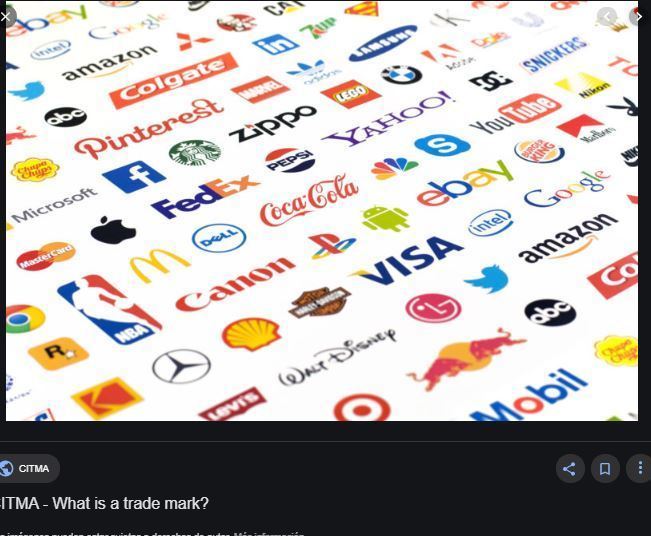
is the symbol by which the goods of a particular manufacturer or trader can be identified and distinguished from the goods of others.
Trade marks and service marks provide protection for the goodwill and reputation of a company in its products and services,
while the formulation and appearance of a company’s hand-cream products sold under a particular trade mark may be re-developed and constantly improved over time,
The brand or trade mark, in which a business wants to create value and become identified by in the market, can be a word, a signature, a monogram, a picture or symbol, a logo or a combination
More recently, colours, smells, shapes and sounds (for example, Intel and McDonald’s ® ® signature tunes)
The word or symbol should be distinctive (but not descriptive) in distinguishing goods or services of one particular business from those of its competitors
Registration of a Trade Mark
- It may be possible in certain countries for a company to assert ‘unregistered rights’ over a mark if it has been used by the company in the marketplace for some time
- and has become synonymous with the company and its goods (without infringing the registered mark of another business).
- Duration of a Trade Mark
- The term of a trade mark in most countries is for 10 years,
International Registration
- There are two main international agreements on trade mark protection – the Community Trade Mark (CTM) and the Madrid Protocol
Trade Mark Use
- It is important to understand the grammatical nature and use of a trade mark.
Imagens e arquivos do mapa
Informações
- Descrição
- Mapa Mental sobre TRADE MARKS, criado por luis guillermo arcila jimenez em 04-10-2019.
- Criado por
- luis guillermo arcila jimenez
- Visualizações
- 4
- Avaliação