
Mapa mental
Chapter 7 - Training
Conteúdo do mapa
Chapter 7 - Training
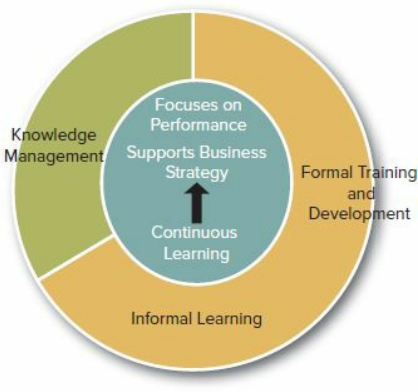
Continuous Learning
- a learning system that requires employees to understand the entire work system; they are expected to acquire new skills, apply them on the job, & share what they have learned with other employees
- key features
- a learning system that requires employees to understand the entire work system; they are expected to acquire new skills, apply them on the job, & share what they have learned with other employees
Training
- a planned effort by a company to facilitate employees’ learning of job-related competencies, knowledge, skills, & behaviors
- goal
- for employees to master the knowledge, skills, & behaviors emphasized in training & apply them to their day-to-day activities
- goal
- a planned effort by a company to facilitate employees’ learning of job-related competencies, knowledge, skills, & behaviors
Formal Training
- training & development programs, courses, & events that are developed & organized by the company.
- Explicit knowledge
- well documented, easily articulated, easily transferred from person to person
- Explicit knowledge
- training & development programs, courses, & events that are developed & organized by the company.
Informal Learning
- learning that is learner initiated, involves action & doing, is motivated by an intent to develop, & does not occur in a formal learning setting
- Tacit knowledge
- personal knowledge based on individual experiences that make it difficult to codify
- Tacit knowledge
- occur without an instructor
- breadth, depth, timing are controlled by the employee
- learning that is learner initiated, involves action & doing, is motivated by an intent to develop, & does not occur in a formal learning setting
Human Capital
- knowledge (know what)
- advanced skills (know how)
- system understanding & creativity (know why)
- motivation to deliver high-quality products & services (care why)
Knowledge Management
- process of enhancing company performance by designing & implementing tools, processes, systems, structures, cultures to improve the creation, sharing, & use of knowledge
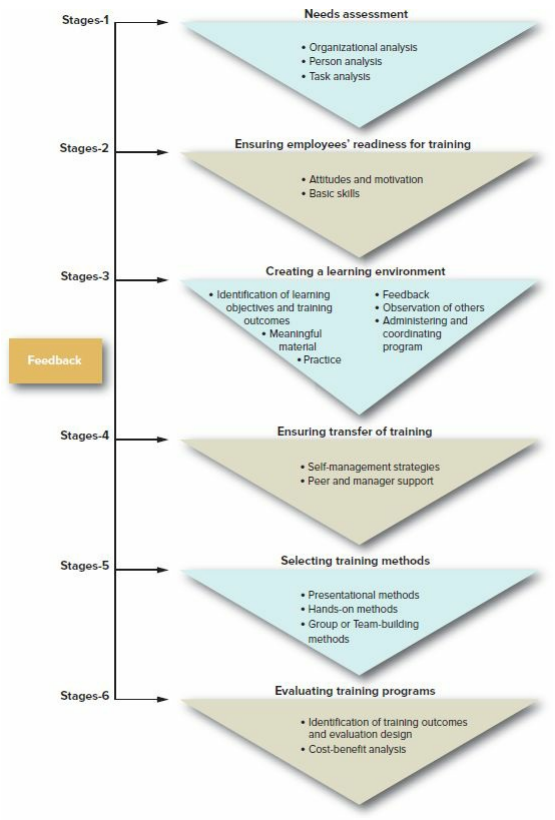
Designing Effective Formal Training Activities
- Training design process
- a systematic approach for developing training programs
- 2 types
- Instructional System Design (ISD)
- ADDIE model
- (analysis, design, development, implementation, evaluation)
- 6 stages
- Stage 1: Needs Assessment
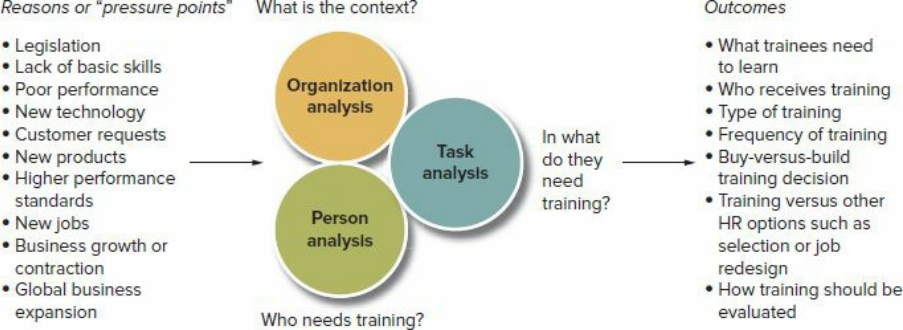
- 3 analyses
- Organizational analysis
- support of managers & peers
- company strategy
- training resources
- Person analysis
- whether performance deficiencies result from a lack of KSAOs
- who needs training
- employees' readiness
- Task analysis
- Organizational analysis
- 3 analyses
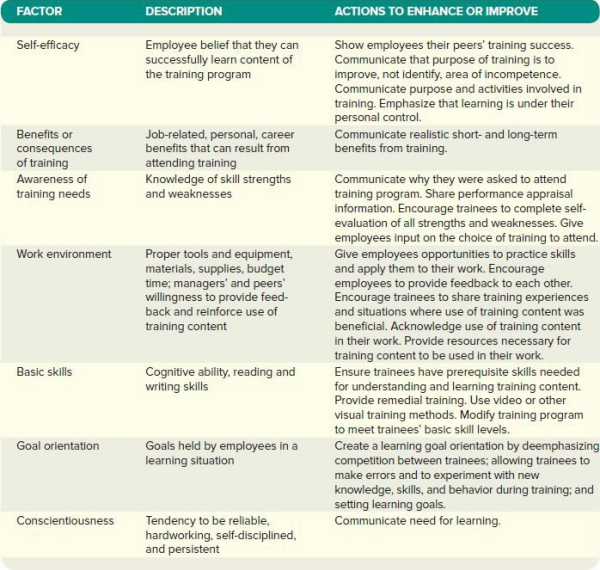
- Stage 2: Ensuring Employees' Readiness for Training
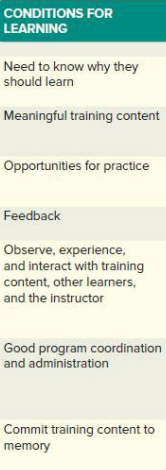
- Stage 3: Creating a Learning Environment
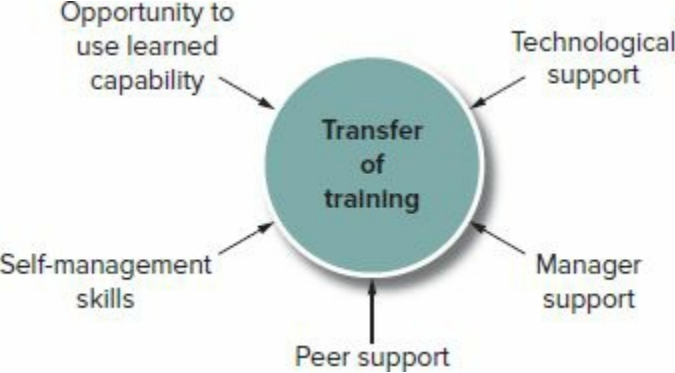
- Stage 4: Ensuring Transfer of Training
- Step 5: Selecting Training Methods
- presentation methods
- instructor-led classroom instruction
- distance learning (teleconferencing, webcasting)
- audiovisual training
- hands-on methods
- on-the-job training (OJT)
- stimulations
- games & case studies
- behavior modeling
- e-learning
- blended learning
- learning management systems (LMS)
- group- or team-building methods
- experiential programs
- team training
- cross-training
- coordination training
- action learning
- presentation methods
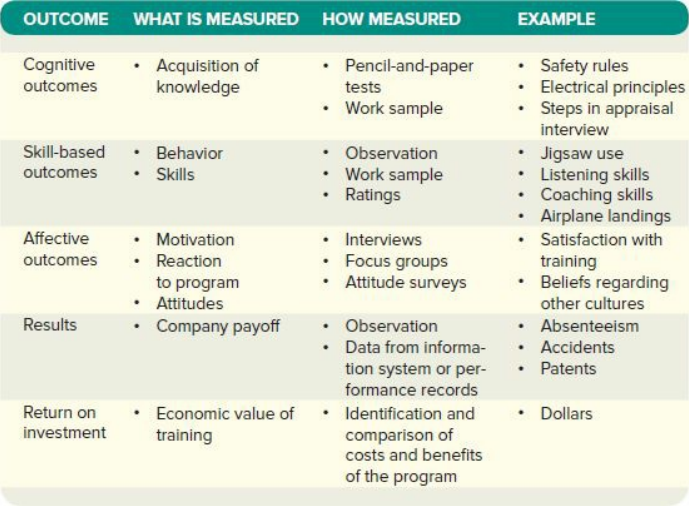
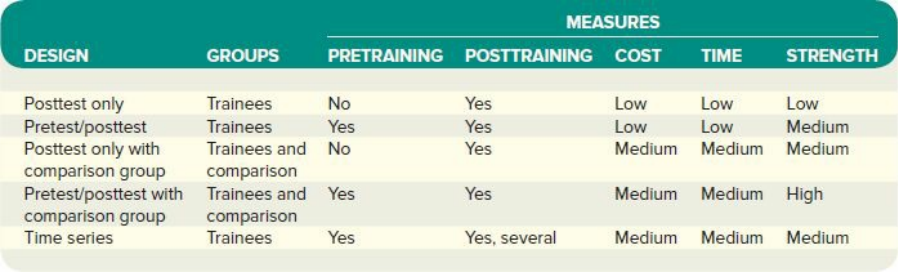
- Step 6: Evaluating Training Programs
- evaluation designs
- Stage 1: Needs Assessment
- 2 types
- a systematic approach for developing training programs
- Training design process
Cross-Cultural Preparation
- 5 steps
- competent in their areas of expertise
- flexible, tolerant of ambiguity, and sensitive to cultural differences
- able to communicate verbally and nonverbally in the host country
- motivated to succeed; able to enjoy the challenge of working in other countries; willing to learn about the host country’s culture, language, and customs
- supported by their families
- expatriate
- employee works in a country other than his or her country of origin
- 3 phases
- predeparture phase
- on-site phase
- repatriation phase
- 5 steps
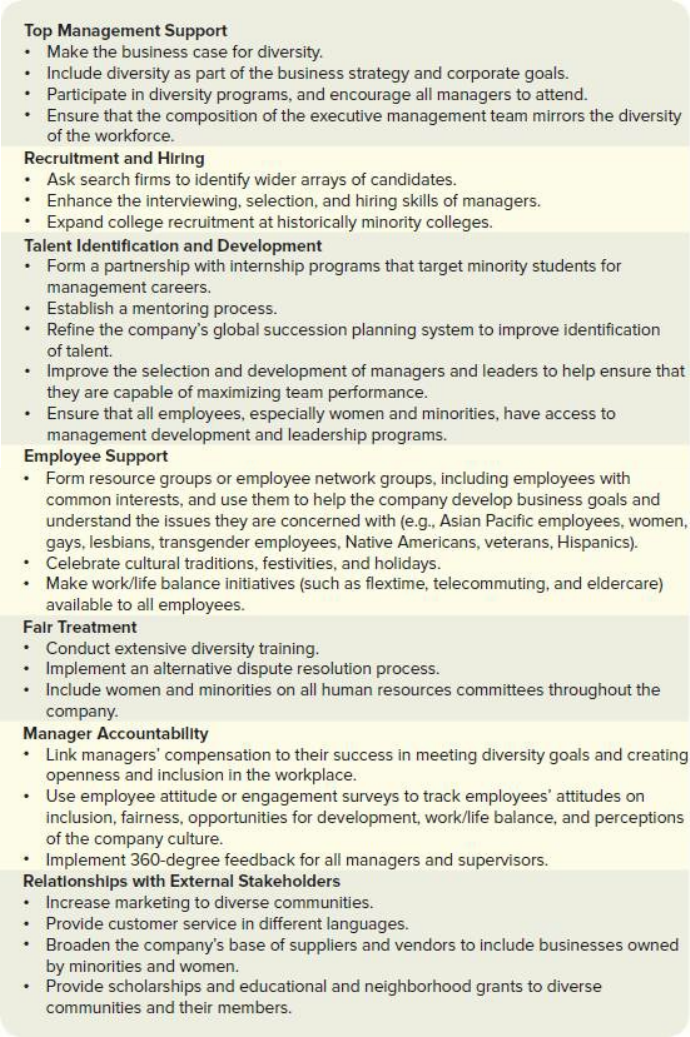
Managing Workforce Diversity & Inclusion
- creating an environment that allows all employees to contribute to organizational goals and experience personal growth
- key components of effective diversity management programs
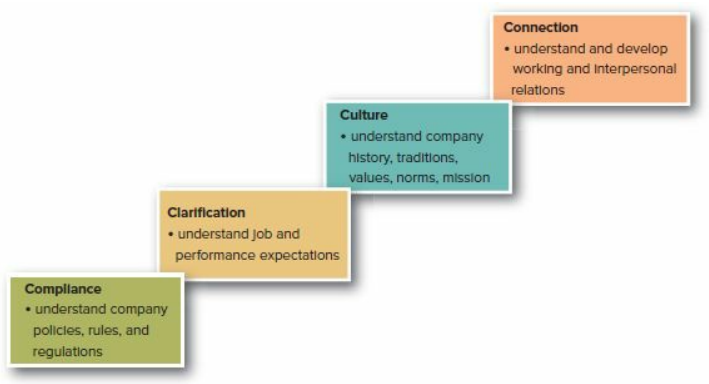
Onboarding / Socialization
- helping new hires adjust to social & performance aspects of their new jobs
- 4 steps
Imagens e arquivos do mapa
Informações
- Descrição
- Mapa Mental sobre Chapter 7 - Training, criado por Huong Huynh em 05-11-2020.
- Criado por
- Huong Huynh
- Visualizações
- 0
- Avaliação