
Mapa mental
Reciprocating Engine Operating Principles

Conteúdo do mapa
Reciprocating Engine Operating Principles
The relationships between pressure, volume, and temperature of gases are the basic principles of engine operation.
- Gasoline is vaporized and mixed with air, forced or drawn into a cylinder, compressed by a piston, and then ignited by an electric spark.
- It requires four strokes of the piston or plunger (two complete turns but of the crankshaft) to complete the thermodynamic cycle of combustion.
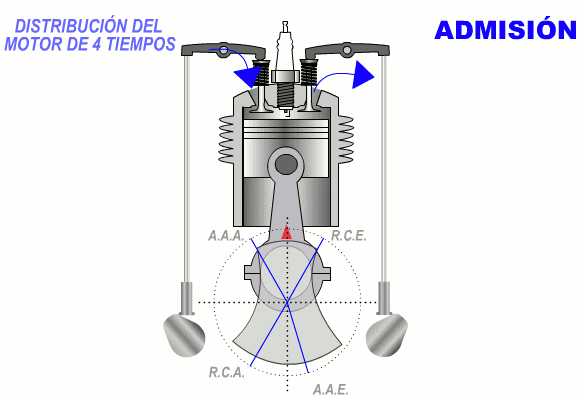
- admission
- in this phase the descent of the piston sucks the fuel-air mixture in provoked-ignition engines
- The exhaust valve remains closed, while the intake valve is open.
- In the first stage the crankshaft rotates 180 ° and the camshaft rotates 90 °.
- The intake valve is open and the piston stroke is downward.
- The intake valve is open and the piston stroke is downward.
- In the first stage the crankshaft rotates 180 ° and the camshaft rotates 90 °.
- The exhaust valve remains closed, while the intake valve is open.
- in this phase the descent of the piston sucks the fuel-air mixture in provoked-ignition engines
- compression
- upon reaching the end of the lower stroke, the intake valve closes
- compressing the gas contained in the chamber by the rise of the piston.
- In the second stage, the crankshaft gives 180 ° and the camshaft gives 90 °
- and also both valves are closed and their stroke is upward.
- and also both valves are closed and their stroke is upward.
- In the second stage, the crankshaft gives 180 ° and the camshaft gives 90 °
- compressing the gas contained in the chamber by the rise of the piston.
- upon reaching the end of the lower stroke, the intake valve closes
- expansion
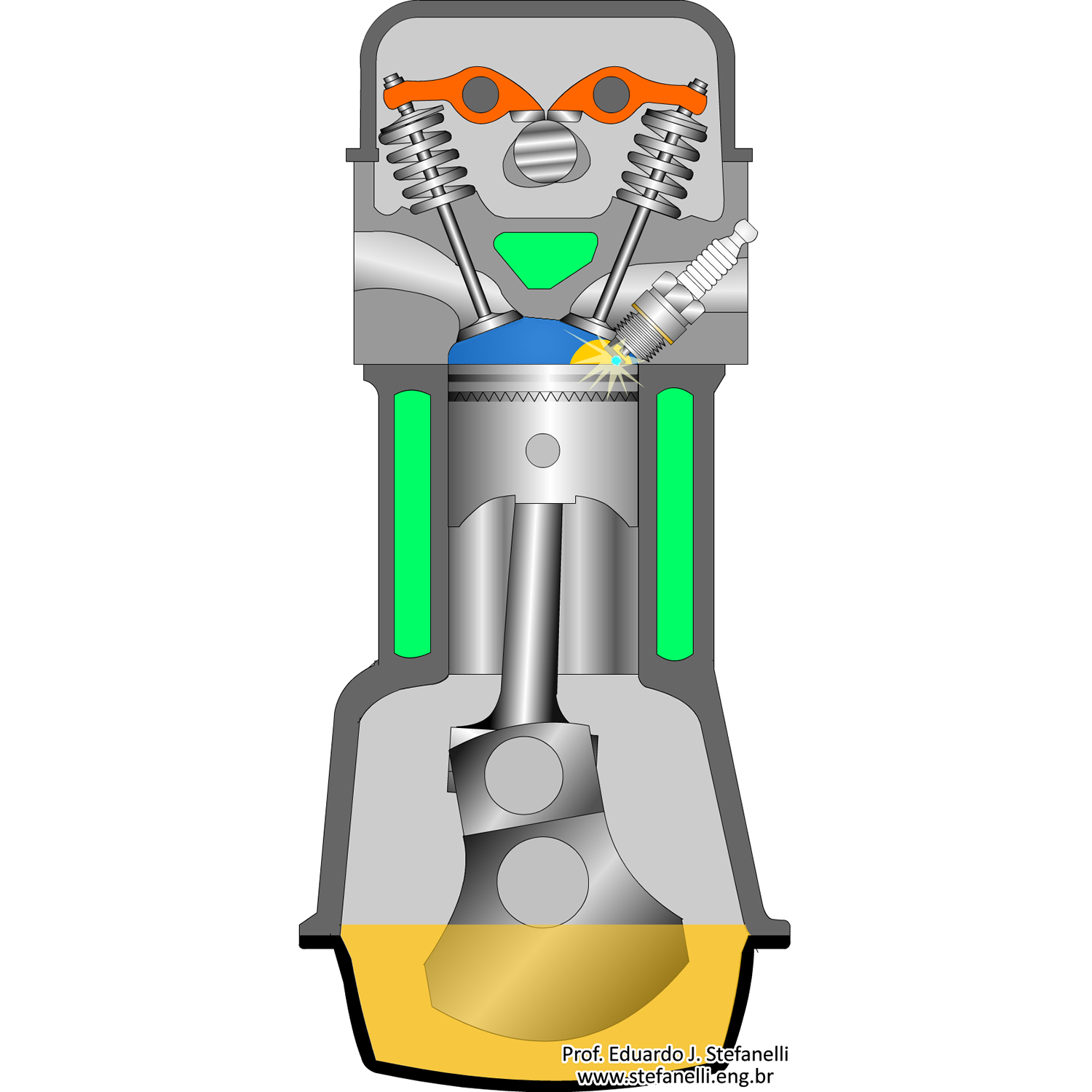
- the end of the upper stroke the gas has reached the maximum pressure.
- In Induced ignition or Otto cycle engines, the spark jumps in the spark plug.
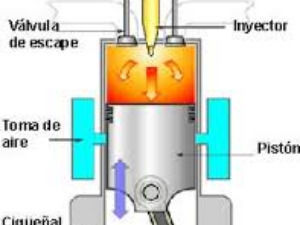
- causing the mixture to ignite, while in diesel engines, highly pulverized fuel is injected through the injector
- the crankshaft rotates 180 ° while the camshaft rotates 90 °
- the crankshaft rotates 180 ° while the camshaft rotates 90 °
- causing the mixture to ignite, while in diesel engines, highly pulverized fuel is injected through the injector
- In Induced ignition or Otto cycle engines, the spark jumps in the spark plug.
- the end of the upper stroke the gas has reached the maximum pressure.
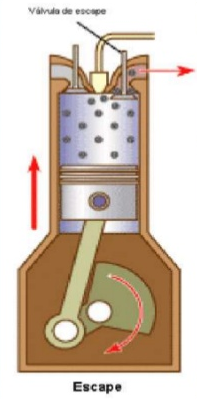
- exhaust
- the piston pushes, in its upward movement, the combustion gases
- that come out through the exhaust valve that remains open.
- this time the crankshaft rotates 180 ° and the camshaft rotates 90 °
- the exhaust valve closes and the intake valve opens
- the exhaust valve closes and the intake valve opens
- this time the crankshaft rotates 180 ° and the camshaft rotates 90 °
- that come out through the exhaust valve that remains open.
- the piston pushes, in its upward movement, the combustion gases
- admission
- It requires four strokes of the piston or plunger (two complete turns but of the crankshaft) to complete the thermodynamic cycle of combustion.
- Gasoline is vaporized and mixed with air, forced or drawn into a cylinder, compressed by a piston, and then ignited by an electric spark.
Imagens e arquivos do mapa
Informações
- Descrição
- Mapa Mental sobre Reciprocating Engine Operating Principles, criado por CRISTINA ELISABETH LONDO�O ROBLES em 07-06-2021.
- Criado por
- CRISTINA ELISABETH LONDO�O ROBLES
- Visualizações
- 0
- Avaliação