
Internal Combustion Engines
63 resources created by 51 users
This Internal Combustion Engines page on GoConqr gathers community-made mind maps, quizzes, flashcards, notes and a slide set, from engine classification and the four-stroke and two-stroke cycles to turbochargers, lubrication and diesel emissions. It's built for university students and professional candidates, school students, and teachers after ready-made material. There are over 50 resources here, including more than 30 mind maps and 9 quizzes, pitched mostly at university and professional level. Try a quiz to find your gaps, then revisit the maps.
Top Internal Combustion Engines resources
-
10 questions4.6 Internal Combustion Engines
-
17 cardsDiesel Compression Ratio SI
-
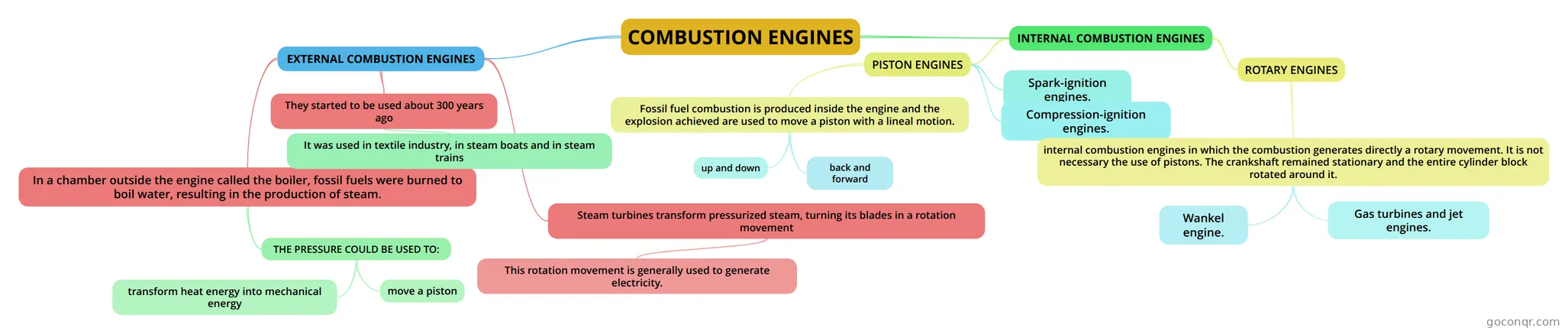 Mind map COMBUSTION ENGINES
-
15 questionspower prep quiz 11 poor combustion in a diesel engine is due to
-
Mind map CONNECTING ROD Mapa Mental Connecting rod por Alberto Escalante se distribuye bajo una <
-
Mind map Engines and motors
-
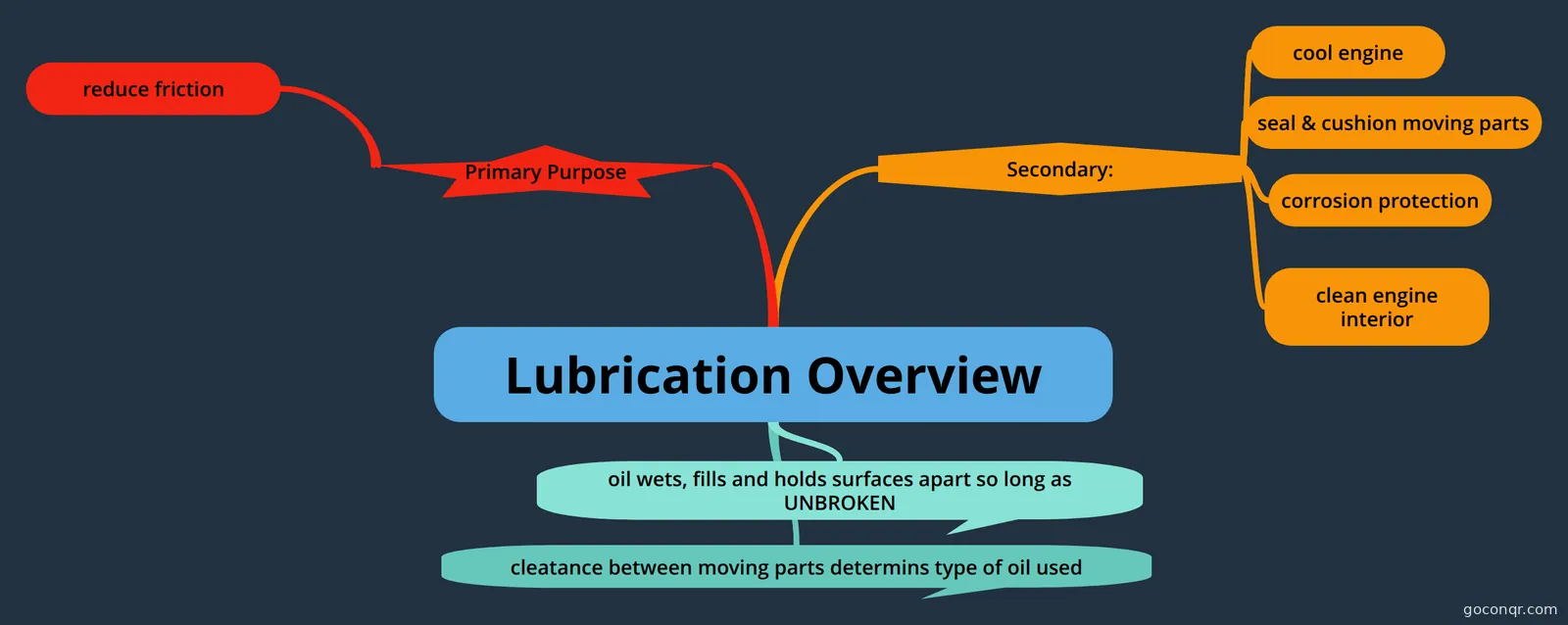 Mind map Lubrication Overview Purpose of lubrication
Quizzes
Mind maps
See all 39 mind mapsFlashcards
See all 12 flashcardsSlides
Topics in Internal Combustion Engines
More Mechanical engineering topics
About Internal Combustion Engines
GoConqr OriginalWhat the page covers
The page opens with mind maps on how engines are classified. Combustion Engines Classification separates external combustion engines, such as steam engines and steam turbines, from internal combustion engines. It then splits the internal group into spark-ignition and compression-ignition types and sets out the four-stroke and two-stroke cycles.
Where to start
Begin with the classification maps, then read the note titled Internal Combustion Engines. It points out that a two-stroke engine of a given size and speed is more powerful than a four-stroke one, because it has twice as many power strokes per unit time. Next, open IC engines 2, a mind map comparing spark ignition and compression ignition. It covers fuel and air intake, weight and the speeds each type can reach. Basic Engine operation follows, with engine geometry, power and torque.
Parts and systems
Once the basics are clear, move on to the component maps. These include PISTON, CONNECTING ROD, Crankshaft, ENGINE HEAD and Lubrication Overview. There are also maps on turbochargers, diesel engine emissions and aircraft engines. The Yamaha R6 Dry Sump System map shows one real lubrication layout.
Using quizzes and maps together
- Read a map and cover the branches you think you know.
- Take a quiz such as 4 SI Engine or 4.6 Internal Combustion Engines. Questions there ask about superchargers, scavenging and closed-cooling systems.
- Return to the map for any answer you missed.
- Run through the flashcards, including IC Engines - equations and Parts of an SI Engine.
Where it sits
This unit belongs to the Energy Conversion Systems strand of Mechanical engineering. Pick the map that matches what you are studying today, then finish with a quiz and see what sticks.
Frequently asked questions
Which resource should I open first?
Start with the Combustion Engines Classification mind map. It sorts external and internal combustion engines and introduces spark-ignition engines and the four-stroke and two-stroke cycles. After that, the note called Internal Combustion Engines and the IC engines 2 map build on the same ideas.
What do the mind maps cover?
There are over 30 of them. They cover classification, basic engine operation, power and torque, pistons, connecting rods, crankshafts, engine heads, lubrication, turbochargers, diesel emissions and aircraft engines. Some also describe four-stroke and two-stroke diesel operation.
Are there quizzes on this page?
Yes, more than 9 quizzes are listed. Examples include 4 SI Engine and 4.6 Internal Combustion Engines, which asks about superchargers, scavenging and cooling systems. One quiz, Things that Make a Small Engine Run, looks at small engines.
Who are these resources for?
They suit university students and professional candidates most of all, then school students. Teachers can use them as ready-made material. Most resources sit at university or professional level, with a good share at secondary level.
Are the resources free, and who made them?
Every resource listed here is free to open, study and take, with no account needed. They were made by GoConqr users, not by GoConqr itself. A free account also saves your quiz scores and lets you make your own maps and flashcards.
What if I can't find the topic I need?
Try a nearby map first, such as Engine types or Reciprocating Engine Operating Principles, as they may touch on it. You can also build your own mind map, flashcards or notes on the missing topic.