
514186
Descrição

Mapa Mental por sian.allison, atualizado more than 1 year ago

|
Criado por sian.allison
quase 12 anos atrás
|
|
Static Electricity
- Build up of static is caused by friction
- When certain insulating materials are
rubbed together negatively charged
electrons will be scraped off one and
dumped on the other
- Theyll leave a positive static charge on one
and a negative static charge on the other
- Theyll leave a positive static charge on one
and a negative static charge on the other
- Electrically charged objects attract
small objects near them
- When certain insulating materials are
rubbed together negatively charged
electrons will be scraped off one and
dumped on the other
- Only Electrons move never positive charges
- Positive and negative electrostatic
charges are only ever produced by the
movement of electrons. The positive
charges do not move
- A positive static charge is always caused by
electrons moving away elsewhere. The material
that loses electrons loses some negative charge
and is left with an equal positive charge
- Positive and negative electrostatic
charges are only ever produced by the
movement of electrons. The positive
charges do not move
- Like Charges repel opposite charges attract
- When two charged objects
are brought together they
exert a force on one another
- Two things with opposite charges are attracted to each other
- Two things with the same electric charge will repel each other
- These forces get weaker the further apart the two things are
- When two charged objects
are brought together they
exert a force on one another
- Charges can move easily through Conductors
- Metals are good conductors
- Metals are good conductors
- Current and Potential difference
- Current is the flow of electric charge
round the circuit. Current will only flow
through a component if there is a potential
difference across that component (A)
- Potential difference if the driving force that pushes the current round (V)
- Resistance is anything in the circuit which slows down the flow down (ohms)
- The greater the resistance across a
component the smaller the current
that flows (for a given potential
difference across the component)
- Total charge through a circuit depends on current and time
- When current flows past a
point in a circuit (I) for a length
of time (t) then the charge (Q)
that has passed
- Current = Charge / time
- I = Q / t
- I = Q / t
- Current = Charge / time
- When current flows past a
point in a circuit (I) for a length
of time (t) then the charge (Q)
that has passed
- Potential difference (P.D.) is the work done per unit charge
- The potential difference (or voltage) is the
work done (the energy transformed
measured in J) per coulomb of charge that
passes between two points in an electrical
circuit
- P.D. = Work done / Charge
- V = W/Q
- V = W/Q
- P.D. = Work done / Charge
- So the potential difference is the
amount of energy that is
transferred by that electrical
component per unit of charge
- Voltage and potential difference mean the same thing
- The potential difference (or voltage) is the
work done (the energy transformed
measured in J) per coulomb of charge that
passes between two points in an electrical
circuit
- Current is the flow of electric charge
round the circuit. Current will only flow
through a component if there is a potential
difference across that component (A)
- Circuits the basics
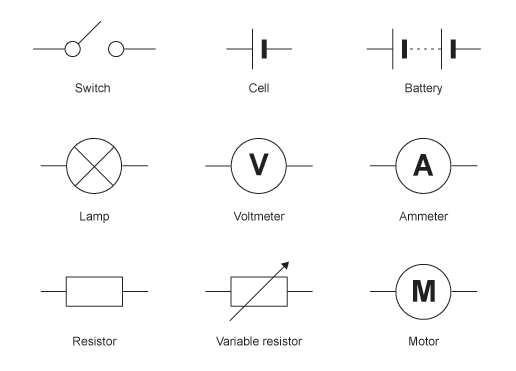
- Circuit symbols
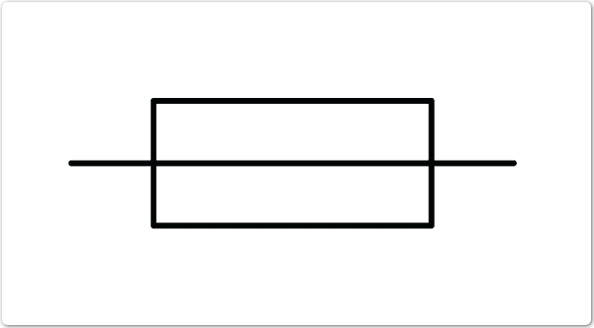
- Fuse
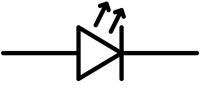
- LED
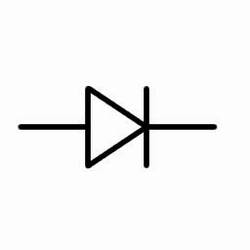
- Diode
- LDR
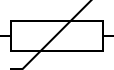
- Thermistor
- Fuse
- Standard test circuit
- If you want to know the resistance of a component
- Find the resistance by measuring current
through and the potential difference across
the component
- Find the resistance by measuring current
through and the potential difference across
the component
- The ammeter measures
the current (A) it has to be
placed in series never in
parallel
- Voltmeter measures the potential
difference (V) must be placed in parallel
around the component under test
- If you want to know the resistance of a component
- Circuit symbols
- Resistance and V= I xR
- Potential different current graphs
- Diode - Current will only
flow through a diode in one
direction as shown. The
diode has very high
resistance in the opposite
direction
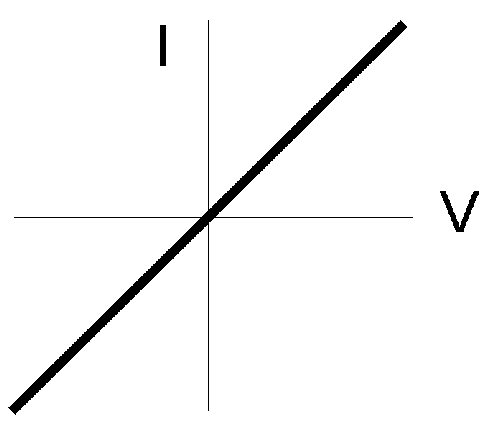
- Different resisters - The current
through a resistor is directly
proportional to P.D.. Different resistors
have different resistances
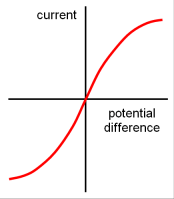
- Filament lamp - As the temperature
increases the resistance increases
hence the curve
- Diode - Current will only
flow through a diode in one
direction as shown. The
diode has very high
resistance in the opposite
direction
- Resistance increases with temperature
- When electrical charge flows
through a resistor some of the
electrical energy is transferred to
heat energy and the resistor get
hot. This heat energy causes ions
in the conductor to vibrate more.
With the ions moving around its
harder for the charge carrying
electrons to get through the
resistor. The current cant flow as
easily.
- When electrical charge flows
through a resistor some of the
electrical energy is transferred to
heat energy and the resistor get
hot. This heat energy causes ions
in the conductor to vibrate more.
With the ions moving around its
harder for the charge carrying
electrons to get through the
resistor. The current cant flow as
easily.
- Resistance, Potential
difference and Current
- Potential Difference = current x resistance
- V = I x R
- V = I x R
- If the graph curves it means
the resistance is changing
- Potential Difference = current x resistance
- Potential different current graphs
Anexos de mídia


Quer criar seus próprios Mapas Mentais gratuitos com a GoConqr? Saiba mais.