
Mapa mental
Lower layer tech: ethernet
Conteúdo do mapa
Lower layer tech: ethernet
Technologies that move data from point to point
- Link layer
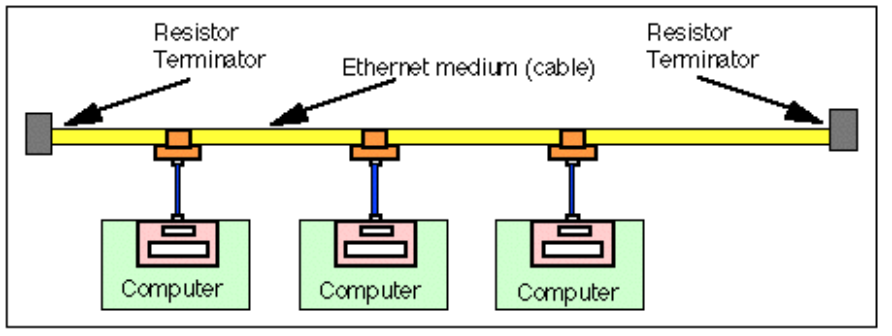
Original topology of a bus
- Single cable with computers connected
- Packets flow through ethernet of a standardised format
Basic Logic
- Only one station can talk at a time
- Every station can see what every other station is saying
- Wait until no other station is talking, then send data
- Susceptible to collisions
- Only one station can talk at a time
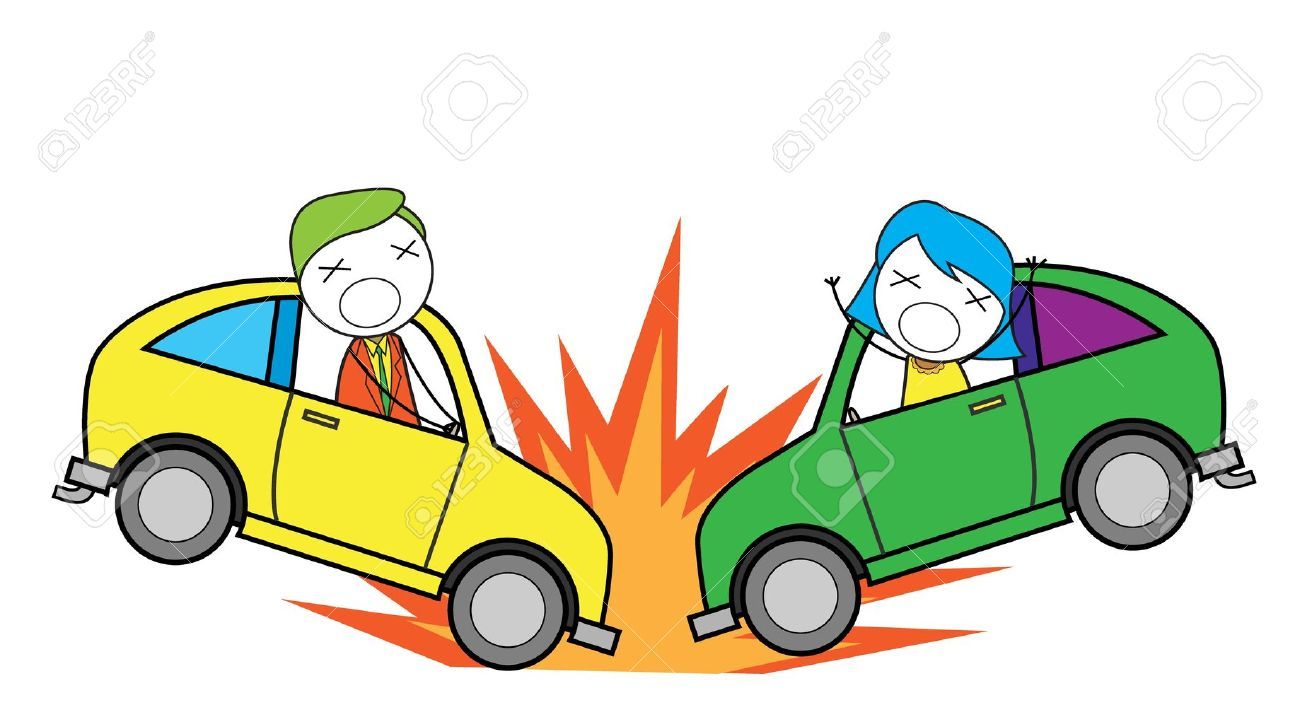
Collisions
- Two or more stations talking at the same time
- Detection
- As station transmits, it listens to ether and checks it only contains the signals being sent
- If there is other data (mismatch), then someone else is transmitting
- As station transmits, it listens to ether and checks it only contains the signals being sent
- Action
- Whole ether is told that there is a collision
- "Jam" network - set packet sent
- Whole ether needs to know before packet has finished being sent
- Whole ether is told that there is a collision
- Recovery
- First attempt
- Choose random k from {0,1} and delay k x 512 bit periods if 1
- Successive atempts
- Increase intervals {0..2^n}
- Give up after 10 attempts
- First attempt
- Problem
- Collisions dependant on what sort of traffic is being sent
- Unpredictable latency - collisions cause delays
- "Ethernet capture effect" - last station to send data before collision as best chance to resume sending after resolution
- Collisions dependant on what sort of traffic is being sent
Sizes
- 10Base5
- 500m and 10Mbps
- Longer cables = increase in minimum packet size
- 10BaseT
- Modern ethernet
- 10Base5
Problem with cables
- Heavy, expensive and difficult to install
- Transceivers add cost and complexity
- Wears out eventually
- Performance issues
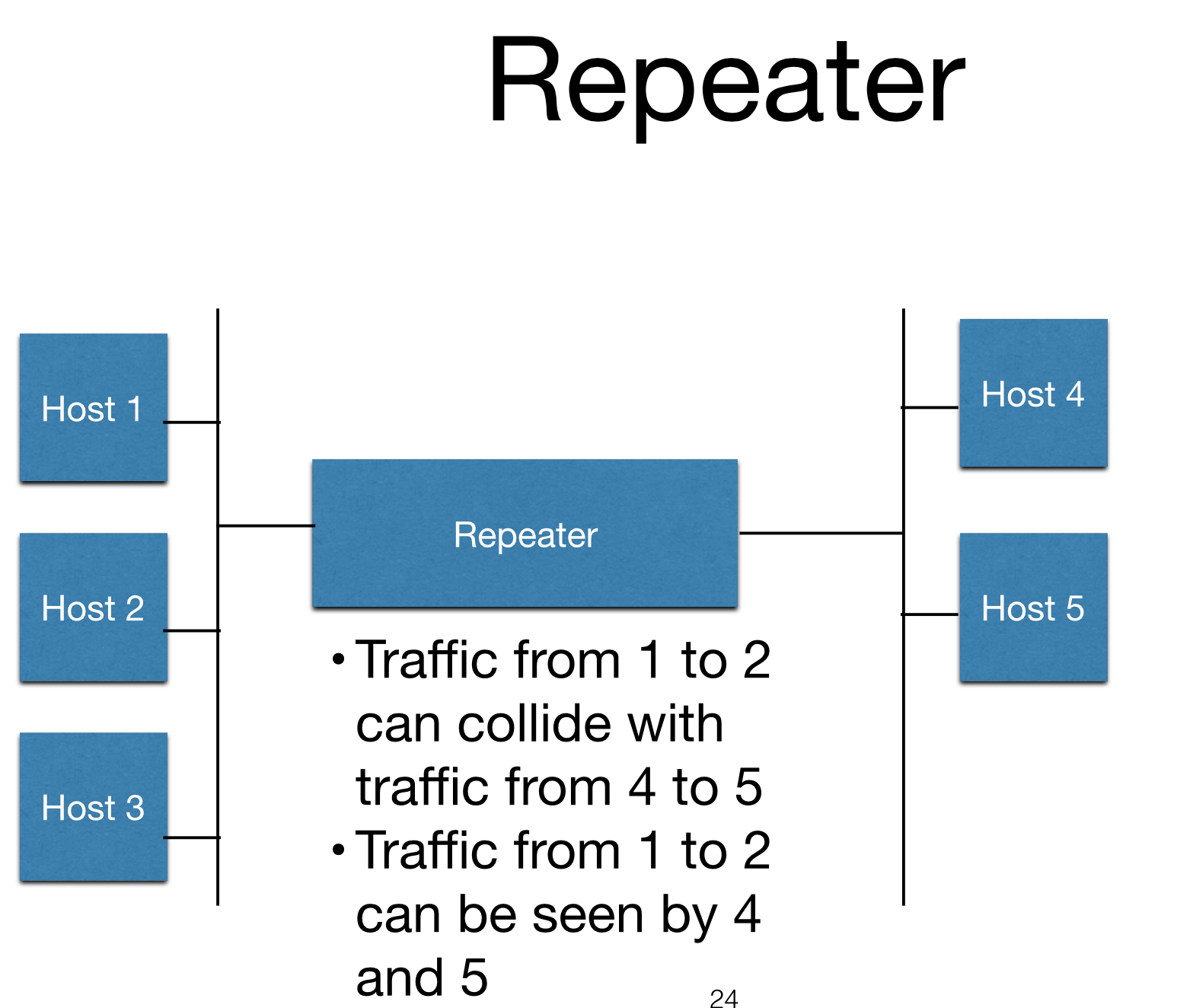
Bridges
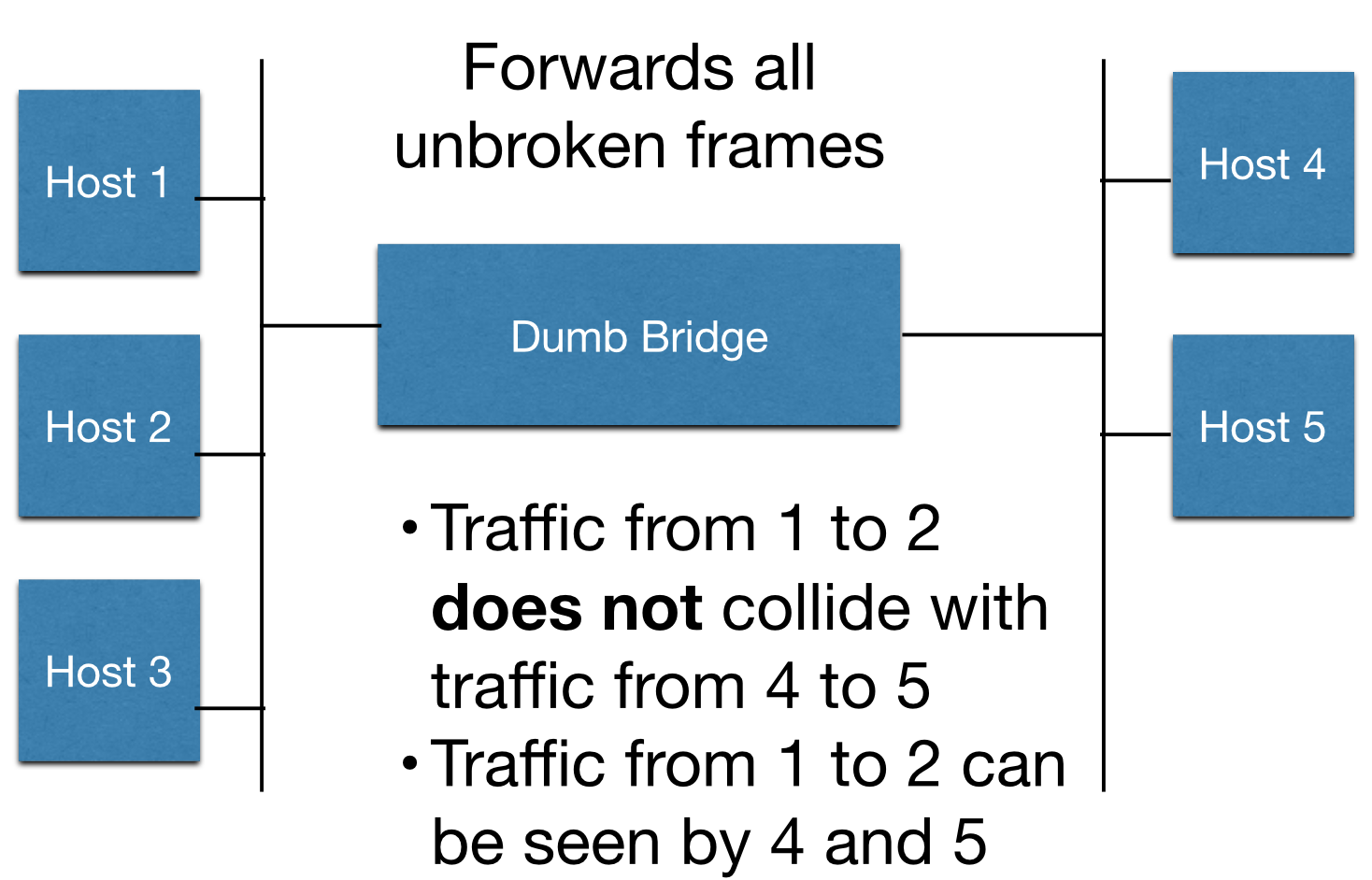
- Dumb bridge
- Packets can still be seen from other stations
- Sees collision in process
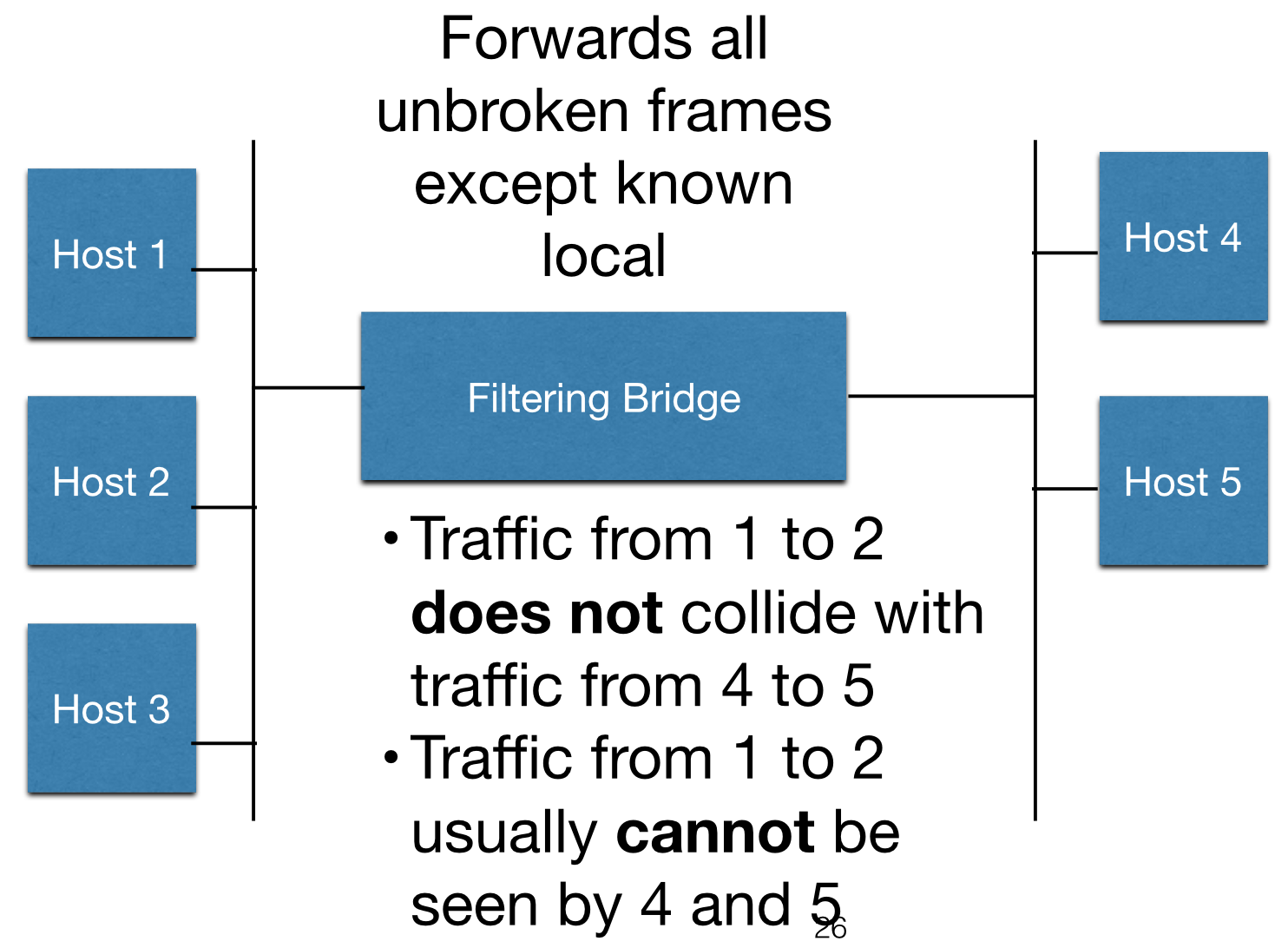
- Learning bridge
- Knows which addresses belong on which side of the bridge
- Only sends frames belonging to other side
- Avoids collisions and traffic cannot be seen by other stations
- Knows which addresses belong on which side of the bridge
- Bridge receives, buffers and transmits frames
- Collisions not propagated
- Dumb bridge
Ethernet switch
- Set of learning bridges in a box
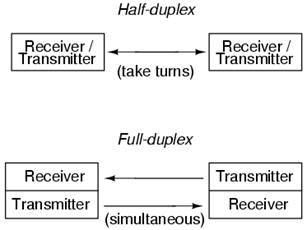
- Full duplex
- Traffic can go in and out without colliding
- Each direction is in a seperate collision domain
- Traffic can go in and out without colliding
- Packets to unknown destinations sent by all ports, otherwise only traffic for devices plugged in are sent
- Large internal buffers to deal with congestions
- Cut-through switches
- Faster
- Conservative switches check the checksum then send - introduces latency
- Cut-through just looks at the packet header and sends immediately after
- Bad for broken frames - still propagates
- Faster
- No collisions
Imagens e arquivos do mapa


Informações
- Descrição
- Masters Computer Science (Networks) Mapa Mental sobre Lower layer tech: ethernet, criado por Ar B em 18-04-2016.
- Criado por
- Ar B · abr 2016
- Atualizado
- 25 mai 2016
- Visualizações
- 1
- Avaliação