
Mapa mental
Language Processing - Morph Processing
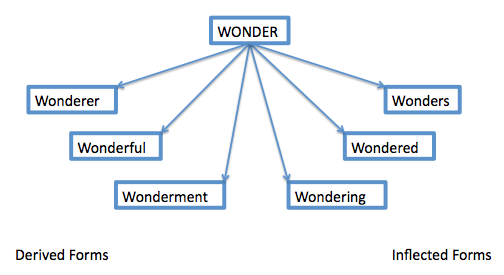
Conteúdo do mapa
Language Processing - Morph Processing
WORDS AND RULES DEBATE (PINKER): We process regulars and irregulars differently
Mopheme = smallest linguistic unit of meaning
- walk-ed
- rat-s
- use-able, re-use-able
- govern-ment
- Either a word that can stand on its own or an affix which cannot
- Suffix
- prefix
- STEM
- INFLECTIONAL MORPHOLOGY = different word forms but do not change stem (walks, walk, walking)
- Don't change syntactic category of the word
- Regular / irregular - (go/went, mouse/mice, walk/walks)
- Strict line between storage and computing may not be accurate
- Perhaps we can both store and compute regular inflections
- Studies on FREQUENCY EFFECTS: Frequent words are accessed faster - so F.E. of regulars and irregulars can be diagnostic of storage
- Frequency FX well attested for irregulars (e.g. Prado & Ullman, 2009)
- "went" vs "bled"
- IF REGULAR PAST TENSE IS COMPUTED ONLINE FREQ SHOULDN'T AFFECT SPEED OF ACCESS
- (Has to be tested with words of equal frequency so as not to confound exp.)
- ALEGRE & GORDON (1999): Lexical decision task w Eng. regular infl
- Reaction times for series of regular infl. forms ranging in freq
- FOUND: For low freq words, there were no freq FX (0-6 / million) but across a broader freq range there WERE FREQ FX 0 – 44 / million
- This suggests that very high frequency words can be stored, not just computed
- WHICH IS INCOMPATIBLE with an extreme DUAL MECH MODEL!!!
- Ullman’s (2001) declarative/procedural is one dual-mechanism model that takes this into account
- Regular inflections (e.g. walked) can be computed online via procedural memory or stored in declarative memory
- Irregulars (e.g. went) are stored in declarative memory
- Ullman’s (2001) declarative/procedural is one dual-mechanism model that takes this into account
- WHICH IS INCOMPATIBLE with an extreme DUAL MECH MODEL!!!
- This suggests that very high frequency words can be stored, not just computed
- Perhaps we can both store and compute regular inflections
- Infl. morph inv in lang imp
- SLI: Genetically based impairment to normal acq. of lang.
- Diffs interpreting certain types of sentecnes, e.g. passives
- Diffs with inflectional suffixes: "The boy walk home"
- Ullman says children w SLI have deficit w PROCEDURAL mem, so instead rely on DECLARATIVE
- ULLMAN & GOPNIK (1999): Investigated Inflectional morph in members of KE family
- FOUND: Children in this family did no produce over-regularisaion errors
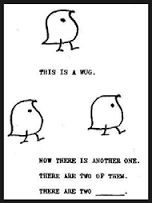
- Diffs producing novel regular inflections, e.g. Wugs
- However they were MORE ACCURATE w HIGH FREQ than LOW one
- Maybe over relying on declarative mem.
- Diffs producing novel regular inflections, e.g. Wugs
- (A british family of Pakistani origin half of whom have language diffs)
- FOUND: Children in this family did no produce over-regularisaion errors
- VAN DER LELY & CHRISTIAN (2000): Examined compound information in SLI
- 10-18 years old
- Lang matched controls & age matched controls
- Used a version of Gordon’s (1985) exp.
- FOUND: children with SLI included similar numbers of regular plurals inside compounds as irregular plurals
- The control groups almost never included regular plurals inside compounds
- Support the notion that individuals with SLI have deficit in GRAMMAR COMPUTATION
- Individuals with SLI store both regular and irregular plurals in the mental lexicon - which is why they are appearing inside compounds
- Support the notion that individuals with SLI have deficit in GRAMMAR COMPUTATION
- The control groups almost never included regular plurals inside compounds
- 10-18 years old
- SLI: Genetically based impairment to normal acq. of lang.
- DERIVATIONAL MORPHOLOGY = create new leximes/words (happy/happiness)
- Suffixes (but NOT prefixes) usually change word category (govern - government)
- Semantically transparent / opaque (department)
Semantic priming suggests words related in meaning are connected in the mental lexicon
- MORPH also provides means of studying mental lex.
- BERKO 1958
- Used non word to test children's production of regular plural
- Found they could apply the rule 'add s' even to words they'd never heard before
- This, again, refutes the old school imitation theory
- Dual mechanism: "This is productive application of a regular rule."
- "This is because of frequency and analogy with regular forms."
- Found they could apply the rule 'add s' even to words they'd never heard before
- Used non word to test children's production of regular plural
- BERKO 1958
- GENERALLY AGREED THAT IRREGULARS ARE STORED AND REGULARS COMPUTED
- Irregulars idiosyncratic so can't be computed
- PINKER (1999) DUAL MECHANISM MODEL
- Storage
- Computation
- "Inflection is the most basic example of a grammatical rule being applied."
- SINGLE MECHANISM MODELS, e.g. Rumelhart & McClelland, (1986)
- Everything is stored
- Words are stored in a HIGHLY CONNECTED NETWORK
- Differences in retrival of irregulars and regulars argued to result from strength of different connections
- "There is no explicit level of mophology."
- MORPH also provides means of studying mental lex.
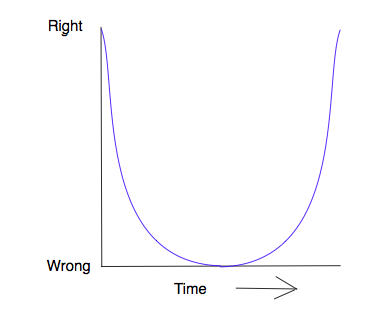
OVER REGULARISATION ERRORS in children
- The U SHAPED CURVE: Children go through a stage of producing over-inflected endings
- "My teacher holded the baby rabbits" - correct tense, wrong form - should be irregular
- Goes against early theories that children just imitate what they hear
- Single mechanism accounts explain this in terms of frequency effects
- E.g. analogy with other words: ANALOGY - call – called, crawl – crawled, fall – falled
- Pinker takes this as evidence of acquisition of the ed rule
- Children notice a pattern of past tense -ed rule
- They start computing it
- They over apply the rule
- As vocab increases, they learn there are exceptions to the rule
- "fall - fell"
- "fall - falled"
- As vocab increases, they learn there are exceptions to the rule
- They over apply the rule
- They start computing it
- Children notice a pattern of past tense -ed rule
- The U SHAPED CURVE: Children go through a stage of producing over-inflected endings
GORDON (1985): Children aged 3-5, elicited novel compounds
- Regular: "What would you call something that eats rats?"
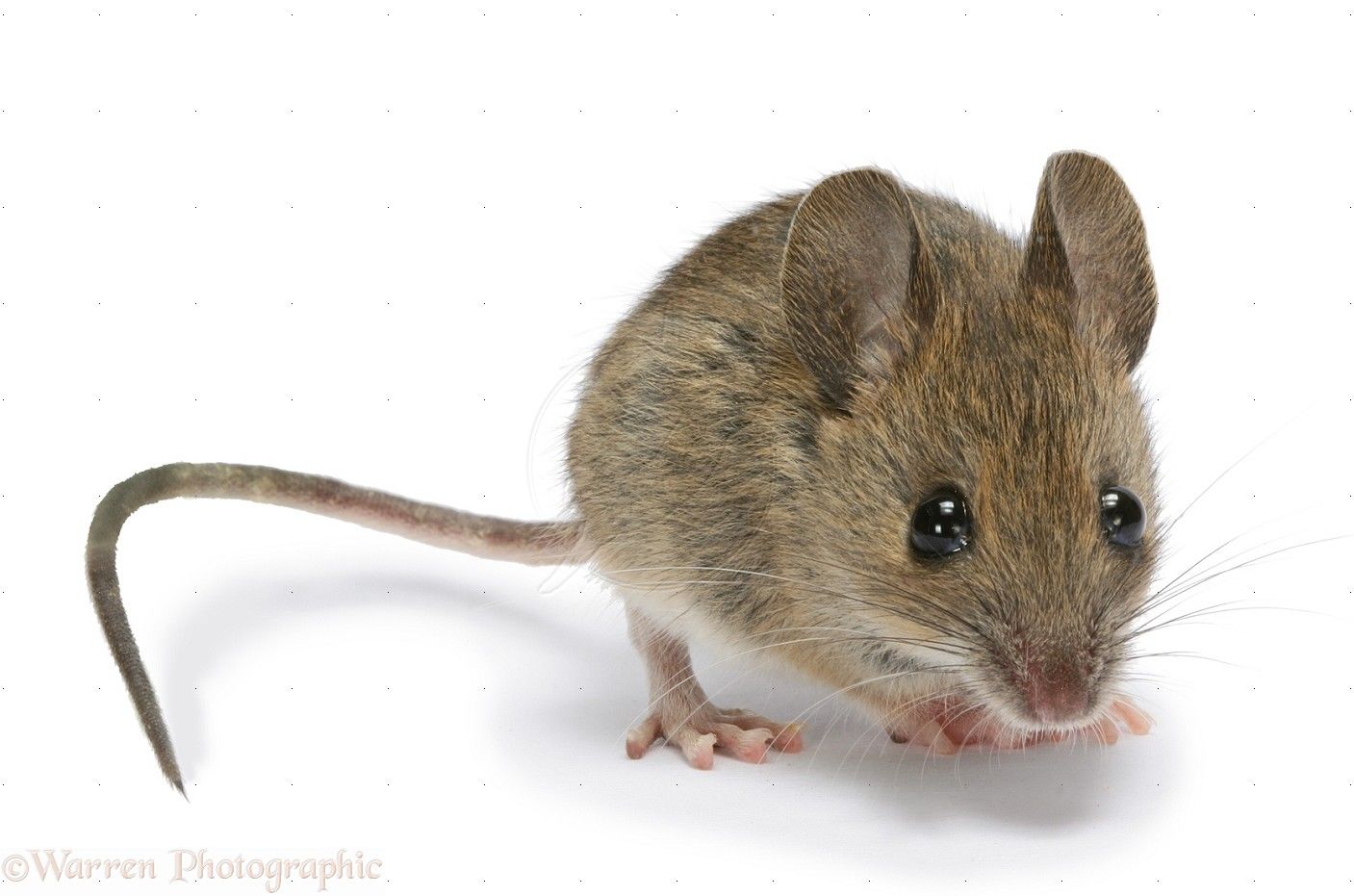
- Irregular: "What would you call something that eats mice?"
- FOUND: Children did not produce regular plurals inside compounds
- "A rat eater."
- But they did often produce irregular plurals inside compounds
- "A mice eater."
- Compounding involves combining words stored in the mental lexicon
- Pinker: "These findings support dual mech. model - as irregulars are stored, they can appear inside compounds."
- N.B. majority of compounds in Eng. contain singular nouns
- Ramscar & Dye (2011) - single mechanism: "These results exist because of question priming. Irregulars included more often because of overlap in plur. and sing. form ((mice – mouse vs. rats – rat))
- Could this be a confound of the experimental design???
STANNERS et al. (1979): Primed lexical decision exp. inv reg and irreg past tense
- Regular: Repeated prime - walk - walk
- Past tense prime - walked - walk
- Irregular: Repeated prime - shake - shake
- Past tense prime - shook - shake
- Reaction times measured
- FOUND: Regular past tense primed the target to the same extend as repetition priming
- But irregular past tense produced slower responses and less priming than repetition condition
- These results compatible with supposition that regular past tense forms are decomposed: stem + affix
- Suggests irregulars have separate lexical entry
- Pinker: "Ahhmaygaad!!! Evidence for Dual Mechanism!!!"
- Single Mechanism: "It's because of frequency! Regular forms are more frequent!"
- Regular: Repeated prime - walk - walk
Studies of other languages necessary to tease apart the effects of overlap in form and frequency
- IN GERMAN REGULAR PAST LESS FREQUENT
- REGULAR AND IRREGULAR can share the same degreee of FORMAL OVERLAP
- SONNENSTUHL et al. (1999): Cross modal priming study (ears to eyes)
- REGULAR
- Repeated: P -öffne T-öffne
- Past tense: P - geöffnet T - T-öffne
- Control: P-wünche T- T-öffne
- IRREGULAR
- Repeated: P - schlafe T- schlafe
- Past tense: P-geschlafen T - schlafe
- Control: P-beuge T- schlaf
- Expect quick response w repetition prime, slow resp. w control
- FOUND: Regular past primed the stem as much as repetition priming
- Irregulars primed the stem more than the control word, but NOT AS MUCH as repetition priming
- Sonnenstuhl et al: "This supports the Dual Mechanism!"
- Full priming regulars = decompsed
- Single Mech: Can't be explained in terms of freq, or formal overlap btwn prime and target
- These guys did supporting work on german plurals too...
- REGULAR
- IN GERMAN REGULAR PAST LESS FREQUENT
Imagens e arquivos do mapa

Informações
- Descrição
- Mapa Mental sobre Language Processing - Morph Processing, criado por Heather Snaith em 14-05-2016.
- Criado por
- Heather Snaith
- Visualizações
- 1
- Avaliação