
Language and Communication
734 resources created by 534 users
This Language and Communication page on GoConqr gathers community-made mind maps, quizzes, flashcards and notes, from Chomsky and language acquisition to bilingual memory, word recognition and non-verbal communication. It's built for university students and professional candidates, school students, and teachers after ready-made material, all practising how language is learned, produced and understood. There are over 700 resources here, including more than 60 quizzes and over 400 mind maps, mostly at university level with some for school. Pick a topic and try a quiz.
Top Language and Communication resources
-
Mind map Bilingual Memory A mindmap to summarise research articles about the bilingual memory.
-
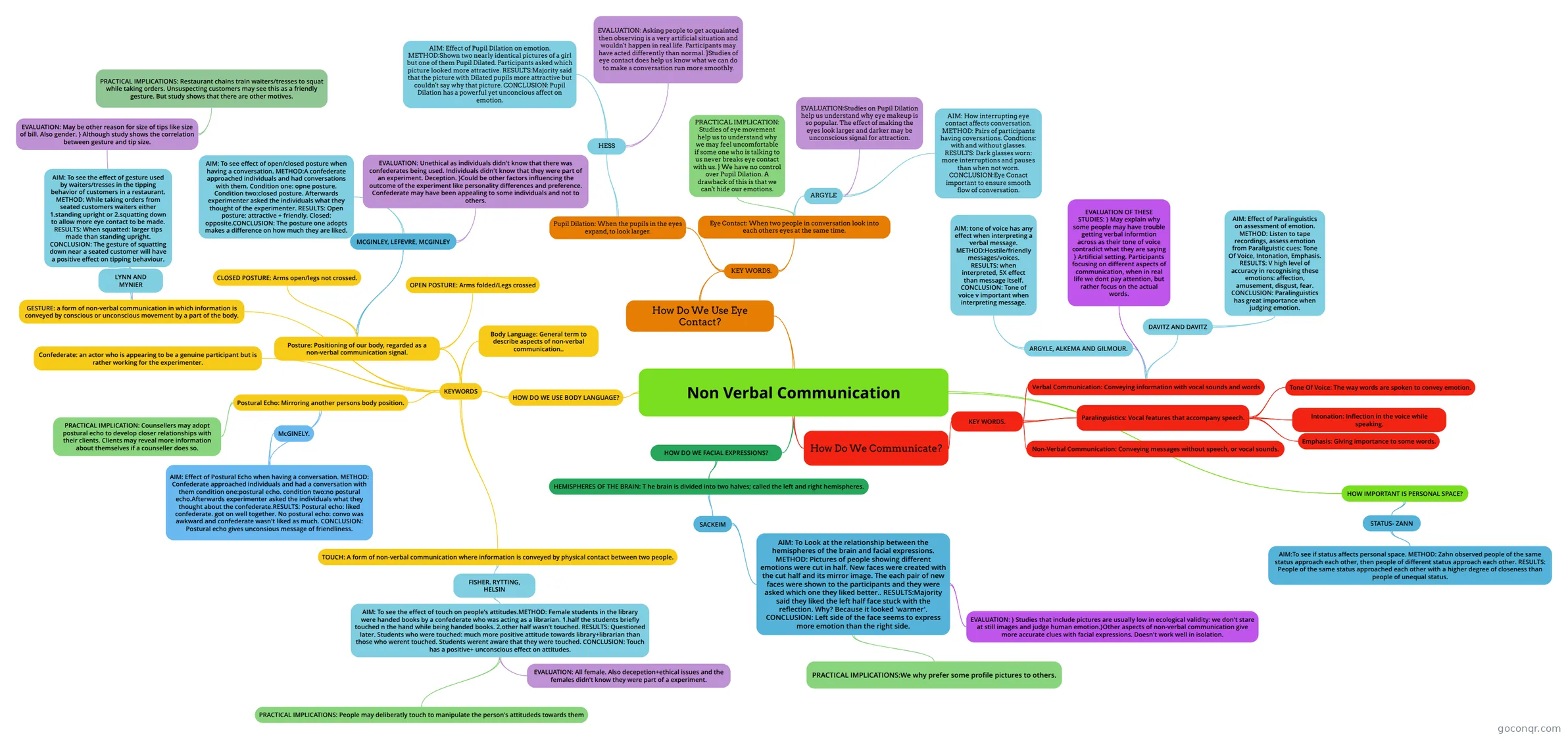 Mind map Non Verbal Communication Unit One Non verbal communication. Studies included.
-
Mind map Non Verbal Communication
-
Mind map THE BRAIN The brain in pshycolinguistics
-
5 questionsNeurolinguistics and Psycholinguistics When shown a picture of a Dog, the patient says "Four Legs". This is an error at the .....
-
Mind map Bilingual Cognition versus Monolingual Cognition Initial mind map of ideas for EPQ.
-
8 questionsWeek 10 - Language Production Which of the following are the levels of speech production?
-
 Mind map Chomsky
Quizzes
See all 67 quizzes-
5 questionsNeurolinguistics and Psycholinguistics When shown a picture of a Dog, the patient says "Four Legs". This is an error at the .....
-
8 questionsWeek 10 - Language Production Which of the following are the levels of speech production?
-
33 questionsPsych What are the smallest units of meaning in a language?
-
37 questionsExploring Interpersonal Communication What type of focus is Level 1 Internal Listening?
-
16 questionsWeek 9 - Word Recognition and Reading
-
17 questionsWeek 9 - Word Recognition & Reading Average adult readers read silently/aloud at:
-
16 questionsPSY204 Language and Communication Transfer of meaningful information from one person to another.
Mind maps
See all 439 mind maps-
Bilingual Memory A mindmap to summarise research articles about the bilingual memory.
-
Non Verbal Communication Unit One Non verbal communication. Studies included.
-
Non Verbal Communication
-
THE BRAIN The brain in pshycolinguistics
-
Bilingual Cognition versus Monolingual Cognition Initial mind map of ideas for EPQ.
-
Chomsky
-
 CD - Wild Children, Deaf Children and a critical period for language
-
 How do we communicate?
Flashcards
See all 172 flashcards-
5 cardsNon-verbal communication
-
42 cardsChapter 9 Language What is Language?
-
82 cardsExam 2 terms interpersonal communication (dyadic)
-
11 cardsLanguage WHAT IS LANGUAGE? - Universal - Symbolic - represents something - Voluntary - used under individual control...
-
49 cardsChapter 9 - Development of Language and Communication Skills FLASHCARDS
-
50 cardsUnit 8: Terms and Concepts Chapter 8: Language and Thought
-
28 cardsDevelopmental Psychology Chapter 8 The sound patterns of a particular language and the rules for combining them.
-
14 cardsPsychology ~ NVC Define non-verbal communication
Flowcharts
See all 19 flowcharts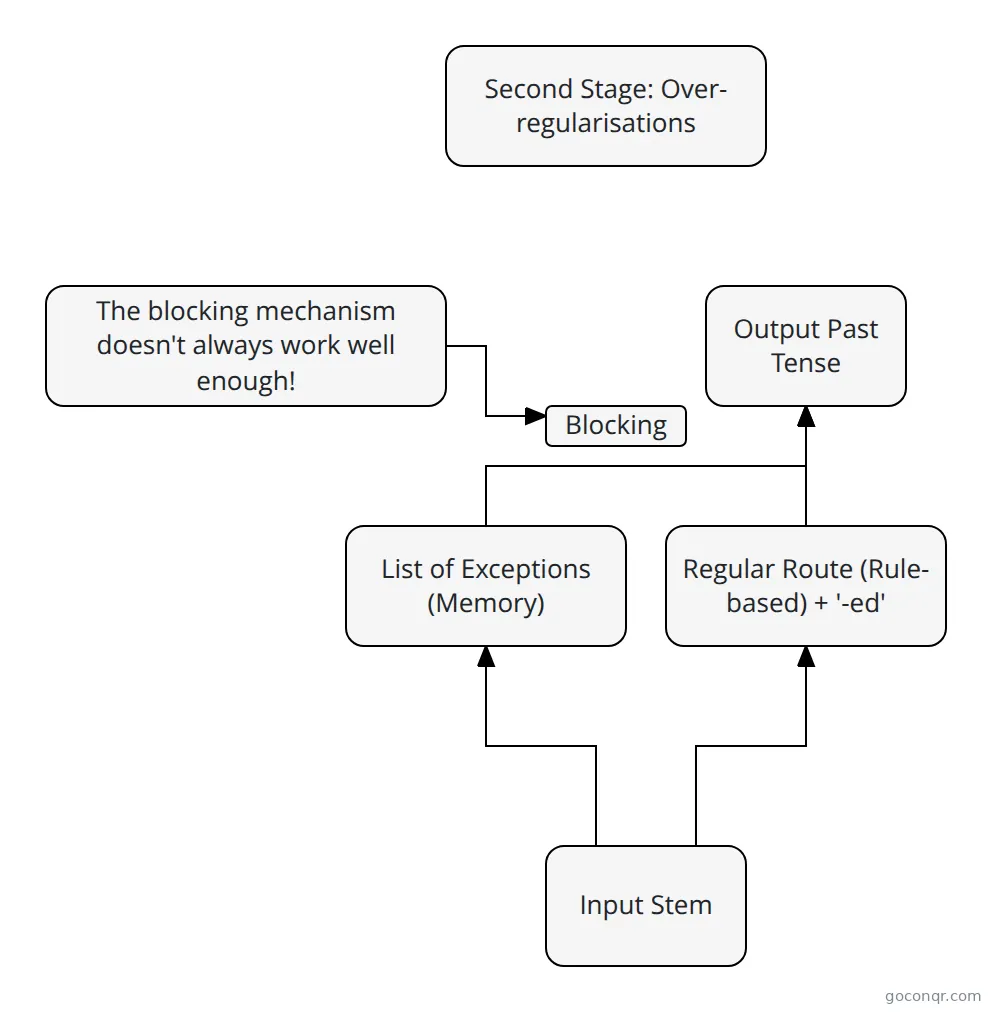
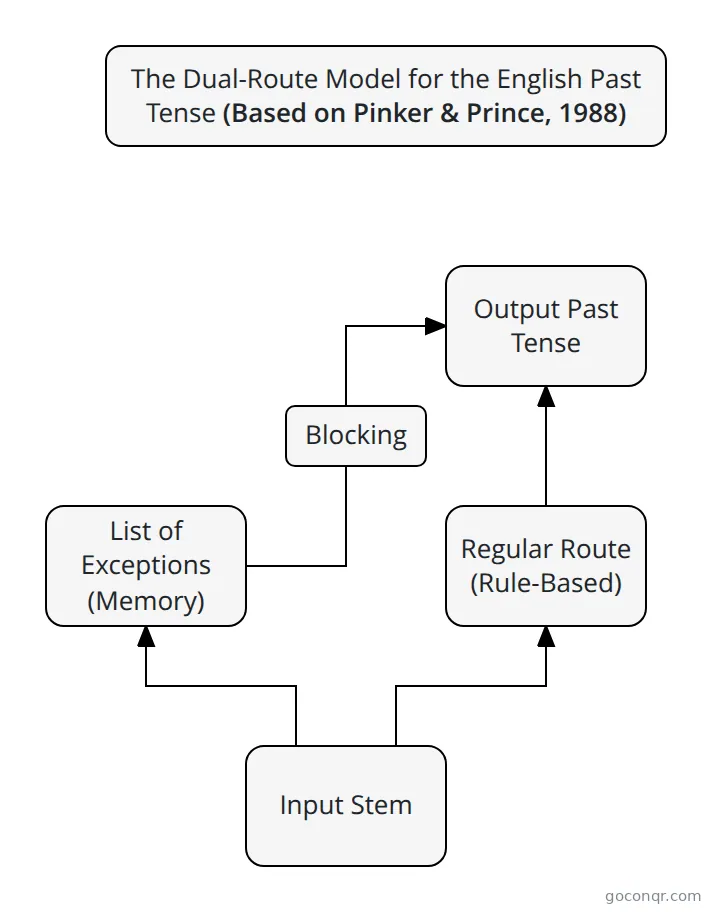
Notes
See all 29 notes-
Unit 8: Study Questions Define cognition. Why was the study of cognition discouraged during the first half of the twentieth century? (p. 349) Define language. Identify and describe the four critical properties of language. (p. 350) Define ph...
-
Non-Verbal Communication Studies Argyle, Alkema and Gilmour 1971Aim - To see if tone of voice has an effect when interpreting verbal messagesMethod - Different groups of participants were played either hostile or friendly messages in hostile or frien...
-
5 Theoretical Perspectives 5 Theoretical Perspectives 1. Behaviorist emphasizes the role of nurture and considers learning to occur based on the stimuli responses, and reinforcements that occur in the environment considers child to be a "blank ...
-
Early work on Parsing Early models of parsing were based on Chomsky's theory of generative grammar. In particular, psychologists tested the idea that understanding sentences involved retrieving their deep structure. As soon as it...
-
Savage rumbauh Aim The aim of this article was to describe the initial results of the attempt to investigate the language acquisition capacity of a pygmy chimpanzee and to contrast it with common chimpanzees. Method/Procedure The st...
Slides
More Psychology topics
About Language and Communication
GoConqr OriginalWhat the resources cover
This unit sits in the Cognition and Learning strand of Psychology. It brings together how children acquire language, how adults produce and understand it, and how we communicate without words.
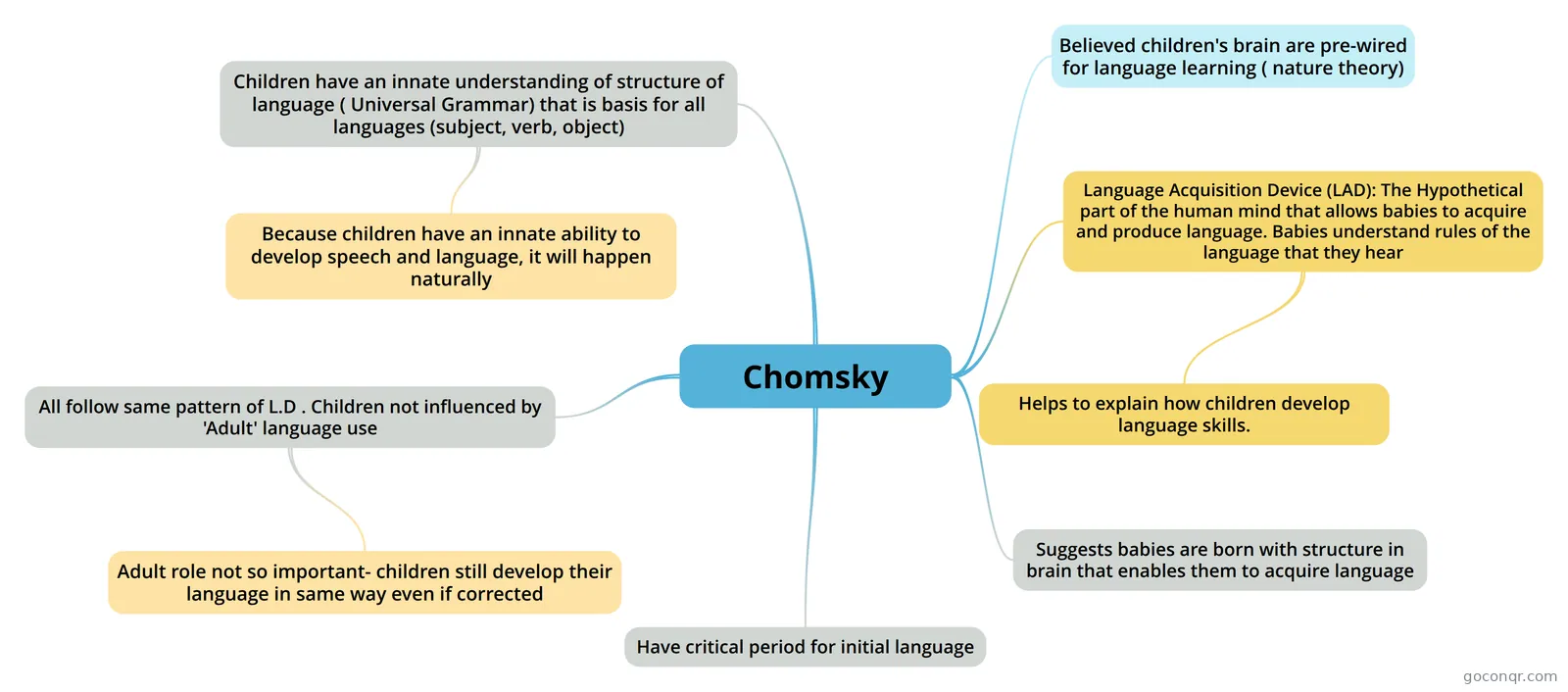
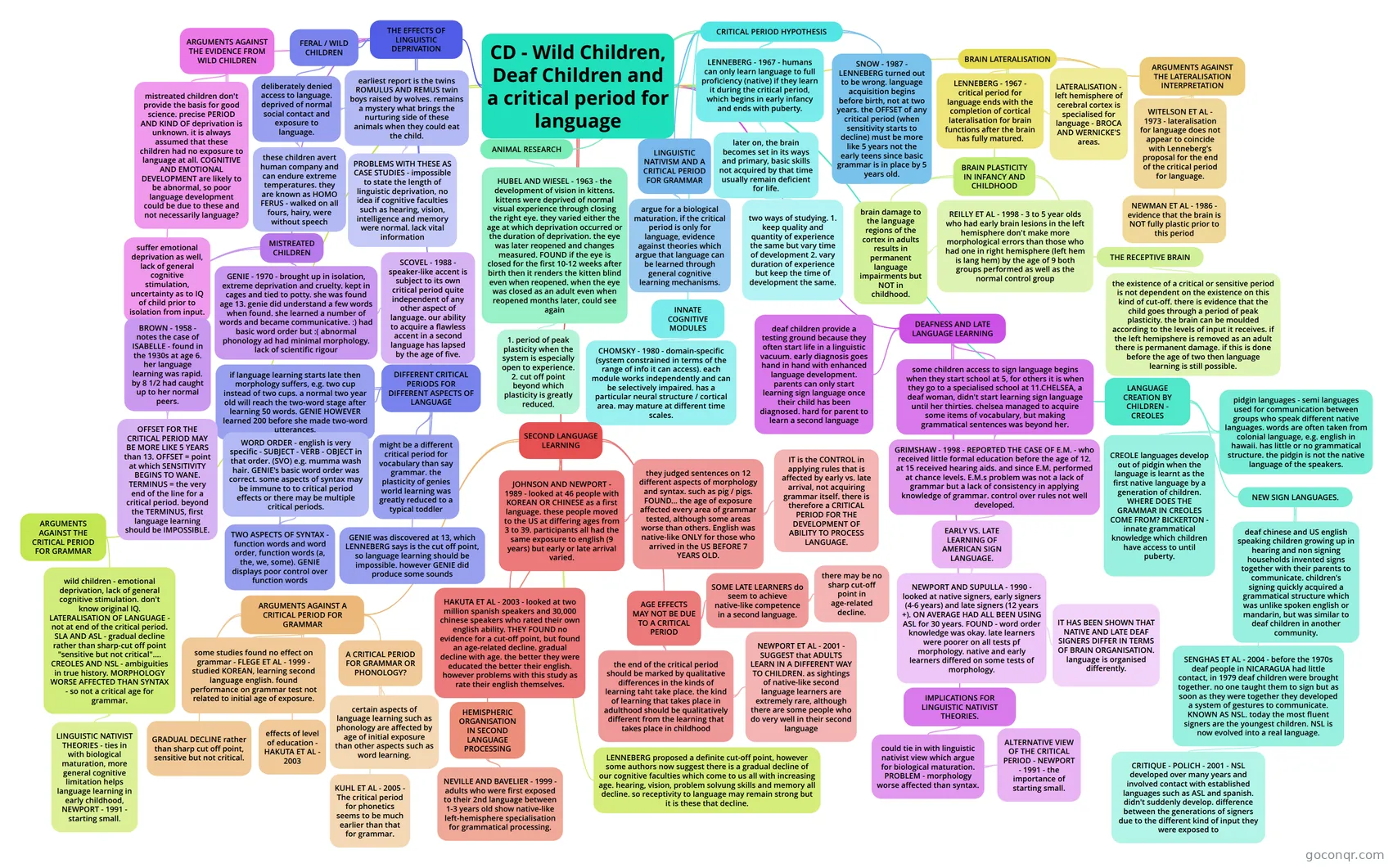
- Acquisition: the Chomsky Mind Map covers the idea that children's brains are pre-wired for language, including the Language Acquisition Device. Other maps look at lexical development, wild children and a critical period, and how children learn words.
- Processing: maps on Sentence Processing, Understanding Words and Understanding Speech, plus the Producing words map on conceptualisation and formulation.
- Communication: several Non-Verbal Communication maps and flashcard decks cover paralinguistics, tone of voice, emphasis and facial expression.
- Bilingualism and the brain: Bilingual Memory, Bilingual Cognition versus Monolingual Cognition and THE BRAIN.
Where to start
Begin with a broad map such as Language Development or Chapter 11: Language to get the overall picture. Then pick the strand you need: acquisition, processing or non-verbal communication. The Chomsky map is a good early step, as many later maps assume the nature versus nurture debate.
Using maps and quizzes together
Read a map first, then test yourself. The Neurolinguistics and Psycholinguistics quiz asks about errors in word retrieval and priming, which pairs well with the speech production maps. The Week 10 - Language Production quiz checks levels of speech production, morphemes and clauses. Wrong answers show you which map branch to reread.
Flashcard decks such as Theories of Language and Language Development suit quick recall of names and terms. Notes like Early work on Parsing and The Psychology of Reading - Rayner add detail for reading and sentence processing.
Levels and exams
Most resources are written for university study, with some for school students. Some mention GCSE Psychology, A-level Psychology and AP Psychology, so check the title and content against your own course.
Next step
Choose one map today, then try a matching quiz and see which ideas stick. Everything here is free to open.
Frequently asked questions
Which resource should I open first?
Start with a broad mind map such as Language Development or Chapter 11: Language for an overview. If you want a specific debate, the Chomsky map explains the Language Acquisition Device and the nature view. Then move on to a quiz to test what you took in.
What do the non-verbal communication resources cover?
There are several mind maps, flashcard decks and notes on non-verbal communication. They cover verbal versus non-verbal messages, paralinguistics such as tone of voice, emphasis and intonation, and facial expressions. There are also case study flashcards and notes on non-verbal communication studies.
Are there quizzes on language production and the brain?
Yes. The Week 10 - Language Production quiz covers levels of speech production, morphemes and clauses. The Neurolinguistics and Psycholinguistics quiz tests errors in word retrieval and priming. There is also a quiz called Brain and language. Together they pair well with the Producing words and THE BRAIN maps.
Are these resources free, and who made them?
Every resource on this page is free to open, study and take, with no account needed. They were made by GoConqr users, not by GoConqr itself. A free account also saves your quiz scores and lets you make your own quizzes, maps, flashcards and notes.
Which levels and exams do they suit?
Most of the resources are at university level, with some for school students. Some of them mention GCSE Psychology, A-level Psychology and AP Psychology. Because the community wrote them, check each title against your own syllabus before relying on it.
What if I can't find the topic I need?
Look through the related areas on the page first. Bilingualism, reading, word recognition, sign language and language disorders each have their own resources. If your topic still isn't there, you can make your own map or flashcards and use the listed ones as a model.