
Mapa mental
Genes
Conteúdo do mapa
Genes
Viruses
- Replicate - only in host cell Evolve - mutation/natural selection Only one kind of Nucleic Acid - Limited amount
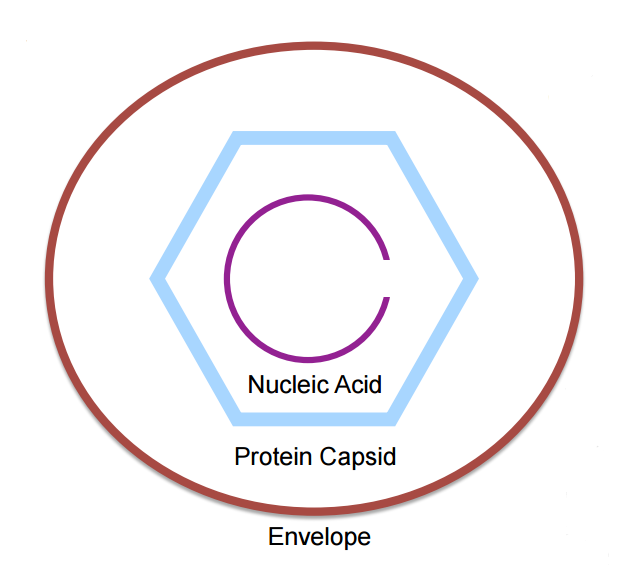
- Structure
- Capsid
- - Protein shell that encloses the viral genome Protects from: - Physcial damage - Chemical damage - Enzymatic damage
- Envelope
- - Membrane derived from host cell - Only sometimes present (not all cases)
- Capsid
- Lifecycle
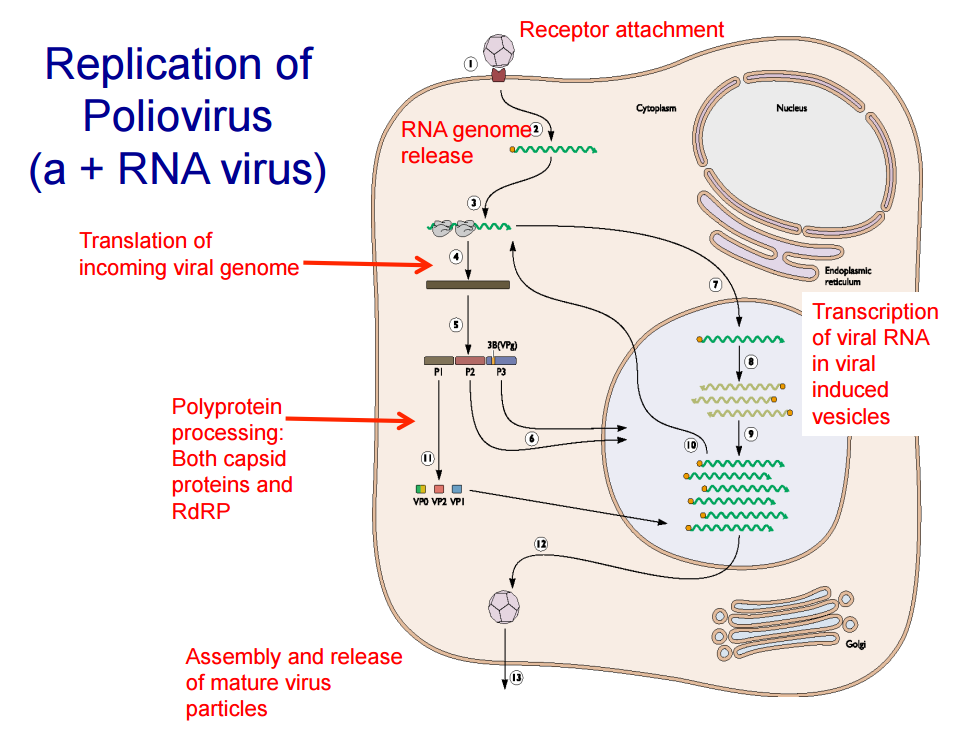
- 1. Attachment (to host) 2. Penetration 3. Uncoating (of capsid) 4. Transcription/Translation 5. Genome replication 6. Assembly 7. Release (from host)
- Replication
- ssDNA
- dsRNA
- dsDNA
- ssRNA
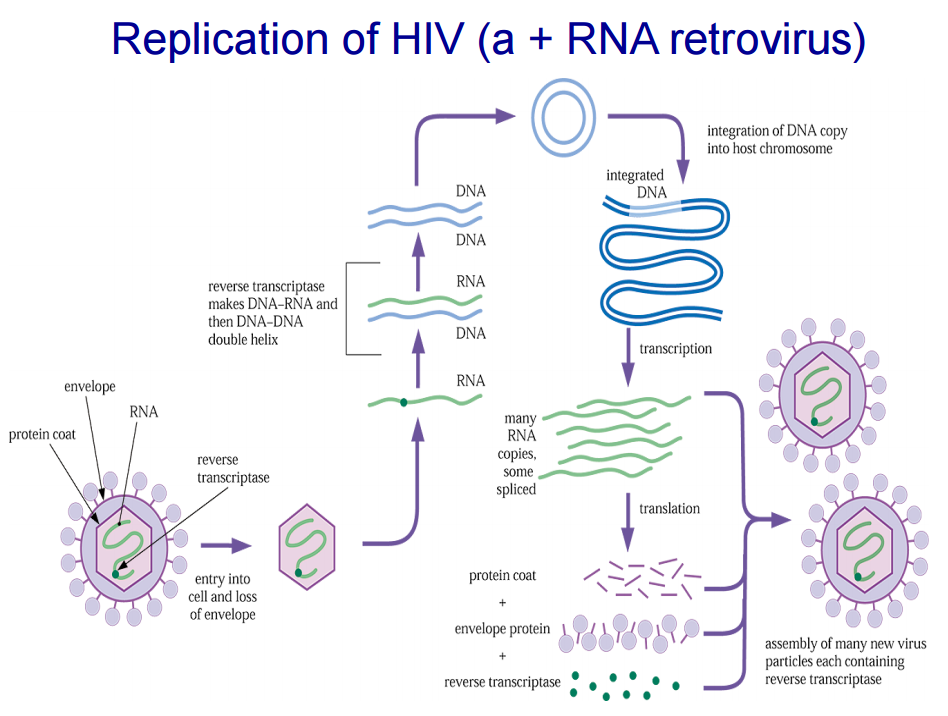
- Retrovirus
- +RNA HIV
- Virus
- Provides: > +RNA > Reverse Transcriptase (uses +RNA to made DNA) > Integrase (enzyme that enables genetic material to be integrated into host DNA) Makes ds DNA with host nucleotides & intergrates into host DNA
- Host
- Does transcription & translation
- Virus
- +RNA HIV
- Positive Sense (+)
- RNA strand resembles mRNA
- Virus
- 'Injects' +RNA & RNA dependent RNA Pol (RdRP) RdRP copies +RNA to produce -RNA
- Host
- Uses -RNA for more +RNA Translates RNA into proteins (for capsids)
- Virus
- Negative Sense (-)
- RNA strand resembles template RNA
- Virus
- 'Injects' -RNA RNA Pol (RdRP)
- Host
- Makes +RNA from -RNA Replicates RNA > -RNA for progeny virus > +RNA for translation Translates RNA into proteins
- Retrovirus
- Lysogenic Cycle
- Phage remain dormant in a genome for an indefinite time before rejoining lytic cycle.
- Lytic Cycle
- Phages replicate. New viral particles are produced and released soon after infection, killing the host bacterium by lysis.
Eukaryotes
- Cancer
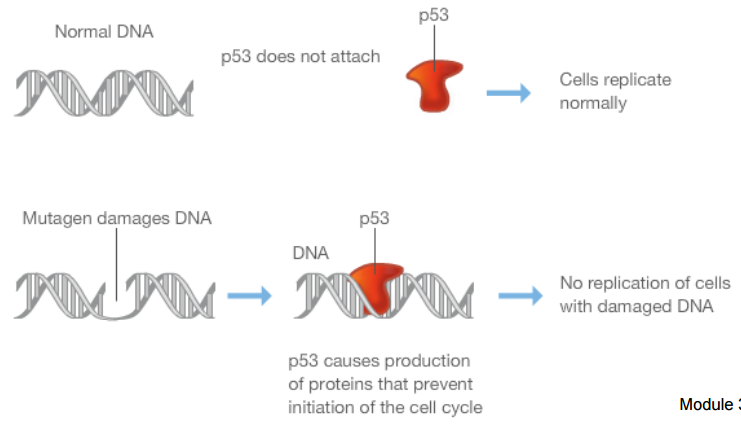
- Loss of cell cycle control = cancer Cancer cells do not respond naturally to the body's control mechanisms.
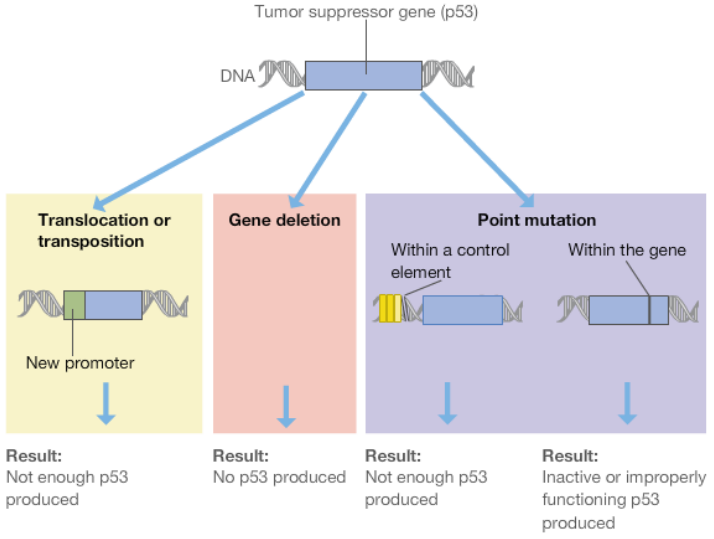
- Tumor Suppressor Genes
- Inhibit cell divisionStop working can lead to cancer
- p53
- >50% human cancer patients have mutated p53 genep53 prevents cells with damaged DNA from replicating
- Oncogenes
- Genes that actively promote cell division.If not turned off at right times, can lead to cancer.
- DNA
- Both strands of DNA can be either coding or template strands, depending on where the gene is. Interphase = dispersed in nucleus metaphase = super compacted
- Chromatin
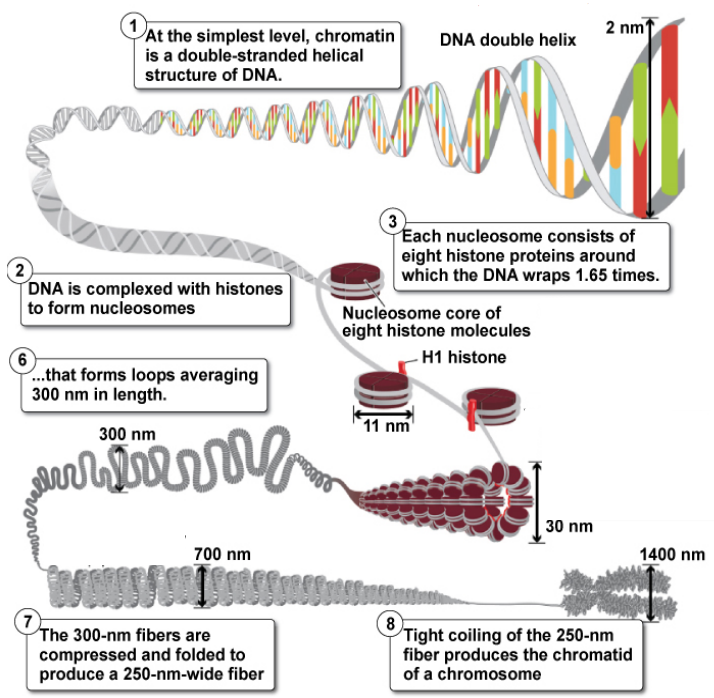
- Compacted DNA wrapped around histones. Prokayotes don't have histones or chromatin
- Histones
- Small positively charged proteins that associate with negatively changed DNA backbones. DNA wraps around histones
- Chromosomes
- Unreplicated chromosome contains one continuous DNA molecule wrapped around histones. Replicated chromosome consists of two sister chromatids connected by a centromere.
- Locus
- A gene's address on a chromosome.
- Euchromatin
- - Relaxed - Transcribed
- Heterochromatin
- - Compact - Transcriptionly silent
- Euchromatin
- Regulation
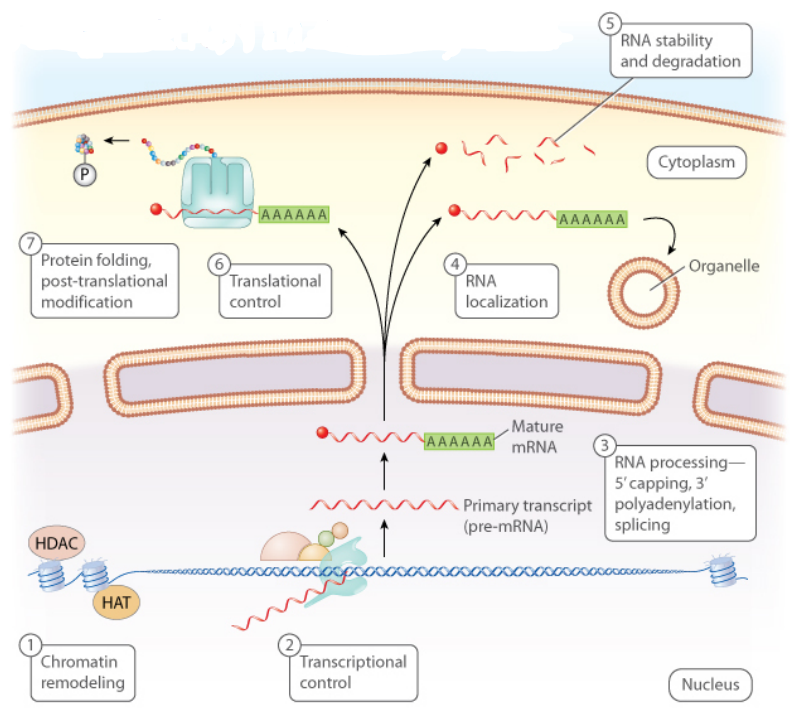
- Regulation of gene expression can occur at: - Chromatin remodeling - Transcription - RNA processing - mRNA stability - Translation - Post-translation
- Chromatin Remodeling
- Histones
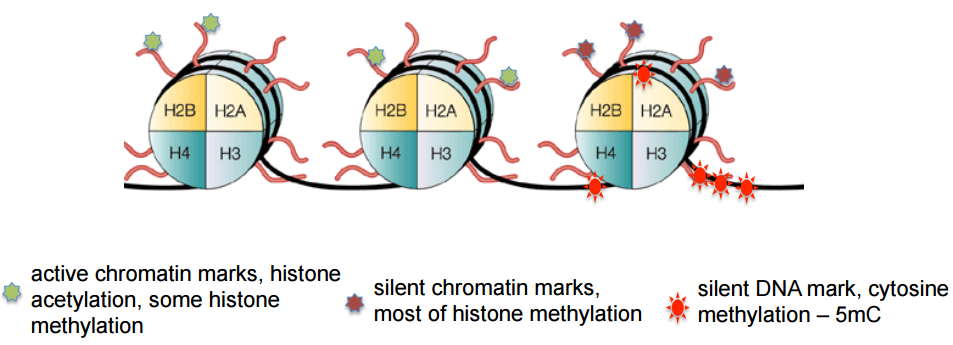
- Histone structure can be modified. - Histone acetylation associated with active chromatin - Histone/DNA methylation = inactive genes
- Acetylation
- - Allows histone to relax hold on DNA - Makes DNA available for transcription
- Methylation
- - Compacts histones & DNA - No transcription
- Acetylation
- Histones
- Transcriptional Control
- TF => Protein => Binds to DNA
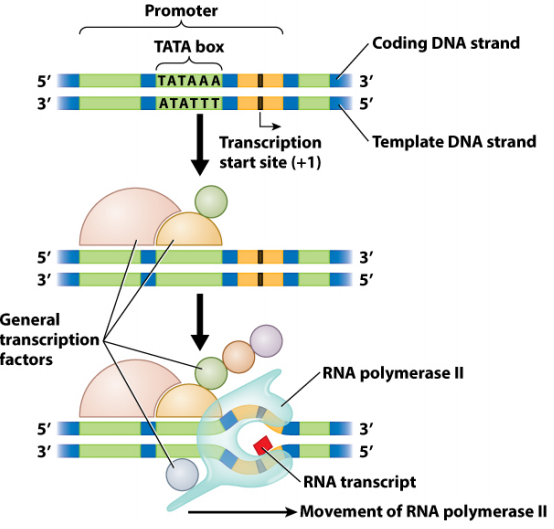
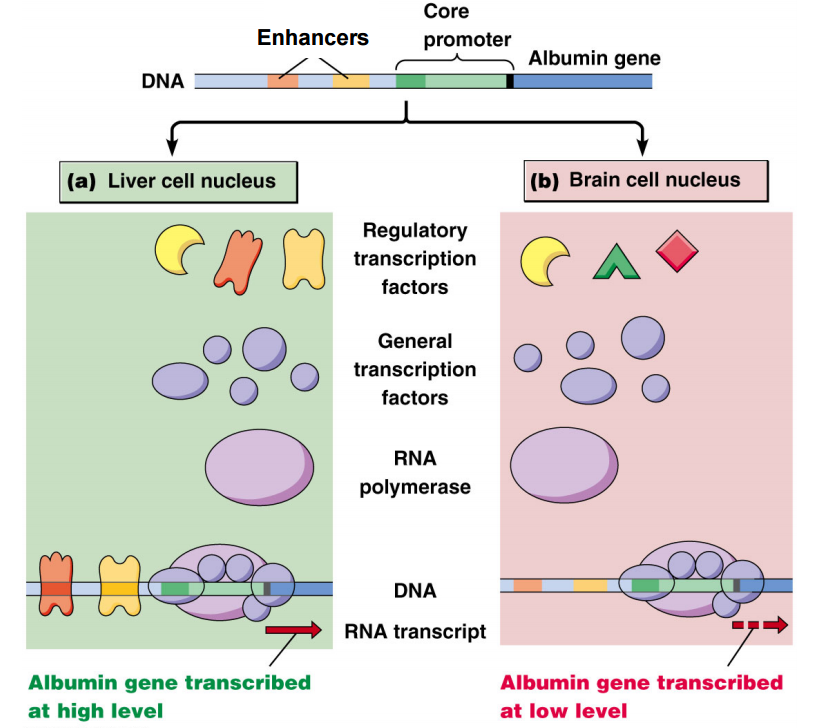
- Basal/Core Promoter
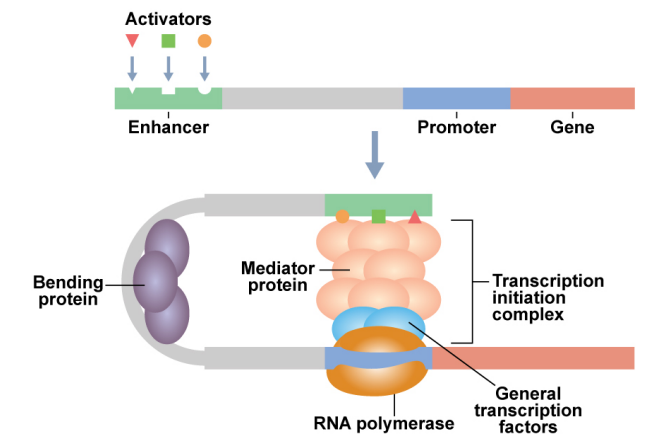
- - Essential for transcription - Required for binding of General TF - Specify/Recognise transcription start site & recruit other proteins required for initial of transcription (e.g. RNA Pol) - Must directly preceide gene
- General TF
- - 'General transcription factor' - Binds to Promoter - Recruit RNA Pol & other proteins for transcription
- Enhancer
- - Gene specific regions recognised & bound by Specific TF. - Provide high levels of cell type-specific gene expression. - Position does not matter. - Not always just 1 per gene (Can be shared/multiple)
- Specific TF
- - Gene-specific transcription factors - Bind to enhancers- Control enhancer strength (Activators or Repressors)
- Hox Genes/TF
- - Conserved family of transcription factors called Homeobox genes. - Encode proteins with a Homeodomain (helix-turn-helix protein domain -specifically structured part of a protein-) - Expressed early in embryo development in animals. Specify head-to-tail development (necessary for proper expression of thousands of genes required to build body parts).
- Homeotic Mutations
- Mutation in which one body part is replaced by another
- MADS Box Genes
- - Encode transcription factors required for proper flower development.
- Post-Transcriptional Control
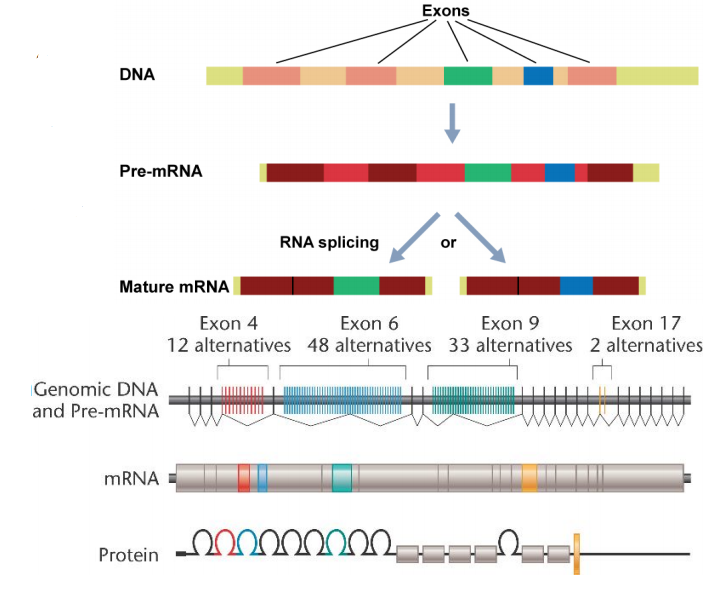
- Gene Splicing
- - Different exons from the same gene can be spliced together to give rise to different mRNAs and proteins. - Increases diversity of proteins
- Exons
- - Exon=Exciting=Keep
- Introns
- - Intron=Intern=Doesn't get paid=Doesn't get translated
- Exons
- mRNA Degradation
- mRNA stability associated with poly(A) tail length. Shortened tail may trigger enzymes to remove 5' cap. Without cap, nucleus enzymes degrade RNA.
- Gene Splicing
- Translational Control
- Translational Repression
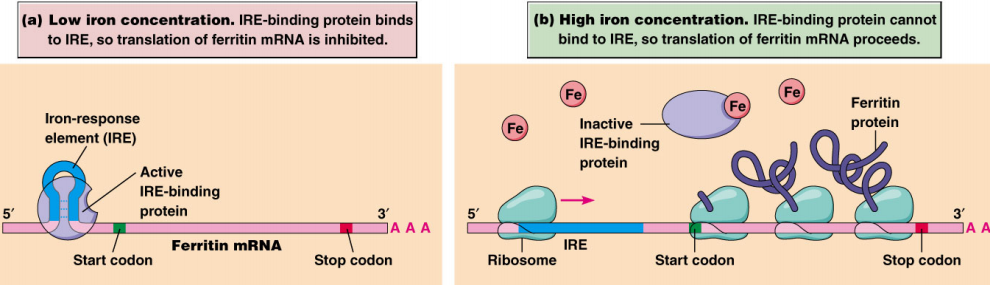
- Example: Ferritin
- - Stores excess iron and releases it when blood iron levels drop. - Production controlled by iron (Fe) levels by translational repression.
- IRE
- - Iron-Response element. - Stops translation when bound by active binding protein.
- IRE Binding Protein
- - Active => Binds to IRE => No translation - Inactive => bound to Fe => translation
- IRE
- Example: Ferritin
- Translational Repression
- Post-Translational Gene Silencing
- miRNA
- - MicroRNA (Non=coding RNA) - Transcribed from genes in DNA. Processed into smaller looped RNA fragments. - Influence stability of mRNA or blocks translation - execute post-transcriptional gene silencing
- Dicer
- In cytoplasm, Dicer enzyme removes hairpin loop of miRNA and transfers it to AGO protein complex forming RISC.
- AGO
- - Argonaute protein complex - Degrades one strand of ds miRNA.
- RISC
- - RNA-induced silencing complex - Guided by sequence of complimentarity of its miRNA to targets (mRNA transcripts) which are either cleaved or translation inhibited.
- miRNA
- Chromatin Remodeling
- Cell Differentiation
- Embryonic cell are provided with signals that indicate their location in the body.
- Signals
- Gene Expression
- Cytoplasmic Determinants
- Include proteins, RNA, organelles in cytoplasm of embryonic cell. Govern cell's gene expression & differentiation.
- Extrinsic
- Come from outside the cell. Membrane receptors detect substance & signal cascade begins that promotes or blocks gene transcription.
- Induction
- Differentiation trigger by extrinsic signals. Other cells with embryo produce inductive signals. Increase and/or decrease gene expression.
- Structure
- Promoter
- Coding Region
- Enhancer
- Chromatin
- Cancer
Prokaryotes
- Very genetically diverse.
- Transcription
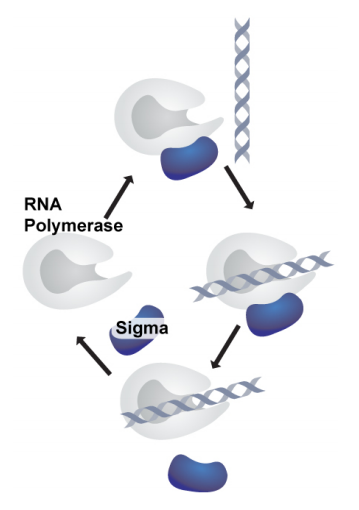
- Sigma
- RNA Polymerase
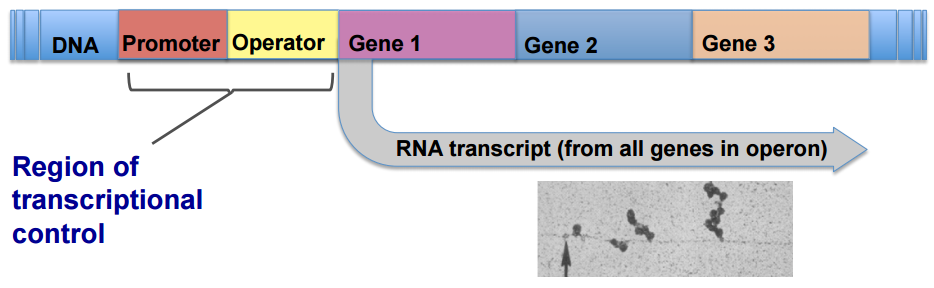
- Operon
- Operator
- Specific DNA sequence binds corresponding regulatory protein. Can 'turn on/off' genes by interfering with RNA Pol activity.
- Promoter
- Specific DNA sequence recognized by RNA polymerase. RNA polymerase binds to the promoter and transcription is initiated.
- DNA
- Operator
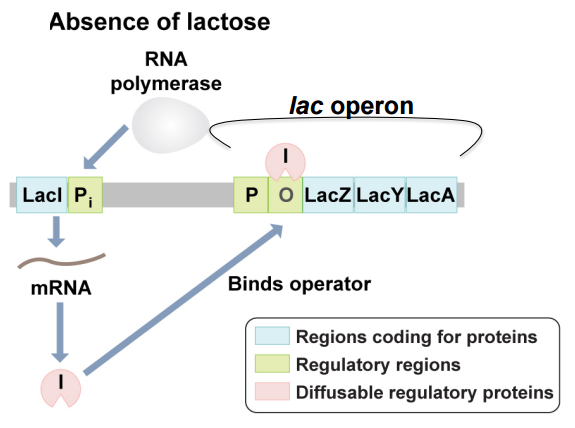
- The Lac Operon
- Catabolite Repression
- Repression of the synthesis of catabolic enzymes in order to use a preferred energy source first
- Negative Control
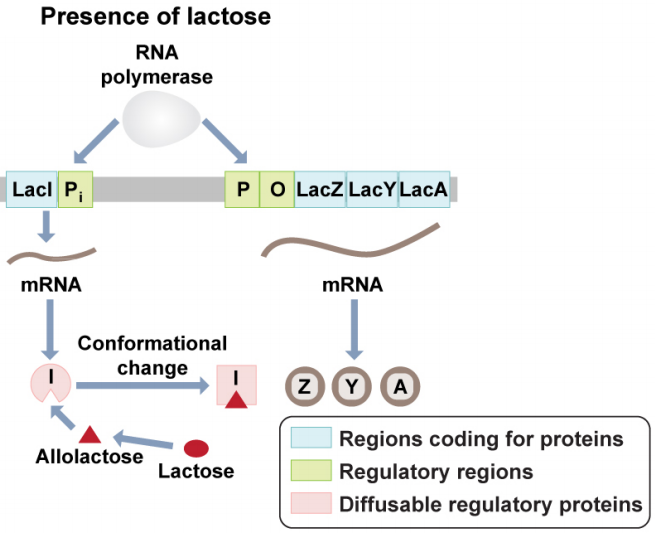
- Lactose+Repressor Binding
- Lactose must be present to prevent binding of the repressor to the operator
- Lactose Absences
- Regulatory Protein
- Turns off Operator
- Regulatory Protein
- Lactose Presence
- Regulatory Protein
- Bound to lactose isomer
- Operator stays on
- Bound to lactose isomer
- Regulatory Protein
- Lactose+Repressor Binding
- Positive Control
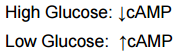
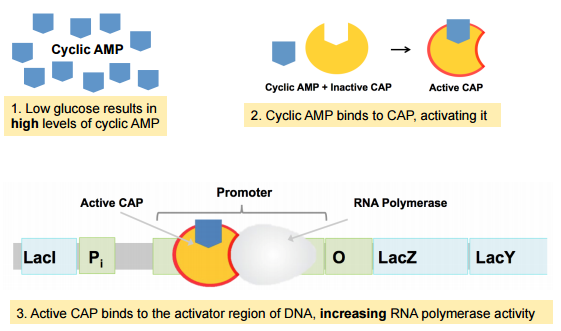
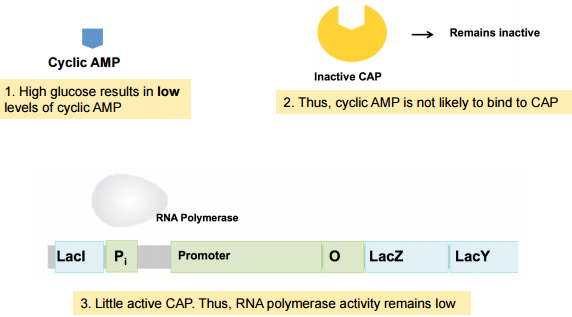
- Cyclin AMP
- The level of cyclin AMP must be high enough so that the catabolite activator proteins (CAP) binds to the CAP binding site upstream of the promoter
- CAP
- - 'Catabolite activator protein' - Regulatory protein- Binds to CAP binding site upstream of promoter with high enough levels.
- Activation
- Repression
- Cyclin AMP
- Catabolite Repression
- The Trp Operon
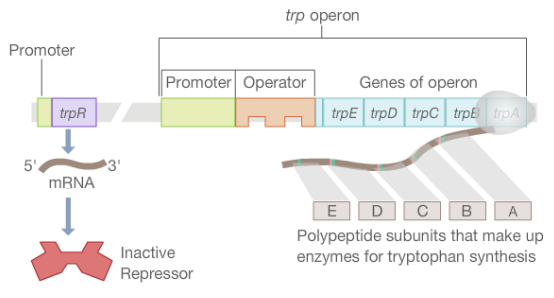
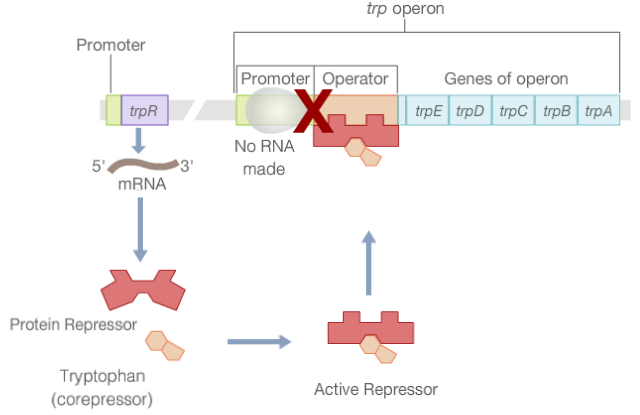
- - 'The Tryptophan Operon' - On by default - Tryptophan binds to repressor protein = Off - Repressor active only in presences of corerepressor (Tryptophan)
- Trp Absence
- Trp Presence
DNA Technology
- Cloning Vectors
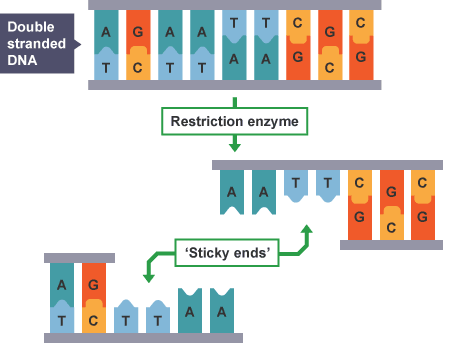
- Molecules used to capture, amplify and express foreign DNA. Uses Restriction Enzymes
- Restriction Enzymes
- 'Cuts' DNA backbone in specific spots on specific DNA recognision sequence depending on the enzyme - Found in bacteria = defense mechanism against viral infection
- 'Sticky' Ends
- DNA ligase
- Is used to repair backbone and properly connect sticky ends
- DNA ligase
- Blunt Ends
- No overhang
- Bacteria
- Restriction enzymes = defense mechanism against viral infection. Protects own DNA with methylase
- Plasmids
- Prefer plasmids: - Small - Independent replication - strong promoter - numerous restriction enzyme recognition sites
- PCR
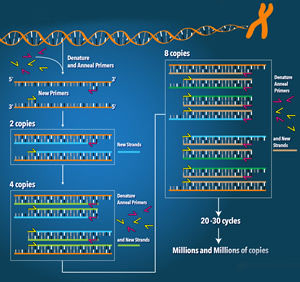
- - Polymerase Chain Reaction - (The thing we did in our bitter gene prac)
- Cloning Vectors
Imagens e arquivos do mapa

Informações
- Descrição
- Summary of the Genes section of BIOL1020
- Criado por
- A Cuffe · set 2016
- Atualizado
- 16 nov 2016
- Visualizações
- 41
- Tags
- Avaliação