
630742
Descrição

Mapa Mental por Zulhilmi Zainal, atualizado more than 1 year ago

|
Criado por Zulhilmi Zainal
mais de 12 anos atrás
|
|
Regulation of Water Balance
( Osmolarity )
- normal
- osmolarity (285-300 mOsm/L) of
ECF
- blood pressure of 120/80
mmHg
- Na+ content is NOT EQUAL to osmolarity. E.g. intravenous drip (isotonic saline) ↑ Na+ content, but no
change in osmolarity, so ECF volume ↑, but no change in ICF volume
- osmolarity (285-300 mOsm/L) of
ECF
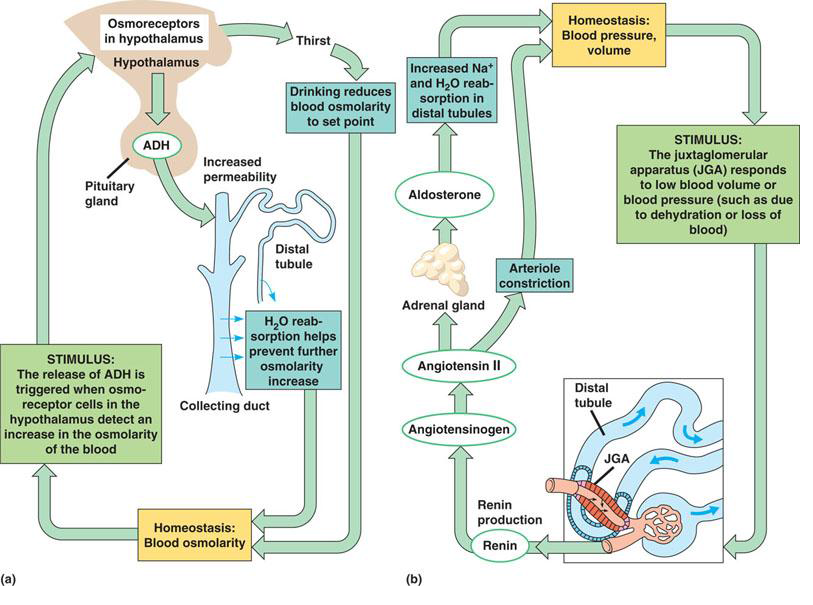
- Regulation of (a) blood osmolarity and (b) blood
pressure
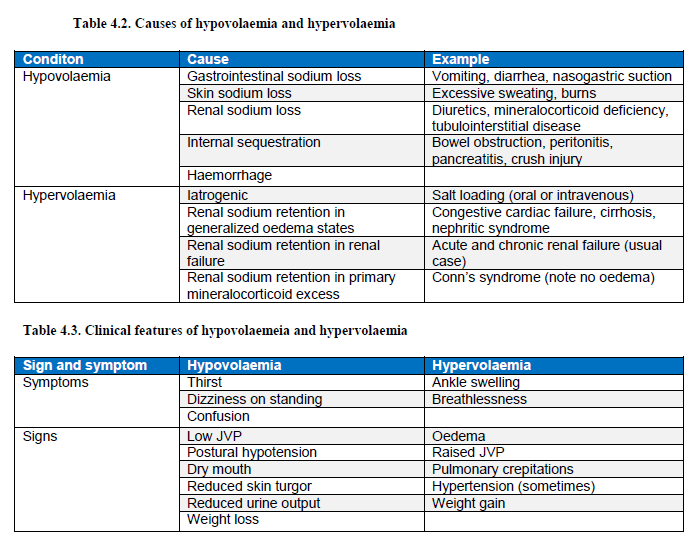
- hypovolaemia and hypervolaemia
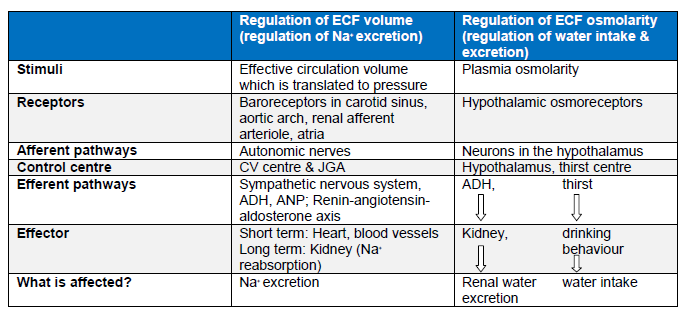
- Regulatory components of ECF volume and
osmolarity
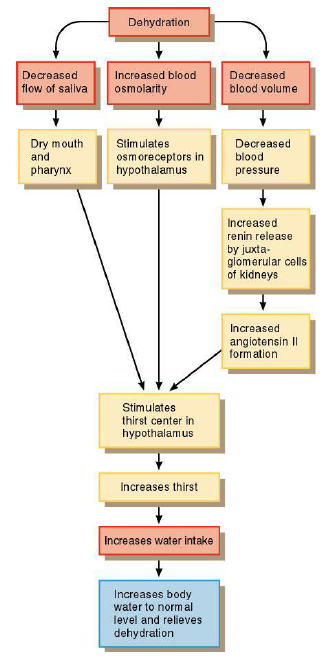
- Regulation of water intake
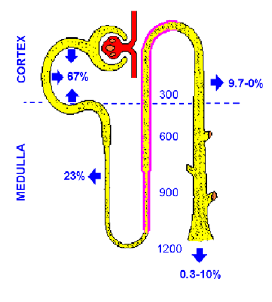
- Locations of water reabsorption
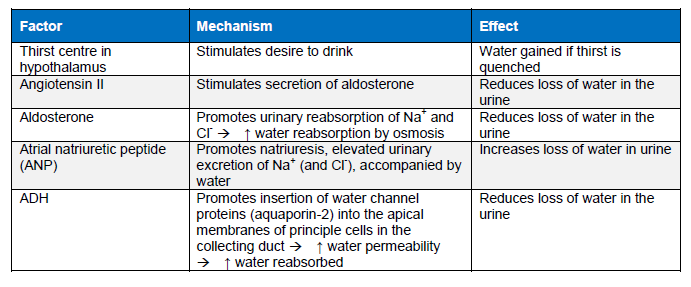
- Factors that maintain body water balance
- production of concentrated urine
- hyperosmotic urine
- there is LESS water in urine
- hyperosmotic urine
- systems that generate the medullary osmotic gradient
- The countercurrent multiplier system
- The urea recycling
- The countercurrent exchanger system
- The countercurrent multiplier system
- Free-water clearance (CH2O)
- ability to concentrate or dilute urine
- CH2O = V – Cosm
- CH2O = free-water clearance (mL/min)
- V = urine flow rate (mL/min)
- Cosm = osmolar clearance (UosmV/Posm) mL/min
- CH2O = free-water clearance (mL/min)
- When CH2O is zero
- Urine is isoosmotic to plasma
- loop diuretic
- Urine is isoosmotic to plasma
- When CH2O is positive
- hypoosomotic to plasma (low ADH).
- high water intake
- central diabetes insipidus
- nephrogenic diabetes insipidus
- hypoosomotic to plasma (low ADH).
- When CH2O is negative:
- Urine that is hyperosmotic to plasma (high ADH).
- water deprivation
- SIADH.
- Urine that is hyperosmotic to plasma (high ADH).
- ability to concentrate or dilute urine
Anexos de mídia
Quer criar seus próprios Mapas Mentais gratuitos com a GoConqr? Saiba mais.