
Mapa mental
Cryptographic Systems
Conteúdo do mapa
Cryptographic Systems
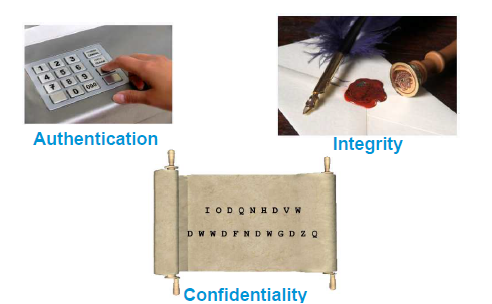
Secure Communications Requires
History of Cryptography
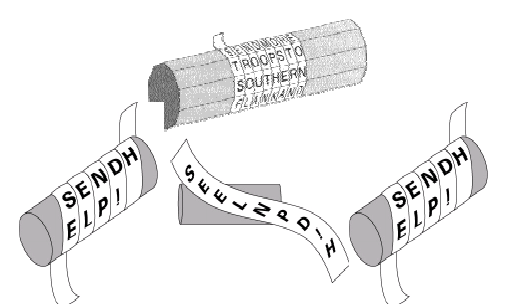
- Scytale
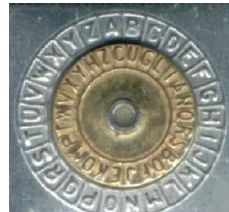
- Caesar Cipher
- Vigenere Cipher
Cipher Text
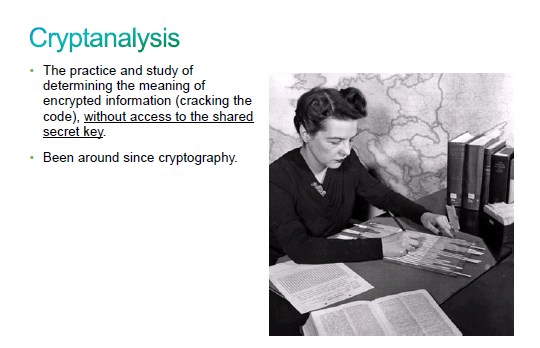
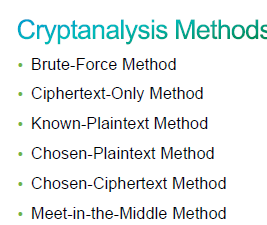
Crypytanalysis
Cryptology
- Is the science of making and breaking secret codes
- Cryiptology in Network
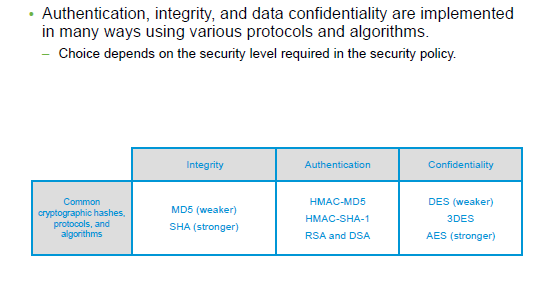
Cryptographic Hashes
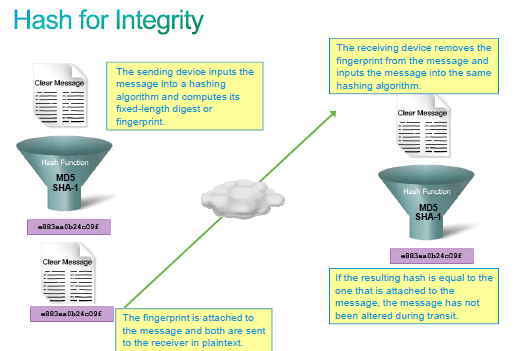
- A hash function takes binary data (message), and produces a condensed representation, called a hash. – The hash is also commonly called a Hash value, Message digest, or Digital fingerprint.
- Hashes are used...To provide proof of authenticity when it is used with a symmetric secret authentication key, such as IP Security (IPsec) or routing protocol authentication
Hashing for integrity
Key Management
- Key Generation: – Caesar to choose the key of his cipher and the Sender/Receiver chose a shared secret key for the Vigenère cipher. – Modern cryptographic system key generation is usually automated.
- Key Verification: – Almost all cryptographic algorithms have some weak keys that should not be used (e.g., Caesar cipher ROT 0 or ROT 25). – With the help of key verification procedures, these keys can be regenerated if they occur.
- Key Storage: – Modern cryptographic system store keys in memory.
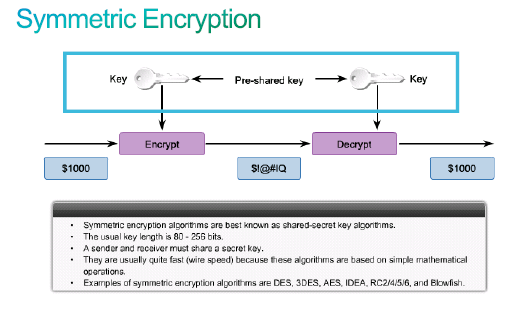
Encryption = Confidentiality
Public Key Cryptography
- Public-key algorithms are asymmetric algorithms based on the use of two different keys instead of one. – Private key: This key must be know only by its owner. – Public key: This key is known to everyone (it is public).
- The key that is used for encryption is different from the key that is used for decryption. – However, the decryption key cannot, in any reasonable amount of time, be calculated from the encryption key and vice versa
- Public-key systems have a clear advantage over symmetric algorithms: – There is no need to agree on a common key for both the sender and the receiver.
Digital Signatures
- Digital signatures are often used in the following situations: – To provide a unique proof of data source, which can only be generated by a single party, such as contract signing in e-commerce environments. – To authenticate a user by using the private key of that user and the signature it generates. – To prove the authenticity and integrity of PKI certificates. – To provide nonrepudiation using a secure timestamp and a trusted time source. • Each party has a unique, secret signature key, which is not shared with any other party, making nonrepudiation possible
Imagens e arquivos do mapa
Informações
- Descrição
- seguridad de redes Mapa Mental sobre Cryptographic Systems, criado por Liliana Torres em 28-10-2016.
- Criado por
- Liliana Torres
- Visualizações
- 1
- Avaliação