
Mapa mental
River Processes and Pressures
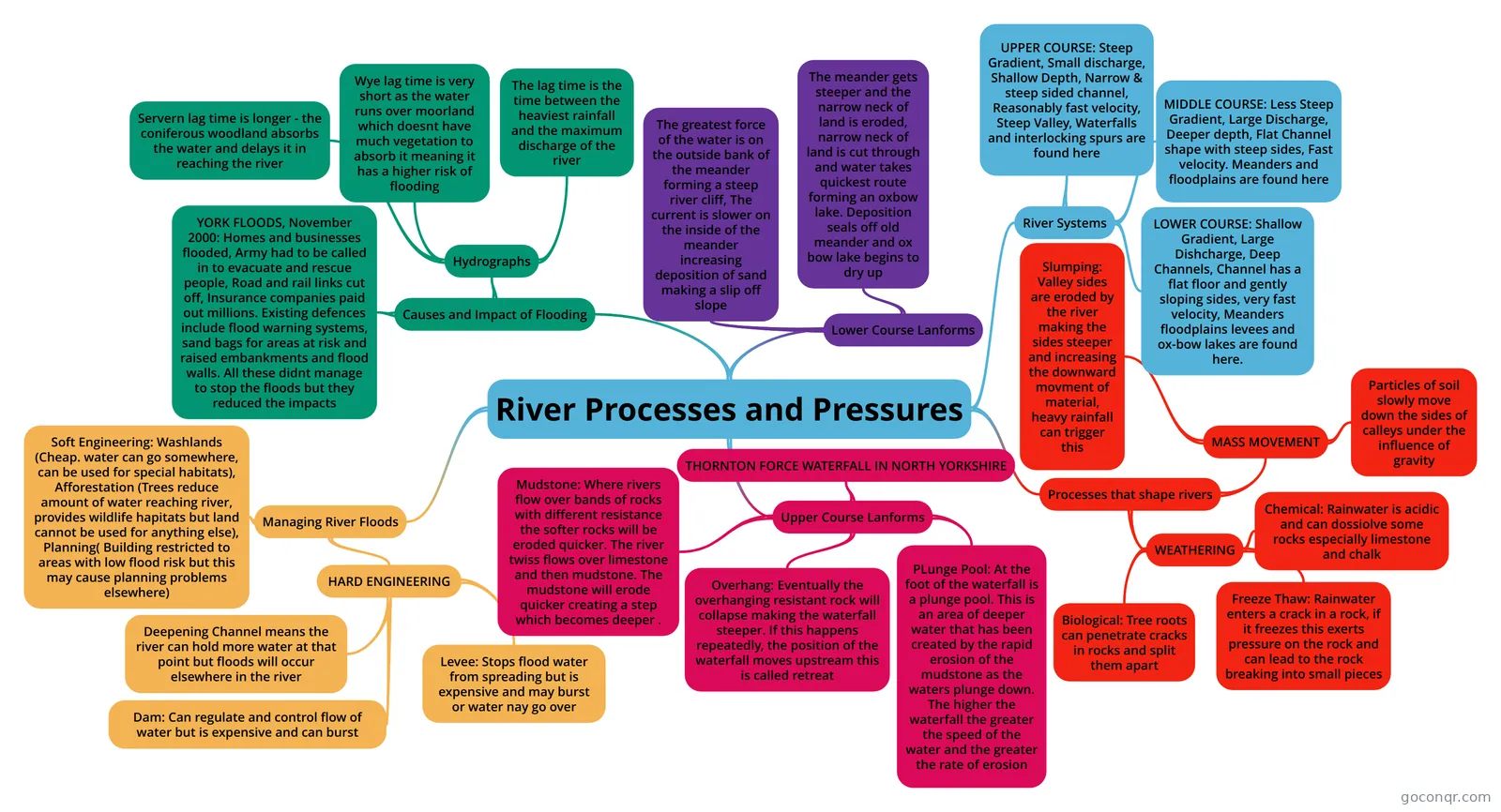
Mind map: River processes and pressures
Conteúdo do mapa
River Processes and Pressures
River Systems
- UPPER COURSE: Steep Gradient, Small discharge, Shallow Depth, Narrow & steep sided channel, Reasonably fast velocity, Steep Valley, Waterfalls and interlocking spurs are found here
- MIDDLE COURSE: Less Steep Gradient, Large Discharge, Deeper depth, Flat Channel shape with steep sides, Fast velocity. Meanders and floodplains are found here
- LOWER COURSE: Shallow Gradient, Large Dishcharge, Deep Channels, Channel has a flat floor and gently sloping sides, very fast velocity, Meanders floodplains levees and ox-bow lakes are found here.
Processes that shape rivers
- WEATHERING
- Freeze Thaw: Rainwater enters a crack in a rock, if it freezes this exerts pressure on the rock and can lead to the rock breaking into small pieces
- Biological: Tree roots can penetrate cracks in rocks and split them apart
- Chemical: Rainwater is acidic and can dossiolve some rocks especially limestone and chalk
- MASS MOVEMENT
- Particles of soil slowly move down the sides of calleys under the influence of gravity
- Slumping: Valley sides are eroded by the river making the sides steeper and increasing the downward movment of material, heavy rainfall can trigger this
- WEATHERING
Upper Course Lanforms
- THORNTON FORCE WATERFALL IN NORTH YORKSHIRE
- Mudstone: Where rivers flow over bands of rocks with different resistance the softer rocks will be eroded quicker. The river twiss flows over limestone and then mudstone. The mudstone will erode quicker creating a step which becomes deeper .
- Overhang: Eventually the overhanging resistant rock will collapse making the waterfall steeper. If this happens repeatedly, the position of the waterfall moves upstream this is called retreat
- PLunge Pool: At the foot of the waterfall is a plunge pool. This is an area of deeper water that has been created by the rapid erosion of the mudstone as the waters plunge down. The higher the waterfall the greater the speed of the water and the greater the rate of erosion
Lower Course Lanforms
- The greatest force of the water is on the outside bank of the meander forming a steep river cliff, The current is slower on the inside of the meander increasing deposition of sand making a slip off slope
- The meander gets steeper and the narrow neck of land is eroded, narrow neck of land is cut through and water takes quickest route forming an oxbow lake. Deposition seals off old meander and ox bow lake begins to dry up
Causes and Impact of Flooding
- Hydrographs
- The lag time is the time between the heaviest rainfall and the maximum discharge of the river
- Wye lag time is very short as the water runs over moorland which doesnt have much vegetation to absorb it meaning it has a higher risk of flooding
- Servern lag time is longer - the coniferous woodland absorbs the water and delays it in reaching the river
- YORK FLOODS, November 2000: Homes and businesses flooded, Army had to be called in to evacuate and rescue people, Road and rail links cut off, Insurance companies paid out millions. Existing defences include flood warning systems, sand bags for areas at risk and raised embankments and flood walls. All these didnt manage to stop the floods but they reduced the impacts
- Hydrographs
Managing River Floods
- HARD ENGINEERING
- Levee: Stops flood water from spreading but is expensive and may burst or water nay go over
- Deepening Channel means the river can hold more water at that point but floods will occur elsewhere in the river
- Dam: Can regulate and control flow of water but is expensive and can burst
- Soft Engineering: Washlands (Cheap. water can go somewhere, can be used for special habitats), Afforestation (Trees reduce amount of water reaching river, provides wildlife hapitats but land cannot be used for anything else), Planning( Building restricted to areas with low flood risk but this may cause planning problems elsewhere)
- HARD ENGINEERING
Informações
- Descrição
- GCSE Geography (Dynamic Planet) Mapa Mental sobre River Processes and Pressures, criado por Mayibongwe Chivizhe em 09-04-2017.
- Criado por
- Mayibongwe Chivizhe
- Visualizações
- 3
- Avaliação