
Mapa mental
The internet problems
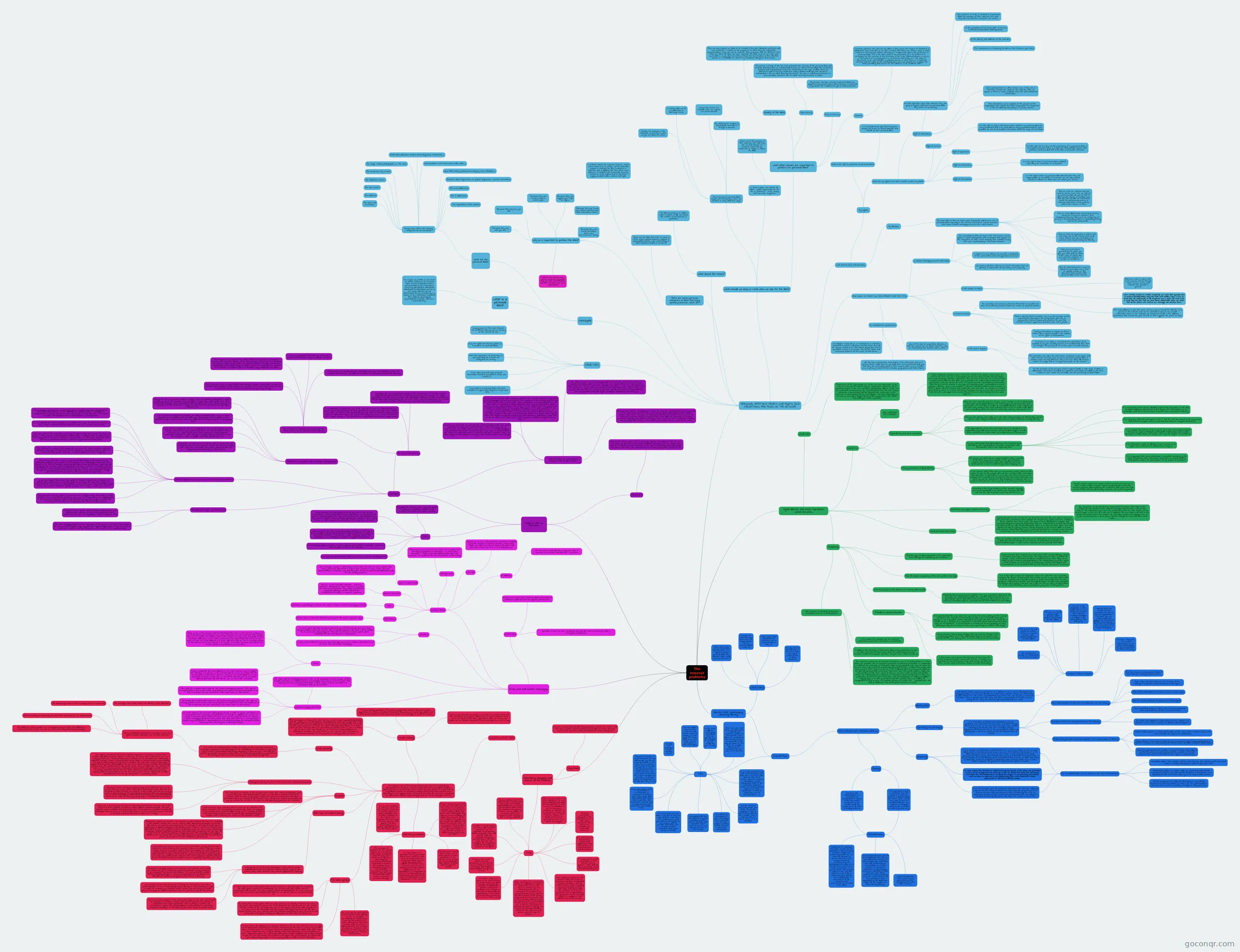
Mind map: The internet problems
Conteúdo do mapa
The internet problems
PERSONAL DATA AND PRIVACY. OUR RIGHTS AND OBLIGATIONS. MAIN RISKS ON THE NETWORK
- OBJECTIVES
- Know what is a personal data and some examples of types and categories of personal data.
- Value the importance of protecting our personal data as a means to safeguard our privacy.
- Knowing some of the most frequent risk situations that can put our privacy on the Internet at risk.
- Know when, how and what personal information should be provided to those who request it.
- Know the rights that the law grants us to protect our personal data.
- concepts
- What is a personal data?
- The Organic Law 5/1999, of December 13, on the Protection of Personal Data (LOPD) establishes that a personal data is any information concerning identified or identifiable individuals. An identifiable person is one whose identity can be determined, directly or indirectly, by means of any information related to their physical, physiological, psychological, economic, cultural or social identity.
- What are the personal data?
- Among many others, the following categories can be mentioned:
- The name and surnames.
- The address.
- The DNI number.
- The telephone number.
- The Social Security number
- The image (videos, photographs, ...). The voice.
- Health data: diseases, medical tests, diagnoses, treatments, ...
- Financial data: current accounts, credit cards, ...
- Labor data: salary, professional category, union affiliation, ...
- Biometric data: fingerprints, iris, palmar fingerprint, ... Genetic information.
- The email addresses.
- The IP addresses.
- vThe registration of the vehicles.
- Among many others, the following categories can be mentioned:
- What is a personal data?
- Why is it important to protect the data?
- Because they say who you are.
- Because they say how you are.
- Because they can reveal a way to contact you.
- Because they can reveal information about your environment or family.
- Because they can suggest your origin or origins.
- Because they can reveal your hobbies, preferences and consumption habits.
- And, for that reason, they can be used for purposes that you have not foreseen and that can harm you or be unpleasant.
- There are some particular categories of data that enjoy special protection. Which are?
- These are the data that refer to racial or ethnic origins, political opinions, religious or philosophical beliefs, union membership or data related to health or sexual life
- In all these cases, the express consent - and in some cases even in writing - of the affected parties is required for their treatment or transfer, and, in addition, the files where such data are recorded must incorporate security measures of the highest level of the three legally provided (basic, medium and high).
- These are the data that refer to racial or ethnic origins, political opinions, religious or philosophical beliefs, union membership or data related to health or sexual life
- What about the minors?
- The data processing of children under 14 years of age will require the consent of the parents or guardians.
- What should we keep in mind when we ask for the data?
- All processing of personal data begins with its collection, which can be done in many different ways.
- Verbally: For example, in the telephone contracting or when we give our data in a store.
- In writing: When we fill out admission or discharge forms.
- Using online forms: For example, when we register in a social network.
- By capturing our images by surveillance cameras or through a webcam.
- In these cases, who collects the data - called "responsible for the file or treatment" - must comply with two basic obligations.
- Inform us of the purpose of their collection (for what they ask us) and request our consent, unless the law authorizes or obliges to deliver the data.
- What other issues are important to protect our personal data?
- Quality of the data
- They can only request our data to be treated if they are "adequate, pertinent and not excessive" in relation to the purposes for which they are requested. (proportionality). They can not be used for other purposes that are different from those for which the data has been collected. The data must be accurate and up-to-date in a way that accurately reflects the real situation of the affected person. It is forbidden to collect it by fraudulent, disloyal or illicit means.
- Data security
- The person in charge of the file must guarantee the security of the personal data and avoid its alteration, loss or unauthorized access, for which it must adapt the necessary technical and organizational measures. Depending on the type of data, there are different levels of security measures (basic, medium and high) that should be established in the so-called "security document". The loss or unauthorized access to personal data constitute the so-called "security breaches or leaks".
- Duty of secrecy.
- All persons who have access to personal data are obliged to keep secret about them. Secrecy is essential to guarantee the fundamental right to data protection.
- Consent.
- In general, whenever they ask for our data, or they will be the subject of treatment or assignment, they must ask us for their consent. But there are certain cases in which consent is not required, without affecting our fundamental right to the protection of personal data. This is the case when a Law authorizes it, or its treatment is necessary for the exercise of the functions of the Public Administrations, or occurs in the context of an employment or contractual relationship, or in the case of documents to be contributed in a judicial process, or when there is a "legitimate interest" and the rights of the interested party are not violated (for example, the data processing that occurs for the issuance of an academic title).
- Quality of the data
- All processing of personal data begins with its collection, which can be done in many different ways.
- OUR RIGHTS AND OBLIGATIONS.
- My rights:
- What is the right to protection of personal data?
- It is a fundamental right that recognizes people the power to control, dispose and decide on their personal data.
- What are my rights to be able to better protect my data?
- Right of information.
- It is the right that I have that, whenever they are going to register and treat my personal data, they inform me previously.
- The existence of a file or treatment of personal data, the purpose of their collection (for what they ask us) and their recipients (for whom).
- The consequences of obtaining the data or the refusal to give them.
- Of the possibility of exercising rights of access, rectification, cancellation and opposition.
- Of the identity and address of the controller.
- When questionnaires or other forms (even if they are in electronic format) are used for the collection, they will appear in them, in clearly readable form, the aforementioned information.
- This information will be available on the website of the organization that collects the data (responsible for treatment) in the so-called "privacy policy", or "privacy clause".
- It is the right that I have that, whenever they are going to register and treat my personal data, they inform me previously.
- Right of access.
- It is the right to obtain information about whether my personal data are being processed and, if so, what data is being processed and for what purpose, as well as all available information about the origin of such data.
- Right of rectification.
- It is the right to have my personal data modified when they are inaccurate or incomplete.
- Right of opposition.
- It is the right not to carry out the processing of my personal data, or to cease it, because there is a legitimate and justified reason that justifies it and provided that a law does not provide otherwise.
- Right of cancellation.
- It is the right to have my personal data deleted when they are inappropriate or excessive. For example, we can ask a social network to delete our data when we cancel your service.
- Right of information.
- What is the right to protection of personal data?
- My duties.
- The basic idea is that we must make responsible and secure use of personal data, especially in the Internet environment (social networks, chat rooms, instant messaging services, etc.), which means
- That we must be cautious and use common sense every time we request our personal data as well as that of other people (family or friends). Know that you can not ask for information about the professional activity or financial information of the parents, without the consent of them.
- That you must inform yourself well to whom you give your data and for what, and in case of doubt ask your parents, teachers or people of confidence.
- That the affected person must be asked for permission every time we upload a photo or any document that contains their personal data to the Internet.
- That we must adopt some elementary security measures to prevent someone from misappropriating our data, such as configuring our privacy in social media profiles or establishing strong and secure passwords.
- That we must be respectful of others and not make use of the Internet that could harm others, such as, pretending to be someone else, impersonating his identity.
- The basic idea is that we must make responsible and secure use of personal data, especially in the Internet environment (social networks, chat rooms, instant messaging services, etc.), which means
- My rights:
- MAIN RISKS TO PRIVACY ON THE INTERNET. PRACTICAL TIPS.
- In social networks.
- If access to our data is not limited, the information will be available to anyone, including seekers It is fundamental, then, that we configure the privacy of our profile well in a social network.
- Posting information or images of others without their consent results in the violation of the rights of third parties.
- Theft or identity theft is another risk if we do not take certain precautions, especially in the configuration and use of passwords. A secure password would be the one that includes numbers, uppercase and lowercase and symbols.
- The publication of excessive personal information in a profile can allow us to identify ourselves and even locate our physical location
- In the emails (e-mails).
- Electronic mail (e-mail) is the most common channel through which viruses, worms and malware are spread in general.
- The email address is also the most common way to record the "identity" of a person on the Internet and can be used as a basis to accumulate information about it. For example, we should not include in the address information that reveals the year of birth or that suggests the years we have.
- When sending emails to multiple recipients we must take special care to ensure confidentiality using the field "With Hidden Copy" (CCO), to avoid that the addresses of all recipients are in sight. We must bear in mind that the fact that we have these addresses does not mean that all the others who receive our message can access them.
- In instant messaging services and chats.
- In chats it is very difficult to know the real identity of the users that contact through these services.
- We must avoid, then, offering too much information that can identify us and locate us accurately, even physically.
- The conversations that are kept in the chat rooms (virtual places in which participants write messages that appear on the computers of other users instantly) are available to any user who is participating in that same session.
- In the search engines.
- The searchers can index the information contained in web pages and other Internet services, such as social networks, granting them a massive and universal diffusion. They can even cache the textual content of a page that is no longer accessible on the Internet.
- For the provision of its services, search engines handle a wide range of data: IP addresses, information recorded by cookies or information provided by the user. Profiles of user habits can be made with the processing of these data.
- On smartphones (geolocation).
- An intelligent mobile device or smartphone is intimately related to a specific individual. Normally these devices are always carried over, which allows geolocation service providers to have a very close view of the habits and movement patterns of the owner of that phone.
- With the help of geolocation technologies (GPS and points with Wi-Fi access) these mobile devices can allow them to be monitored and, given that they are particularly linked to their owners, offer a very intimate view of privacy related to their situation geographical and travel habits.
- One of the risks of using these devices is that the owners are not aware that they may be transmitting their location and to whom.
- In social networks.
- OBJECTIVES
Digital identity and online reputation. Social networks.
- OBJECTIVES
- Awareness of the appropriate use of the services that make up the Web 2.0 environment (search engines, collaborative platforms, social networks, images on the web: webcams, photographs, videos on the web, etc.) and their consequences. By using these services, the user shows attributes of personality that are beyond their control due to the structure of participation of new technologies. Therefore, depending on its use we will build a "digital" identity that is projected in the others, thus building a certain reputation.
- CONCEPTS
- NEW PARADIGM OF INTERNET.
- Unlike traditional websites, where users are limited to the passive observation of content, the term Web 2.0 is associated with services that promote interoperability, user-centered design and the colaboration. The services of the Web 2.0 environment are multidirectional channels that offer new possibilities for collaboration, expression and participation. Web 2.0 means the birth of a social universe populated by communities that can go from the closest to any type of horizontal group - professional or social groups -, vertical, - group work spaces -, and even "informal" without limits of space or time. It allows users to interact and collaborate with each other as creators of content generated by users in a virtual community. Examples of Web 2.0 are Web communities, Web services, Web applications, social network services, video hosting services, wikis, blogs, etc.
- Digital identity and online reputation.
- When the user uses the services of Web 2.0, he creates a set of attributions that make up his digital identity. The Technologies of Communication and Information (ICT) are able to create an "expanded identity" in the majority of its users: they enhance their skills and allow them to be in contact with other users maintaining different levels of relationship, intimacy, commitment, etc.
- Until now the identity was made up of the name and surnames, an identification number and, at most, a physical address, which can be called traditional or analog identity.
- The digital identity will be that information about an individual or an organization exposed on the Internet (personal data, images, records, news, comments, etc.) that makes up a description of that person.
- To truly understand what digital identity is, the characteristics defined by the Organization for Economic Cooperation and Development (OECD) are especially clear:
- It is essentially social. As the individual projects his personality on the Web, his digital neighbors characterize and recognize him effectively, even on occasions when there has not been a face-to-face verification of identity.
- It is subjective. Both the perception of the "I" and the "we" are based on the experience that different people construct and that allow them to recognize themselves.
- It is valuable. The activity of the subjects generates informational capital that can be used to establish personalized relationships and to make decisions in relationships with people, with a greater degree of confidence.
- It is referential. In fact, an identity is not a person or an object, but a reference to that person or object.
- It is composed. While some information is provided voluntarily by the users themselves, other information about them is constructed by third parties, without the participation of the subject in question.
- Privacy: parameter of digital identity.
- According to the Royal Academy of the Spanish Language, privacy is considered to be the "Scope of private life that one has the right to protect from any interference".
- In the specific field of the Web 2.0 environment, privacy refers to the control of who are the people who can have access to the information that they have or that refers to a certain user that connects to the Network. It is a broad term, formed for that information that taken by itself may not be relevant, but that analyzed in a specific time or context can lead us to form a profile of a pretty successful person.
- The privacy of users can be compromised in many moments of the online experience, whether in the use of search engines, social networks, online video platform services, subscriptions to services advertising, online shopping, etc.
- NEW PARADIGM OF INTERNET.
- Searchers, Web pages, cookies and privacy.
- Internet search engines are content search provision services or, in other words, a huge computer system programmed to track the network, organizing and registering its content, so that users can find results of interest when performing searches with certain keywords.
- By using them we provide diverse associated information that leads to the creation of user profiles, often without knowledge and, therefore, without their consent. This information goes from the actual query, stored in the registry of the search engine in the form of a URL, the IP address, the exact date and time of the search, the preferences, the browser, the operating system, the language, etc., up to the announcements in which shown interest through the clicks that have been made.
- Social Networks and privacy.
- Social networks on the Internet are so attractive because they are able to overcome with great ease parameters that condition the human being: space and time. Traditional social relations have these limits. The lapse of time and distance mitigate and eventually disappear personal relationships that are established in principle as eternal, but little by little go cold. Friends disappear, there is no news of them again. Time and distance erase everything. However, social networks on the Internet allow to recover and maintain relationships that were considered finished. Even through social networks relationships can be established that would otherwise be enormously complex.
- They are another example of the Web 2.0 or collaborative Web environment, in which the Internet ceases to be a source of information to become a virtual feedback space in which users consume, but also provide information.
- Problems
- That the type of data requested in the registration form, although not mandatory, are excessive.
- Social networks often request new users about their political ideology, sexual orientation and religious preference. The implications for their lives and the people in their environment should be considered, since these data will be visible by their contacts and, depending on the configuration, by all the users of the network. It will therefore be necessary to control the degree and transcendence of the published data so that they do not become excessive.
- That the degree of publicity of the user profile is too high.
- It is at the initial moment of registration as a user when the user must duly configure the degree of publicity of their profile, in such a way that determines from the beginning who may have access to all the information that the user publishes. Most social networks have the highest degree of advertising activated by default, which poses a serious risk to the security of users' personal data, to the extent that they will be accessible by any user of the platform.
- That the purpose of the data is not correctly determined.
- Frequently the privacy policies included in this type of platform determine the purposes for which personal data are collected and processed, but in a generalized manner and without fully clarifying why they may or may not treat personal data, which is a serious risk for the treatment of user data.
- Friends in social networks:
- It is essential that the user, and more specifically the minor, distinguish the concept of friend in the "real life" of the Friend concept in the "virtual life". Normally a stranger is not It provides certain information of private life and in the "virtual life" a friend can be a stranger. It is important to note that minors sometimes think that their list of friends in A social network is a reflection of its popularity, so they add people they do not know or know very superficially to enhance that image.
- Social networks have privacy settings that can prevent strangers from accessing profiles, but if they add people they do not know to their friends list they are allowing them to access their personal information.
- In this sense, some social networks allow to know how the profile is shown to other users, with "see as ..." options. It is important to use this service from time to time, so that the user can see what information shows a certain third party.
- The excessive publication of personal information (own or of third parties).
- In this phase, the possible risk of excessive publication of personal information is maintained.
- In addition, the possibility of third-party data being published must also be taken into account, which may involve the processing and public transfer of data from people who have not given their consent to do so.
- The excessive publication of personal information (own or of third parties). o In this phase, the possible risk of excessive publication of personal information is maintained. o In addition, the possibility of third-party data being published must also be taken into account, which may involve the processing and public transfer of data from people who have not given their consent to do so. o The traditional idea of privacy was linked to the idea of personal data information that came from the private sphere. Today the main problem of the minor users of Web 2.0 services is the incoming information. Minors can undoubtedly be producers of information about themselves, but they are particularly sensitive to input information: with the possibilities of adding metadata (tagging, tags, ...) to their publications and their profiles, they can modify the management of your privacy. For example, photos of a match of football where the child or adolescent has participated and that a "friend",
- That the type of data requested in the registration form, although not mandatory, are excessive.
- OBJECTIVES
Image in Web 2.0 Services.
- OBJECTIVES
- Awareness of the proper use of the image (photos and videos) in the services that make up the Web 2.0 environment and its consequences. The images show directly or indirectly certain attributes of the user's personality that may escape their control when they are used in Internet services, putting their privacy at risk.
- Concepts
- Online platforms for publishing and sharing content in video format.
- Services like Youtube, Dalealplay.com, Vimeo, etc. they are characterized by the provision of free and simple tools for users to exchange and publish digital content (videos, photos, texts, etc.). They allow the hosting of contents so that the rest of users can visionaries, and the interaction between the users adds the possibility of including comments regarding the contents and giving them scores, as well as linking the contents and publishing them directly in the profile of the social network used. by the users.
- The videos contain a lot of information that is not directly perceived, such as, for example, the license plate of a car, the name of a street, the soccer team where a minor trains, the school or institute he attends every day, ... In the case of adolescents, the situation is complicated because they often hang information without taking into account that that they are putting on the Web can identify them and associate them with inappropriate behaviors (fights, vandalism, harassment situations, ...).
- Like any social network, video publishing platforms are characterized by virality (that is, they propagate as fast as viruses) in the expansion of its contents and the loss of control by the author of the video. This circumstance must be added that in the videos that are uploaded to these platforms there may be third parties whose privacy may be compromised. In this sense it is We need to take into account the consent or authorization of the people that appear in the video uploaded to the network and the possible consequences of such action. A good measure of evaluation will be to ask if there is any risk that any person, and at any time, can see these images. In the case of an affirmative answer it is better not to upload them The images are disseminated quickly and extensively and those people that we do not want to see them, at the least opportune moment, can get to receive them.
- Likewise, we must bear in mind that the content posted on the Web will be published for a long time and, therefore, a video that today can be innocuous or even funny, within a time can put us in a situation engaged. The platforms themselves recommend that if you want to upload a video with images of a personal nature it is better to make it private. In this way they only go to The people to whom the user invites to see it can access it.
- The use of the Webcam.
- Nowadays, the use of platforms based on the transmission of real-time images captured through Webcam has increased exponentially (for example, the Skype application). Likewise, social networks and collaborative platforms include communication through videoconferencing among their services. That is why the importance of a correct use of the Webcam in the Web 2.0 environment must be remembered.
- It is advisable to restrict the use of the Webcam to minors so that they can not use it without the permission of their parents. The person who sees us, in addition to the face, can observe the approximate age, the state of mind, the body language and much information about our way of life, clothes, how is the house, if there are other people nearby, ... The information is very detailed and can be analyzed well.
- The situations of risk that can compromise the user's privacy can be specified in the following
- The Webcam can accidentally give information that was not intended to show. For example, that someone who was not intended to teach passes behind the camera.
- You can record the scene that you see in the camera and therefore, anyone could get to see it.
- The images can be tricked. This means that if the objective of activating a webcam is to know the identity of the other person, you can fool us with some recording to make us think that it is someone that is not really. Sometimes irresponsible and reckless things are done in front of a Webcam in a moment of excitement or euphoria that, in a thoughtful way, would never be done.
- There may be a risk of being teased and cheating in camera chats, which can then be recorded and published on the Internet. The Webcam is the most used means to carry out blackmail, extortion and sexual harassment: grooming, sexting, ...
- Platforms to publish and exchange photographs.
- Among the Web 2.0 services related to images, there are platforms designed to share images by users (for example, Flickr, Instagrann, Picasa, etc.), which range from online services to Software that is downloaded and installed on the user's device allowing the organization of the information in image format, either through albums, through tags, collections, etc.
- It is important to highlight the possibility of adding metadata to the images in these applications, for example, you can add maps (geolocation) and comments to the published images, which will allow extracting additional information beyond the photograph itself.
- Many of these platforms can be considered as true social networks due to the structure of user participation and others are directly linked to these networks. Even when registering on these platforms, or download the necessary software for your use, you can grant them permissions to use the webcam in order to update user data, identification, etc.
- Therefore, we must bear in mind the risks to privacy that the "correlation between Web services" entails, that service providers offer, when they can modify the privacy policy that the user initially accepted individually for each service.
- Facial recognition services in Web 2.0 services and mobile devices.
- The availability and precision of technology facial recognition has been integrated into online and mobile services for the identification, authentication / verification or categorization of people. Among the online and mobile services that use it are social networks and manufacturers of smartphones or smartphones.
- It is considered that facial recognition is included in the scope of biometrics and that in many cases it contains sufficient details to identify a person unequivocally.
- Facial recognition is the automatic processing of digital images that contain the faces of people for the purpose of identification, authentication or categorization of said persons. It is composed of a series of different subprocesses such as image acquisition, face detection, normalization, feature extraction, registration and comparison.
- The risks to the privacy of the people that can pose the facial recognition systems depend on the type of treatment and the objectives in question. However, there are risks that have greater relevance in specific phases of facial recognition.
- The privacy of the user may be compromised depending on the location of the platforms involved in each phase of facial recognition. It may happen that each actor involved in the different phases (obtaining, detecting, extracting features, registering and comparing) has to make a data communication to move on to the next phase, with the risk that such communication can entail through the network . It is very important that through the privacy policies of the facial recognition service, the destination, storage, platforms involved and security measures used are reported.
- It can also happen that a user has opted for facial recognition as a measure of identification and access to a certain platform, but does not want their image to be associated with their profile on said platform, so they must know beforehand about said choice, the concrete treatment and the purpose of its image in said social network.
- Likewise, when security failures or malicious use of digital image information by third parties occur, uncomfortable situations may occur for those users who initially opted for the facial recognition system and who observe how their image is used in the environment of the Web 2.0 for purposes that did not initially consent.
- The labeling of images by third parties.
- Subjective to the private sphere of the person, altering and modifying their identity, because these attributes will be related to a specific user regardless of the acceptance of it.
- The risks of tagging images for the reputation of the person occur when, for example, the use of search engines may imply that the tagged images pass through the circle of authorized contacts, reaching third parties, who may use them inappropriately.
- Online platforms for publishing and sharing content in video format.
- TIPS.
- Read carefully the privacy policies of the services of the Web 2.0 environment. It is very important to know what data is necessary for the use of a determined service, who will treat them, for what and until when they will be treated. In case of doubt regarding the treatment that is going to give our data, assess the possibility of not using these services.
- When using services that involve downloading software on the user's device, analyze in detail the Permissions that are granted to modify or access the contents of the device. In case of doubt, assess the possibility of not installing the program or suggested application.
- Avoid sending images or videos to users who are not trusted if a stranger requests a video or photo, or turn on the Webcam.
- Use Webcam with indicators that let you know if you are recording or not.
- Regarding the Webcam, use it only with people of maximum confidence and do not do anything that would not be done in public.
- OBJECTIVES
Email, chat and instant messaging.
- OBJECTIVES
- Aprender a hacer un buen uso de los servicios de correo electrónico, chats y mensajería instantánea.
- Conocer los riesgos para nuestros datos personales si utilizamos estos servicios sin algunas precauciones.
- COMMON TERMS
- IP address.
- Set of numbers that identify a computer when it connects to a network that uses the IP protocol.
- Web Mail.
- System of access to the electronic mail that is realized using the navigator of Internet and the protocol http. There are numerous Internet service providers that offer this service for free or at a reduced cost.
- Message chain.
- Also known as an email or hoax chain, it is a system for the rapid propagation of messages - in many cases deceptive - using e-mail and requesting the user who receives it to send it to the set of users he or she knows.
- Spam or spam email
- Mail messages, usually of advertising content, which are sent to users without their having previously requested it or given their consent. In many cases, they are disseminated in a massive way and using illicit means to obtain email addresses and for the sending process.
- Malicious software.
- Viruses, worms and other malware - malicious software - designed to insert Trojans or spyware into information systems. They cause many times irreparable damage and the collection of confidential information in computer systems.
- Nick.
- Nickname or pseudonym used as user code in chats or instant messaging services.
- Chat channel.
- Virtual rooms in which the different participants talk about a specific topic.
- IP address.
- CONTENT.
- In recent years the Internet has evolved and we with the Net. We have gone from having a model in which the Internet user occupied a passive role, from a mere reader, to an active role and protagonist. The Web has become a social space where individuals interact and interact in communities.
- In this context different services arise that allow us to be in contact with others such as email, chat and instant messaging.
- Email.
- Email is one of the services that has developed the most on the Internet. It allows us to send and receive messages very quickly and keep us connected with other people. The way to register for mail services is very simple: we simply have to provide certain personal information (name and surname, city, etc.) and accept the terms of use. Once we have our email address it is more than likely that we use it in multiple places on the Internet, since they request it to register us in other services and without our email it would be impossible to access them.
- Keep in mind that the email address is the most common way to register the "identity" of a person on the Internet and can serve as a basis for the accumulation of information about it. Caring for our email address is very important because it says who we are on the Internet, just as our home address identifies us and tells us who we are in the real world.
- Instant messaging and chats.
- The chats are included within what we call "instant messaging protocols". This type of messaging differs from email in that conversations are kept in real time and allows us to talk to all those who are connected in the same room or chat channel.
- The chats are included within what we call "instant messaging protocols". This type of messaging differs from email in that conversations are kept in real time and allows us to talk to all those who are connected in the same room or chat channel.
- We must register with username and password and, in order to speak with others, it is necessary to have previously accepted them as friends. In addition, we will have to create a nickname, which will be our name when we are using this service. In theory, instant messaging should be more private than chat, and serve as a communication channel only with friends or acquaintances, but sometimes people are accepted without being very clear who they are or directly unknown.
- The chats and the messaging services offer us the possibility to meet people, contact friends and share our tastes, hobbies or knowledge. However, we must be aware that exposing excessive personal information in these types of sites can lead to a consequence that we do not want.
- OBJECTIVES
Advertising, shopping and leisure on the internet.
- Objectives
- Know the commercial and advertising practices used on the Internet and the risks involved in protecting the personal data of users. Become aware of the risks to privacy associated with online videogames.
- CONCEPTS AND KEY IDEAS.
- The massive use of the Internet has brought with it an extraordinary development of electronic commerce and new business models based on advertising that is aimed at the users of the Network. Suffice it to say that for a significant number of websites, including some of the Most relevant, online advertising is your biggest source of income. To reach the consumer, companies use different techniques and strategies that we will see throughout this file.
- Email marketing
- It is a form of marketing that consists of sending emails containing commercial messages. Companies take advantage of their databases of customers or registered users to direct personalized advertising campaigns to them, at lower cost and with greater possibilities of communication than with traditional postal delivery. Sometimes the sending of these commercial messages can be done through SMS.
- The law establishes guarantees to protect us as users against possible improper use of these practices
- The message must clearly reflect the identity of the advertiser.
- The advertising nature of the message must be unequivocal.
- Before sending us advertising, the advertiser must ask for our authorization.
- The advertiser must provide us, in an obligatory way, an electronic address to communicate that we do not want to continue receiving advertising messages.
- The law establishes guarantees to protect us as users against possible improper use of these practices
- It is a form of marketing that consists of sending emails containing commercial messages. Companies take advantage of their databases of customers or registered users to direct personalized advertising campaigns to them, at lower cost and with greater possibilities of communication than with traditional postal delivery. Sometimes the sending of these commercial messages can be done through SMS.
- Tracking the activity of users in the network for commercial purposes.
- The majority of Internet users have had the experience of visiting a website that includes ads directed to our tastes or interests, or that is able to remember our visit visiting preferences. These situations are examples of the so-called online advertising based on behavior (Online Behavioral Advertising), which is characterized by personalizing the type of advertising message that is shown to the user when visiting a Web page based on their profile, understood as the set of its characteristics, tastes, interests and preferences. The construction of the profile of the users is made from the collection of traces of their browsing activity (behavioral tracking): sites and pages visited, content accessed, searches carried out, etc. These data are subsequently processed by applying data mining techniques, so that the user's profile can be elaborated, including characteristics such as age and gender, or purchasing habits.
- The use of online tracking techniques brings us benefits as users to the extent that we receive useful information and relevant online ads that are focused on what interests us. However, it also entails risks for our privacy, since it relies heavily on the processing of personal data. An inappropriate use of these technologies could lead us to a society or Internet monitored, where all our online or even physical activity is recorded and interrelated.
- Minors are a priority group for Internet advertising, due to their intensive use of the Internet and their greater inclination to follow fashion and latest trends. This fact, together with an attitude that is generally less critical and more confident towards the messages that are shown on the Internet, makes it a more vulnerable group in the face of possible practices that pose a risk to the Privacy.
- Cookies
- The tracking of our activity on the network can be done with various technologies, with cookies being the most widespread. A cookie is a file that is stored in the user's browser when he visits a web page. Cookies are used to record, store and share information about our activity on the network. They can also be used to personalize the way we browse the Internet, or to show us ads specifically geared to our interests.
- Third-party cookies are stored in our browser by other entities than the one controlled by the website visited. They can be used to show advertising messages specifically directed to our interests or preferences. For example, if we read an article about gardening in a digital newspaper, a third-party cookie could be used to record this fact and add it to our user profile, so that in subsequent visits we will be shown advertising messages related to gardening products. Many advertising companies use this type of cookie to track user activity across multiple websites. The knowledge of the pages visited by the user allows them to show advertising messages directed specifically to what is presumed to be their interests or preferences.
- Most browsers allow controlling which cookies can be stored on the user's computer. The total blocking of cookies can make our navigation in the network more uncomfortable, forcing us, for example, to enter data repeatedly. However, most browsers allow blocking third-party cookies without affecting the cookies of the websites visited.
- Law 34/2002, of July 11, on services of the information society and electronic commerce (LSSI), requires that websites (service providers) that use cookies inform users in a complete manner about the purpose for which they were installed and the uses that will be given to them and obtain their consent for data collection. Obligation that covers all cookies except those whose purpose is to allow only communication between the user's equipment and the network, or are strictly necessary to provide a service expressly required by the user.
- mobile tracking
- The technologies of tracking the online activity of users have expanded significantly with the growing use of smartphones (smartphones), which has brought with it the development of numerous applications (commonly known as Apps) that record the location and movements of users. the users. The geolocation allows us to offer useful services, such as advice on which direction to take when we are in a traffic jam, to know where our friends are, or to receive recommendations on restaurants located in the area where we are. However, this information is sometimes used also for the purpose of creating profiles of users.
- A recent study published in the press revealed that some of the most popular applications for iPhone or Android transmitted the location of mobile, age, gender and other personal data to third companies without the knowledge or consent of users.
- Some social networks encourage us to share our location data and the information we publish in others can be used to deduce if we are in our home or not. Other applications allow us to know the location of our friends' cell phones in real time and show it on a map.
- The risks of online tracking.
- Although the use of tracking technologies on the Internet entails undoubted benefits for economic activity and for users, it also poses privacy risks. Between they can be highlighted the following
- Surveillance and global control of our activity in the network, which could be carried out by the States, for political or national security reasons, or by companies for commercial reasons. There are prediction models that, by analyzing changes in users' browsing patterns, can deduce, for example, if a woman is pregnant or if a person is divorcing.
- Discrimination of services and prices. Profiling can reveal that a user has a certain disease, or has a certain propensity to develop it. This information could be used, for example, by a medical insurer to deny you the hiring of a health policy, or to apply an additional penalty on the fee you must pay for this service.
- Excessive personalization of the information shown to the user, which could be trapped in a "bubble of filters and content" and not be exposed to information that could expand their vision of things. In states with authoritarian regimes, this personalization could be used for censorship purposes, selecting in a controlled way the news shown to certain users.
- Although the use of tracking technologies on the Internet entails undoubted benefits for economic activity and for users, it also poses privacy risks. Between they can be highlighted the following
- The online games
- In recent years, online video games have become popular, in which, through the computer, the video game console or a smartphone, we can play with other users who are connected to the Internet. This way of playing opens new possibilities for us to enjoy our leisure time more, but it also entails some risks for our privacy that we should be aware of.
- To participate in online games, the Web page will ask us to identify ourselves as users of the game, which makes it possible for us to associate this activity with our user profile. The risk is that we do not really know who we are playing with or for what purpose we are going to use the information that the system has registered about us. For this reason, we must be very cautious when they request information to open an account and participate in the game, avoiding providing personal data that can identify us.
- In many cases, the videogame incorporates features such as chat with text, voice or image, or an associated social network to share information, so the risks to privacy may be the same as those present in this type of Internet applications. In fact, there have been cases in which a malicious user, using an identity false, took advantage of the possibilities of online collaborative game of a well-known video game console equipped with a video camera, to gain the trust of minors, who invited to visit pages with sexual content for adults and get compromising images of these young people, in order to extort them later .
- We must also be alert against some practices that, although we can not consider generalized, we should know, such as the existence of online video games that incite to make bets or economic disbursements (for example, to make our character more powerful), or that subscribe to users to high-cost Premium SMS services.
- Internet purchases
- Due to their condition as intensive users of the Network, minors are a priority object for many companies that sell their products on the Internet. For example, there are more and more services that appear that allow downloading music, games, applications, etc. on the mobile phone.
- The purchase of products on the Internet allows us to access a wide range of products without moving from home, but it must be done adopting precautions that avoid unpleasant surprises. For example, some companies may carry out fraudulent promotions in order to contract SMS Premium services that could cause us serious economic damage.
- For this reason, it is advisable that any purchase that a minor wants to make online is supervised by a responsible adult, who can guide and check if the website is trusted. A very common case of online shopping is the download of applications on our smartphone. It is important to check if the download has an associated cost, and ask the parents beforehand to avoid displeasure in the invoice.
- Before making any purchase on the Net we must check if the website is trusted, for example by verifying that it has a privacy policy, and that it uses technologies that allow a secure exchange of data. The presence of the term "https", or a padlock in the visited web address that shows the browser when we are going to transmit data such as our password or our credit card number, is a sign that the website is communicating safely with our team.
- We must bear in mind that e-mail is not a safe means to make purchases on the Internet, so we should not rely on messages that request financial data through this means.
- Email marketing
- The massive use of the Internet has brought with it an extraordinary development of electronic commerce and new business models based on advertising that is aimed at the users of the Network. Suffice it to say that for a significant number of websites, including some of the Most relevant, online advertising is your biggest source of income. To reach the consumer, companies use different techniques and strategies that we will see throughout this file.
- TIPS
- Pop-up windows, which are opened when visiting some web pages can contain advertisements or present special offers after which the installation of malicious software can be hidden, so we must protect our equipment with software anti virus duly updated.
- In order to avoid tracking of visits made to other websites, it is It is advisable to periodically delete temporary files and "cookies" from the computer, taking into account that, in the latter case, the user can configure the browser to avoid the recording of "cookies" on the device
- E-mail is not a safe means to make purchases on the Internet, so we should not rely on messages that request financial data through this means.
- Purchases made by a minor on the Internet must be supervised by an adult who can verify that the website is trustworthy and the commercial conditions. For example, in the case of downloads of applications in the mobile we must check previously if it is free or has a cost.
- When accessing an e-commerce portal, it is advisable to make a small effort to know the services and the type of information that can be accessed. The existence of comprehensible privacy policies, the identification of the person responsible for the service with all the necessary data to locate you, the presence of information on the way to contract, or the use of secure connections to facilitate the data or manage the payments, are data that they must be taken into account before using this type of services.
- When making purchases on the Internet, verify that a secure connection has been established between our device and the Internet server before providing any personal data, including user codes and passwords. The existence of a secure connection can be identified by the appearance of the acronym "https" or a padlock in the address bar of the browser.
- It is advisable to make purchases on the Internet using a specific credit card for these purposes, with a reduced spending limit.
- It is preferable to download our games and applications from official sites of manufacturers and developers.
- Disabling restrictions imposed by the manufacturer of a video game, console or other device can eliminate your protection measures.
- When we participate in an online videogame we must not provide personal data that can identify us, which is why it is advisable to use an anonymous nickname or nickname as a username. Likewise, we should be wary of those players who ask us questions about our personal lives or try to obtain our images.
- Objectives
Identity theft, Cyberbullying, Grooming, Sexting
- OBJECTIVES
- Raise awareness among minors that they must be very careful with the personal data they disclose when using Web 2.0 services.
- Publicize the risks that may arise from the inappropriate use of personal data in Web 2.0.
- Offer advice that facilitates the conscious use of personal data in Web 2.0.
- Knowing what to do and who to turn to in case of being a victim of one of these situations.
- CONCEPTOS
- RISKS, MINORS AND SERVICES WEB 2.0.
- Identity theft
- With identity theft, a person pretends to be a different one. It can be defined as the misappropriation of a person's identity by a third party and the actions of a third party on their behalf. It is one of the situations that can occur in the use of Web 2.0 services. In these cases a person uses the name and other personal data of another person posing as her. They are therefore personal data that are used.
- Examples of these behaviors
- The creation of a profile of a third party in a social network.
- The use of the real profile of another person in a social network, after obtaining illegitimate access codes.
- The use of a third party's email account, after obtaining illegitimate access codes.
- The use of the telephone or other mobile device of a third party without their consent, sending messages or images to be attributed to that third party.
- Identity theft can cause serious consequences for the person supplanted. In his name you can make comments, judgments, statements, threats, provocations, ... that seriously threaten your privacy, honor or physical integrity.
- Likewise, it may give rise to the requirement of civil and criminal liability for the perpetrators of these behaviors.
- Examples of these behaviors
- With identity theft, a person pretends to be a different one. It can be defined as the misappropriation of a person's identity by a third party and the actions of a third party on their behalf. It is one of the situations that can occur in the use of Web 2.0 services. In these cases a person uses the name and other personal data of another person posing as her. They are therefore personal data that are used.
- Cyberbullying or Cyberbullying
- It is a situation of harassment, harassment, insults, vexations, even blackmail, from one minor to another through the means of Web 2.0 services such as blogs, email, instant messaging, social networks, text messaging. through telephones or mobile devices or the publication of videos and photographs in electronic platforms for the dissemination of content.
- Main characteristics of this form of harassment are the following.
- That the situation of harassment dilate in time. Remain excluding isolated actions.
- That it does not have elements of a sexual nature, (although it could also contain elements of this type).
- That victims and stalkers are equal, minors of similar ages.
- That the means used for harassment be technological.
- Examples of this form of harassment are the following.
- Post committed photos or videos that may embarrass the victim and send them to their circle of friends.
- Enroll the email address in advertising services websites so that later it is a victim of spam, of contacts with strangers, ...
- Actions that generate harassment based on the impersonation of identity.
- Create a false profile or a blog with the data of the victim where certain events of the victim's private life appear as confessions.
- Make offensive comments in chats, forums, communities aggressively participating so that the reactions are subsequently directed to those who have suffered identity theft.
- Obtain the password of the profile in a social network, and modify it so that the victim can not access, and then publish on the wall inappropriate content that leads to some type of responsibility.
- Main characteristics of this form of harassment are the following.
- It is a situation of harassment, harassment, insults, vexations, even blackmail, from one minor to another through the means of Web 2.0 services such as blogs, email, instant messaging, social networks, text messaging. through telephones or mobile devices or the publication of videos and photographs in electronic platforms for the dissemination of content.
- Grooming
- It is a situation of harassment and blackmail to a minor by an adult. We are no longer talking about a situation between minors, but one of the parties, the harasser, is an adult, posing as a minor to reach his victim. While it may respond to the same purposes as cyberbullying, what characterizes grooming is that this harassment has a sexual intention. It can be defined as the harassment exercised by an adult and refers to deliberate actions to establish a relationship and emotional control over a child in order to prepare the ground for sexual abuse, explicit or implicit.
- In most cases, this situation is reached through the deceit of the adult who pretends to be a minor to approach his victim, get to be his friend and obtain the necessary information for the harassment. It is usual for images or compromising information, which will allow to blackmail it with disseminate them once obtained or stolen passwords or electronic address books.
- You can differentiate several phases in this form of harassment
- Friendship phase. Take contact with the minor to know their tastes, preferences and create a friendly relationship in order to gain their trust.
- Relationship phase. It is often made up of personal and intimate confessions between the child and the harasser. It strengthens trust and deepens the information about your life, tastes and customs.
- Sexual component It includes the description of specifically sexual terms and the request to minors for their participation in acts of a sexual nature, recording of images or taking pictures.
- You can differentiate several phases in this form of harassment
- Once the harasser gets the password and seizes the electronic address book, he has the means to obtain from the victim the purposes pursued that, as we have said, are sexual in nature, threatening the victim by passing on to his parents, friends and acquaintances the information he has obtained through deception if he does not accede to his wishes.
- Sexting
- Sexting is the dissemination or publication of photographs or videos of sexual content produced by the sender, using the mobile phone or other technological device.
- It is important to bear in mind that, from the moment in which its content is disseminated, the author loses control, being able to have an unlimited diffusion (by massive re-sending, virality of the contents in social networks, etc.).
- Characteristics
- Initial voluntariness. These contents are generated by their protagonists or with their consent.
- Technological devices. Use of technological devices that, by facilitating their sending to other people, also make their use and retransmission uncontrollable as of that moment. It can lead to situations of cyberbullying, sextorsion (blackmail in which someone uses these contents to obtain something from the victim, threatening their publication) and, depending on the illegitimate holder of the images, can also lead to grooming.
- Assignment to blackmail. The victim, faced with the possibility of disseminating sensitive images that would compromise her, can make the decision to access blackmail, which usually consists in continuing to send photographs or videos of a sexual nature and even to make concessions of a sexual nature with physical contact. In this way, the child can enter a spiral whose exit goes through not accessing the pretensions of the harasser and communicate the situation to an adult.
- Characteristics
- Sexting is the dissemination or publication of photographs or videos of sexual content produced by the sender, using the mobile phone or other technological device.
- Identity theft
- TIPS
- Never use your real name. Use nicknames or pseudonyms (nicks) to operate on the Internet, which does not compromise the security of your personal life. It will only be known by the circle of contacts that know the nickname that you use on the Internet.
- In the email address avoid giving information that can identify you, for example, do not include the year of birth.
- Use the hidden copy function (CCO) to send emails to several people. Do not post the email address on Web sites. Do not participate in chain messages.
- Reread the messages before sending them.
- Beware of friends in social networks. Do not add people you do not know as friends on the Web. Be very careful with friends of friends, as they may not be people who are truly known by them. You must bear in mind that the proper management of privacy by a user does not imply that his friends also carry it out.
- Leave web pages, chats or forums where uncomfortable or unpleasant situations occur. Remember that THE USERS ARE THEY THAT CONTROL THE SITUATION and that with a single click they can finish with what bothers them.
- Do not provide personal data if you do not know to whom and for what they are needed. Never give your data to strangers. Be very careful with the private information you provide, including information about your family or friends.
- Use passwords that are difficult to guess (including numbers, letters, symbols) and remember that it must be secret. You should not share it with friends.
- Ask others for permission if your information will be provided. Do not post images of others on the Internet without their authorization.
- Use the webcam only with people you trust. Do not do anything in front of her that you did not do in public. Cover it when you do not use it or turn it to a standstill.
- If you find yourself facing one of the situations we have seen, YOU MUST ASK FOR AN ADULT OF TRUST (parents, relatives, educators, ...) and DENOUNCE CASE to the authorities (National Police, Civil Guard, Spanish Agency for Data Protection - if there is inadequate use of personal data -, ...).
- RISKS, MINORS AND SERVICES WEB 2.0.
- OBJECTIVES