
Mapa mental
9.2 ANCIENT EGYPT
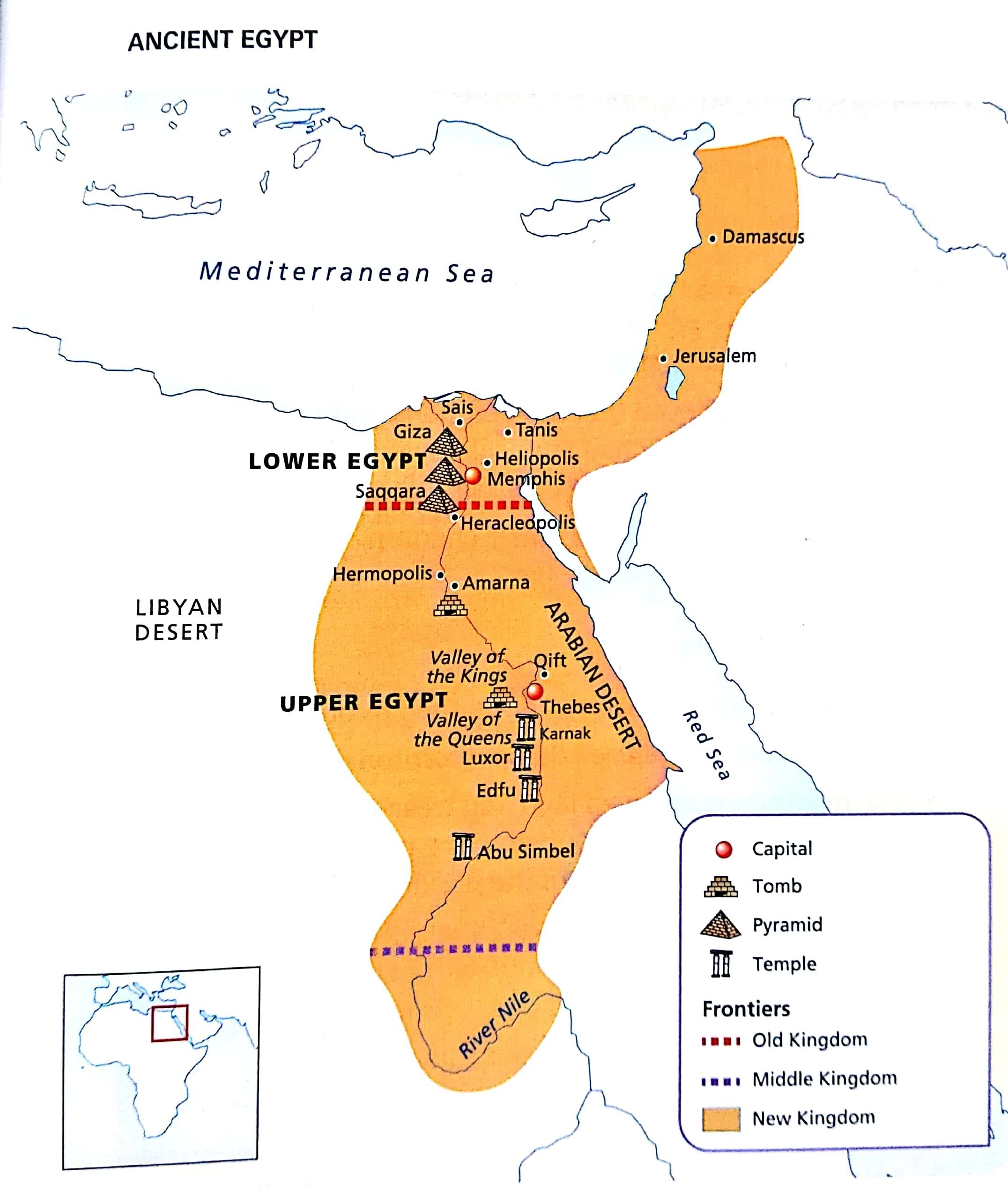
Conteúdo do mapa
9.2 ANCIENT EGYPT
RIVER NILE
- Ancient Egypt developed along the River Nile
- It provide water for human needs and agriculture
- It was also the main route for comunications
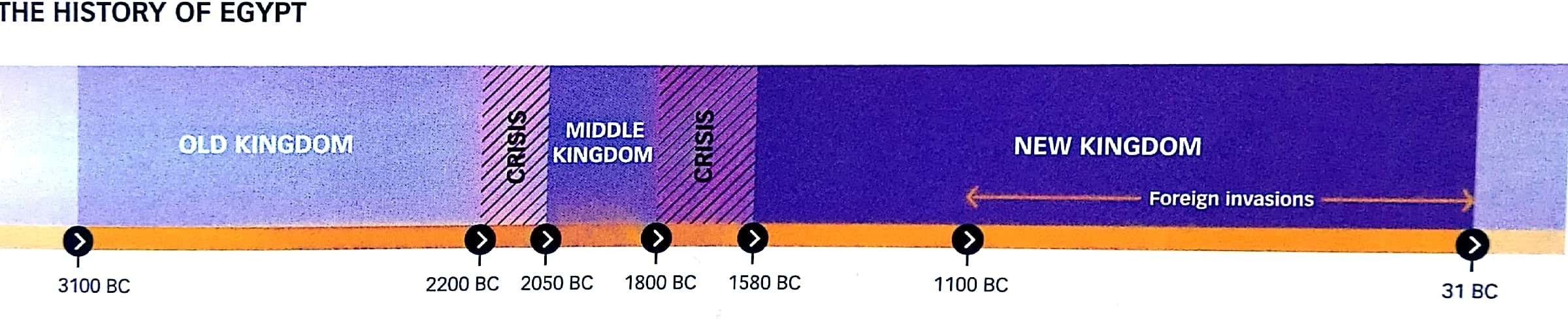
THE HISTORY OF EGYPT
- THE OLD KINGDOM (3100-2050 BC)
- The Egyptian STATE was created and the PHARAOH became a powerful divine figure.
- The capital was at MEMPHIS
- THE MIDDLE KINGDOM (2050-1580 BC)
- More power for the pharaoh
- New territories in the south
- The capital was Thebes
- THE NEW KINGDOM (1580-31 BC)
- Famous pharaohs: Amenhoted III, Akhenaten and Ramesses II.
- Large palaces and temples
- Libya and Syria were conquered
- King MENES was the first PHARAOH of Egypt
- From 1100 BC, there were several FOREING INVASIONS
- THE OLD KINGDOM (3100-2050 BC)
SOCIETY IN ANCIENT EGYPT
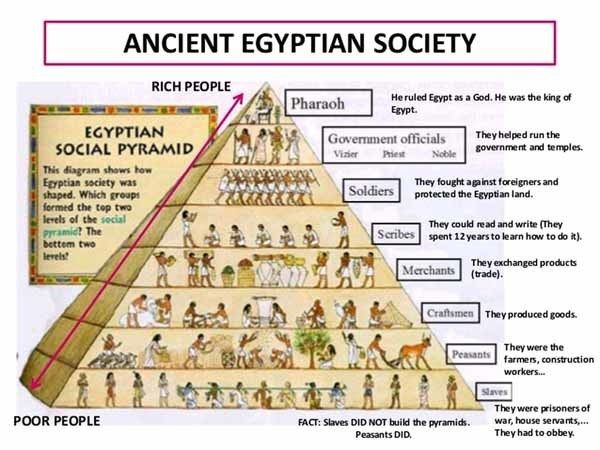
- THE PHARAOH
- PHARAOH was a monarch who rule in Ancient Egypt with absolute power.
- The pharaoh governed, owned the land, and led the army
- They were GODS for people
- DYNASTIES were create (pharaohs were succeeded by their children)
- THE EGYPTIAN STATE
- CIVIL SERVANTS (funcionarios). Organised the vast territories of the empire.
- NOBLEMEN (nobleza). Received lands and treasures from the pharaoh.
- PRIESTS (sacerdotes). Directed religious rituals and temples.
- SCRIBES (escribas). Kept official records, and counted goods in the royal warehouses (almacenes)
- SOLDIERS (soldados). Protected the frontiers.
- WHAT WAS SOCIETY LIKE?
- Most people were poor PEASANTS (campesinos) who live in houses along the Nile, in lands did not belong to them.
- CRAFTSMEN (carpinteros): made scultures, textiles and papyrus.
- MERCHANTS: exchanged products (wood, minerals and perfumes) because thet didn´t have money
- SERVANTS: were free people who worked for a salary.
- SLAVES: were often prisioners of a war and have no rights
- THE ROLE OF WOMEN
- They had some rights and freedom. They could inherit and own property.
- Most worked as peasants (campesinas) or servants
- A few were female pharaohs (i.e. Cleopatra)
- THE PHARAOH
RELIGION AND ART IN EGYPT
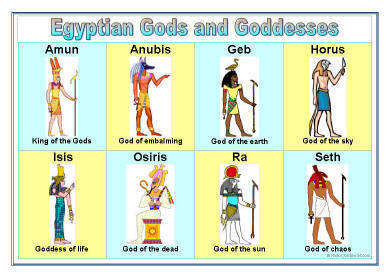
- POLYTHEISTIC RELIGION: They believed in many GODS.
- the SUN called RA, AMUN or ATUM.
- Others Gods were ISIS, OSIRIS and HORUS.
- Also worshipped (adoraban) some animals like cats or cocodriles; river Nile and the Pharaoh.
- ATTITUDES TO DEATH
- They believed they had a life after death
- The body of important people were dried to make a MUMMY, placed in SARCOPHAGUS
- The TOMBS contained everything they needed in the afterlife (la siguiente vida)
- The biggest tombs were the PYRAMIDS for the pharaohs.
- TEMPLES
- ART
- Artists were considered craftsmen
- Most Egyptian art had a religious meaning; other had a political meaning.
- Large statues of the pharaohs.
- PAINTING
- Figures represented in a hierarchical order anfd painting without perspective
- Human body is shown from the front but the head, arms and legs are seem in profile
- POLYTHEISTIC RELIGION: They believed in many GODS.
Imagens e arquivos do mapa
- Ancient Egypt - Facts for Kids & Adults (Incorporar)
- Egyptian Social Structure (Incorporar)
- THIS is Why Great Pyramids of Giza Egypt Were NOT Tombs Lost Ancient Human Civilization & Egyptians (Incorporar)
Informações
- Descrição
- Geography and History Mapa Mental sobre 9.2 ANCIENT EGYPT, criado por Benito Román Guerrero Blanco em 26-04-2018.
- Criado por
- Benito Román Guerrero Blanco
- Visualizações
- 0
- Avaliação