
Mapa mental
Context and Inference

Conteúdo do mapa
Context and Inference
Deixis
- The reference of certain expressions cannot be determined without knowing to the extralinguistic context of the utterance
- Spatial Deixis
- Adverbs
- A division of time relative to the act of speaking.
- Via pronouns, shorthand naming system for the participants involved in the talk.
- Demonstratives
- This/these and that/those.
- Items closer to her will be discribed as this/these
- Items further away as that/those
- This/these and that/those.
- Adverbs
- Spatial Deixis
- Grammaticalization of context
- Type of semantic information
- Included in deictic terms=grammaticalized
- Language
- Divides up space and time and its function words or its morphology
- The ability
- To talk about any division of space and time by paraphrase.
- Language
- Included in deictic terms=grammaticalized
- Type of semantic information
- Extensions of spatial deixis
- Textual deixis - metaphoric deixis in texts, often borrowing spatial/temporal deictic words
- Spacial deixis terms such as demonstratives, are extended to refer to time.
- Textual deixis - metaphoric deixis in texts, often borrowing spatial/temporal deictic words
- Person diexies
- Deictic system grammaticalized the roles of participants
- Grammaticalized by pronouns
- First person-speaker
- Second person pronouns-addressee(s)
- Third person category-category neither-speaker-nor-addressee
- Grammaticalized by pronouns
- Deictic system grammaticalized the roles of participants
- Social Deixis
- English thou/ye
- Metaphorical proximity/distance on a social hierarchy
- Terms of familiarity/solidarity
- Deictic because choice of forms depends on speaker.
- The reference of certain expressions cannot be determined without knowing to the extralinguistic context of the utterance
Reference and Context
- Involves reliance on context
- Speakers calculate how much information the hearer needs to make a successful reference
- EG. I’m looking for the new McCartney.
- Shorthands
- Metonymy and synecdoche
- With metonymy we identify the referent by something asociated with it
- Metonymy and synecdoche
- Synedoche
- Where the part stands for the whole
- Use of referring expresions
- Calculation of retrievability
- Use of referring expresions
- Where the part stands for the whole
Knowledge as a Context
- Speaker
- To make reference
- To make estimations of what the hearers know
- To make reference
- That computable from the physical context
- That available from what has already been said
- That available from the background or common knowledge
- Speaker
Focus and Topic
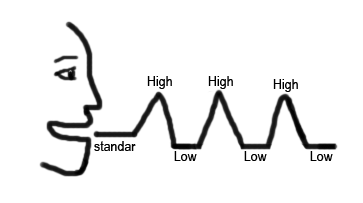
- English is intonation
- To mark new information.
- a. Henry cleaned the kitchen b. Someone cleaned the kitchen
- To mark new information.
- English is intonation
Inference
- A referential relation between expressions where they both refer to the same entity
- NOMINAL. May be repeated (ANAPHORA)
- INDEPENDENT NOMINAL. Used as an epithet
- ANAPHORIC PRONOUN. They have no independent reference and must rely on an antecedent
- A referential relation between expressions where they both refer to the same entity
Conversational impliccature
- Philosopher H.Paul Grice
- Cooperative principle
- Tacit agreement by speakers and listeners to cooperate in communication
- Cooperation between speakers and listeners
- Griece’s maxims of conversational cooperation
- Maxims: assumptions
- A speaker’s conduct seemed to Griece to be of several different types.
- Maxims: assumptions
- Cooperative principle
- Philosopher H.Paul Grice
LITERAL LANGUAGE THEORY
- Viewed as the engine
- Drives the interpretetion of non-literal utterances
- If a listener interprets an utterance as literally untrue or nonsensical, the principle may lead him to search dor a futher level of meaning.
- EG. I’ve read this millions of times. You’re the only woman in my life
- If a listener interprets an utterance as literally untrue or nonsensical, the principle may lead him to search dor a futher level of meaning.
- Drives the interpretetion of non-literal utterances
- Viewed as the engine
Relevance theory
- by Sperber and Wilson in 1995
- Ostensive communication
- Situation
- Interaction: the communicator
- Create a mutual environment of communication
- Recognized by her hearers
- Create a mutual environment of communication
- Interaction: the communicator
- Situation
- Ostensive communication
- by Sperber and Wilson in 1995
Imagens e arquivos do mapa



















Informações
- Descrição
- Mapa Mental sobre Context and Inference, criado por Giovanna Cardenas em 26-04-2018.
- Criado por
- Giovanna Cardenas
- Visualizações
- 0
- Avaliação