
Mapa mental
1 The Universe and the solar system
Conteúdo do mapa
1 The Universe and the solar system
What is the Universe?
- Is the collection of heavenly bodies, material and energy found in the space
Origin
- Cosmogony
- It's a collection of mythological beliefs that propose that the universe was created from nothing by beings with infinite powers.
- Scientific explanation
- Big Bang 13700 Million years ago
- http://artigoo.com/curiosidades-de-la-ciencia-la-huella-del-big-bang
- Big Crunch
- Big Rip
- Oscillating Universe Theory
- It proposes that after the Big Crunch there will be another Big Bang and it will continue like that successively
- Oscillating Universe Theory
- Big Bang 13700 Million years ago
- Cosmogony
Composition
- Galaxies
- Galaxies are large groups of stars, nebulae and interstellar dust. Gravity joins them together.
- Stars
- Stars are large spheres of gas (mostly hydrogen and helium). Stars emit light and energy. The colour of a star depends on its surface temperature:
- Planetary System
- The Solar System is made up of a star (the Sun) and all the celestial bodies that orbit it.
- Stars
- Stars are large spheres of gas (mostly hydrogen and helium). Stars emit light and energy.
- Size
- Dwarf
- Medium
- Giants
- Colour
- The colour is defined by its surface temperature. The star change it colour until all the hidrogen is USED UP and the star dies. Violet- BlueBlueWhiteWhite-YellowYellow The Sun OrangeRed
- Brightness
- Varies according to : a) How far away it is b )Quantity of energy c) It's Size
- Planets
- Revolution Rotation
- Inner Planets
- They are small, have very little or no atmosphere and have a rocky surface. MERCURY VENUS, EARTH, MARS Earth’s atmosphere has greenhouse gases. As a result, the average temperature is 15 ºC. There is water in its three states and it's the only planet where we know there is life.
- Outer Planets
- They are very large and have a gaseosus atmosphere. They are surrounded by rings and their surface is in gaseous or liquid state JUPITER, SATURN, NEPTUNE, URANUS.
- Movements of planets
- Rotation
- Rotation is the movement of a planet on its axis. The time it takes for a planet to complete a full rotation on its axis is called a solar day. Earth 24 hours Venus 243 days on Earth The rotation of most planets is anticlockwise. The Earth's axis is Tilted thanks to a meteorite........ Ver comienzo de Terra, la película de nuestro planeta. https://www.youtube.com/watch?v=q7RURP4WdQA&t=3707s
- Revolution
- is the movement of the planets around the Sun in an ANTICLOCKWISE direction 1year: Earth=365 days 1 year in Neptune= 164.8 years in earth
- Rotation
- Satellites
- They are of astros without light that turn arround a planet
- Comets
- Little pieces of rock, gas and ice with an oval orbit around the sun
- Asteroids
- They are solid and irregular heavenly bodies smaller than a planet and bigger than a meteoride that orbit arround a star
- Meteorites
- Small heavenly bodies (smaller than asteroid) that orbit arround the sun.
- Differences between Meteorites, meteoroids and Meteor
- https://www.nationalgeographic.es/espacio/meteoroides-meteoros-y-meteoritos
- Shooting Stars
- falling stars or shooting stars are caused by tiny bits of dust and rock called Meteoroids falling into the Earth's atmosphere and burning up. ...
- Our solar system
- Dwarf planets
- They are espheric they share their orbit with other similar planets (small) Pluto, Ceres Make Make and Eris Their orbit is still full of meteorites
- Asteroids belt
- Between Mars and Jupiter. There are thousand of asteroids
- Kuiper's Belt
- It's a zone of the solar system 20 times larger than the Asteroid belt, that includes Neptune's orbit. There are dwarf planets like Pluto and Eris and comets such as Halley's. Their orbits take less than 200 years. https://solarsystem.nasa.gov/solar-system/kuiper-belt/overview/
- Oort's Cloud
- It's a spherical region around the solar system farther than the kuiper belt. In this cloud there are comets with an orbit period more than 200 years.
- Dwarf planets
- Nebulae
- Nebulae are large clouds of gas made up of hydrogen, helium and interstellar dust. Stars form and are destroyed inside nebulae.
- Dust
- Gas
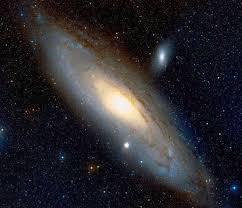
- About Galaxies
- kind
- Young
- Eliptical
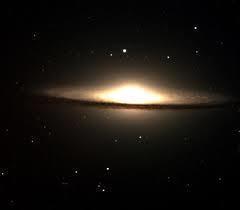
- Lenticular
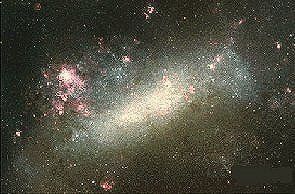
- Irregular
- Una galaxia irregular es una galaxia que no encaja en ninguna clasificación de galaxias de la secuencia de Hubble. Son galaxias sin forma espiral, lenticular ni elíptica. Algunas galaxias irregulares son pequeñas galaxias espirales distorsionadas por la gravedad de un vecino mayor. En ellas hay mucho polvo estelar y gas y pocas estrellas porque aún se están formando
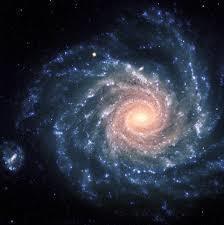
- Spiral is the most common
- Eliptical
- Old
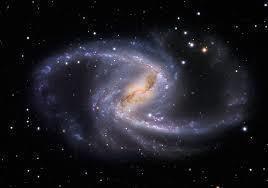
- Spiral
- Barred Spiral
- Spiral is the most common
- Spiral
- Young
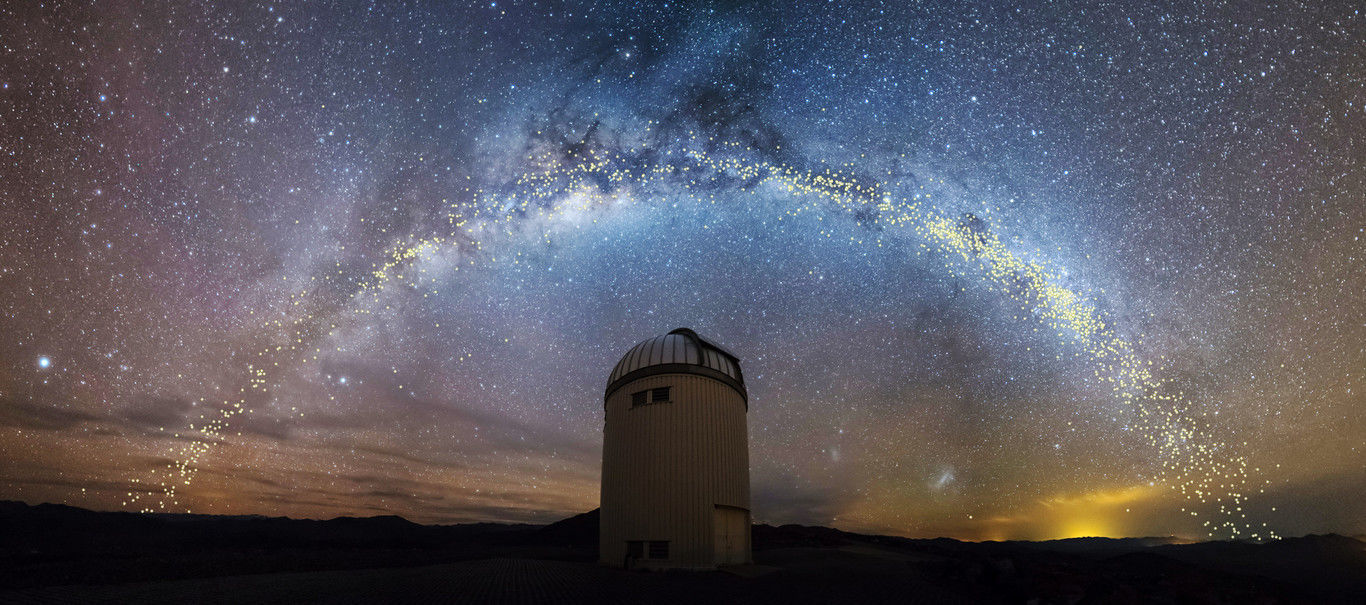
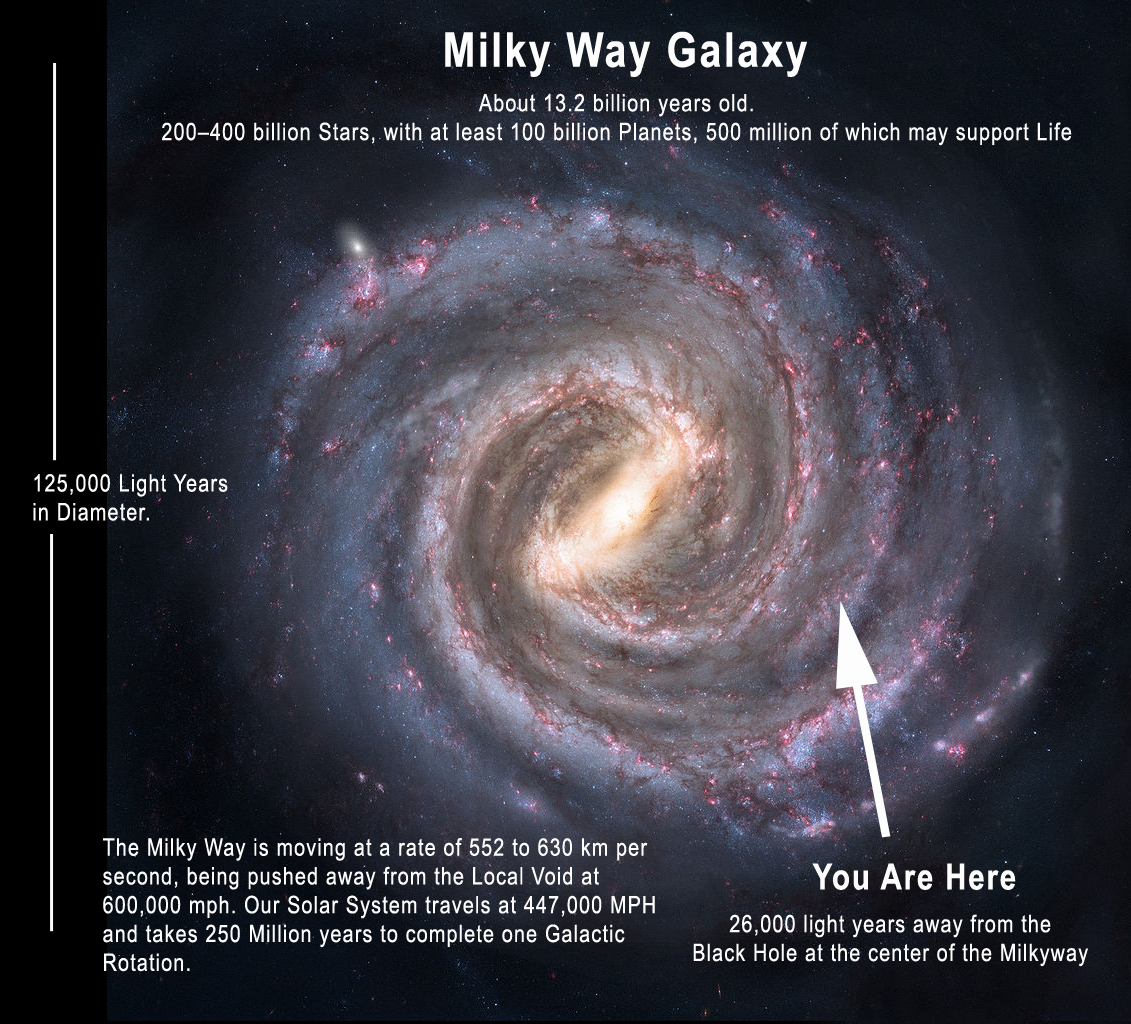
- Our Galaxy: The Milky Way or Camino de Santiago
- The stars we see at night are part of the Milky Way. Each star is at a different distance from the Earth. We group stars into patterns and shapes called constellations.
- Spiral Galaxy
- HALO: Surrounds the core and the disk and contains isolated stars DISK: Is formed by four arms and contains the YOUNGEST STARS. NUCLEUS O BULGE: Is the center of the galaxy and is formed by the oldest stars
- CLUSTER (SECTOR)
- Galaxies group together. When these groups of galaxies are very large we call them CLUSTERS O SECTORES OUR CLUSTER IS CALLED "THE LOCAL GROUP"
- kind
- Galaxies
Distances in the Universe
- The Universe is so immense that in order to measure distances between galaxies, we need to use different units of measurement
- Astronomical Unit 150000000 km 1 UA is the distance between Sun and Earth
- Light Year 300000 Km/s
- Parsec= 3.26 Light year
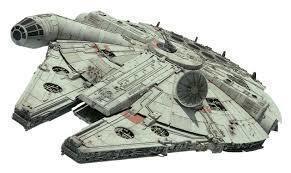
- Este curioso -aunque laborioso estudio-, que se encuentra en el sitio web TOR con todo lujo de detalles, llega a una conclusión pasmosa: la velocidad que puede alcanzar el Halcón Milenario es de 25.000 años luz por día, lo que serían unos 1.041,66 años luz por hora.
Models of the Universe
- Geocentric
- The Earth is spherical and is the centre of the Universe. ❚ The Sun, the Moon and the planets revolve in concentric circles around the Earth. ❚ The stars are fixed on a dome that also revolves around the Earth
- Heliocentric
- ❚ The Sun does not move and is in the centre of the Universe. ❚ All the planets revolve around the Sun in concentric circles. ❚ The Earth rotates on its axis and the Moon revolves around the Earth. ❚ The stars are fixed on a dome that does not move.
- Actually
- From the 17th century onwards, scientists like Johannes Kepler, proved that planets have elliptical orbits, and we now know that the Sun is not fixed in the centre of the Universe. The Sun is in a galaxy called the Milky Way, which is one of billions of galaxies.
- Geocentric
The scale of universe
- https://htwins.net/scale2/ La simulación que vimos en de lo más grande a lo más pequeño
Imagens e arquivos do mapa
- Comparison of planets and stars (Incorporar)
- NASA Found An Alien Planet With 3 Suns! (Incorporar)
- Asteroids, Comets & Meteors: What's the Difference? (Incorporar)
- What Does It Take to Be a Planet and Why Doesn't Pluto Belong? (Incorporar)
- Solar System 101 | National Geographic (Incorporar)
- A Capella Science - The Surface Of Light! (Lion King Parody) (Incorporar)
- Black Holes 101 | National Geographic (Incorporar)
- The Milky Way for Children, Galaxies and Space: Astronomy for Kids - FreeSchool (Incorporar)
Informações
- Descrição
- Mapa Mental en The Universe and the solar system, creado por Rafael Marañon viedma en 30/09/2018.
- Criado por
- Rafael Marañon viedma
- Visualizações
- 1.590
- Histórico
-
- Criado por Rafael Marañon viedma · 30 set 2018
- Copiado por Rafael Marañon viedma · 19 out 2018
- Copiado por Rafael Marañon viedma · 20 out 2018
- Avaliação