
Mapa mental
Chemistry- Separation Techniques
Conteúdo do mapa
Chemistry- Separation Techniques
Chromotography
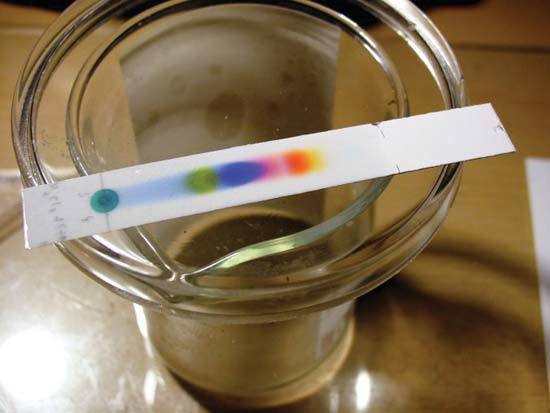
- Chromatography is a technique for the separation of a mixture by passing it in solution through a medium where the components move at different rates.
- Chromatography can be used to separate mixtures of coloured compounds.
- Mixtures that are suitable for separation by chromatography include: inks, dyes and colouring agents in food.
- Simple chromatography is carried out on paper.
- A spot of the mixture is placed near the bottom of a piece of chromatography paper and the paper is then placed upright in a suitable solvent, eg water.
- As the solvent soaks up the paper, it carries the mixtures with it. Different components of the mixture will move at different rates. This separates the mixture out causing individual colours to appear for different chemicals.
- A spot of the mixture is placed near the bottom of a piece of chromatography paper and the paper is then placed upright in a suitable solvent, eg water.
- Simple chromatography is carried out on paper.
- Mixtures that are suitable for separation by chromatography include: inks, dyes and colouring agents in food.
- RF values
- Different chromatograms and the separated components of the mixtures can be identified by calculating the Rf value using the equation
- Rf = distance moved by the compound ÷ distance moved by the solvent
- The Rf value of a particular compound is always the same - if the chromatography has been carried out in the same way. This allows industry to use chromatography to identify compounds in mixtures.
- Rf = distance moved by the compound ÷ distance moved by the solvent
- Different chromatograms and the separated components of the mixtures can be identified by calculating the Rf value using the equation
- Food dyes are miscible and are separated by chromatography. Oil and water is an example of an immiscible mixture.
Immiscible Liquids
- Liquids that don't dissolve are called immiscible.
- oil and water are an example.
- An evaporating basin is used to separate a soluble salt from a liquid. A separating funnel is used to separate two immiscible liquids.
- It is possible to shake up the liquids and get them to mix but they soon separate.
- Separating immiscible liquids is done simply using a separating funnel. The two liquids are put into the funnel and are left for a short time to settle out and form two layers. The tap of the funnel is opened and the bottom liquid is allowed to run. The two liquids are now separate.
- Liquids that don't dissolve are called immiscible.
Miscible Liquids
- Liquids that do dissolve are called miscible.
- Miscible liquids are harder to separate as they dissolve in each other.
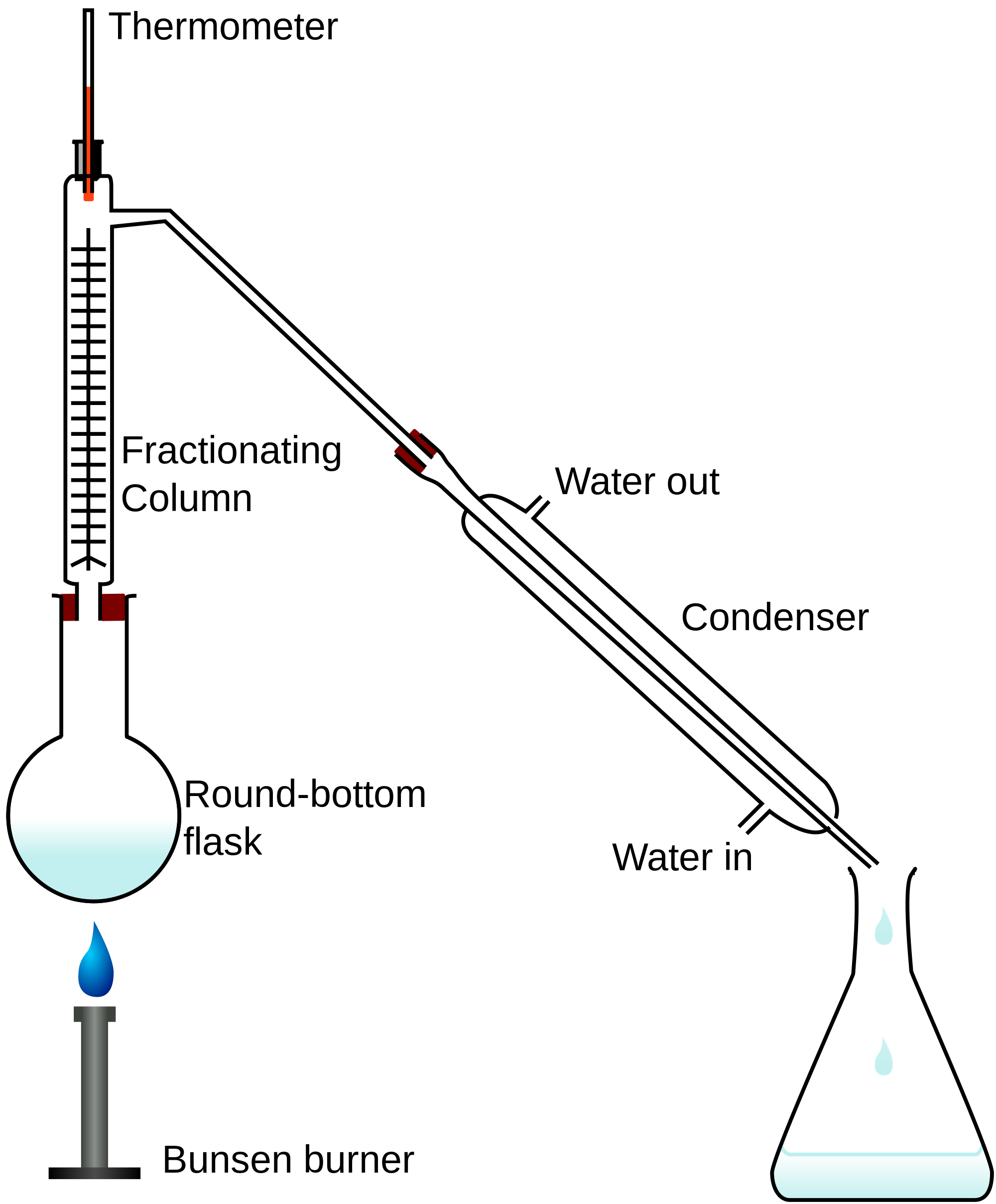
- Miscible liquids are often separated using fractional distillation. This is possible as miscible liquids have different boiling points.
- A tall column is fitted above the mixture, with several condensers coming off at different heights. The column is hot at the bottom and cool at the top.
- Substances with high boiling points condense at the bottom and substances with low boiling points condense at the top.
- Boiling point is the property that allows mixtures to be separated by fractional distillation.
- Cracking is used to break up long chain hydrocarbons. Fractional distillation is used to separate air into different gases.
- Substances with high boiling points condense at the bottom and substances with low boiling points condense at the top.
- A tall column is fitted above the mixture, with several condensers coming off at different heights. The column is hot at the bottom and cool at the top.
- Miscible liquids are often separated using fractional distillation. This is possible as miscible liquids have different boiling points.
Imagens e arquivos do mapa
Informações
- Descrição
- Mapa Mental sobre Chemistry- Separation Techniques, criado por Edward Corke em 09-02-2015.
- Criado por
- Edward Corke
- Visualizações
- 6
- Avaliação