
Mapa mental
Pharmacology of Autocoids
Conteúdo do mapa
Pharmacology of Autocoids
- Self remedy. Local hormones that are formed at the site of action to produce localized action and metabolized locally. It is nor released or stored in glands and not circulated in blood but large amounts can be produced and moved into circulations
Classification
- Decarboxylated amino acids: Such as histamine or serotonin Polypeptides such as angiotensin and bradykinin Endothelium derived factors such as Nitric Oxide (NO) Eicosanoids such as leukotrienes tromboxanes or prostaglandins
- Histamine
- Histamine is an endogenous amine: Basic and hydrophilic Had presence in most living things. Local release and hormones Physiological roles aren't really clear ( cause discomfort) no clinical application for treating diseases.
- Synthesis and Metabolism
- Synthesized wholly from histidine, processed by L-Histidine decarboxylase into Histamine Histamine can be broken down into 2 pathways. Histamine is broken down by histaminase (diamine oxidase) into imidazoleacetic acid It also can be down by histamine-N-methyltransferase into 1-methy-histamine and broken down by MAO to methylimidazole-acetic acid.
- Cellular Distribution
- Stored in mast cells of skin, gastriuc and broncial mucosa, it is also stored in basophils in blood Non-mast cells
- Release
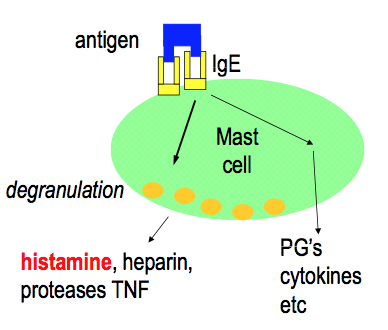
- Degranulation from mast cells by immunological release such as immediate *type 1 allergic reaction Tissue injure by any physical or chemical agents Compounds such as morphine, penicillins, toxins, venoms, bradykinin and substance P.
- Immune function mediated
- antibody affixed to surface of mast cells and react with specific antigen like dust to result in Ab:Ag complex and trigger the release of granules.
- Allergic Reaction
- Exposure of antigen to previously sensitized subject can cause mast cell degranulation and trigger allergic reaction.
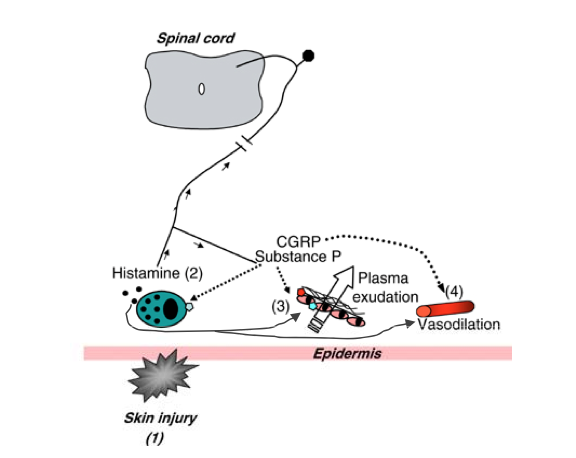
- Triple Response
- Vasodilation (Red spot) Increased cappilary Permeability (Wheal: Localized edema) Axon relfex and sensory nerve stimulation causing itchiness.
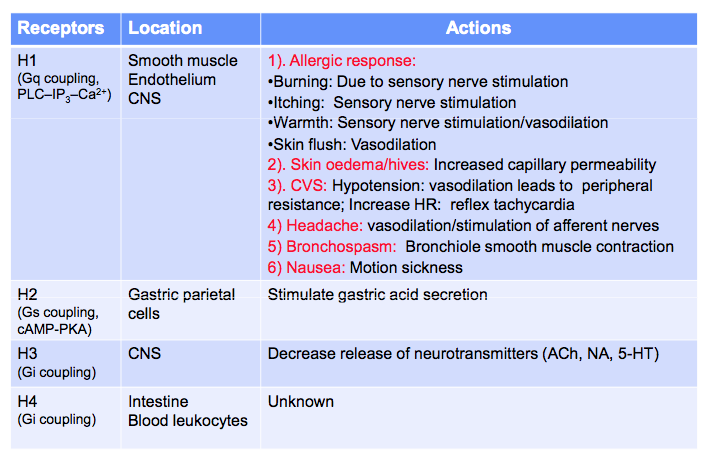
- Receptors
- 4 Receptor subtypes: G protein couple receptors which are embedded in the plasma membrane and ligand binding leads to conformational change and activation of intracellular pathways.
- Antagonist
- Examples are Antihistamines sucha s loratadine, levocabastine or olopatadine it is to treat the allergies symptomatic treatment
- Loratidine (Claratyne)
- Do not pass BBB Long acting and potent antihistamine whith H1 selectivity
- Levocabastine
- Olopatadine
- Serotonin
- Platelet derived serum factor, vasoconstrictor, identified as 5HT Found in platelets, GIT< CNS and peripheral vascular system
- Distribution
- 90% of serotonin is found in gut in the enterochromaffin cells and in the neurons of the ENS. Much of them is in the platelets to accelerate platelet aggregation and change local blood flow. 4-5% is in hte brain to affect behavior and the blood flow in the cerbral blood vessels.
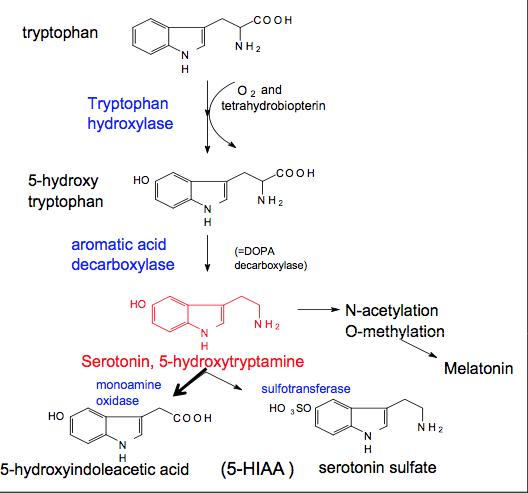
- Biosynthesis and Degradation
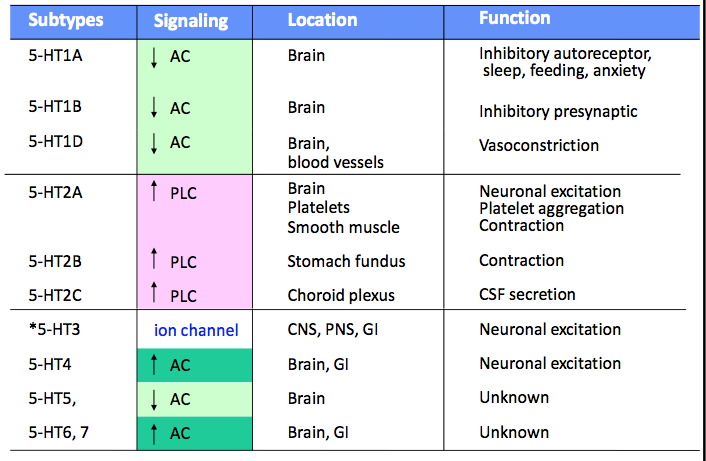
- Receptors
- Effects
- 5HT receptors found int he CNS causing excitatory, inhibitory and presynaptic effects on particular neurons. it also affect vomiting centre. It have pysiological effects ont he periphery too to stimulate nociceptive nerve endings. Increased gut motility with direct effects on smooth muscle and the enteric neurones. Platelet and vascular responses When it is normal, endothelium dependent NO release vasodilation. Direct effects on vascular smooth muscle vasoconstriction.
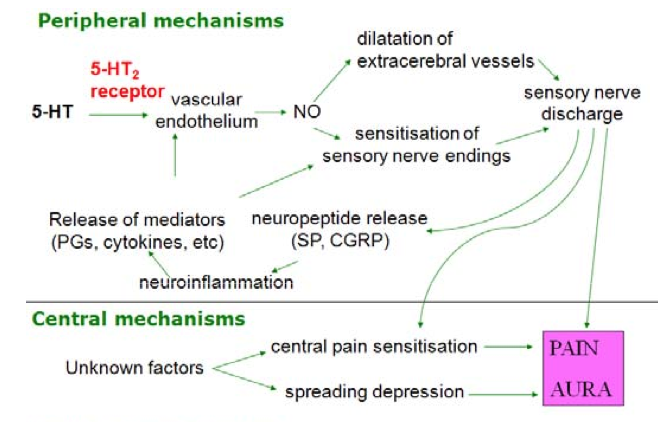
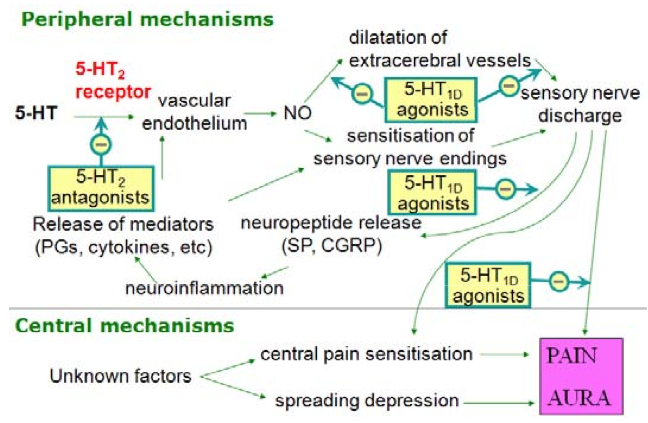
- Serotonin theory
- Agents
- Agonist
- Examples are triptans, ergotamine (PA) Used for acute migraine attack.
- Antagonists
- Example is methysergide It is used for the prophylactic treatment of migraine. It is used to prevent of migraine, but not effective in treating an active migraine attack.
- Agonist
- Depressive Illness
- Suffers from depressive illness is increase the pre-synaptic serotonin output.
Function
- They deal with inflammation, allergic reactions, neurotransmission, gastric acid secretions. Neuroendocrine regulation vascular activites and smooth muscle activities.
Imagens e arquivos do mapa
Informações
- Descrição
- Introductory Pharmacology Mapa Mental sobre Pharmacology of Autocoids, criado por Daniel Elandix G em 30-09-2013.
- Criado por
- Daniel Elandix G
- Visualizações
- 294
- Tags
- Avaliação