
Mapa mental
bone tumors
Conteúdo do mapa
bone tumors
structures of the thigh
- bones
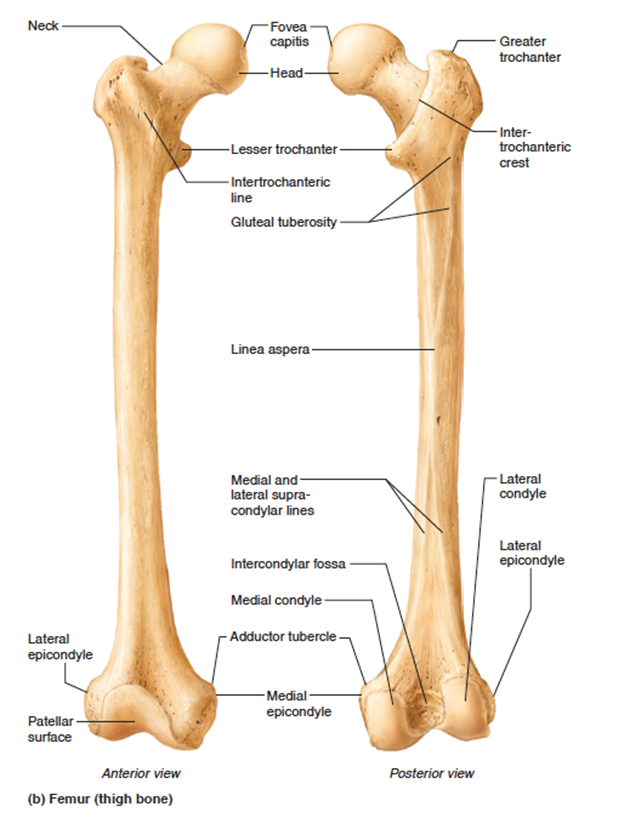
- femur
- is the large upper leg bone that connects the lower leg bones (knee joint) to the pelvic bone (hip joint)
- femur
- The thigh is the region between the hip and knee joints
- joints
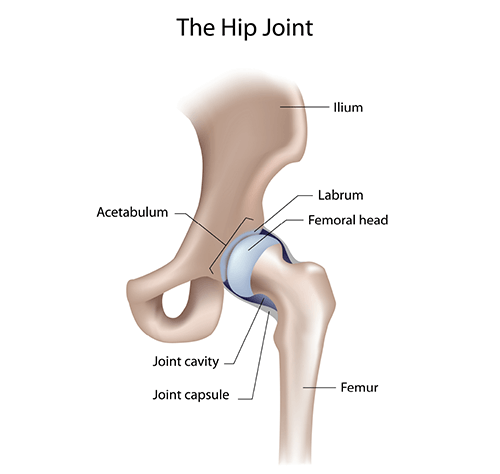
- The head of the femur articulates with the acetabulum in the pelvic bone forming the hip joint
- The hip joint is a ball and socket synovial joint
- The hip joint is a ball and socket synovial joint
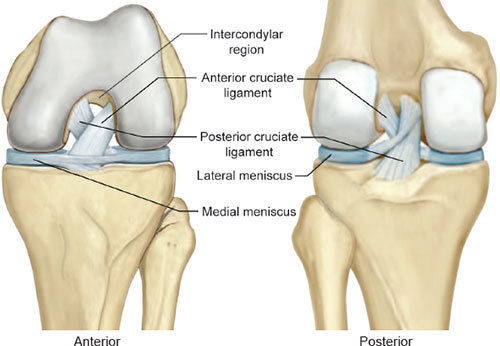
- the distal part of the femur articulates with the tibia and patella (kneecap), forming the knee joint.
- The knee joint is a hinge type synovial joint, which mainly allows for flexion and extension
- The knee joint is a hinge type synovial joint, which mainly allows for flexion and extension
- The head of the femur articulates with the acetabulum in the pelvic bone forming the hip joint
- ligaments
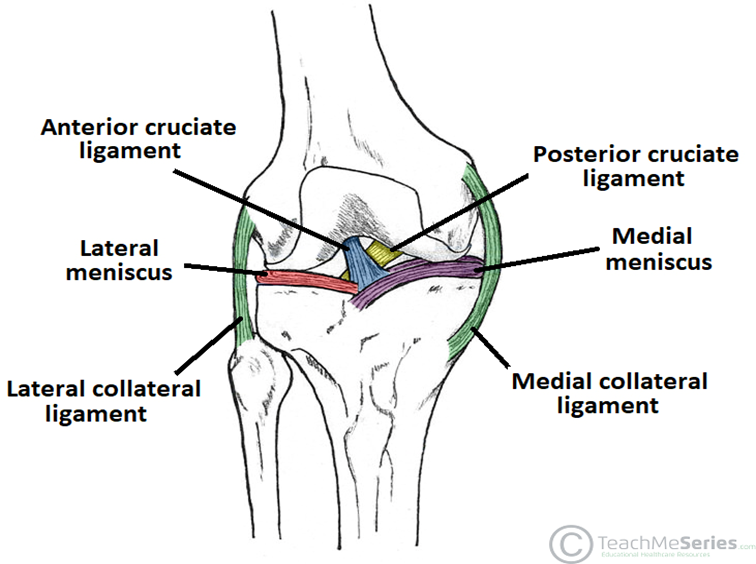
- Anterior cruciate ligament (ACL) Posterior cruciate ligament (PCL) Medial collateral ligament (MCL) Lateral collateral ligament (LCL)
- Anterior cruciate ligament (ACL) Posterior cruciate ligament (PCL) Medial collateral ligament (MCL) Lateral collateral ligament (LCL)
- muscles
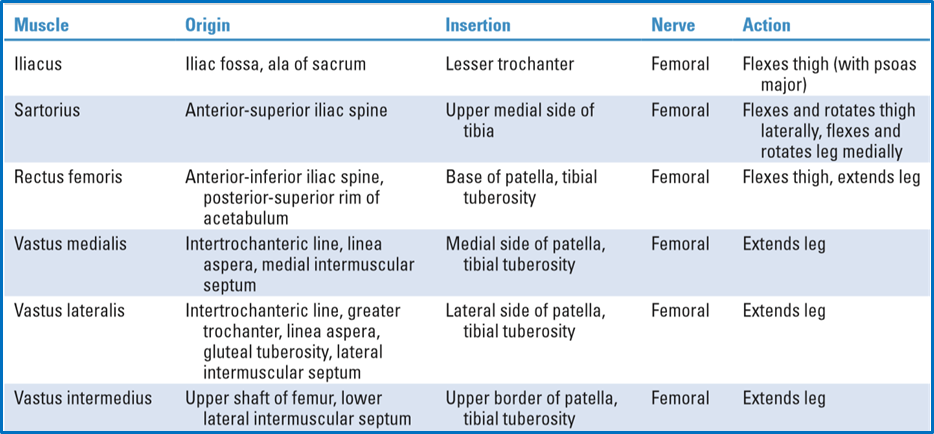
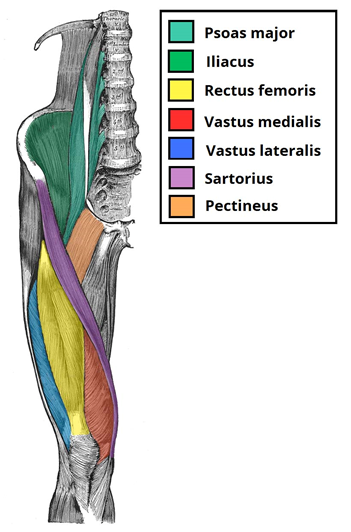
- anterior compartment of the thigh
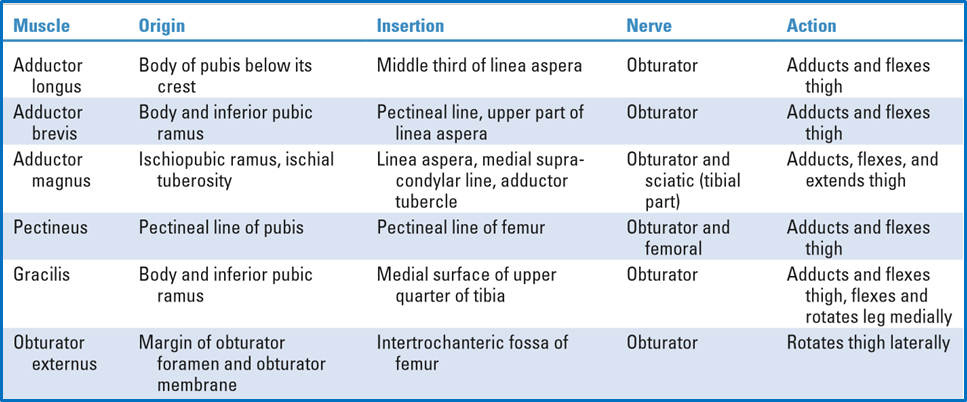
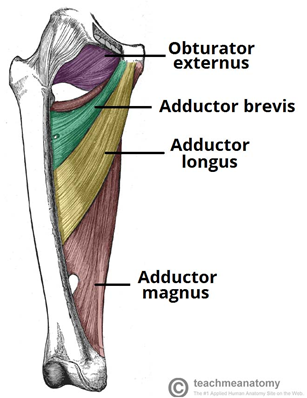
- medial compartment of the thigh
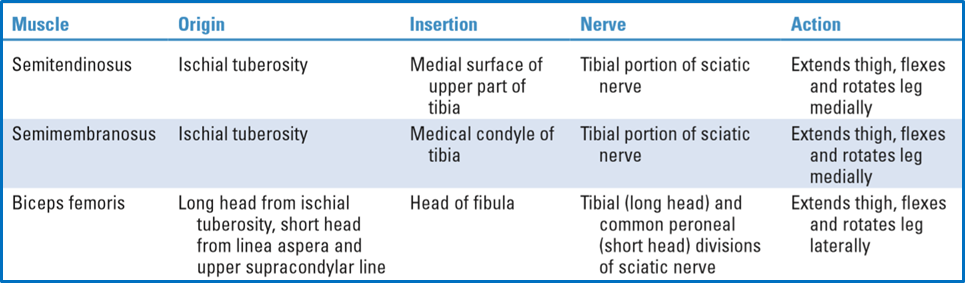
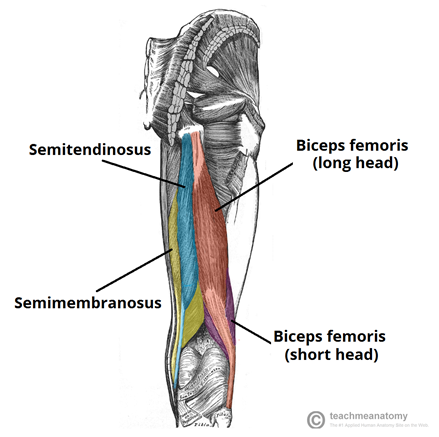
- posterior compartment of the thigh
- anterior compartment of the thigh
- arterial supply
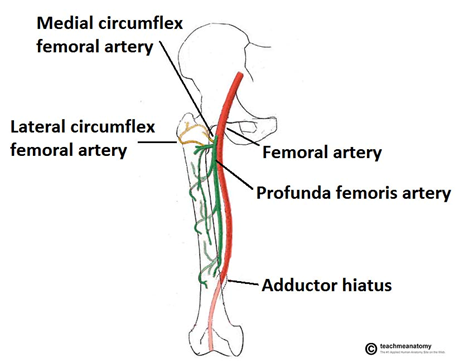
- femoral artery / profunda femoris artery / The obturator artery
- femoral artery / profunda femoris artery / The obturator artery
- nerve supply
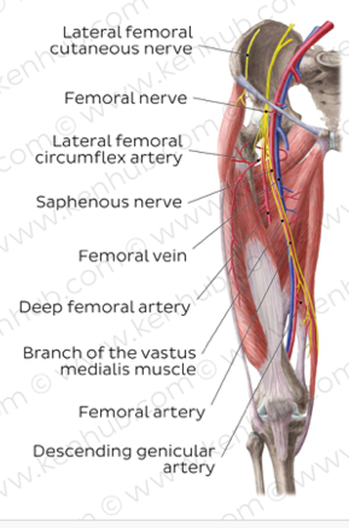
- Femoral nerve / Saphenous nerve / femoral cutaneous (lateral and posterior) / Sciatic nerve / Obturator nerve
- Femoral nerve / Saphenous nerve / femoral cutaneous (lateral and posterior) / Sciatic nerve / Obturator nerve
- bones
Common causes for swelling in the thigh
- Obstructive
- Obstructive causes of swelling in one thigh are related to clotting of the blood that begins in the lower leg
- When a blood clot forms in the deep veins of the lower leg, it obstructs blood flow and can result in leg swelling and pain.
- Hematologic
- Bleeding disorders and medical conditions that affect the way different components of the blood function can result in blood clots.
- Immobility
- When the leg is immobile for long periods, the muscles dont contract normally to help blood circulate and blood clots form due to disruption of blood flow.
- Systemic
- Circulatory
- Problems with the heart and its ability to pump effectively (heart failure) will cause blood to back up in the lower body.
- This causes excessive pressure in the blood vessels that causes damage and further leakage of fluid into the body’s tissue.
- Problems with the heart and its ability to pump effectively (heart failure) will cause blood to back up in the lower body.
- Lymphatic
- the lymphatic system is composed of multiple nodes and vessels that when damaged can cause swelling all over the body, especially the thigh and lower leg.
- kidney
- Without the kidney, filtrate such as proteins, electrolytes, and toxins can remain in the blood and act as forces that draw fluid out.
- In most cases, kidney problems result in swelling of both legs and usually does not affect only one leg.
- Without the kidney, filtrate such as proteins, electrolytes, and toxins can remain in the blood and act as forces that draw fluid out.
- Circulatory
- inflammatory
- Arthritis
- arthritis in the joints of the lower extremity predisposes people to inactivity, making swelling even more likely.
- infection
- Both superficial infections of the skin and deep tissue infections of the thigh can result in swelling.
- Arthritis
- Obstructive
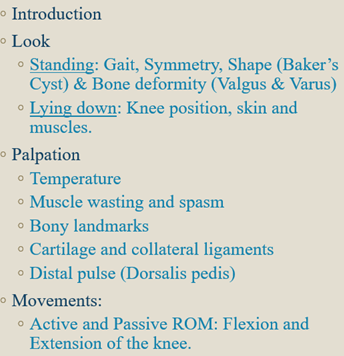
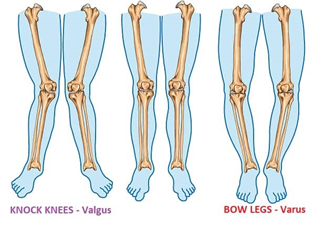
Physical Examination of the knee
- tests
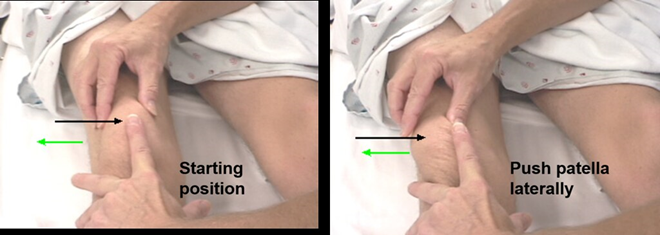
- Patellar Apprehension Test
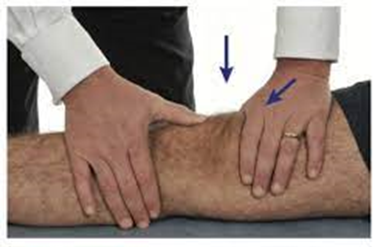
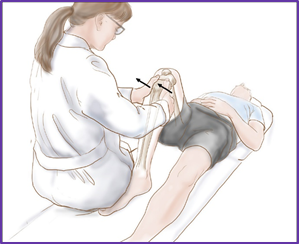
- Patellar Tap Test
- Patellar Apprehension Test
- special tests
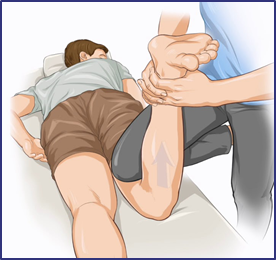
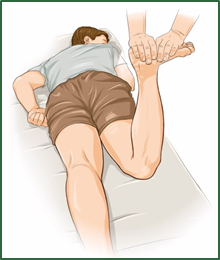
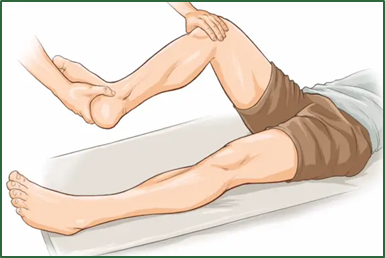
- Cruciate Ligament:Anterior Drawer Test
- Collateral Ligaments: Collateral ligament Stress test. Apley’s distraction tes
- Meniscal Cartilage: Apley’s grinding test McMurray’s Test
- Meniscal Cartilage: Apley’s grinding test McMurray’s Test
- Collateral Ligaments: Collateral ligament Stress test. Apley’s distraction tes
- Cruciate Ligament:Anterior Drawer Test
- tests
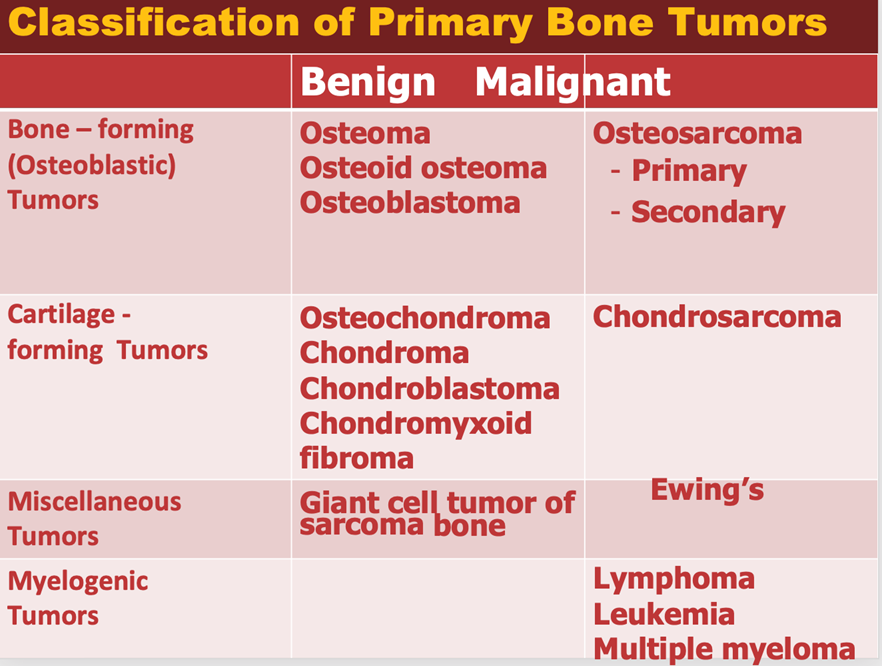
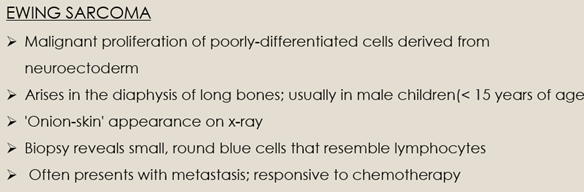
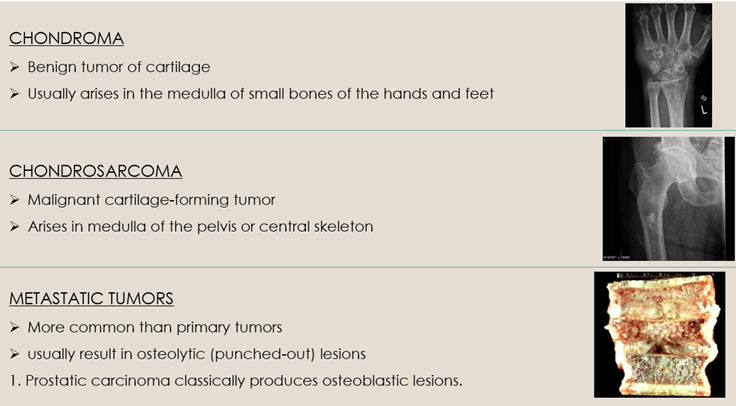
Types & classification of bone tumors
- Benign
- malignant
- primary
- secondary
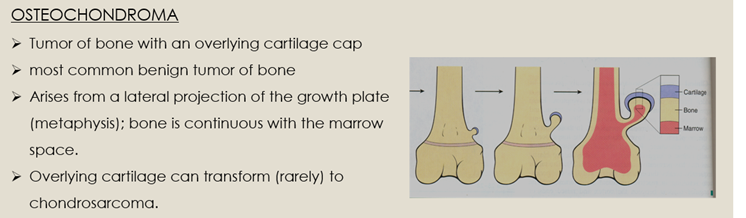
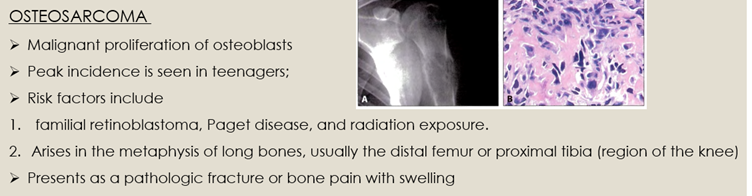
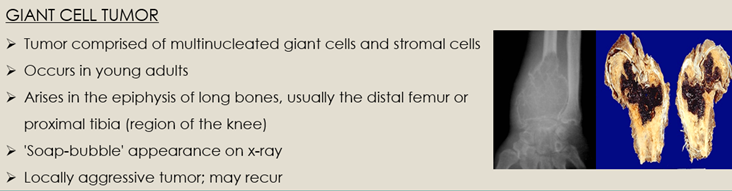
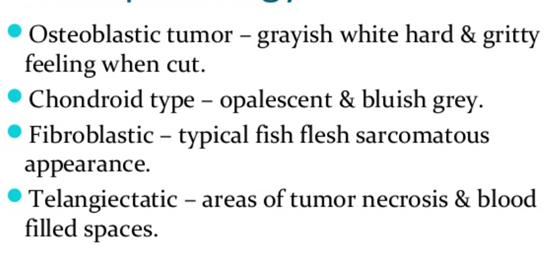
Osteosarcoma
- (low –grade): Intramedullary osteosarcoma (intermediate-grade): Juxtacortical osteosarcoma (high-grade): Extraskeletal osteosarcoma
- is a type of cancer that produces immature bone.
- it is the most common type of cancer that arises in bones, and it is usually found at the end of long bones, often around the knee.
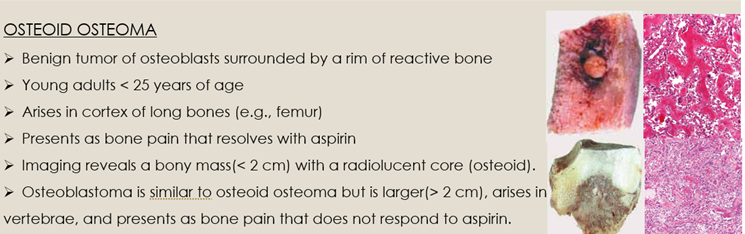
- gross pathology
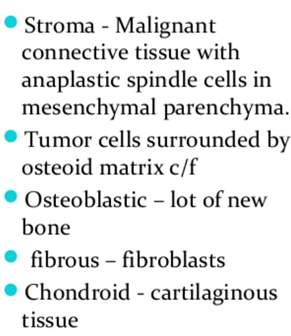
- histologic appearance
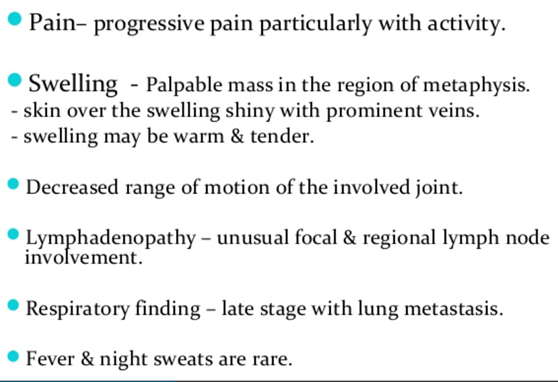
- clinical presentation
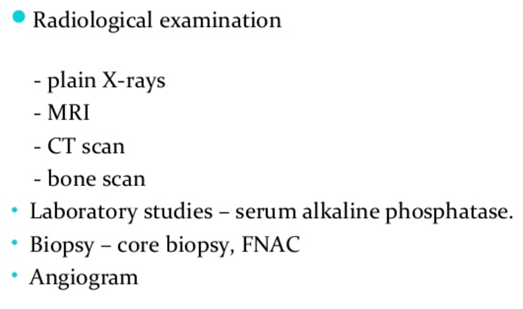
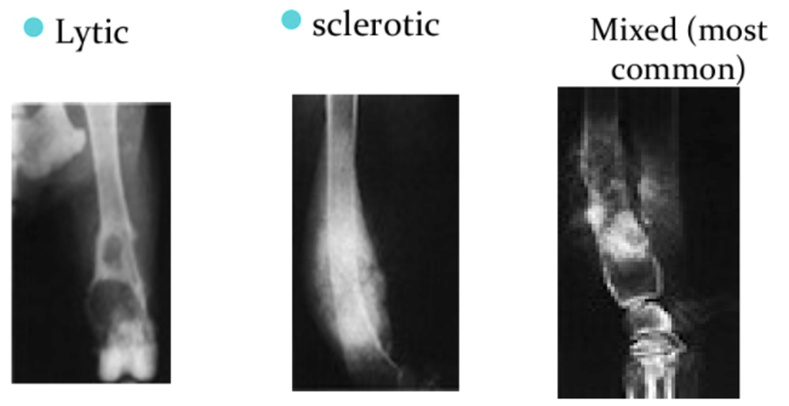
- investigations
- some of its risk factors
- Age / Height / Gender / Race/ethnicity / Radiation to bones / Certain bone diseases / Inherited cancer syndromes
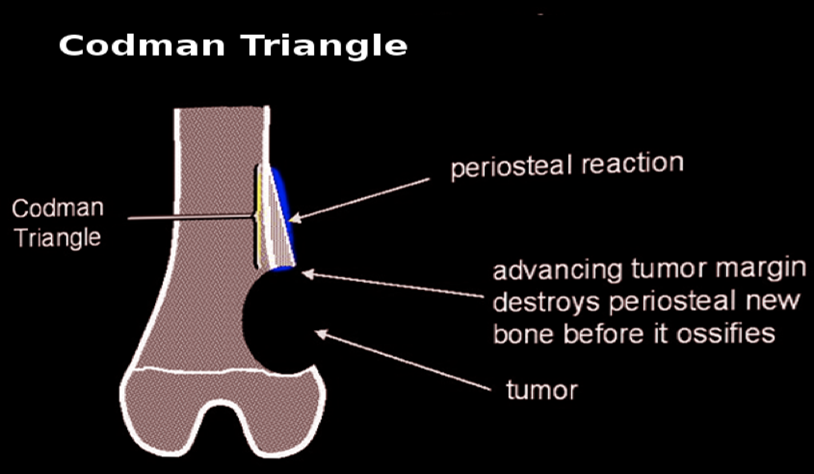
codman triangle
- is the triangular area of new subperiosteal bone that is created when a lesion, often a tumour, raises the periosteum away from the bone.
- is a radiologic sign seen most commonly on musculoskeletal plain films
bone biopsy
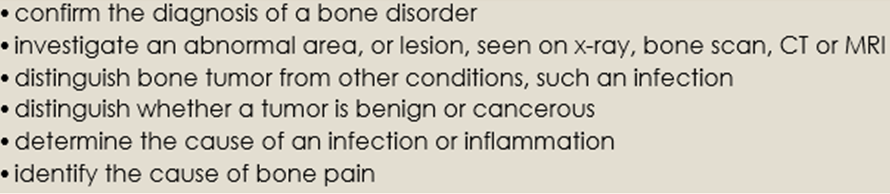
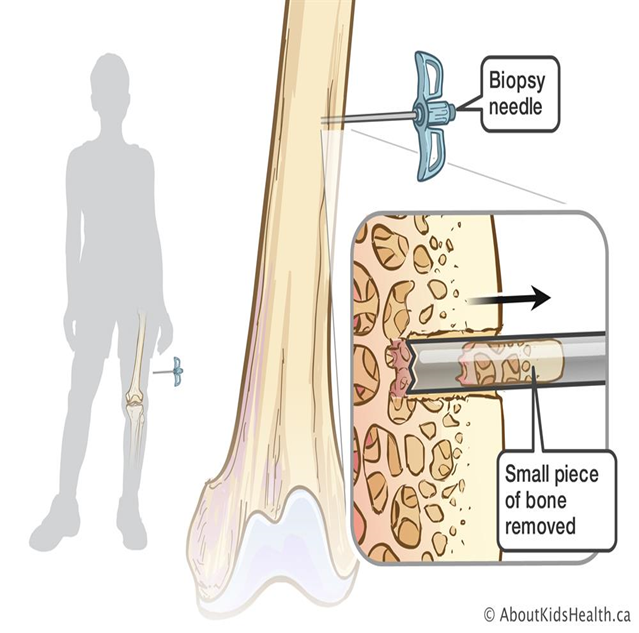
- A bone biopsy is a procedure in which bone samples are removed (with a special biopsy needle or during surgery) to find out if cancer or other abnormal cells are present.
- common causes
- types
- Needle biopsy. After a local anesthetic is given, your healthcare provider makes a small cut (incision) in your skin. He or she inserts the special biopsy needle into your bone to get a sample.
- Open biopsy. After a general anesthetic is given, your healthcare provider makes a larger incision in your skin and surgically removes a piece of bone. Depending on the lab findings, you may need more surgery.
- risks
- Bleeding from the biopsy site/ infection / Nerve or blood vessel damage / Bone fracture / Bruising and discomfort at the biopsy site
- A bone biopsy is a procedure in which bone samples are removed (with a special biopsy needle or during surgery) to find out if cancer or other abnormal cells are present.
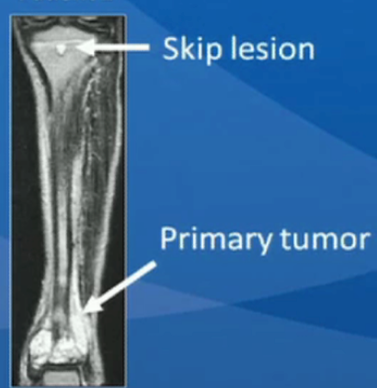
skip lesions
- Group of normal tissue with tissue affected by a pathologic condition.
- Skip lesions occur in metastatic carcinoma, polyarteritis nodosa (interspersed “skipping” or sparing of vessels), Crohn’s disease (interspersing of involved and relatively normal intestine), radiologically and on gross examination;
- Group of normal tissue with tissue affected by a pathologic condition.
possible treatments of bone tumors
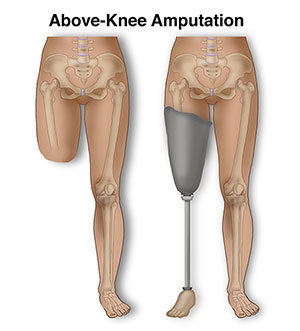
- above knee amputation
- is a procedure where a part of the limb is removed through one or more bones
- involve removing the leg from the body by cutting through both the thigh tissue and femoral bone.
- This procedure may be necessary for a wide variety of reasons, such as trauma, infection, tumor, and vascular compromise.
- is a procedure where a part of the limb is removed through one or more bones
- limb saving surgery
- Surgery to remove a tumor in a limb (arm or leg) without removing the whole limb. The bone and tissue around the tumor may also be removed, and an implant may be used to replace the part of the limb removed.
- Limb-salvage surgery is done to help save the use and appearance of the limb
- Surgery to remove a tumor in a limb (arm or leg) without removing the whole limb. The bone and tissue around the tumor may also be removed, and an implant may be used to replace the part of the limb removed.
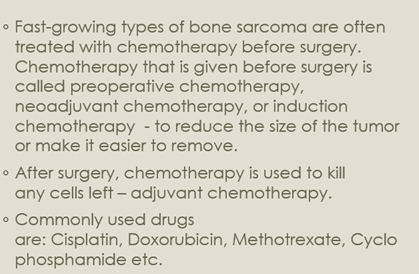
- chemotherapy
- above knee amputation
complication of surgery
- shock / hemorrhage / wound infection / deep vein thrombosis / urinary retention ...etc
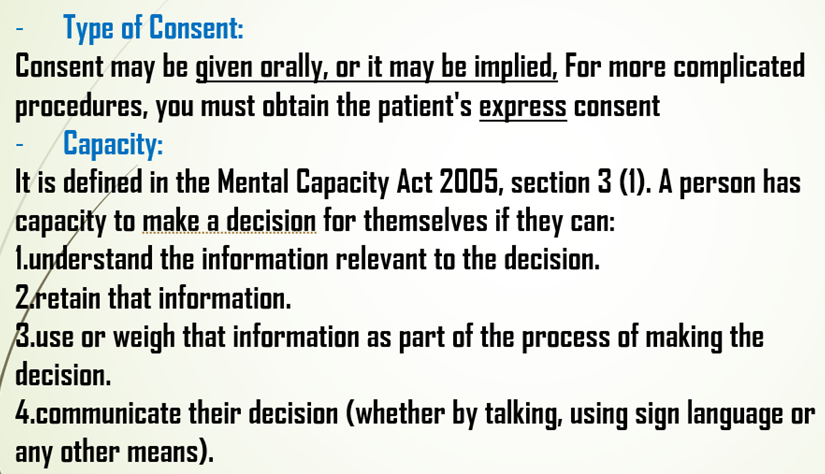
role of consent
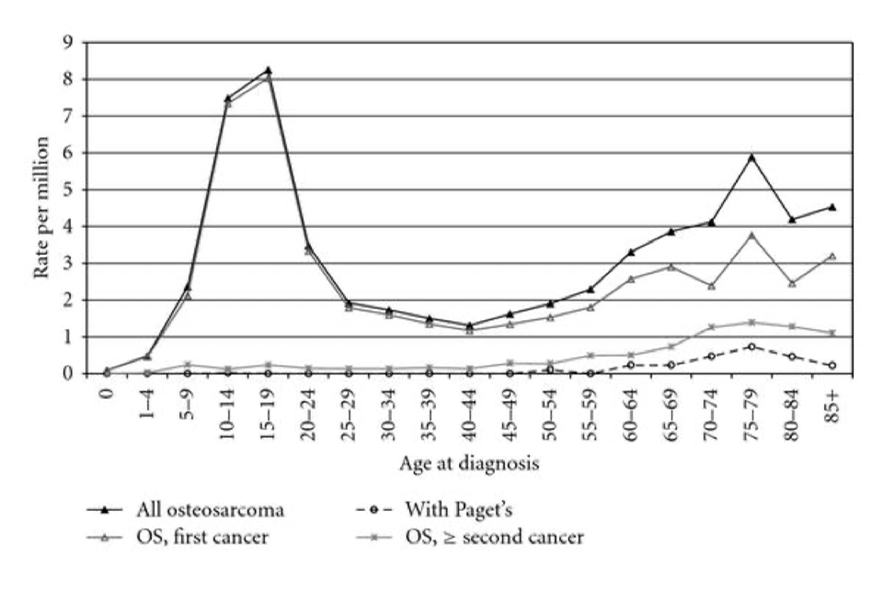
epidemiology of osteosarcoma
Imagens e arquivos do mapa



Informações
- Descrição
- Mapa Mental sobre bone tumors, criado por Aml Fathi em 15-03-2021.
- Criado por
- Aml Fathi
- Visualizações
- 1
- Avaliação