
Mapa mental
The Zero Conditional
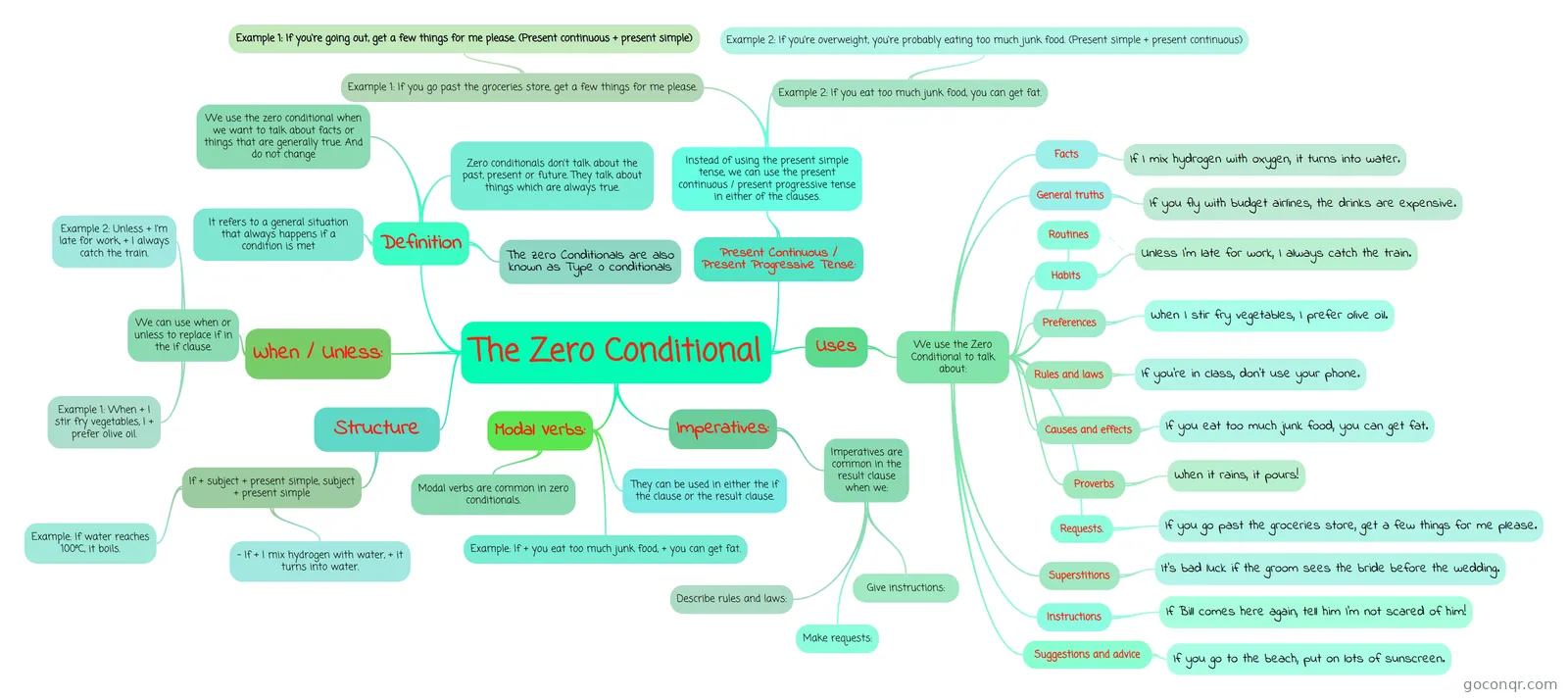
Mind map: The zero conditional
Conteúdo do mapa
The Zero Conditional
Definition
- We use the zero conditional when we want to talk about facts or things that are generally true. And do not change
- Zero conditionals don’t talk about the past, present or future. They talk about things which are always true.
- It refers to a general situation that always happens if a condition is met
- The zero Conditionals are also known as Type 0 conditionals
Structure
- If + subject + present simple, subject + present simple
- Example: If water reaches 100ºC, it boils.
- – If + I mix hydrogen with water, + it turns into water.
- If + subject + present simple, subject + present simple
Uses
- We use the Zero Conditional to talk about:
- Facts
- If I mix hydrogen with oxygen, it turns into water.
- General truths
- If you fly with budget airlines, the drinks are expensive.
- Routines
- Habits
- Unless I’m late for work, I always catch the train.
- Preferences
- When I stir fry vegetables, I prefer olive oil.
- Rules and laws
- If you’re in class, don’t use your phone.
- Causes and effects
- If you eat too much junk food, you can get fat.
- Proverbs
- When it rains, it pours!
- Instructions
- If Bill comes here again, tell him I’m not scared of him!
- Suggestions and advice
- If you go to the beach, put on lots of sunscreen.
- Requests.
- If you go past the groceries store, get a few things for me please.
- Superstitions
- It’s bad luck if the groom sees the bride before the wedding.
- Facts
- We use the Zero Conditional to talk about:
When / Unless:
- We can use when or unless to replace if in the if clause.
- Example 1: When + I stir fry vegetables, I + prefer olive oil.
- Example 2: Unless + I’m late for work, + I always catch the train.
- We can use when or unless to replace if in the if clause.
Modal Verbs:
- Modal verbs are common in zero conditionals.
- They can be used in either the if the clause or the result clause.
- Example: If + you eat too much junk food, + you can get fat.
Present Continuous / Present Progressive Tense:
- Instead of using the present simple tense, we can use the present continuous / present progressive tense in either of the clauses.
- Example 1: If you go past the groceries store, get a few things for me please.
- Example 1: If you‘re going out, get a few things for me please. (Present continuous + present simple)
- Example 2: If you eat too much junk food, you can get fat.
- Example 2: If you’re overweight, you‘re probably eating too much junk food. (Present simple + present continuous)
- Example 1: If you go past the groceries store, get a few things for me please.
- Instead of using the present simple tense, we can use the present continuous / present progressive tense in either of the clauses.
Imperatives:
- Imperatives are common in the result clause when we:
- Describe rules and laws:
- Give instructions:
- Make requests:
- Imperatives are common in the result clause when we:
Informações
- Descrição
- Group work: Latorre Hipolito - Parreño Danny - Trujillo Santiago
- Criado por
- TRUJILLO MOROCHO SANTIAGO JAVIER
- Visualizações
- 21
- Avaliação