
Mapa mental
GI A&P
Conteúdo do mapa
GI A&P
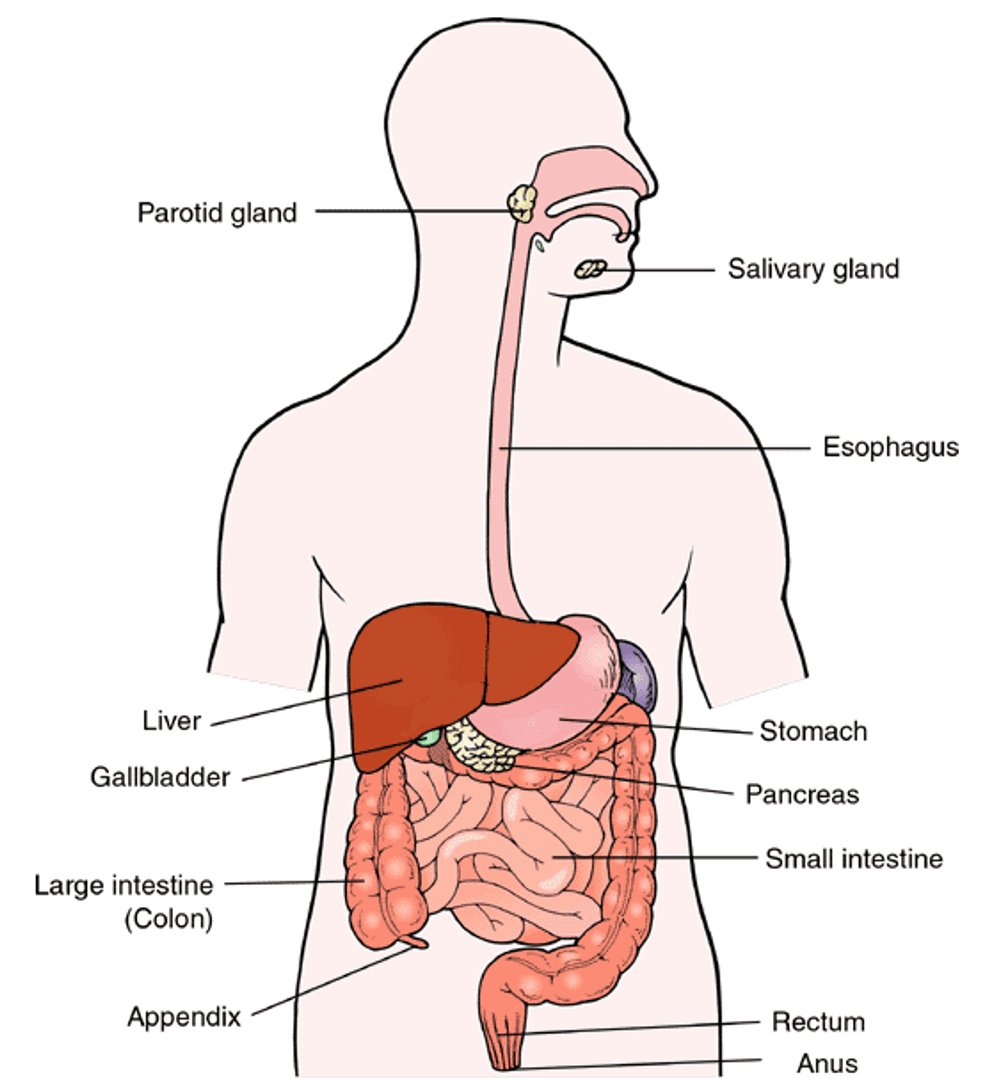
ESOPHAGUS
- STOMACH
- SMALL INTESTINE
- LARGE INTESTINE
- Appendix
- Rectum
- Anus
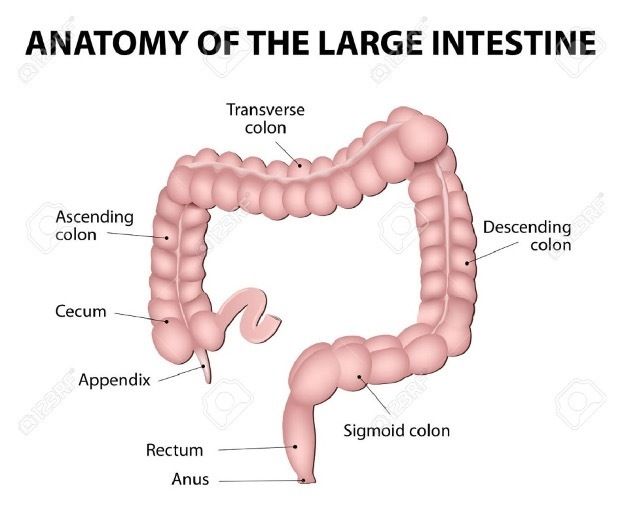
- Consists of: APPENDIX, CECUM, COLON, RECTUM
- COLON
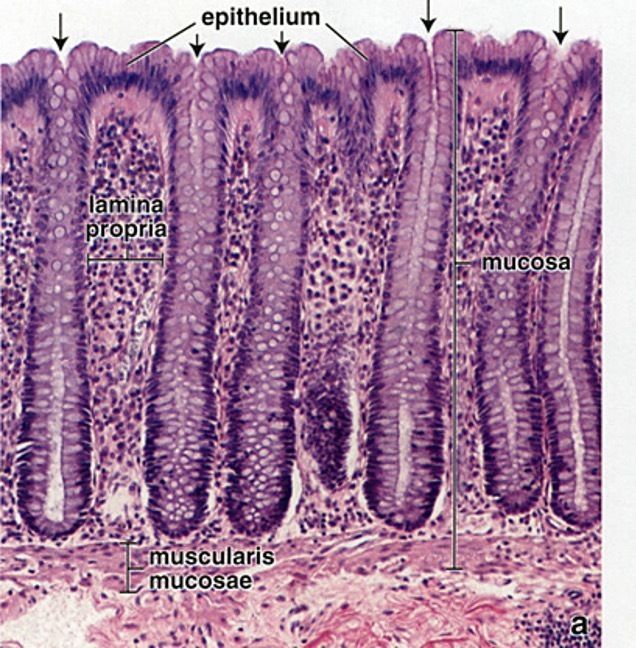
- Tons of goblet cells, no villi, tightly packed glands
- Mature cells at surface
- Stem cells (immature cells) at base of glands
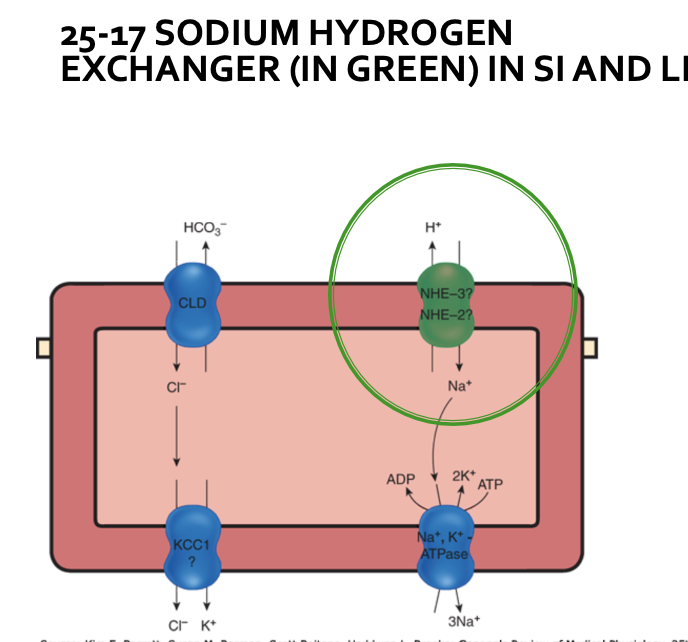
- Electrolyte transport by intestinal epithelial cells
- APPENDIX
- In adults, may influence gut microflora and GALT more than digestion.
- In fetuses, may be more important for growth and development as a source of endocrine cells
- In adults, may influence gut microflora and GALT more than digestion.
- SIGMOID COLON
- Muscular, moves ingesta (feces)
- RECTUM
- Stores feces until elimination
- APPENDIX
- Electrolyte transport by intestinal epithelial cells
- Stem cells (immature cells) at base of glands
- Mature cells at surface
- Colon Conserves Water
- follows osmotic gradient: equalizes when osmotic pressure in lumen = to that of plasma
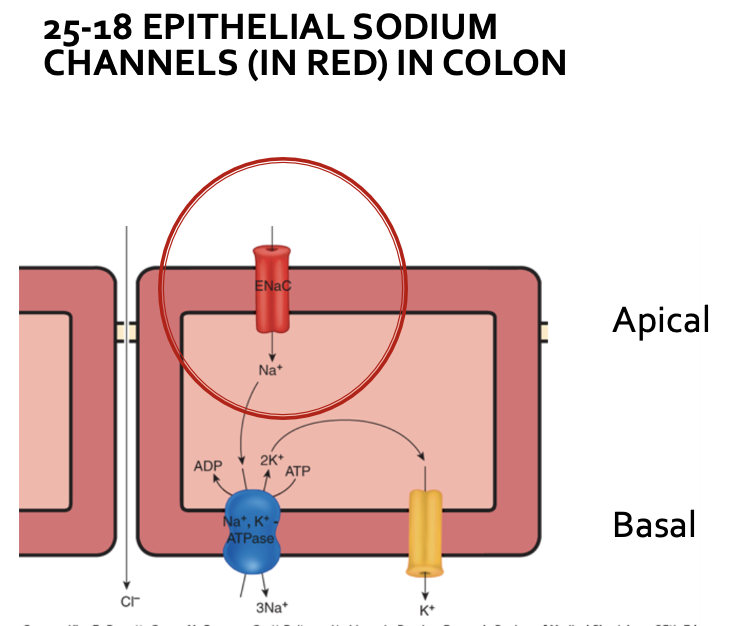
- Absorption of Na+
- Electrogenic
- Na+ enters the apical epithelial sodium channels (ENaC) and exits basal Na+ K+ ATPase pumps
- Cl- follows passively
- Electroneutral
- ATP-dependent Na+/H+ pumps at the basolateral aspect of cells.
- Absorption of Vit k, Vit B12, thiamine, riboflavin
- bacterial metabolism products from microbiome
- Acetate, butyrate, proprionate
- Good for you
- Acetate, butyrate, proprionate
- bacterial metabolism products from microbiome
- Electrogenic
- Absorption of Na+
- 1300ml in 200 out
- follows osmotic gradient: equalizes when osmotic pressure in lumen = to that of plasma
- Tons of goblet cells, no villi, tightly packed glands
- COLON
- Consists of: APPENDIX, CECUM, COLON, RECTUM
- Anus
- Duodenum
- Jejunum
- Ileum
- Empties into LI , 3 m
- Distal segment of SI
- Absorb vitamin B12 and bile acids
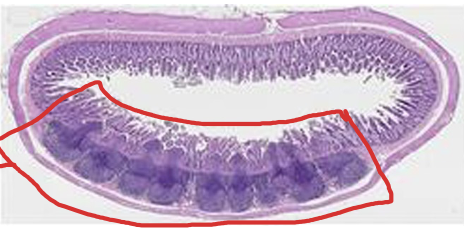
- Contains “Peyer’s Patches"
- Less of a role in digestion than jejunum
- ABSORPTION
- Less of a role in digestion than jejunum
- Contains “Peyer’s Patches"
- Absorb vitamin B12 and bile acids
- Distal segment of SI
- Empties into LI , 3 m
- middle, 2.5 m
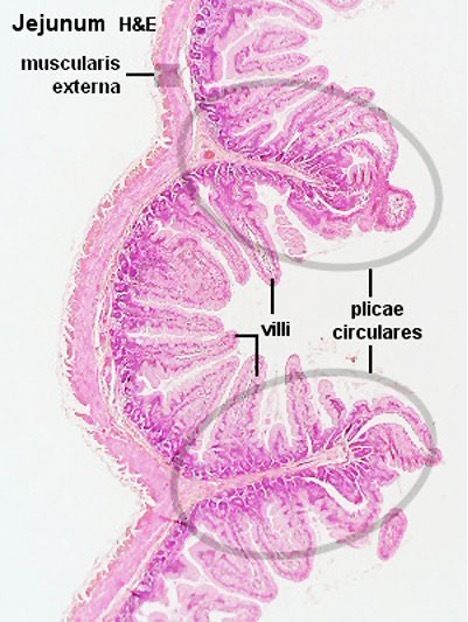
- Lots of plications and villi
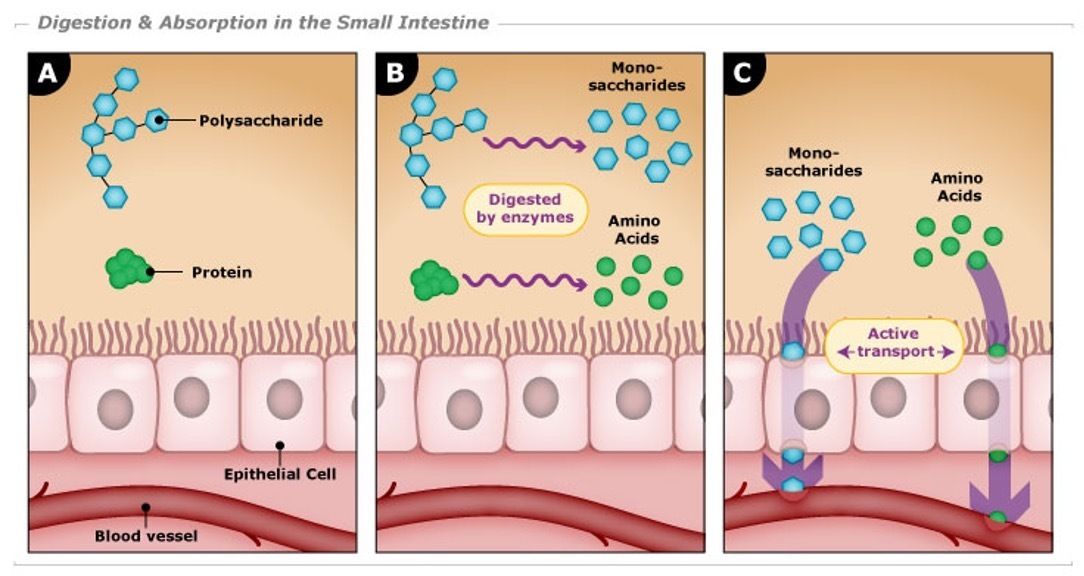
- MAJOR SITE OF absorption of SUGARS, AMINO ACIDS, FATTY ACIDS
- MAJOR SITES OF WATER
- Electrolyte transport by intestinal epithelial cell control:
- water
- Uptake of glucose, amino acids, and bile acids across the apical (luminal) aspect of cells
- Electrochemical gradients are maintained by ATP-dependent Na+/H+ pumps at the basolateral aspect of cells
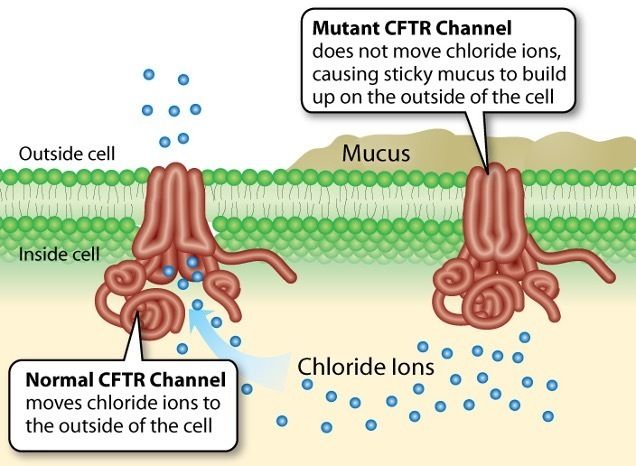
- Cl- is secreted to the lumen through the CFTR on epithelial cells
- Cystic Fibrosis Transmembrane Conductance Regulator
- Na+ and water follow
- Rehydrate mucus
- Cystic Fibrosis Transmembrane Conductance Regulator
- K+ secretion into GIT lumen
- Active
- Exchanged for Na+
- Passive
- Secreted into mucus
- Active
- Spatial distribution of transporters in SI matters
- Disease
- Pathogens can damage villi/microvilli
- Impairs absorption
- osmotic diarrhea
- secretory diarrhea
- Impairs absorption
- Pathogens can damage villi/microvilli
- Homeostasis
- Water and digestion products follow Na+ movement
- Secretion at crypts follow Cl- movement
- Disease
- Cl- is secreted to the lumen through the CFTR on epithelial cells
- Electrolyte transport by intestinal epithelial cell control:
- MAJOR SITES OF WATER
- MAJOR SITE OF absorption of SUGARS, AMINO ACIDS, FATTY ACIDS
- Lots of plications and villi
- Ileum
- Closest to stomach, short, 20-25 cm
- Receives gastric contents (“chyme”) mixes it with pancreatic enzymes and bile.
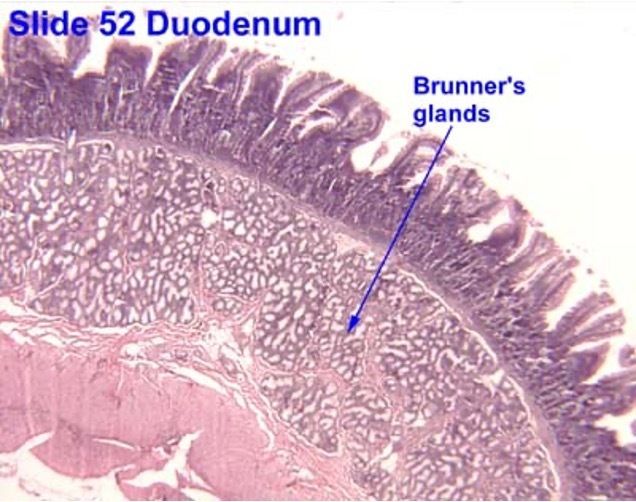
- Neutralizes the gastric acid with mucus and bicarbonate-rich solutions from Brunner’s glands
- Site of IRON absorption
- Neutralizes the gastric acid with mucus and bicarbonate-rich solutions from Brunner’s glands
- Receives gastric contents (“chyme”) mixes it with pancreatic enzymes and bile.
- Jejunum
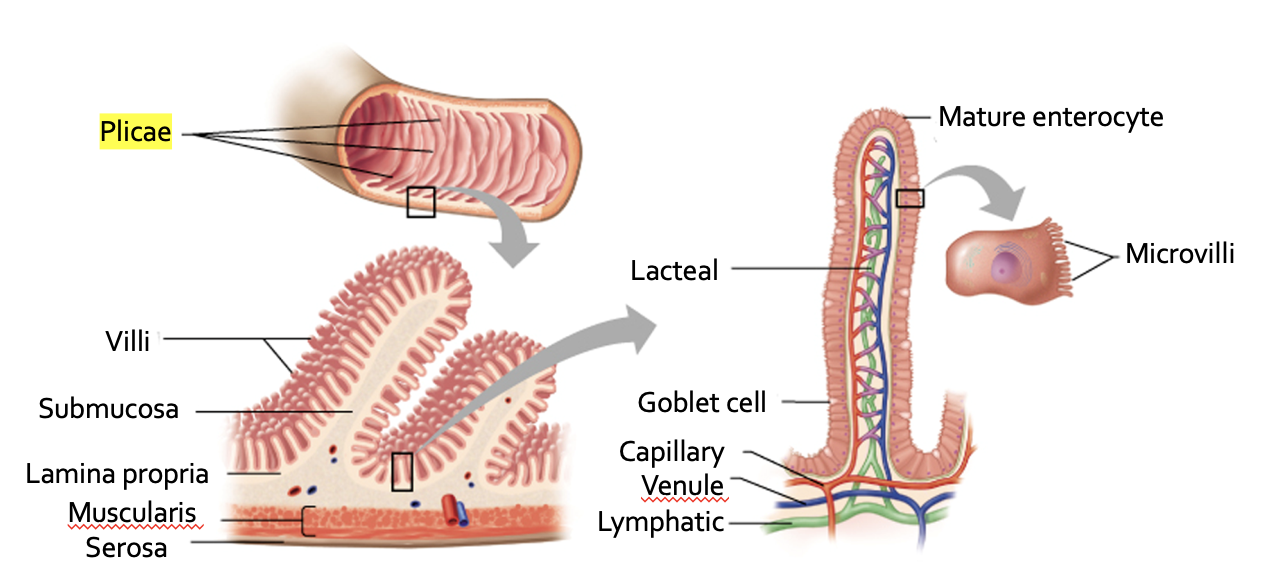
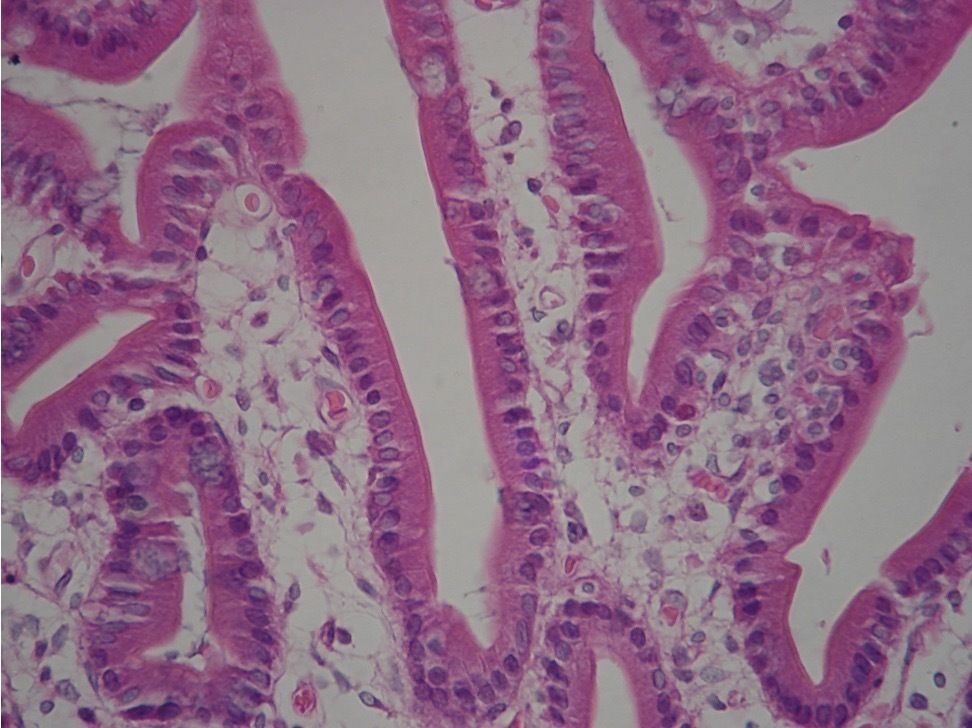
- Villi are unique to SI
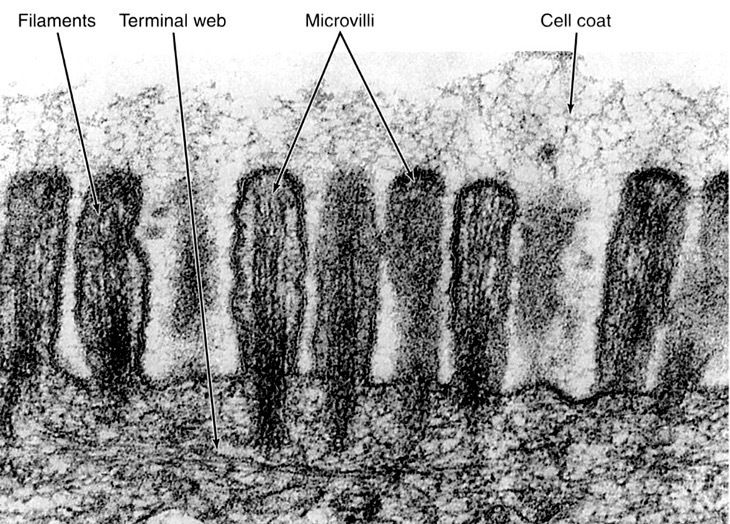
- Microvilli are surface projections from epithelial cells of villi
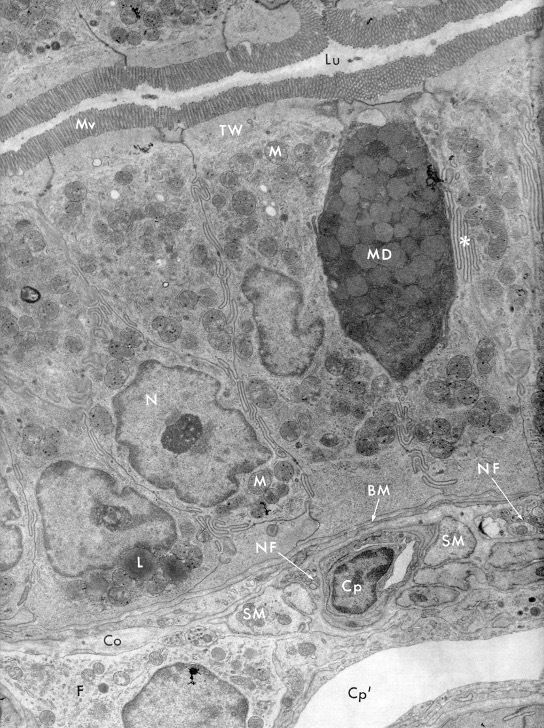
- Brush border= microvilli and glycocalyx on mature enterocytes
- Enterocytes with microvilli
- Filaments and terminal web are made of ACTIN
- Goblet cell filled with mucus droplets
- Enterocytes are attached to the basement membrane
- The glycocalyx contains glycoproteins and enzymes
- Dipeptidases split some amino acids
- Disaccharidases can split some sugars
- Enterocytes with microvilli
- Brush border= microvilli and glycocalyx on mature enterocytes
- Microvilli are surface projections from epithelial cells of villi
- Main location for digestion= Enzymes
- Sucrase
- Lactase
- Isomaltase
- Aminopeptidase
- Dipeptidase
- Enteropeptidase
- Many enzymes are produced in an INACTIVE form and are CLEAVED in the lumen to an active form.- so we don’t digest ourselves
- Enteropeptidase
- Dipeptidase
- Aminopeptidase
- Isomaltase
- Lactase
- Pancreas= Trypsin
- activated by enteropeptidase
- Proteins/polypeptides
- Sucrase
- LARGE INTESTINE
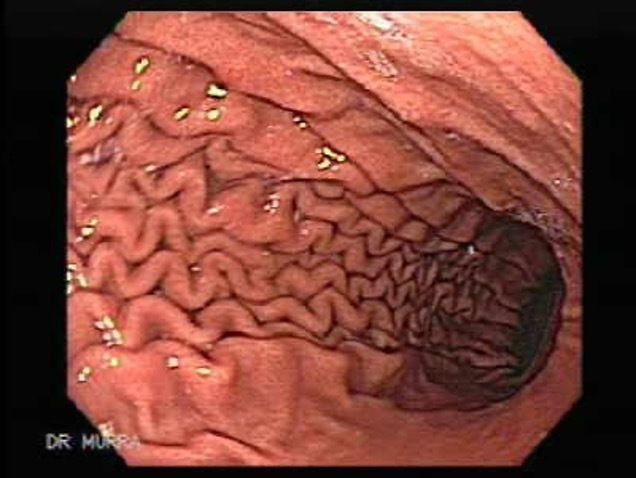
- Rugal folds allow stretch
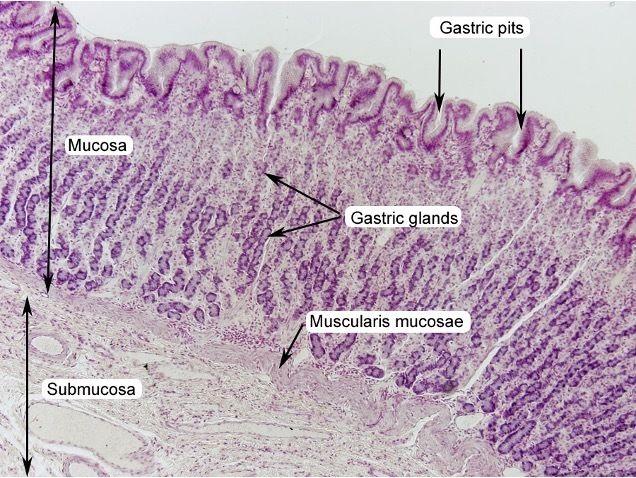
- The stomach does not have villi. Some cells have microvilli but the microvillli are not as abundant or obvious as the brush border of the small intestine.
- Function
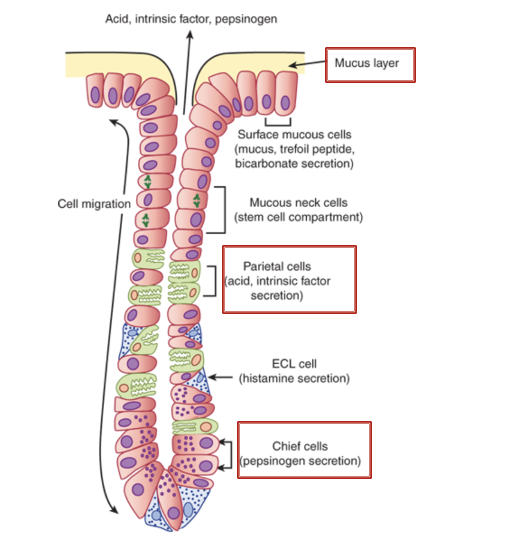
- Mucus protects our stomach from the stomach acid
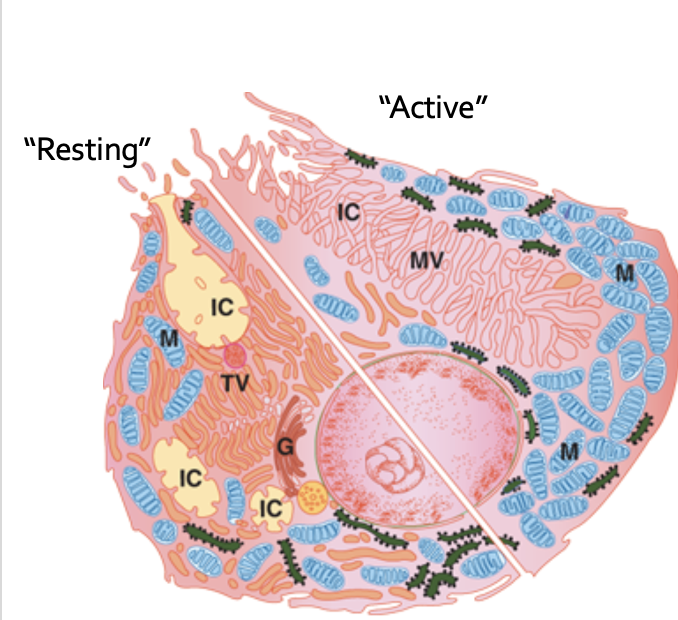
- Parietal cells increase their SA when producing acid
- Vitamin absorption
- PCs produce intrinsic factor which helps w/Vit B12 absorption
- PCs contain many mitochondria to produce ATP
- Microvilli and vesicles
- Increase the area that H+ and Cl- can be secreted from
- Microvilli and vesicles
- PCs contain many mitochondria to produce ATP
- PCs produce intrinsic factor which helps w/Vit B12 absorption
- Acid production increased by:
- Gastrin
- Histamine
- Acetylcholine
- Vitamin absorption
- Hydrochloric acid = pH2-3
- Hydrolysis of macromolecules and lipase
- Inhibit bacterial growth
- Shigella spp.
- Some E. coli
- ***Listeria monocytogenes
- Parasite oocysts
- Pathogens that survive stomach acid
- Parietal cells increase their SA when producing acid
- Gastric secretions add 2.5L/day to GIT contents
- FUN FACT
- Liquefy, mix, and break down ingesta into small particles
- Peristalsis
- Acid
- Enzymes
- Pepsin
- Breaks down proteins/polypeptides
- Activated to pepsin by Hal
- Breaks down proteins/polypeptides
- Lipase
- Triglycerides
- Pepsin
- Regulates flow into duodenum
- Mucus protects our stomach from the stomach acid
- Function
- Store ingested meal
- Peristalsis
- The stomach does not have villi. Some cells have microvilli but the microvillli are not as abundant or obvious as the brush border of the small intestine.
- SMALL INTESTINE
- MOUTH
- SALIVARY GLANDS
- Break down food
- Mechanical
- Enzymatic
- Amylase breaks down starch
- Saliva
- IgA
- Lysozyme
- Mucins
- Alkaline
- Balances acidic pH in stomach
- STOMACH
!!Big Picture!!
- Structure
- Convoluted tube with invaginations and surface projections.
- Most anatomic divisions are separated by sphincters
- Convolutions: 30-300 m2 for avg adult
- Important for small intestine
- Convolutions of the jejunum= plicae, villi, and microvilli
- As the cells differentiate they migrate towards the tips as they mature
- Plicae are permanent folds in the mucosa and submucosa
- In all parts of the large intestine and jejunum of SI
- SI does not like to stretch
- They do not like to stretch
- In all parts of the large intestine and jejunum of SI
- Convolutions: 30-300 m2 for avg adult
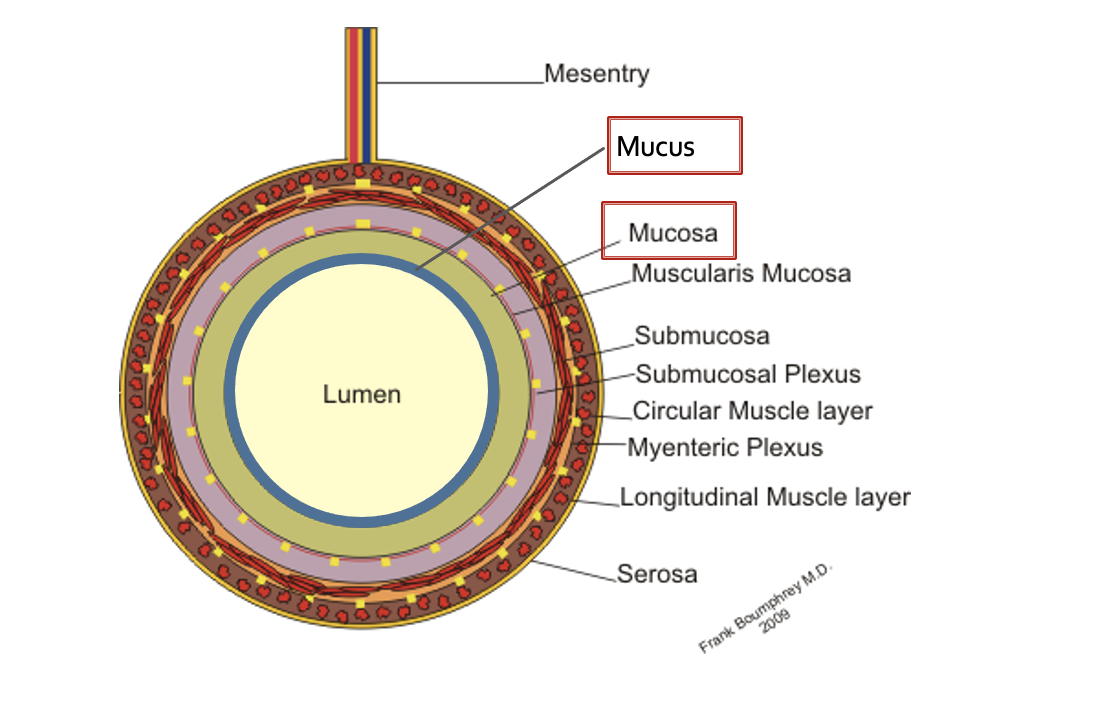
- Lumen is inside your body but OUTSIDE your tissues
- Pathogens interact with the mucus and mucosa first
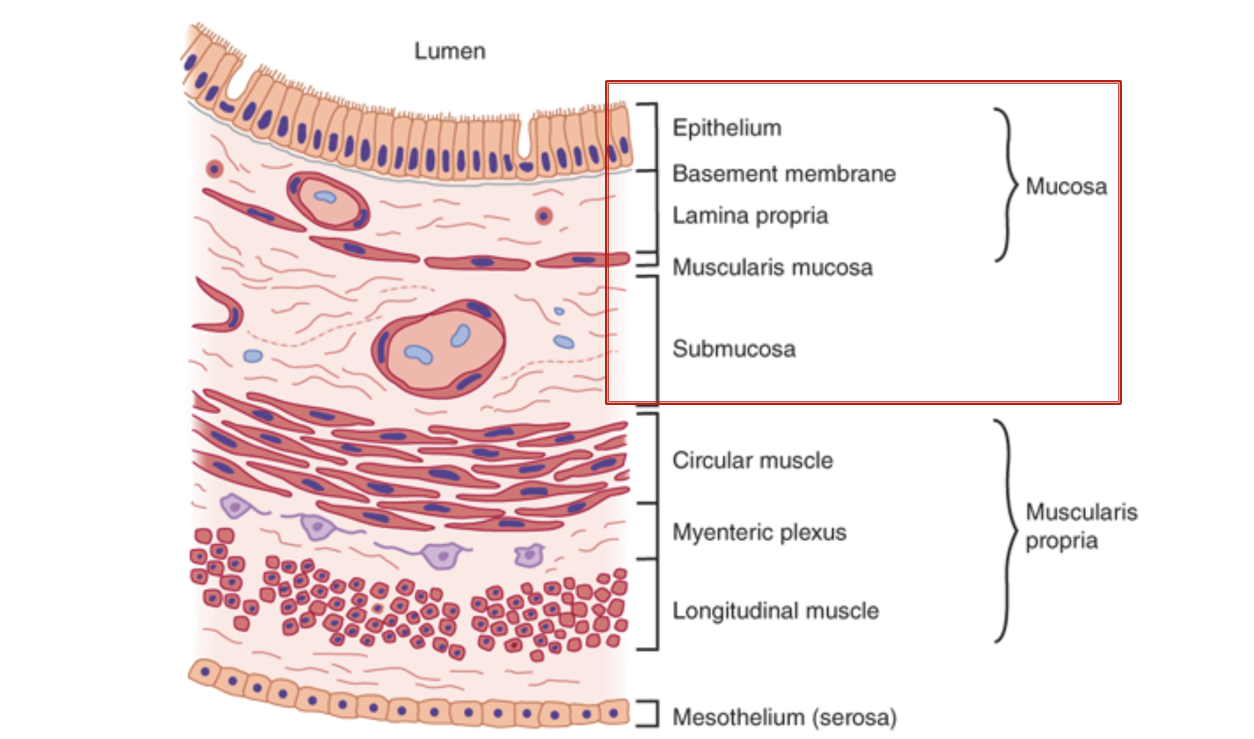
- Mucosa: epithelial cell layer and the subjacent tissue of the lamina propria
- Pathogens interact with the mucus and mucosa first
- Most anatomic divisions are separated by sphincters
- Convoluted tube with invaginations and surface projections.
- Function
- Maximize surface area for enzymatic digestion, absorption, secretion
- Control flow
- Increase SA, provide flexibility
- Stretching of stomach/colon/rectum
- Storage of food and feces
- Storage of food and feces
- Digestion and absorption
- Stretching of stomach/colon/rectum
- Increase SA, provide flexibility
- Control flow
- Maximize surface area for enzymatic digestion, absorption, secretion
- Structure
Briefly covered
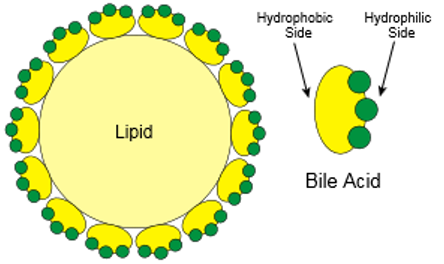
- Bile normal functions
- Bile is alkaline solution produced by liver and stored in gall bladder
- Bile salts (bile acids)
- synthesized from cholesterol
- Act as detergents to emulsify lipids for absorption
- Antimicrobial
- Some pathogens like Salmonella Typhi can survive in bile
- Some pathogens use bile components as signals to adapt.
- Salmonella, Vibrio, Cryptosporidium
- Bile pigments
- Derived from hemoglobin
- Brown, green, yellow
- Bile salts (bile acids)
- Bile is alkaline solution produced by liver and stored in gall bladder
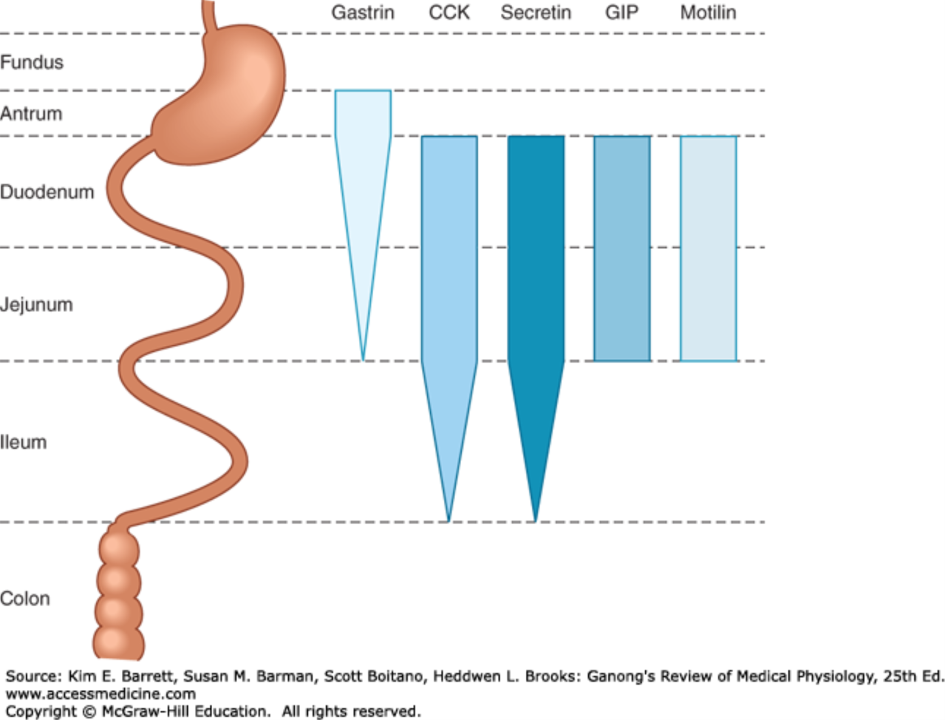
- Hormones that regulate GIT
- Gastrin
- Gastric epithelial cells, stimulates acid secretion, pepsin production, growth of GIT mucosa
- Secretin
- SI endocrine cells
- Inc bicarbonate, dec acid secretion
- SI endocrine cells
- Cholecytokinin (CCK)
- SI endocrine cells
- Gall bladder contraction, pancreatic secretion
- SI endocrine cells
- Gastrin
- PERISTALSIS
- A reflex initiated by lumen stretching, resulting in contraction behind the stretch and relaxation in front.
- VOMITING!!= REVERSE Peristalsis
- REMOVES stomach & upper GIT CONTENTS and PROTECTS the airway.
- STIMULI= irritants to mucosa like infection or inflammation, chemoreceptors in brain, links to limbic system
- VOMITING!!= REVERSE Peristalsis
- Requires intact innervation, smooth muscle coordination, and multiple types of neurotransmitters that we are not covering
- A reflex initiated by lumen stretching, resulting in contraction behind the stretch and relaxation in front.
- Bile normal functions
Imagens e arquivos do mapa

Informações
- Descrição
- infectious disease-MS GI disease unit Mapa Mental sobre GI A&P, criado por Alyssa Walsh em 16-10-2021.
- Criado por
- Alyssa Walsh
- Visualizações
- 0
- Avaliação