
Mapa mental
Genectically Modified Food
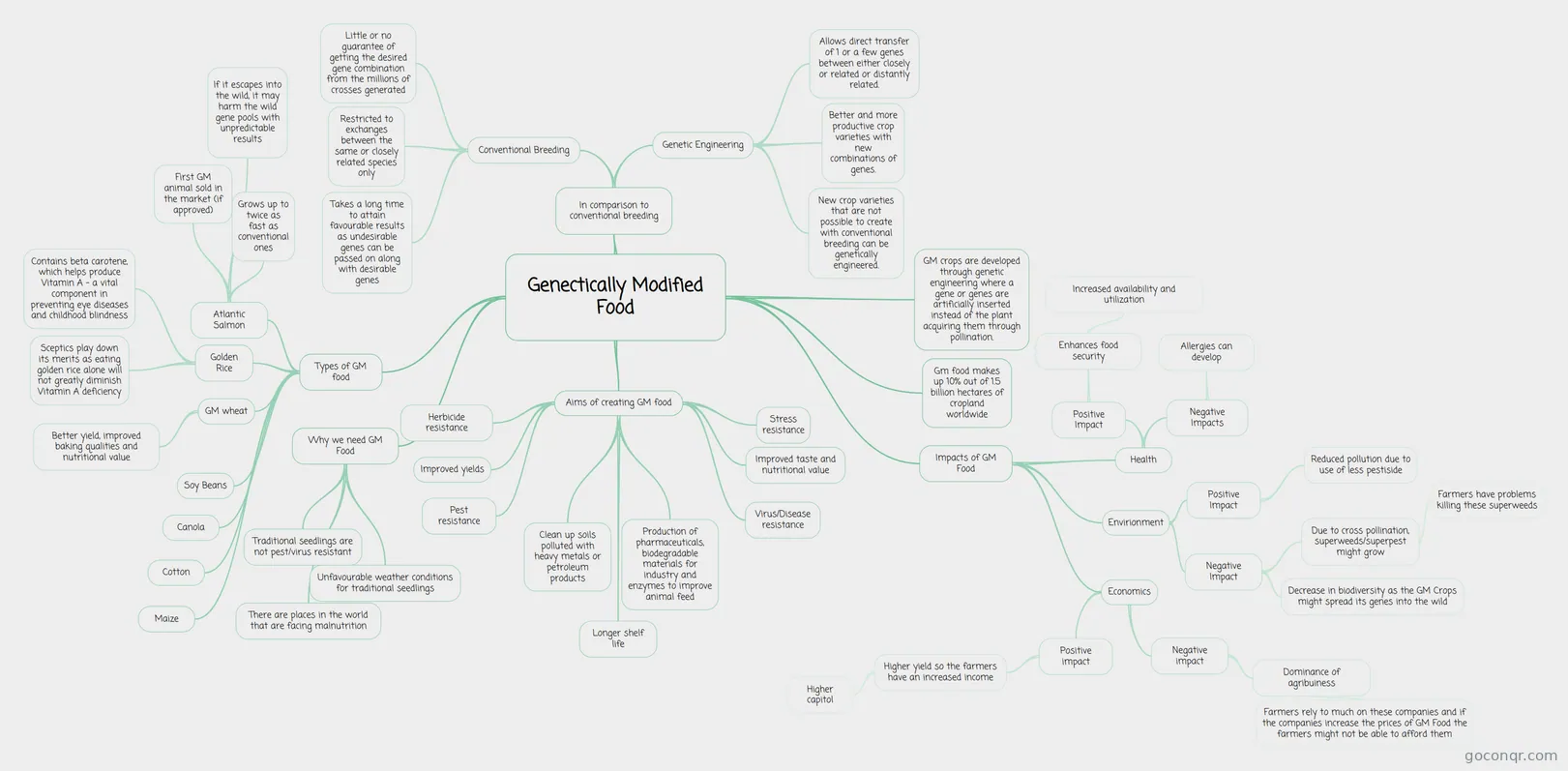
Mind map: genetically modified food
Conteúdo do mapa
Genectically Modified Food
GM crops are developed through genetic engineering where a gene or genes are artificially inserted instead of the plant acquiring them through pollination.
In comparison to conventional breeding
- Conventional Breeding
- Restricted to exchanges between the same or closely related species only
- Little or no guarantee of getting the desired gene combination from the millions of crosses generated
- Takes a long time to attain favourable results as undesirable genes can be passed on along with desirable genes
- Genetic Engineering
- Allows direct transfer of 1 or a few genes between either closely or related or distantly related.
- Better and more productive crop varieties with new combinations of genes.
- New crop varieties that are not possible to create with conventional breeding can be genetically engineered.
- Conventional Breeding
Aims of creating GM food
- Pest resistance
- Stress resistance
- Virus/Disease resistance
- Improved yields
- Herbicide resistance
- Improved taste and nutritional value
- Production of pharmaceuticals, biodegradable materials for industry and enzymes to improve animal feed
- Clean up soils polluted with heavy metals or petroleum products
- Longer shelf life
Types of GM food
- Atlantic Salmon
- Grows up to twice as fast as conventional ones
- First GM animal sold in the market (if approved)
- If it escapes into the wild, it may harm the wild gene pools with unpredictable results
- Golden Rice
- Contains beta carotene, which helps produce Vitamin A - a vital component in preventing eye diseases and childhood blindness
- Sceptics play down its merits as eating golden rice alone will not greatly diminish Vitamin A deficiency
- GM wheat
- Better yield, improved baking qualities and nutritional value
- Soy Beans
- Maize
- Cotton
- Canola
- Atlantic Salmon
Gm food makes up 10% out of 1.5 billion hectares of cropland worldwide
Why we need GM Food
- Traditional seedlings are not pest/virus resistant
- Unfavourable weather conditions for traditional seedlings
- There are places in the world that are facing malnutrition
Impacts of GM Food
- Health
- Positive Impact
- Enhances food security
- Increased availability and utilization
- Enhances food security
- Negative Impacts
- Allergies can develop
- Positive Impact
- Envirionment
- Positive Impact
- Reduced pollution due to use of less pestiside
- Negative Impact
- Decrease in biodiversity as the GM Crops might spread its genes into the wild
- Due to cross pollination, superweeds/superpest might grow
- Farmers have problems killing these superweeds
- Positive Impact
- Economics
- Positive impact
- Higher yield so the farmers have an increased income
- Higher capitol
- Higher yield so the farmers have an increased income
- Negative impact
- Dominance of agribuiness
- Farmers rely to much on these companies and if the companies increase the prices of GM Food the farmers might not be able to afford them
- Dominance of agribuiness
- Positive impact
- Health
Informações
- Descrição
- Mapa Mental sobre Genectically Modified Food, criado por Cheryl chan em 27-09-2015.
- Criado por
- Cheryl chan
- Visualizações
- 2
- Avaliação
Mais sobre Genetically Modified Organisms