
Mapa mental
Cognitive Interaction Design
Conteúdo do mapa
Cognitive Interaction Design
1. Interaction Basics
- 1.1 Cognitive Perspective
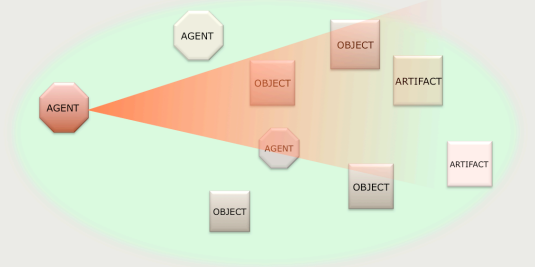
- General conceptual framework consisting of an environment or world, an agent in this environment, and a set of success criteria for the agent in the environment.
- Cognition
- Processes based on symbolic representations and information processing.
- Perception
- Memory
- Problem solving
- Decision making
- (Intentional) acting
- Processes based on symbolic representations and information processing.
- Cognitive ergonomics
- Optimizing human work, with specific regard to cognitive processes.
- 1.2 Artifacts
- Human-made entities
- 1.3 Interface
- 2. A boundrary of an independent object
- Herbert Simon's view.
- Focuses on an artifacts external interface with its more or less problematic and uncontrolled environment.
- 1. A surface of contact between two matching objects
- Focuses on internal interfaces between the parts of complex design.
- 3. A means for controlling an objects
- Plays a dominant role in classical HCI.
- Focuses exclusively on the "use end", and is all about functions and features.
- 4. A means for expressions and impressions.
- The interface is seen as the "face" of an object.
- 2. A boundrary of an independent object
- 1.4 Interaction
- Two entities interact when they have an effect on each other, in both directions.
- An ongoing acitivy.
- Classical HCI
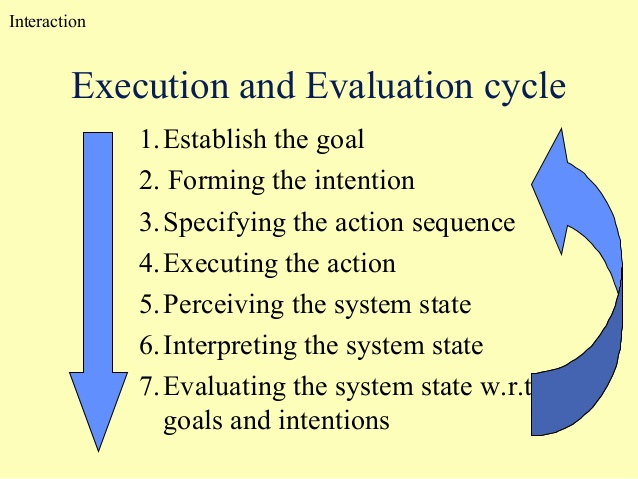
- Donald Norman's seven stage cycle
- Donald Norman's water tap example.
- Industrial virtues: standards, norms, specifications, carefulness, knowledge, verification, repeatability, punctuality, rationality, dutifulness, predictability, orderliness, prudence, conformity, uniformity, control
- 1.1 Cognitive Perspective
2. Types of Interaction
- 2.1 Interaction metaphors
- Hutchin's interaction metaphor taxonomy
- 1. Activity metaphors: concern the ultimate goal and outcome of the interaction. Is the user playing a game? Designing an artifact? Communicating with other humans? Controlling a process?
- 2. Mode of interaction metaphors: Concern the relationship between the user and the computer, without regard to the particular task the user is attempting to accomplish via the computer. The choice of metaphor at this level determines what sort of thing the user thinks the computer is. Is it a conversational partner? An environment for action? A tool box and materials shed?
- The conversation metaphor: interaction by "conversing" with an intermediary helper.
- The model-world metaphor (acting-in-a-world-metaphor): interaction by doing it yourself.
- 3. Task domain metaphors: specific for particular applications or services, e.g. the file metaphor.
- Hutchin's interaction metaphor taxonomy
- 2.2 Three interaction stances (Dennet)
- 2. Design stance: You try to explain and predict from knowledge or assumptions about the designed purpose, the function, of the system: it will do what it is supposed to do, what it is designed to do.
- Designed interaction: interaction with an object/interactant understood as designed, with (at least partially) known functions. This is surely the most common assumption made by researchers, designers and users alike.
- Strategies of someone who is trying to explain and predict the behavior of a system.
- 1. Physical stance: you try to explain and predict in terms of the physical states of the system and known laws of nature: it will do what it is forced by natural laws to do.
- Ad hoc interaction: there are several objects with known ”primitive” purposes and we want to combine them for some new particular super purpose—the way we approach building something out of generic Lego building blocks
- 3. Intentional stance: you try to explain and predict in terms of assumptions about the information the system has, its goals and motives, and rationality: it will do whatever is most rational to do given its beliefs and desires.
- A system to which the intentional stance successfully applies is called an intentional system.
- Some “smart” applications, and some particular parts of more traditional artifacts may open up for this kind of interaction. HRI (Human–Robot Interaction), in particular, invites to it, as we shall see.
- 2. Design stance: You try to explain and predict from knowledge or assumptions about the designed purpose, the function, of the system: it will do what it is supposed to do, what it is designed to do.
- 2.3 Interaction paradigms
- The virtuality paradigm
- GUI or virtual reality, use is typically not directly related to the user’s specific use situation.
- The ubiquity paradigm
- The users use facilities on site, for uses that are relevant to the situation of use, and the interface gives access to the artifact it is part of
- The mobility paradigm
- Remote access or in situ
- The virtuality paradigm
- 2.1 Interaction metaphors
3. Thinking and acting
- 3.1 Thinking in context
- Theories where context is an important part of cognition: distributed cognition, epistemic actions, extended-mind hypothesis, activity theoryand ecological psychology.
- 3.2 Distributed cognition
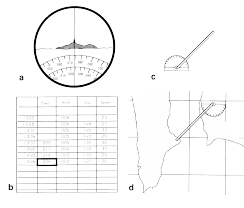
- Edward Hutchin's ship navigation study.
- spoken and written numbers, drawn line, angle setting of the hoey and fathometer reading was used to navigate.
- Cognition is distributed over persons and artifacts, with regard to representing, storing and transferring information in various forms, and with regard to the computations taking place in solving the task.
- Assistive redundancy.
- The cognitive system in focus in distributed cognition is the cognition of the system as a whole
- Edward Hutchin's ship navigation study.
- 3.3 Off-loading cognition into the environment
- Epistemic actions
- Physical actions whose primary function is to improve cognition by improving space complexity, time complexity, and reliability
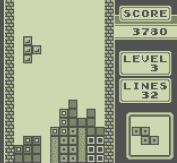
- Kirsh and Maglios tetris study: physical acting can be used as a way of thinking.
- Pragmatic actions
- Physical actions whose primary function is to bring the agent closer to its physical goal.
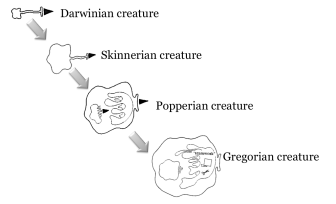
- Dennett's sketch of cognitive evolution.
- Cognitive artifacts
- Personal view: is what the task look like from the user's point of view.
- System view: the task is the same, but the enhanced (person + artifact) seems more competent.
- Epistemic actions
- 3.4 Symbols and object symbols
- Basic expecations on symbols:
- 1. Lightweight: physically easy, cheap and safe to manipulate
- 2. Can be at a distance from their referents.
- 3. Can be counterfactial: can symbolize state of affairs other than the real and actual.
- 4. They are perspicuous
- Basic expecations on symbols:
- 3.6 Extended-mind hypthesis
- Clark & Chalmers extended-mind belief
- 1. Accessability - directly avallable without difficulty
- 2. Reliance - constantly consulted (when relevant)
- 3. Trust - retrieving the information means automatically endorsing it
- Clark & Chalmers extended-mind belief
- 3.1 Thinking in context
4. Complexity in interaction
- 4.2 Internal, external, interaction and mediated complexity
- 4.4 The interface in a tight squeeze
- Perceptual cluttering
- Behavioral cluttering
- Motives for complication
- automation
- Functional orientation:
- Structural orientation:
5. Esthetical aspects
- 5.1 Attractive things seem to work better
- Karuso's and Kashimura's experiment
- Norman:
- 5.2 Levels of emotional response
- Norman's emotional theory
- 1. Visceral level: prewired, fast and automatic reactions (emotion when riding a roller coaster)
- 2. Behavioral level: not consious, automated behaviour (the feeling of skilled piano playing)
- 3. Reflective level: consious and reflective thoughts and evaluation of your own behavior and experiences (emotions in contemplating a serious work of literature or art)
- Norman's emotional theory
- 5.3 Beauty in action
- Djajadiningrat
- Feed forward: communicating the results of various actions.
- Djajadiningrat
- 5.1 Attractive things seem to work better
6. Cognitive Design Issues
- 6.1 The notion of Design Space
- The abstract space of conceivable designs of some particular type of artifact, spanned by a (any) number of design parameters
- 6.2 Material, appearence etc.
- Effect
- Appearence
- Implementatino
- New technologies
- Organic User Interfaces
- (1) Input equals output (2) Function equals form (3) Form follows flow
- Organic User Interfaces
- 6.3 Artifact character theory
- Characteristic
- A meta property: a high-level attribute that ideally applies to every aspect of the characterized entity (complete)
- Character
- Consists of a set of characteristics that combine to form a relatively coherent whole.
- A character should be designed so that:
- 1. Each of its characteristics is as complete as possible
- 2. Each of its characteristics is easily recognizable from the artifacts appearence if possible.
- 3. Its characteristics together form a coherent whole, a conceivable character.
- 4. Its character matches its purpose and use situation well.
- Characteristic
- 6.4 Designing and implementing interactino
- How do you implement designed interaction?
- 1. The artifact enforces the intended behavior.
- 2. The artifact object invites or entices the intended behavior.
- 3. By explicit instruction, demonstration, training of designed behavior.
- 4. By imitation of other interactor's behavior.
- How do you implement designed interaction?
- 6.1 The notion of Design Space
7. Advanced interaction
- 7.1 Human-Robot interaction
- Motives for human-robot interaction
- 1. Solve/coordinate potentiallt conflicting/interfering behavior
- 2. The robot needs additional information or instructions.
- 3. Interaction with human is an important part of the robot's task.
- 4. Semiautonomous robot: it needs a helping hand, here and there, now and then.
- 5. Cooperating robot: cooperating with humans is part of the job description.
- Motives for human-robot interaction
- 7.2 Rational interaction with robots
- To adopt the intenational stance towards X is to:
- 1. ascribe beliefs to X
- 2. ascribe desires to X
- 3. ascribe rationality to X
- 4. and use that to successfully explain and predict X's behavior.
- Fritz Heider 6 Marianne Simmel's animated film study
- Hu
- Clifford Nass & Byron Reeves experiment
- Humans tend to treat computers as social beings.
- Paul Ekman's basic emotions: fear, anger, fear, disgust, surprise, hapiness, sadness)
- Common ground (Herbert Clark)
- Information about the extent to wich thery share understandings: beliefs and values (desires)
- The principle of least collective effort: use the minimum amount of communicative effort needed to convey the meaning.
- Robot ethics
- 0. A robot may not harm humanity, or, by inaction, allow humanity come to harm.
- 1. A robot may not injure a human being or, through inaction, allow a human being to come to harm, unless this would violate the Zeroth Law.
- 2. A robot must obey orders given to it by human beings except where such orders would conflict with the Zeroth or First Law.
- 3. A robot must protect its own existence as long as such protection does not conflict with the Zeroth, First or Second Law.
- To adopt the intenational stance towards X is to:
- 7.1 Human-Robot interaction
Imagens e arquivos do mapa




Informações
- Descrição
- Mapa Mental sobre Cognitive Interaction Design, criado por karro.jonzen em 06-10-2015.
- Criado por
- karro.jonzen
- Visualizações
- 8
- Avaliação