
Mapa mental
PE - Anatomy and Physiology
Conteúdo do mapa
PE - Anatomy and Physiology
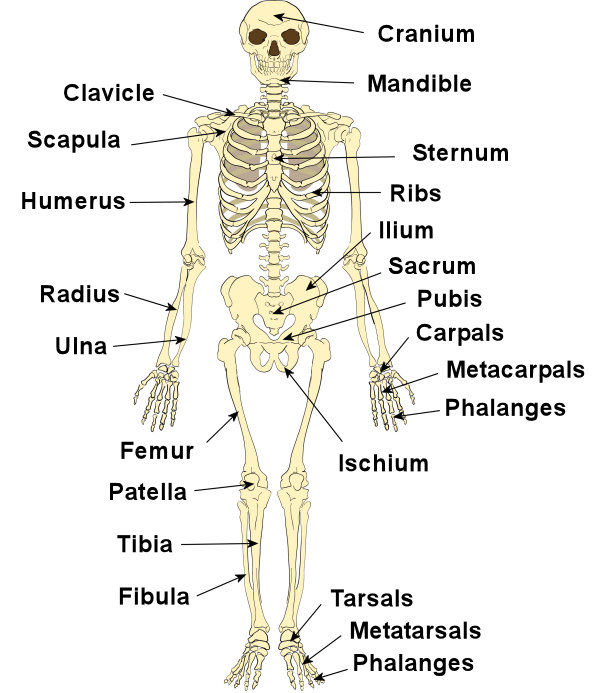
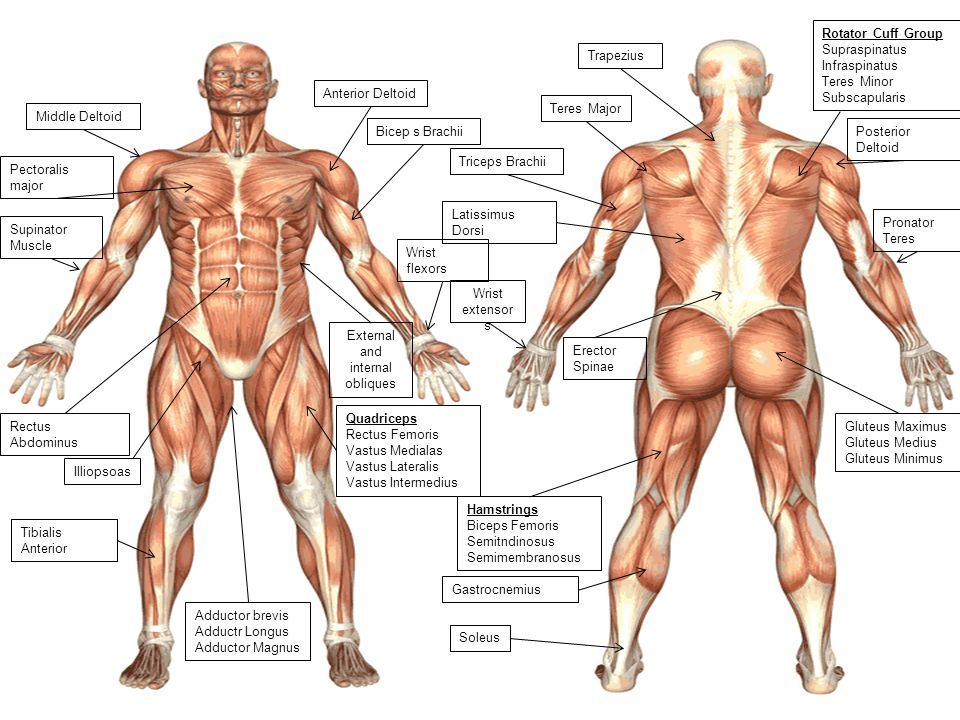
Skeletal System and Muscles of the Body
Synovial Joints
- Ball and Socket - Shoulder
- Saddle - Thumb
- Hinge - Elbow
- Gliding - Vertabrea
- Pivot - Neck
- Condyloid - Wrist
3 Main Joints
- Synovial Joints
- Fibrous (immoveable) Joints
- Cartilaginous (slightly moveable) Joints
Structure of a Synovial Joint
- Ligament
- A band of strong fibrous tissue
- Connects bone to bone
- Synovial Fluid
- A slippery fluid - the consistency of egg-whites - that is contained within the joint cavity
- To reduce friction between the articular cartilage in the joint
- Articular Cartilage
- Glassy-smooth cartilage that is spongy and covers the ends of the bones in the joint
- To absorb shock and prevent friction between the ends of the bones in the joint
- Joint Capsule
- A tough fibrous tissue that has two layers, with the fibrous capsule lying outside the synovial membrane
- The fibrous capsule helps to strengthen the joint, while the synovial membrane lines the joint and secretes synovial fluid
- Tendon
- A band of strong fibrous tissue
- Connects muscle to bone
- Ligament
Movement at Synovial Joints
- Flexion
- Bending of a limb
- Extension
- The straightening of a joint
- Horizontal Flezion
- When the shoulder is flexed and the hand comes across the front of the body
- Horizontal Extension
- When the shoulder is flexed and the hand moves away from the front of the body
- Abduction
- Moving the body part away from the central line
- Adduction
- Moving the body part towards the central line
- Circumduction
- Moving the entire connecting limb through its full range of motion
- Pronation
- The movement of turning the palm over to face downwards
- Supnation
- The movement of turning the palm over to face up
- Dorsiflexion
- Backward flexion or bending, as of the hand or foot
- Plantar flexion
- Extension of the ankle, pointing of the foot or toes
- Lateral flexion
- Bending to the side
- Rotation
- Movement in which something revolves around a single long axis
- Flexion
Antagonistic Pair
- Occurs when muscles work as a pair to produce a movement
- One muscle shortens to produce movement whilst the other muscle lengthens to allow that movement
- E.G. Flexion at the arm, the biceps brachii being the agonist and the triceps brachii being the antagonist
Contraction Types
- Isometric
- Tension is produced at the muscle, but there is no change in muscle length
- Isotonic
- Tension is produced in the muscle and there is a change in muscle length
- It is broken down into concentric and eccentric
- Concentric
- Shortening of the muscle while producing tension
- Eccentric
- Lengthening of the muscle while producing tension
- Isometric
Health Disorders
- Osteoporosis
- Caused by low bone density
- Bones in hip, spine and wrist joints are most commonly affected
- More associated with the older generation and women over men
- Growth Plate Disorders
- Damage (fractures) to the growth plate within a bone - common as its the weakest part of the growing skeleton
- Associated with young people as the growth plates are still active
- Caused by sudden force travelling through the bone
- Osteoarthritis
- Wearing down of articular cartilage causing friction within joints
- Can lead to bone spurs within joints that cause considerable pain
- Effects large weight bearing joints such as hip and knees
- Joint Stability
- Refers to whether a joint is able to be compressed and stretched repeatedly without injury
- Shallow joints are less stable
- Weight bearing and deep joints are most stable
- Ligaments help to promote joint stability
- Ligaments aren't very elastic though and so can be damaged easily
- Location and tone of surrounding muscles can effect joint stability
- Posture and Alignment
- The bodies use of muscles to maintain good posture
- Good posture allows you to exercise with maximum efficiency and minimum risk of injury
- Good posture prevents lower back pain
- Osteoporosis
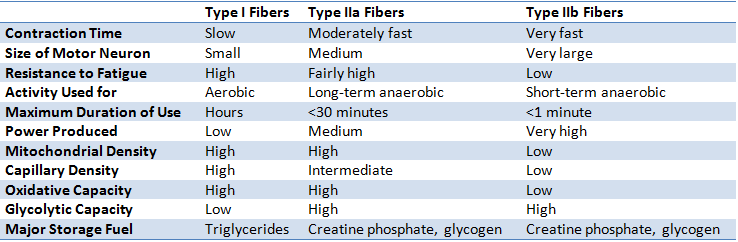
Muscle Fibre Types
Imagens e arquivos do mapa
Informações
- Descrição
- Mapa Mental sobre PE - Anatomy and Physiology, criado por Jack Burdett em 14-10-2015.
- Criado por
- Jack Burdett
- Visualizações
- 41
- Avaliação