
Mapa mental
12. Sampling and Hypothesis Testing
Conteúdo do mapa
12. Sampling and Hypothesis Testing
H0 is the Null hypothesis or default claim eg earth is round
H1 is Hypothesis and is what is not currently proven and rejects H0
Testing
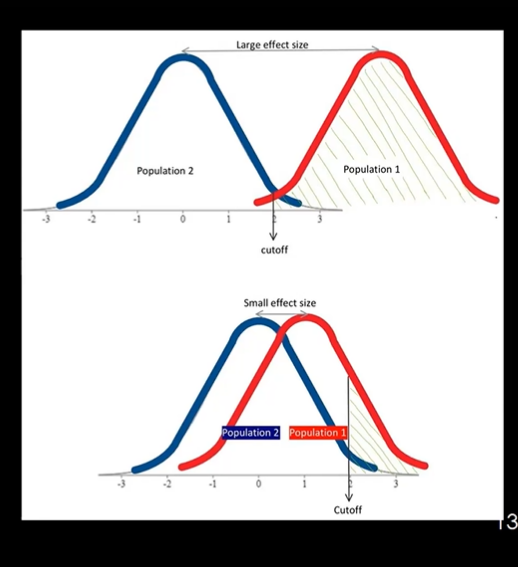
- uses plot graph for null and H1 to see any difference
- p-value
- The p-value given by a statistical test answers this question. It gives you the probability of obtaining a difference of this size or larger, assuming that the null hypothesis is true i.e., the chances that the result is a false positive Smaller p-values = good! Result “unlikely” to be due to chance
- Type 1 error
- Rejecting the null hypothesis when it is actually true = Type 1 Error
- An alpha of 0.05 indicates that you are willing to accept a 5% chance that you are wrong when you reject the null hypothesis. If alpha = 0.05, then p-values < .05 are “statistically significant”
- Rejecting the null hypothesis when it is actually true = Type 1 Error
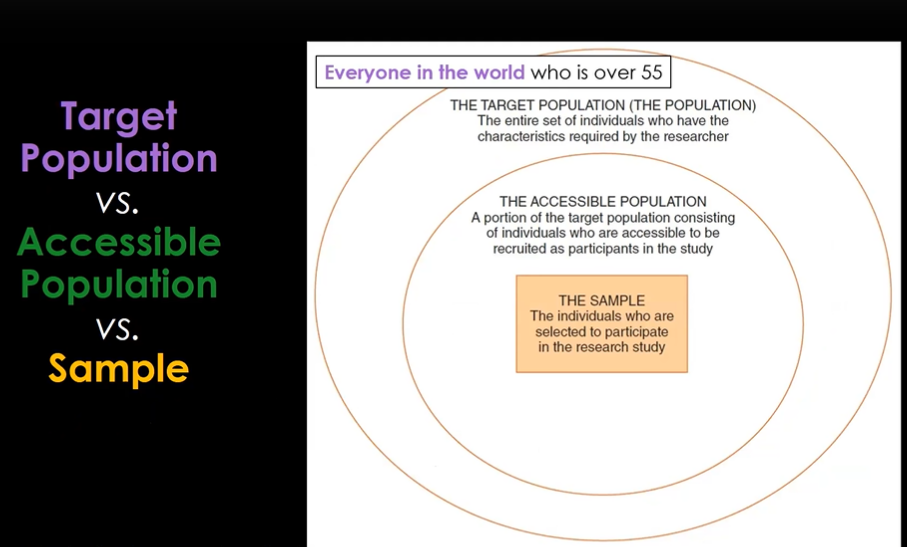
Population v Sample
- Population is all
- Sample is represented group of population
Sampling Methods
- Probability Sampling
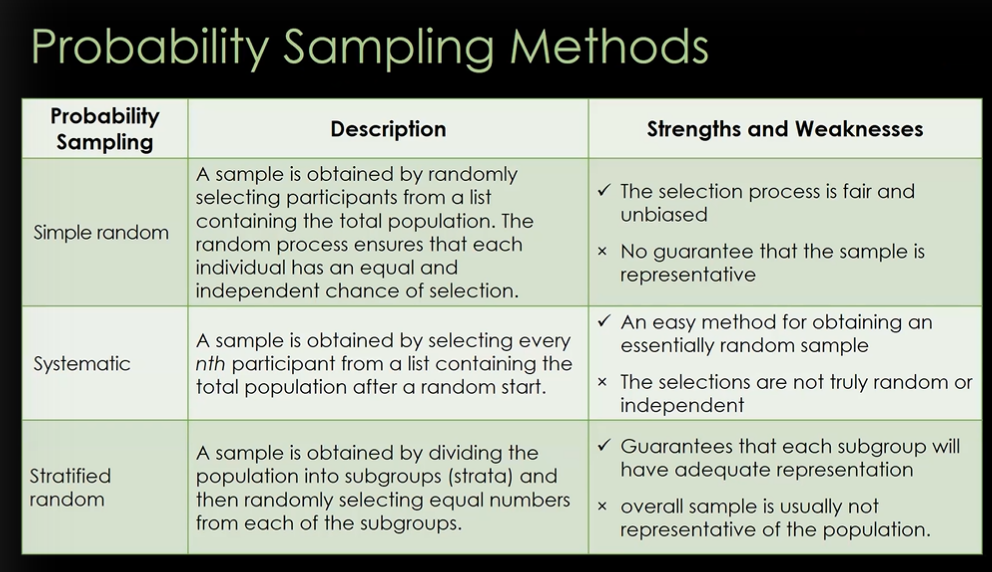
- 1. Simple random sampling
- equality and independent, drawn from total population
- concern: chance can create distorted sample. eg might get heads 10 times in coin toss
- types:
- 1. sample with replacement (if drawn, put back in)
- 2. sample without replacement (removed if drawn)
- 2. Systematic sampling
- Every nth participant is selected from a list containing the total population. Random starting position. Ensures high degree of representativeness
- concern: Violates the principle of independence – because the selection of one individual does have an impact on which individual is chosen next
- 3. Stratified random sampling
- The population is divided into subgroups (strata), then equal numbers are randomly selected from each of the subgroups
- positives: each group adequate representation
- concern: sample is not representative
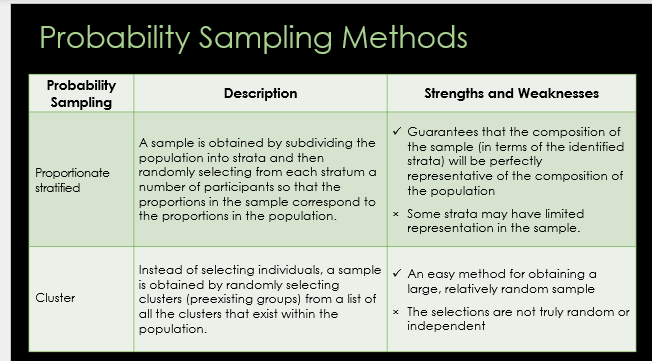
- 3a. Proportionate random sampling
- The population is subdivided into strata, number of participants from each stratum is selected randomly (not equally)
- concern: requires a lot of comparison work
- 4. Cluster sampling
- Clusters (preexisting groups) are randomly selected from a list of all the clusters that exist within the population
- positives: easy method for obtaining a large, relatively random sample
- concerns: Selections are not really random or independent
- 5. Combined strategy sampling
- positives: increases chance sample is representative of a widely dispersed or broad-based population
- pseudo randomisation
- 1. Simple random sampling
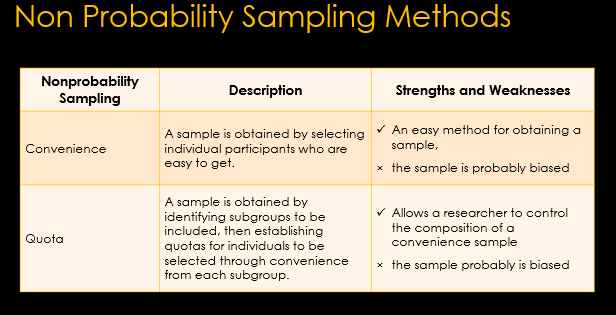
- non-probability sampling
- 1. Convenience sampling
- Sample is made up of individuals who are available and willing
- concerns: sample is probably biased
- Sample is made up of individuals who are available and willing
- 2. Quota sampling
- Subgroups to be included are identified. Quotas are established for individuals to be selected through convenience from each subgroup.
- positives: researcher to control the composition of a convenience sample
- concerns: sample is probably biased
- 1. Convenience sampling
- Probability Sampling
Imagens e arquivos do mapa
Informações
- Descrição
- Undergraduate Degree Psychology Introduction to Research Mapa Mental sobre 12. Sampling and Hypothesis Testing, criado por Shess 21 em 16-10-2022.
- Criado por
- Shess 21 · out 2022
- Atualizado
- 9 nov 2022
- Visualizações
- 0
- Avaliação