
Mapa mental
Lexical Stylistic Devices

Conteúdo do mapa
Lexical Stylistic Devices
Metaphor
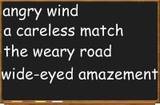
- Transference of names based on the associated likeness between two objects, as in the “pancake”, or “ball”, or “volcano” for the “sun”; “silver dust”, “sequins”; Kukharenko V.A. “A book of Practice in Stylistics”- Moscow1986 p. 38
- Types: 1. Genuine; 2. Dead; 3. Prolonged;
- Genuine: "Through the open window the dust danced and was golden"; Dead: "floods of tears"; Prolonged: "Mr.N bothled up his vergeabce and cookrd it down";
- Functions
- 1. To make the discription concrete; 2. to express the individual attitude;
Metonymy
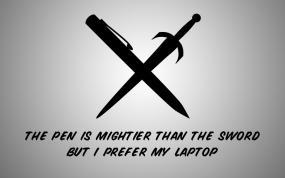
- Is created by a different semantic process and is based on contiguity of objects or phenomena. Kukharenko V.A. “A book of Practice in Stylistics”- Moscow1986 p. 40.
- Functions
- 1. to present rhe events of reality in it's subjective attitude;
Antonomasia
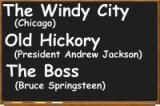
- It is the use of the name of a historical, literary, mythological, or biblical personage applied to a person whose characteristic features resemble those of the well-known original . Skrebnev Y.M. “the basics of English style”- M., 2000 p.117
- Functions
- 1. to characterize person without naming him; 2. to revive the logical meaning of the proper names thus making more apparent the interplay of logical and nominal meanings; 3. to give information to the reader about the name; 4. to point out the leading most characteristic feauture of a person, event;
Epithet
- Is a stylistic device based on the interplay of emotive and logical meaning in an attributive word, phrase or even sentence used to characterize an object and pointing out to the reader. Galperin I.R. “Stylistics” - Moscow 1981 p.157
- Compositional structure
- 1. Simple; 2. Compound; 3. Sentence/phrase
- 1. Simple: He looked at them in animal panic; 2. Compound: apple-faced man; 3. S/P: a shadow of a smile;
- 1. Simple; 2. Compound; 3. Sentence/phrase
- Semantically
- 1. Associated; 2. Unassociated;
- 1. Associated: dark forest; 2. Unassociated: voiceless sounds;
- 1. Associated; 2. Unassociated;
- Types
- Single; Chain and phrase; Compound; Reversed;
- Fonctions
- 1. is based on the interplay of emotive and logical meaning in an attribute words; 2. used to characterize an object; 3. express emotional characteristics of an object;
Irony
- Is a stylistic device in which the contextual evaluative meaning of a word is directly opposite to its dictionary meaning. Kukharenko V.A. “A book of Practice in Stylistics”- Moscow1986 p. 47.
Hyperbole
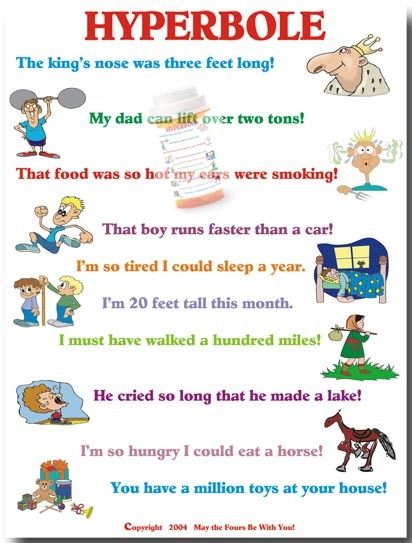
- A stylistic device in which emphasis is achieved through deliberate exaggeration, - like epithet relies on the foregrounding of the emotive meaning. Kukharenko V.A. “A book of Practice in Stylistics”- Moscow1986 p.57.
- Functions
- 1.to intensify the quantative or qualitative aspect of an object; 2. to denote signals of the emotional background of the utterance; 3. to emphasise for an amusing effect; 4. to place emphasis on a particular action feeling feauture and it's not meant to be literally;
Synecdoche
- The simplest kind of metonymy : using the name of a part to denote the whole or vice versa. Skrebnev Y.M. “the basics of English style”- M., 2000 p.110.
Oxymoron
- Is a combination of two words in which the meanings of the two clash, being opposite in sense. Galperin I.R. “Stylistics” - Moscow 1981 p.162.
Understatement
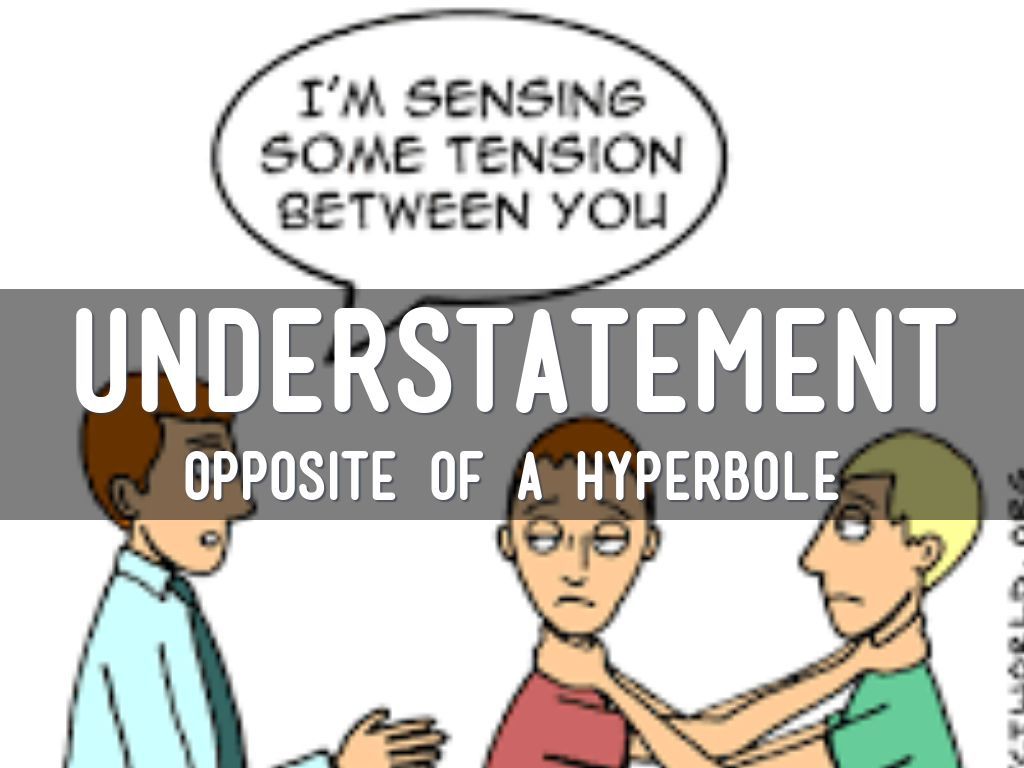
- Is the logical and psychological opposite of hyperbole. It is lessening, weakening, reducing the real characteristic of the object of speech. Skrebnev Y.M. “the basics of English style”- M., 2000 p.104.
- Functions
- 1.to intensify the quantative or qualitative aspect of an object; 2. to present the latter through the emotionally colored percption; 3. to develop figures of speech such as irony and sarcasm by deliberately decreasing the severity of a situation;
Zeugma
- Is the use of a word in the same grammatical but different semantic relations to two adjacent words in the context, the semantic relations being, on the one hand, literal, and, on the other, transferred. Galperin I.R. “Stylistics” - Moscow 1981 p.150.
Pun
- is a SD based on the interaction of 2 well-known meanings of words or a phrase; Podavets O.D. "English stylistics" p 43
Interjactions
- are words we use when we express our feelings strongly and which may be said to exist in language as conventional symbols of human emotions; Podavets O.D. "English stylistics, p. 43
- 1. Primary; 2. Derivative;
- Primary: Good gracious! God knows! Derivative: Terrible! Awfully!
- Functions
- help to express various feelings such as regret, dispair, dissapointment, surprise and many others.
Periphrasis
- is a round - about a way of speaking used to name some object or ohenomenon; Podavets O.D. English stylistics, p. 46
- Types: 1. Logical; 2. Figurative;
- Logical: The object of administration; Figurative: To tie a knot - to get married;
Euphemism
- is used to avoid some unpleasant things or a taboo things; Ex: To pass away - to die;Podavets O.D. p46
Proverb
- short, well-known, supposedlyy wise saying, usually in simple language; Ex: Never say never; Podavets O.D., p 47
Quotation
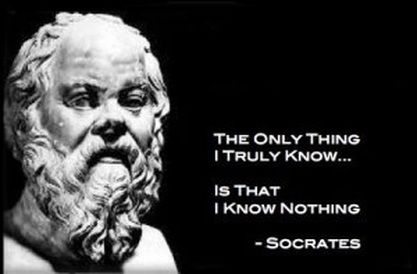
- phrase or sentence taken from a work of literature or other piece of writingand repeated in order to prove a point or support an idea; Ex: "Say hello to my little friend" Podavets O.D. p 47
Imagens e arquivos do mapa




Informações
- Descrição
- LSD, Tyulyubayeva Gaukhar
- Criado por
- g.tyulyubaeva
- Visualizações
- 734
- Tags
- Avaliação