Mapa mental
Reverse Logistics
Conteúdo do mapa
Reverse Logistics
Dimensions of the reverse logistics context
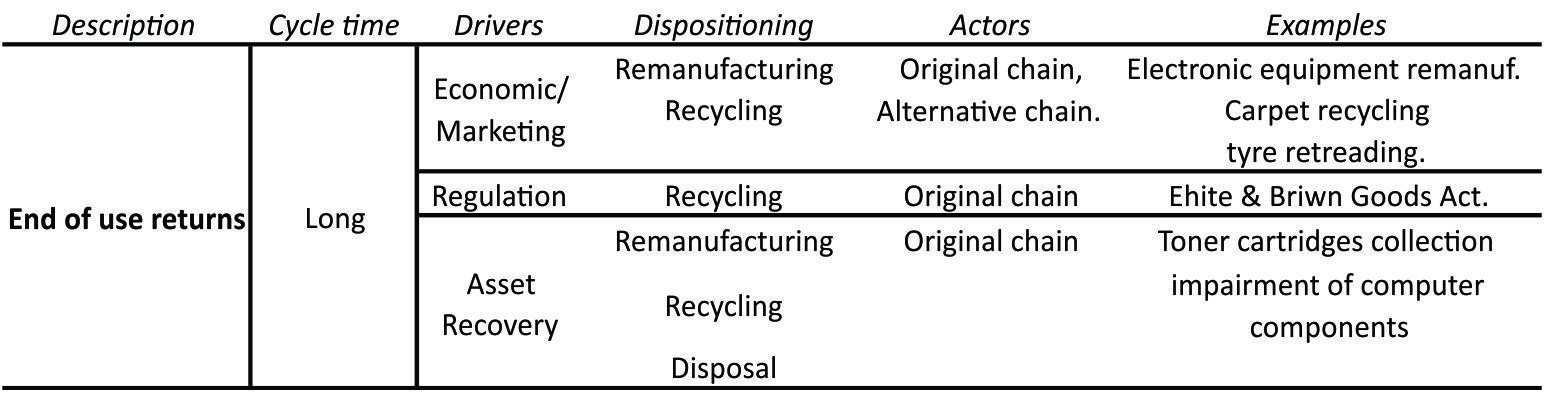
- Reverse logistics drivers
- Economic
- Cheap resources
- Cheaper than building/buying new products/virgin materials
- Precious metal recycling
- Marketing
- Green profile
- Service element
- Taking care of customers waste disposal needs
- Legislative
- Public Policy
- Asset protection
- Leaking secondary markets or competitors
- Economic
- Forms of recovery/Dispositioning options
- Reused directly
- Remanufacturing
- Repair
- Recycling
- Disposal
- Actors
- Cycle time
- TIme period with the owner
- Reverse logistics drivers
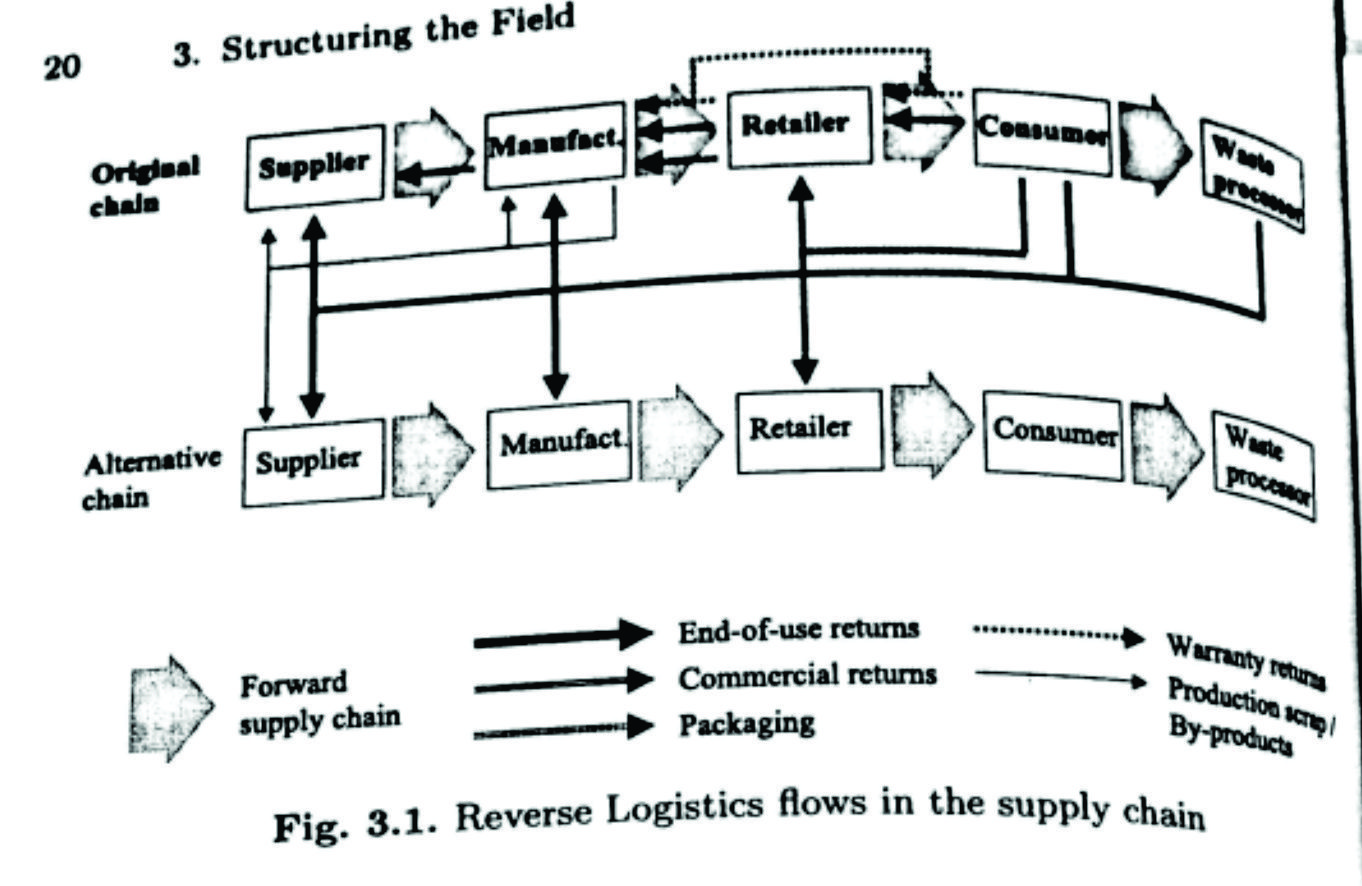
Categories of Reverse Logistics Flows
- End of use returns
- products disposed of long after completing use
- Commercial returns
- Warranty returns
- Production scrap and by products
- Packaging
- End of use returns
Reverse distribution
- Commonalities
- Collection
- Activities rendering used products avaiable and physically moving them to some point.
- Purchasing
- Transportation
- Storage
- Inspection/Separation
- All operations determining whether a given product is in fact reusable and in which way. Splitting the flow of used products.
- Disassembly
- shredding
- testing
- Sorting
- Storage steps
- Re processing
- Transformation of a used product to a usable product again (Recycling, repair, remanufacturing).
- Cleaning
- Replacement
- Re assembly
- Disposal
- Products cannot be reused, rejected at the separation level +repair requirements -market potential
- Transportation
- Landfilling
- Incineration steps
- Re distribution
- Directing reusable products to a potential market and to moving them to future users
- Reuse
- Sales
- Leasing
- Service
- Contracts
- Transportation
- Storage
- Collection
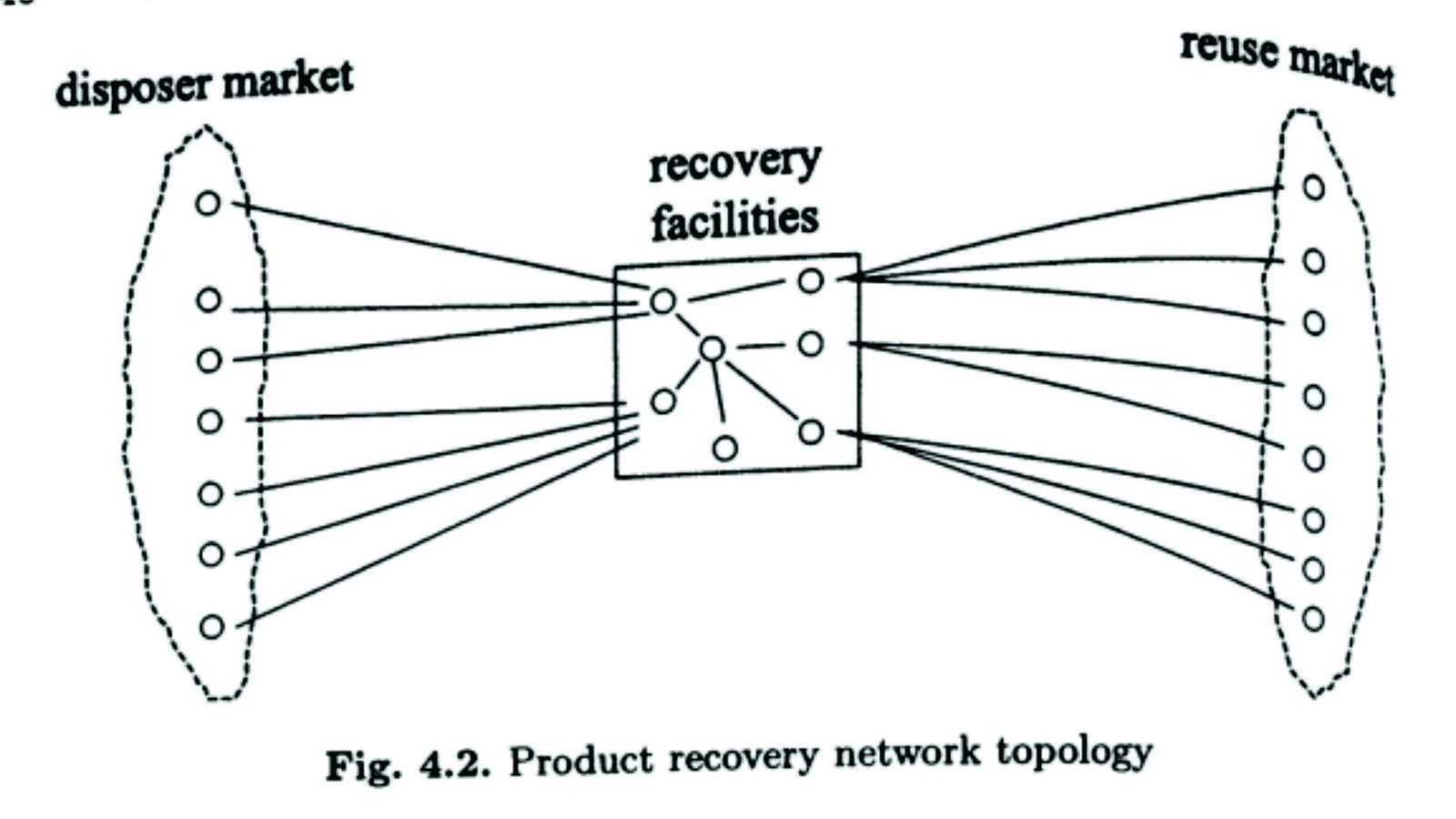
- Clasification of Recovery Networks
- Structure
- Centralisation
- Number of locations at which similar activities are carried out.
- Centralised
- Few locations
- Decentralised
- Several locations
- Number of levels
- Number of facilities a goods flow visits squentially (vertical integration of network).
- Links with other networks
- Degree of integration of a new network with existing.
- Open vs closed loop
- Incoming and outgoing flows if a netwirk
- Closed
- network sources and sinks coincide so that flows cycle in the network
- Open
- One way structure enter in one point and finishes in another.
- Degree of branch cooperation
- Parties responsable for setting up the network (single, joint, etc.)
- Centralisation
- Dimensions
- PRODUCT Characteristics
- The form of recovery determines the facilities required and hence the related investment costs.
- Physical
- Weight
- Volume
- Fragility
- Economic
- Value
- Rate of obsolescence
- MARKET Characteristics
- Actors-relationships
- Relative power and economic incentives.
- Suppliers
- OEM´s
- Service providers
- Independent recoverers
- Consumers
- Public Authorities
- Actors-relationships
- Relevant RESOURCES
- Recovery facilities
- Human resources
- Transportation resources
- PRODUCT Characteristics
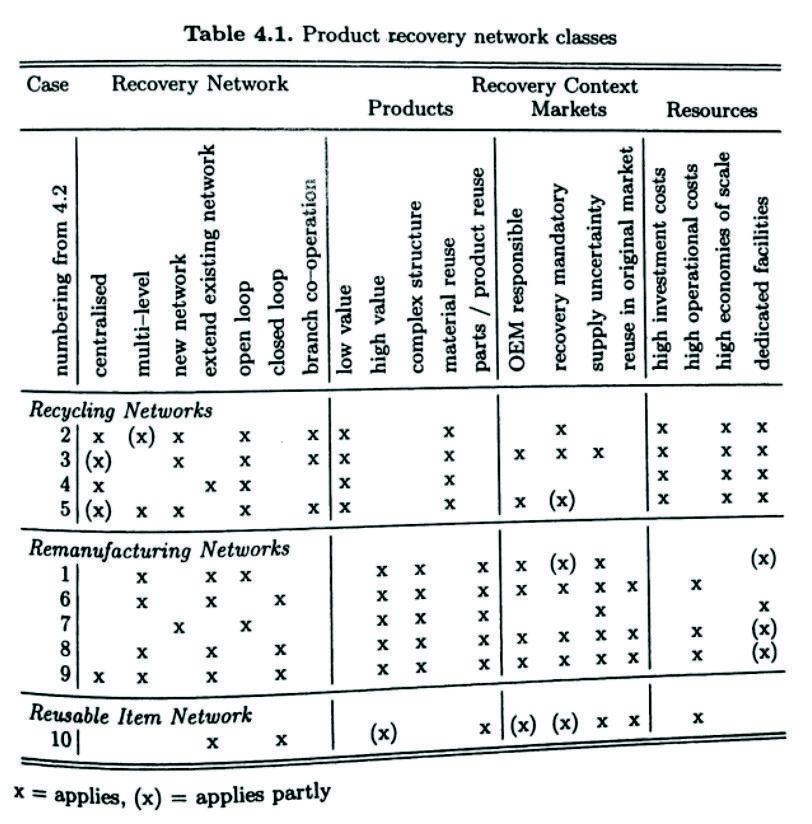
- Product recovery network types
- Bulk recycling networks
- Assembly product remanufacturing networks
- Reusable item networks
- Structure
- Vehicle Routing Issues
- Lower time pressure
- Cost-revenue tradeoffs
- Vehicle loading
- Commonalities