
Mapa mental
Chapter 12 - Waves
Conteúdo do mapa
Chapter 12 - Waves
Standing waves
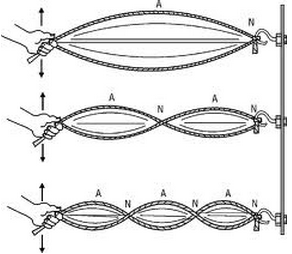
- This forms when two waves with the same frequency travelling in opposite directions are superposed
- An interference pattern is set up by superposition of waves reflected from end to end of a wave
- A node is a position on a standing wave where there is no movement
- An antinode has maximum movement (peak and trough)
- The separation between to adjacent nodes (or antinodes) is equal to half a wavelength of the original wave
- As two progressive waves are travelling in opposite directions there is no net energy transfer
- A node is a position on a standing wave where there is no movement
- An interference pattern is set up by superposition of waves reflected from end to end of a wave
- Formation of nodes/antinodes
- A node is formed where the displacement is zero
- So the displacements cancel out
- An antinode is formed when the two waves are in phase and the displacements add up to make more
- A node is formed where the displacement is zero
- This forms when two waves with the same frequency travelling in opposite directions are superposed
Superposition of waves
- When two waves of the same type meet they pass through each other
- Where the waves superpose (overlap) they produce a single wave
- This displacement can be found by adding the displacements of each wave
- Where the waves superpose (overlap) they produce a single wave
- When two progressive waves continuously pass through each other they superpose and produce a resultant wave with displacement of waves added together
- If two waves are in phase then max. positive displacements add together to make increased amplitude
- This is constructive interference
- Increase in amplitude results in an increase in intensity
- intensity is proportional to amplitude^2
- Increase in amplitude results in an increase in intensity
- This is constructive interference
- If two waves are anti-phase then peak of one wave and the trough of another superpose to create zero amplitude
- This is destructive interference
- Drop in amplitude means a drop in intensity
- This is destructive interference
- If two waves are in phase then max. positive displacements add together to make increased amplitude
- When two waves of the same type meet they pass through each other
Interference
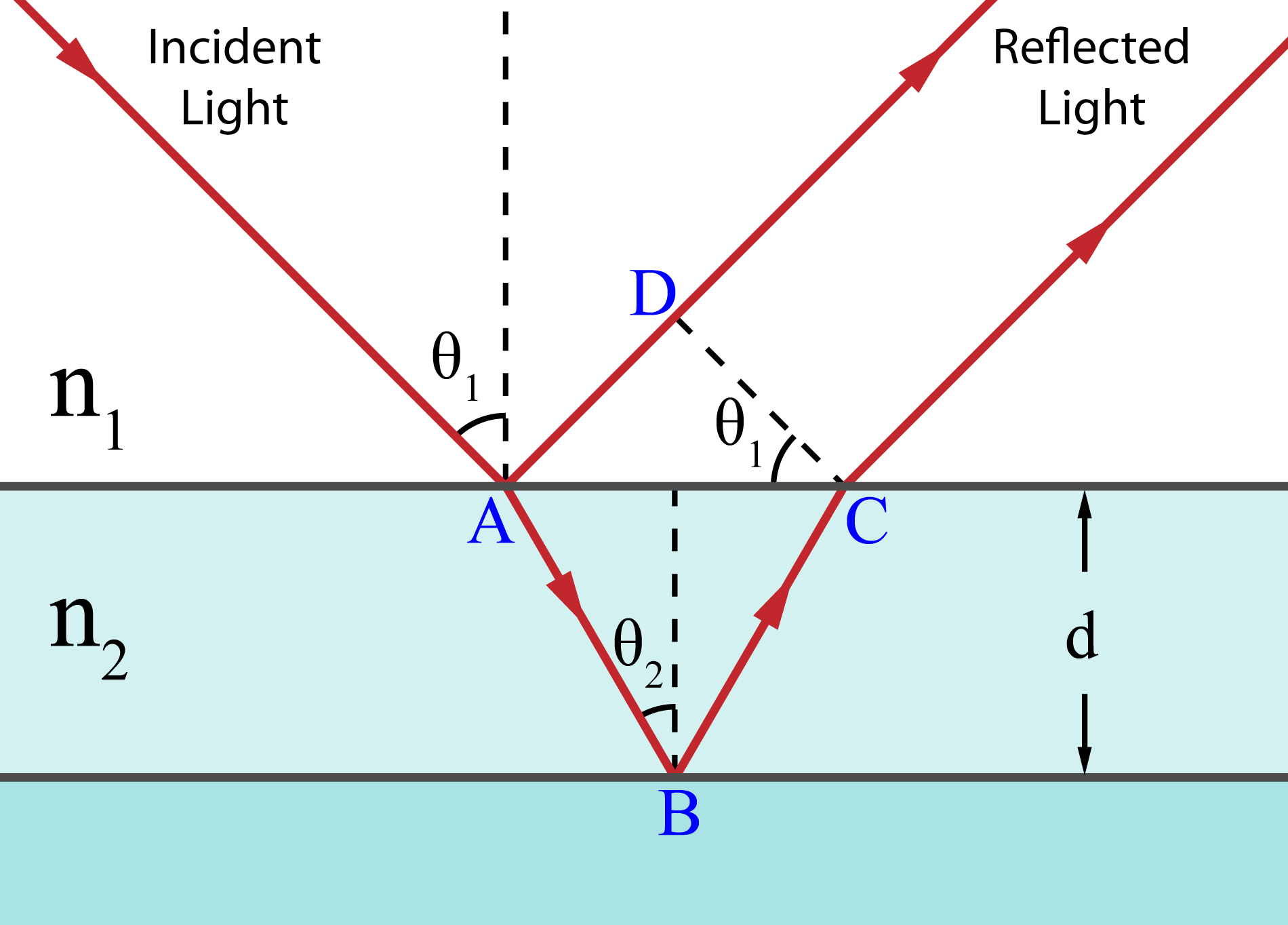
- Thin film interface
- The film must be 1/2 a wavelength thick
- Coherent waves have a constant phase difference and must have the same frequency and wavelength
- Path difference
- Maxima is where the waves interfere constructively
- Minima is where they interfere destructively
- Maxima and minima are a result of two waves having travelled different distances from their sources
- The difference of the distance travelled is the path difference
- Maxima is where the waves interfere constructively
- Thin film interface
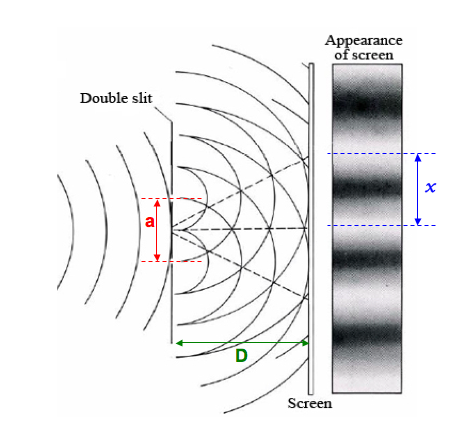
Young double-slit experiment
- Two coherent waves are needed to form an interference pattern
- At the double slit the light is coherent, as the wave passes through the slit it diffracts and overlaps the waves coming from the other slit
- When the waves overlap they create interference patterns
- i.e. light and dark patterns
- When the waves overlap they create interference patterns
- At the double slit the light is coherent, as the wave passes through the slit it diffracts and overlaps the waves coming from the other slit
- Wavelength = ax/D
- a is distance of slits
- x is separation between fringes
- D is distance
- Two coherent waves are needed to form an interference pattern
Harmonics
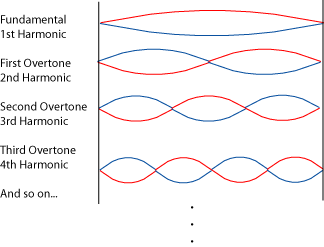
- Notes and fundamental frequencies
- So the fundamental has 2 nodes 1 antinode
- 2nd harmonic has 3 nodes 2 antinodes etc.
- The fundamental frequency changes how the wave behaves
- e.g. if a string has a fundamental frequency of 200Hz
- If the string is vibrated at 700Hz then the line will be flat and straight because it is not a multiple
- If the string length is doubled then you half the frequency
- If the length of the string is halved then you double its frequency
- V = k Root T
- T is tension in N
- k is constant
- T is tension in N
- Mass per unit length also affects the fundamental frequency
- e.g. if a string has a fundamental frequency of 200Hz
- So the fundamental has 2 nodes 1 antinode
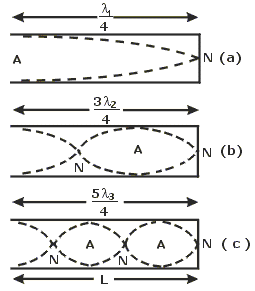
- Standing waves in pipes
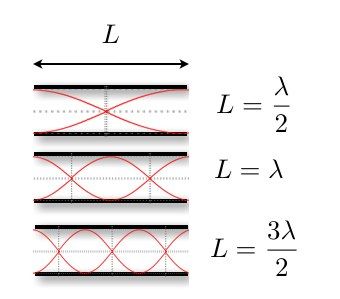
- Open ended pipes
- Anti-nodes exist at open ends
- As air particles are free to move
- <-- L*2 = wavelength
- Anti-nodes exist at open ends
- Closed ended pipes
- Nodes exist at the closed end
- Air particles can't move
- Only odd numbered harmonics can be produced
- This is impossible because you can't have a node at an open end
- Antinode at closed end
- Nodes exist at the closed end
- Resonance is making something vibrate at its natural frequency
- Open ended pipes
- Notes and fundamental frequencies
Imagens e arquivos do mapa
Informações
- Descrição
- AS - Level Physics (Waves) Mapa Mental sobre Chapter 12 - Waves, criado por Jacob Shepherd em 01-12-2015.
- Criado por
- Jacob Shepherd
- Visualizações
- 3
- Avaliação