
Mapa mental
Chemical Analysis and Instrumental Methods
Conteúdo do mapa
Chemical Analysis and Instrumental Methods
Artificial Colours can be seperated using paper chromatography
- A food colouring might contain one dye or it might be a mixture of dyes
- 1. Extract the colour from a food sample by placing it in a small cup with a few drops of slovent (water, ethonal etc)
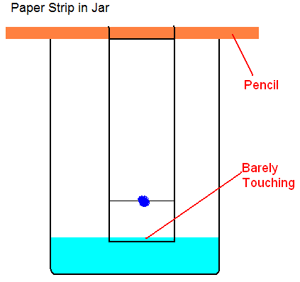
- 2. Put spots of the coloured solution on a pencil baseline on filter paper
- 3. Roll up the sheet and put it in a beaker with some solvent - but keep the baseline above the level of solvent
- 4. The solvent seeps up the paper taking the dyes with it. Different dyes form spots in different places
- 5. Watch out though a chromatogram with four spots means at least four dyes not exactly four dyes. There could be five dyes with two of them making a spot in the same place
- 4. The solvent seeps up the paper taking the dyes with it. Different dyes form spots in different places
- 3. Roll up the sheet and put it in a beaker with some solvent - but keep the baseline above the level of solvent
- 2. Put spots of the coloured solution on a pencil baseline on filter paper
Machines can also analyse unknown substances
- You can identify elements and compounds using instrumental methods
- Advantages
- Very sensitive can detect even the tiniest amount of substance
- Very fast and tests can be automated
- Very accurate
- Advantages
- You can identify elements and compounds using instrumental methods
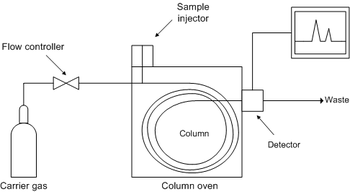
Gas chromatography
- Seperate out a mixture of compounds to help identify the substances
- 1 .A gas is used to carry substances through a column packed with a solid material
- 2. The substances travel through the tube at different speeds so they are seperated.
- 3. The time they take to reach the detector is called retention time. It helps identify substances
- 4. The recorder draws a gas chromatograph. The number of peaks shows the number of different compounds in the sample
- 5. The position of the peaks shows the retention time of each substance
- 6. The gas chromatography column can also be linked to a mass spectrometer. This process is known as GC-MS and can identify the substances leaving the column very accurately
- 7. You can work out the relative molecular mass of each substance from the graph it draws. You just read off from the molecular ion peak
- 6. The gas chromatography column can also be linked to a mass spectrometer. This process is known as GC-MS and can identify the substances leaving the column very accurately
- 5. The position of the peaks shows the retention time of each substance
- 4. The recorder draws a gas chromatograph. The number of peaks shows the number of different compounds in the sample
- 3. The time they take to reach the detector is called retention time. It helps identify substances
- 2. The substances travel through the tube at different speeds so they are seperated.
Imagens e arquivos do mapa
Informações
- Descrição
- GCSE Science (Chemistry Additional) Mapa Mental sobre Chemical Analysis and Instrumental Methods, criado por sian.allison em 24-01-2014.
- Criado por
- sian.allison
- Visualizações
- 175
- Tags
- Avaliação