
Mapa mental
Learning Process, Training and Development
Conteúdo do mapa
Learning Process, Training and Development
Bass and Vaughan (1996)- Learning is when a change in behaviour occurs as a result of practise or experience.
Behaviourist Learning
- Pavlov (1927) Skinner (1953)- 'the drive' is the instinctive need or motivation to learn
- Pavlov (1927)- Trained dogs to salivate when a bell rang. Conditioned response- associating bell with food.
- Skinner (1953)- Reinforcement learning through Pigeons playing ping pong
- Foot Hook and Jenkins (2016)- organisations need to understand what will motivate workers to learn and ensure HR policies support this.
- Criticisms...
- Behaviourists use positive/ negative reinforcement. Positive if generally more effective than negative in a change in behaviour in the long term.
- Foot, Hook and Jenkins (2016)- 'Practise with appropriate feedback makes perfect'
- Gladwell (2004)- People need talent too and opportunities to show talent
- Behaviourists use positive/ negative reinforcement. Positive if generally more effective than negative in a change in behaviour in the long term.
- Pavlov (1927) Skinner (1953)- 'the drive' is the instinctive need or motivation to learn
Experiential Learning
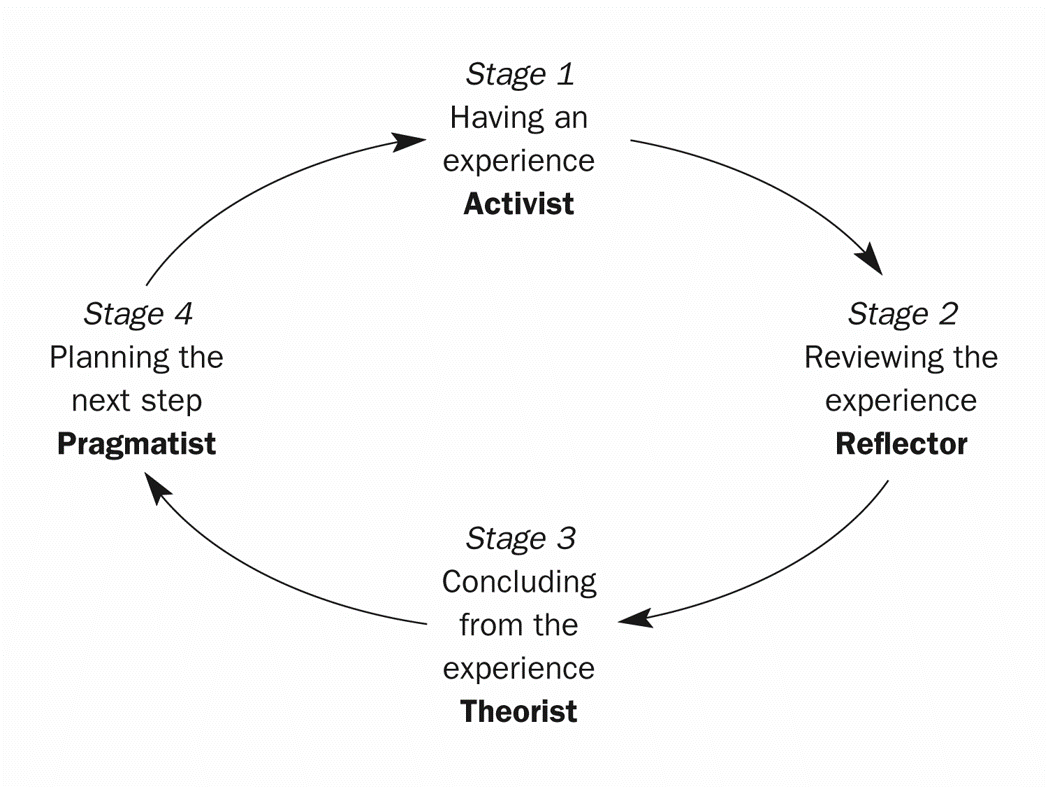
- Learning Cycle (Kolb, 1974; Honey and Mumford 1992)
- Stage 1- Let experiences come to you (reactive), or seek out experiences (proactive)
- Stage 2- Review experience
- Stage 3- Conclude from experience eg lessons to be learnt.
- Stage 4- Planning next stage
- Four stages all Mutually dependent
- Learning Cycle (Kolb, 1974; Honey and Mumford 1992)
Learning Styles
- Activists
- Foot, Hook and Jenkins (2016)- Get involved in whatever is happening eg new experiences
- Reflectors
- Foot, Hook and Jenkins (2016)- Stand back and observe experiences from different perspectives
- Theorists
- Foot, Hook and Jenkins (2016)- turn observations into logical theories.
- Pragmatists
- Foot, Hook and Jenkins (2016)- try out new ideas, theories and techniques.
- Fleming (2001)- Visual, Auditory and Kinaesthetic learners.
- Foot, Hook and Jenkins (2016)- Employees need to be aware of individuals learning styles and keep up to date with new discoveries about learning.
- Activists
Torrington et al (2011)- Learning and Training Model
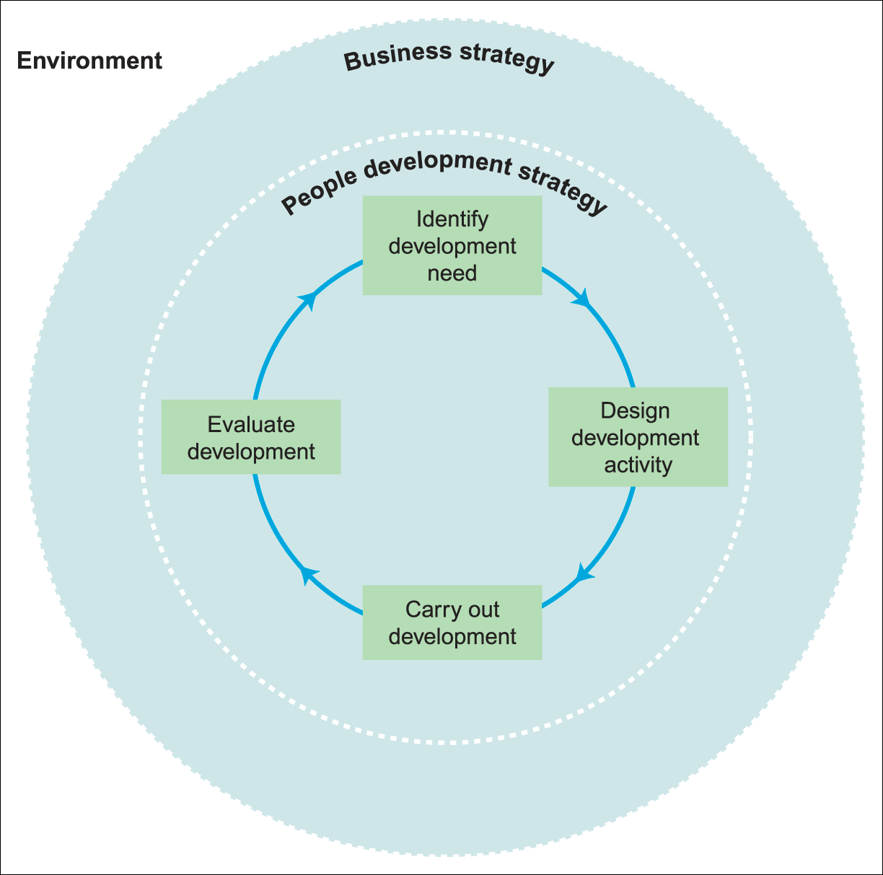
- Stage 1- Identifying learners needs
- Bratton and Gold (2007)- identify training needs through gaps between work performance and standard of work criteria
- Harrison (2009)- Training Approaches
- Organisational- Whole organisation eg strategy analysis
- Intermediate- Team or profession level eg skills audit, appraisals.
- Individual- Own needs eg self assessments
- Stage 2- Design Development Activity
- Beardwell and Claydon (2011)- Fits with objectives etc. Eg Away days, teaching
- Stage 3- Development Activity
- Stage 4- Evaluate
- CIPD (2007)- prove value and quality of training.
- Kirkpatrick- 4 Levels of evaluation; Reaction, Learning, Behaviour and Results.
- CIPD (2007)- prove value and quality of training.
- Stage 1- Identifying learners needs
Trends
- CIPD (2014)- 51% of respondents using training as an approach to learning, regarding most effective method of L&D by 53% of respondents.
- CIPD (2014); Conerstone (2014)- ELearning 3rd popular method
- Foot, Hook and Jenkins (2016)- L&TD adds value to organisations by attracting and retaining talent
Induction
- Foot, Hook and Jenkins (2016)- Help employee settle in properly and learn about the company.
- XPertHR (2015)- promote image, benefits employee.
Imagens e arquivos do mapa
Informações
- Descrição
- Mapa Mental sobre Learning Process, Training and Development, criado por Paisley Williams em 11-04-2016.
- Criado por
- Paisley Williams
- Visualizações
- 7
- Avaliação