
Mapa mental
Environmental Pollution
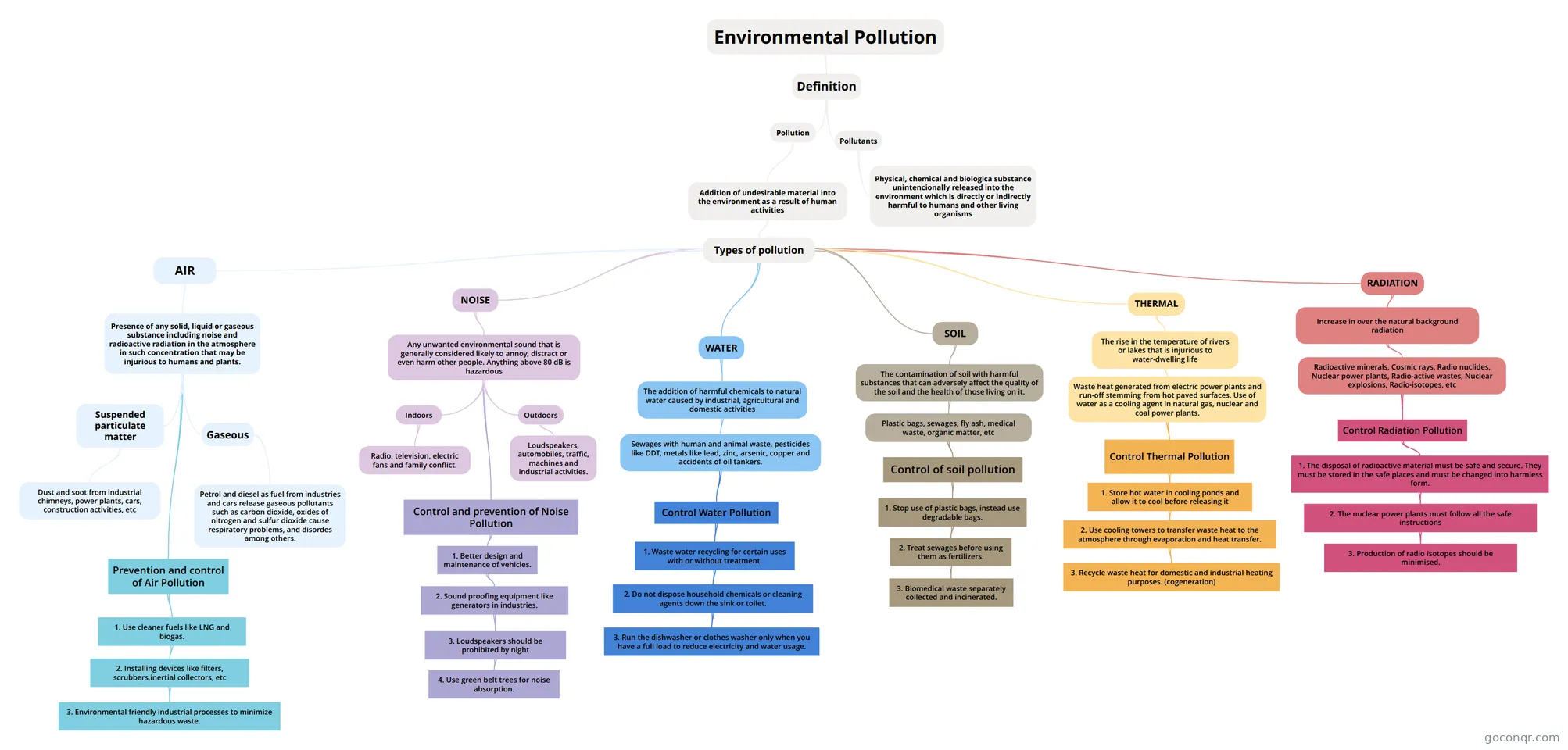
Mind map: Environmental pollution
Conteúdo do mapa
Environmental Pollution
Definition
- Pollution
- Addition of undesirable material into the environment as a result of human activities
- Types of pollution
- AIR
- Presence of any solid, liquid or gaseous substance including noise and radioactive radiation in the atmosphere in such concentration that may be injurious to humans and plants.
- Suspended particulate matter
- Dust and soot from industrial chimneys, power plants, cars, construction activities, etc
- Gaseous
- Petrol and diesel as fuel from industries and cars release gaseous pollutants such as carbon dioxide, oxides of nitrogen and sulfur dioxide cause respiratory problems, and disordes among others.
- Prevention and control of Air Pollution
- 1. Use cleaner fuels like LNG and biogas.
- 2. Installing devices like filters, scrubbers,inertial collectors, etc
- 3. Environmental friendly industrial processes to minimize hazardous waste.
- 2. Installing devices like filters, scrubbers,inertial collectors, etc
- 1. Use cleaner fuels like LNG and biogas.
- Suspended particulate matter
- Presence of any solid, liquid or gaseous substance including noise and radioactive radiation in the atmosphere in such concentration that may be injurious to humans and plants.
- NOISE
- Any unwanted environmental sound that is generally considered likely to annoy, distract or even harm other people. Anything above 80 dB is hazardous
- Indoors
- Radio, television, electric fans and family conflict.
- Outdoors
- Loudspeakers, automobiles, traffic, machines and industrial activities.
- Control and prevention of Noise Pollution
- 1. Better design and maintenance of vehicles.
- 2. Sound proofing equipment like generators in industries.
- 3. Loudspeakers should be prohibited by night
- 4. Use green belt trees for noise absorption.
- 3. Loudspeakers should be prohibited by night
- 2. Sound proofing equipment like generators in industries.
- 1. Better design and maintenance of vehicles.
- Indoors
- Any unwanted environmental sound that is generally considered likely to annoy, distract or even harm other people. Anything above 80 dB is hazardous
- WATER
- The addition of harmful chemicals to natural water caused by industrial, agricultural and domestic activities
- Sewages with human and animal waste, pesticides like DDT, metals like lead, zinc, arsenic, copper and accidents of oil tankers.
- Control Water Pollution
- 1. Waste water recycling for certain uses with or without treatment.
- 2. Do not dispose household chemicals or cleaning agents down the sink or toilet.
- 3. Run the dishwasher or clothes washer only when you have a full load to reduce electricity and water usage.
- 2. Do not dispose household chemicals or cleaning agents down the sink or toilet.
- 1. Waste water recycling for certain uses with or without treatment.
- Control Water Pollution
- Sewages with human and animal waste, pesticides like DDT, metals like lead, zinc, arsenic, copper and accidents of oil tankers.
- The addition of harmful chemicals to natural water caused by industrial, agricultural and domestic activities
- SOIL
- The contamination of soil with harmful substances that can adversely affect the quality of the soil and the health of those living on it.
- Plastic bags, sewages, fly ash, medical waste, organic matter, etc
- Control of soil pollution
- 1. Stop use of plastic bags, instead use degradable bags.
- 2. Treat sewages before using them as fertilizers.
- 3. Biomedical waste separately collected and incinerated.
- 2. Treat sewages before using them as fertilizers.
- 1. Stop use of plastic bags, instead use degradable bags.
- Control of soil pollution
- Plastic bags, sewages, fly ash, medical waste, organic matter, etc
- The contamination of soil with harmful substances that can adversely affect the quality of the soil and the health of those living on it.
- THERMAL
- The rise in the temperature of rivers or lakes that is injurious to water-dwelling life
- Waste heat generated from electric power plants and run-off stemming from hot paved surfaces. Use of water as a cooling agent in natural gas, nuclear and coal power plants.
- Control Thermal Pollution
- 1. Store hot water in cooling ponds and allow it to cool before releasing it
- 2. Use cooling towers to transfer waste heat to the atmosphere through evaporation and heat transfer.
- 3. Recycle waste heat for domestic and industrial heating purposes. (cogeneration)
- 2. Use cooling towers to transfer waste heat to the atmosphere through evaporation and heat transfer.
- 1. Store hot water in cooling ponds and allow it to cool before releasing it
- Control Thermal Pollution
- Waste heat generated from electric power plants and run-off stemming from hot paved surfaces. Use of water as a cooling agent in natural gas, nuclear and coal power plants.
- The rise in the temperature of rivers or lakes that is injurious to water-dwelling life
- RADIATION
- Increase in over the natural background radiation
- Radioactive minerals, Cosmic rays, Radio nuclides, Nuclear power plants, Radio-active wastes, Nuclear explosions, Radio-isotopes, etc
- Control Radiation Pollution
- 1. The disposal of radioactive material must be safe and secure. They must be stored in the safe places and must be changed into harmless form.
- 2. The nuclear power plants must follow all the safe instructions
- 3. Production of radio isotopes should be minimised.
- 2. The nuclear power plants must follow all the safe instructions
- 1. The disposal of radioactive material must be safe and secure. They must be stored in the safe places and must be changed into harmless form.
- Control Radiation Pollution
- Radioactive minerals, Cosmic rays, Radio nuclides, Nuclear power plants, Radio-active wastes, Nuclear explosions, Radio-isotopes, etc
- Increase in over the natural background radiation
- AIR
- Types of pollution
- Addition of undesirable material into the environment as a result of human activities
- Pollutants
- Physical, chemical and biologica substance unintencionally released into the environment which is directly or indirectly harmful to humans and other living organisms
- Pollution