
Mapa mental
The Three Refuges
Conteúdo do mapa
The Three Refuges
The Three Refuges are also known as the Three Treasures or the Tiratana.
The Dharma could not have been taught without the Buddha, and could not have been followed without the Sangha, so the three are inseparable.
The meaning of the Refuges
- When someone formally decides to become a Buddhist, he or she recites what is called the Three Refuges.
- I take refuge in the Buddha, I take refuge in the Dharma, I take refuge in the Sangha.
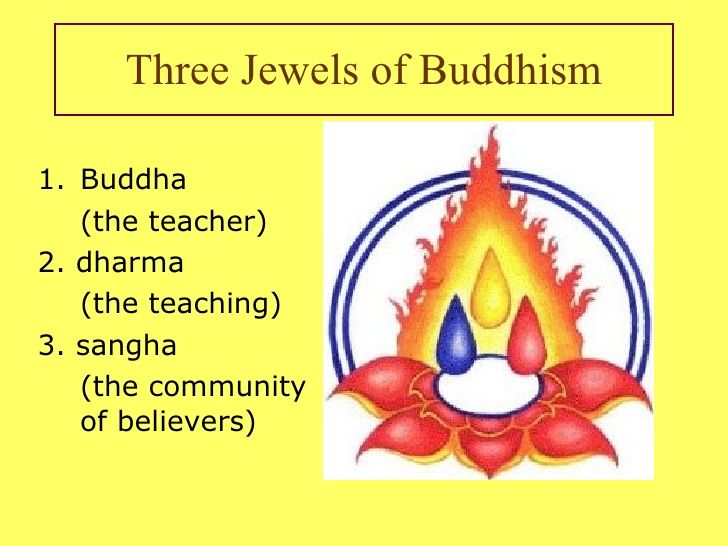
- These three principles of Buddha, Dharma (teachings) and Sangha (community) are sometimes called the Three Jewels because the are considered so precious and valuable.
Quotes
- “Many persons, indeed, driven by fear, move quickly to mountains, forests, the parks and trees of shrines, as a refuge. That is not a safe refuge; it is not the best refuge. Having come to this refuge one is not freed from all suffering. But he who goes for refuge to the Buddha, Dharma and Sangha …….This is the safe Refuge, this is the best Refuge. Having come to this Refuge one is freed from all suffering.” (Dhammapada 188-192)
- “He who sees the Dhamma sees me; he who sees me sees the Dhamma.”
Mahayana understanding
- Mahayana developed a specific understanding of who or what the Buddha is through its Three Body or Trikaya doctrine.
- Mahayana is, of course, an umbrella term for many different schools, and certain Mahayana schools have unique ways of understanding refuge in the Buddha.
Vajrayana understanding
- Vajrayana schools share the same understanding of this as the Mahayana schools.
- Vajrayana practitioners take refuge in their spiritual master. This us because the master is seen as a living embodiment of the qualities of the enlightened mind and of the essence of all the Three Refuges.
- The master represents the Buddha since he is one's guide and teacher.
Statues of the Buddha
- Statues of the Buddha have become a familiar image in our society. He is usually depicted sitting in meditation.
- There are many different statue poses.
- The different poses of the Buddha are called, the Nirvana Buddha, Protection Buddha, Meditation Buddha and Medicine Buddha.
Sangha (community)
- The Fourfold Sangha
- Sangha is the word for the community of those who follow the Buddhist path.
- Often, Sangha refers to the monastic community - the monks and nuns who have abandoned a worldly life to lead an exemplary life of virtue.
- The Fourfold Sangha
The role of monastics
- Monks and nuns play an extremely important role in Buddhist societies.
- The practice of ordinary people into monastics life was initiated by the Buddha, and the rules monastics follow were set out by the Buddha.
Dharma (teachings)
- It is possible to argue that the Dharma is the most important of the Three Refuges, especially since the scriptures.
- The Dharma is the universal truth, the laws or order inherent in nature.
- Even if Buddha had not become enlightened, the Dharma would still be the truth. It exists whether humans are aware of it or not.
Buddha (teacher)
- When Theravadins take refuge in the Buddha, they acknowledge his historical role in communicating the Dharma and express their respect and gratitude to him.
- The Buddha is seen as an extraordinary human being, respected because he succeeded in attaining enlightenment and showed us the way to do so ourselves.
Summary
- All Buddhists express their religion by taking refuge in the Buddha, Dharma and Sangha.
- Taking refuge in the Buddha means expressing gratitude and respect for his enlightened teaching.
- The inner meaning of taking refuge is a commitment to develop one's inner strength and potential for enlightenment.
- Taking refuge in the Dharma is an undertaking to study, practise and fully embody the Buddha's teaching.
- The Buddha himself has passed away, and the core of the religion is now his teaching.
- Sangha is the most important refuge because it preserves and passes on the Dharma from one generation to the next and keeps it alive.
Imagens e arquivos do mapa
Informações
- Descrição
- Mapa Mental sobre The Three Refuges, criado por Jasvinder Kaur em 18-11-2016.
- Criado por
- Jasvinder Kaur
- Visualizações
- 3
- Avaliação