
Buddhism
526 resources created by 330 users
This Buddhism page on GoConqr gathers community-made mind maps, quizzes, flashcards and notes, from the Four Noble Truths and the Noble Eightfold Path to Zen Buddhism, the Bodhisattva Ideal and the life of the Buddha. It's built for school students revising a topic, university students and professional candidates filling gaps, and teachers after ready-made material. There are over 500 resources here, including more than 300 mind maps, more than 10 quizzes and over 140 flashcard decks, mostly at secondary level. Pick a map, then test yourself with a quiz.
Top Buddhism resources
-
 Mind map Story of Siddhartha this is a mind map for my assesment i hope it helps you
-
20 questionsQ1 Exam Review for Buddhism How many steps did the Buddha take after he was born?
-
21 cardsBuddhism key words: Living The Four Noble Truths
-
19 cardsBuddhism Key Words: Insight Buddhism insight flashcards
-
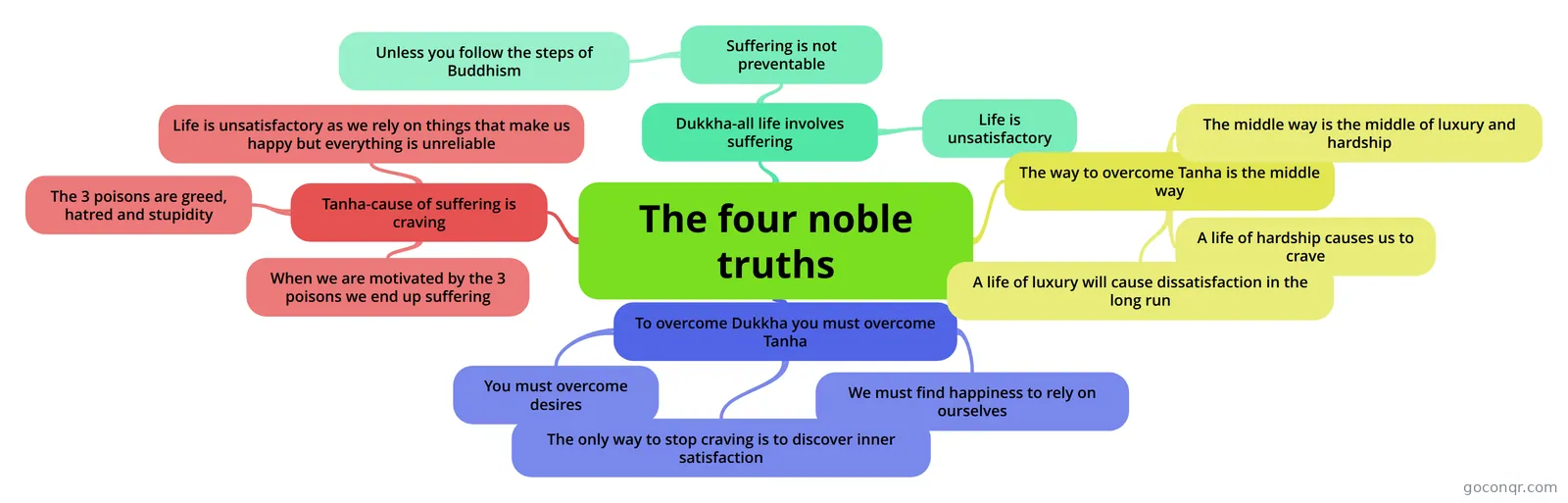
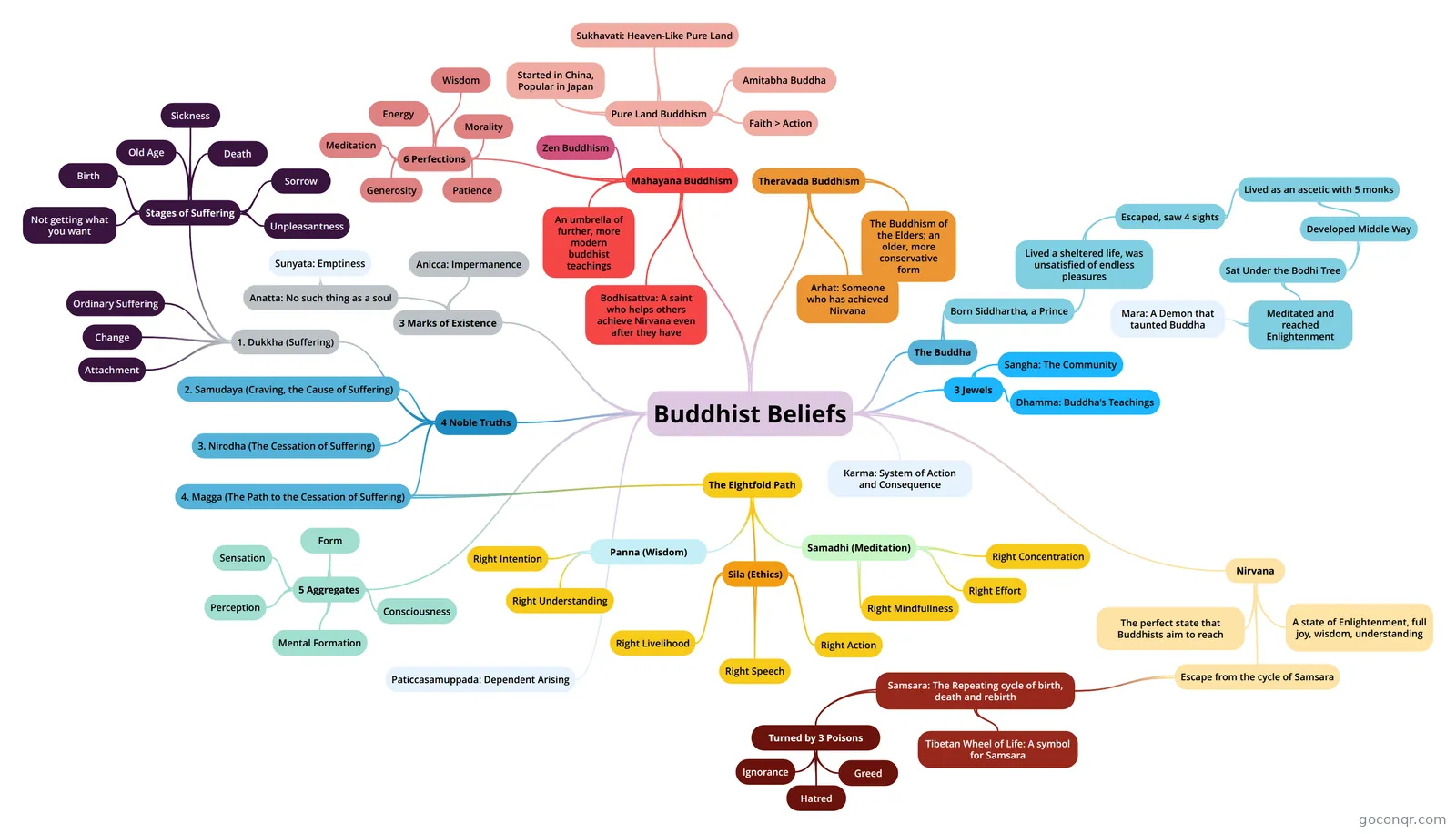 Mind map Buddhist Beliefs
-
12 questionsRELIGIOUS STUDIES- BUDDHISM What are the 'four noble truths'?
-
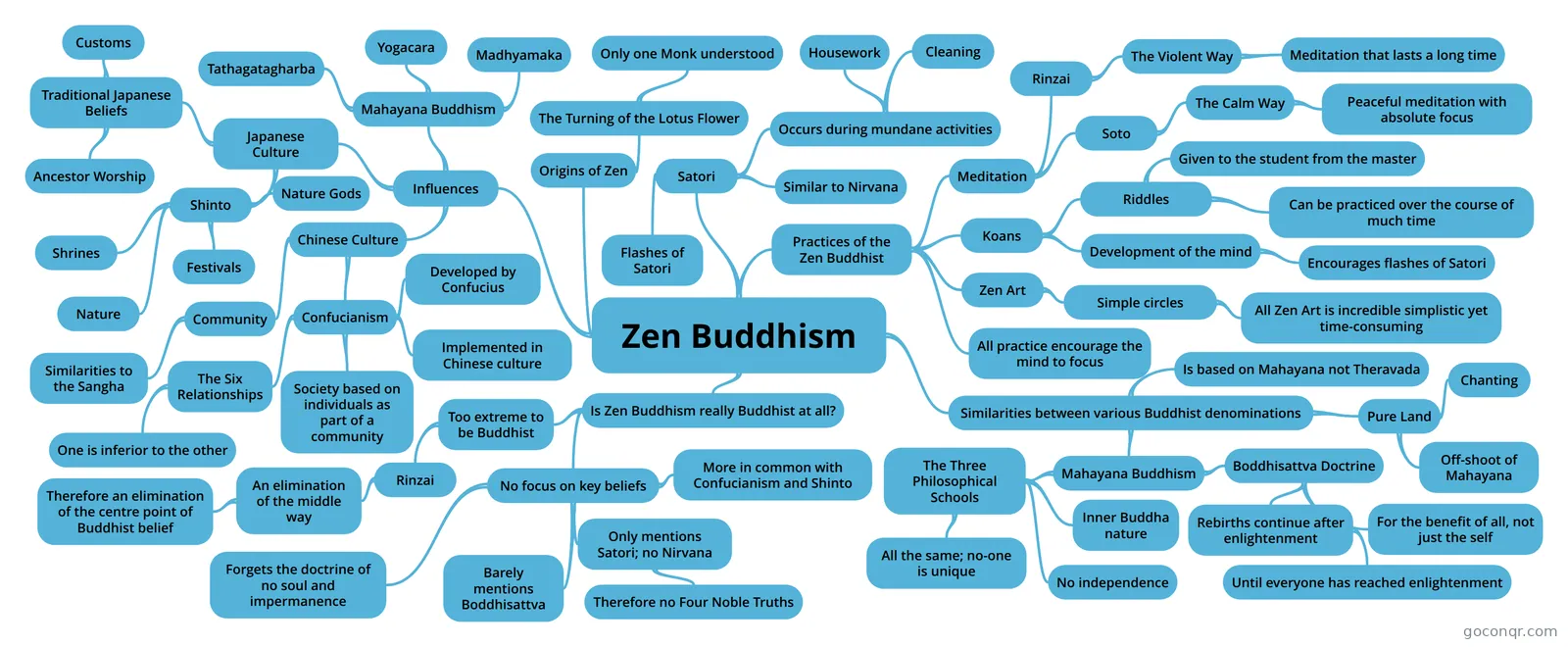 Mind map Zen Buddhism
-
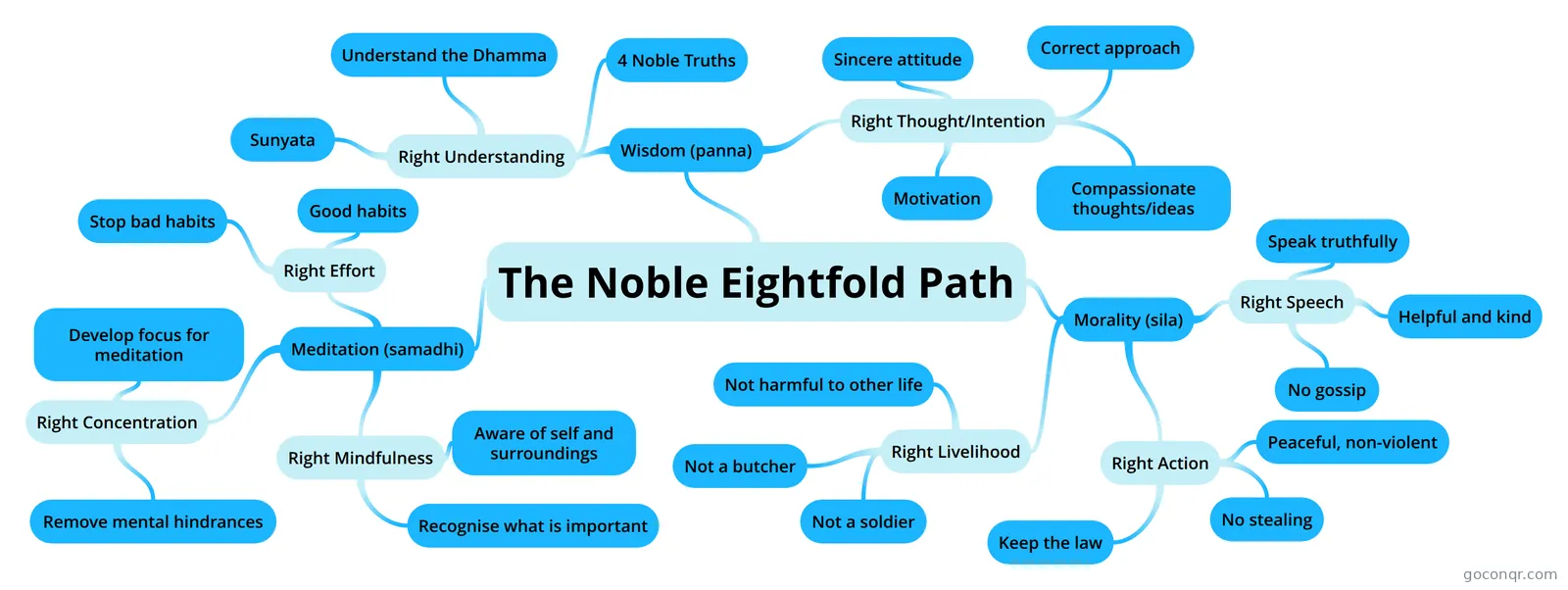
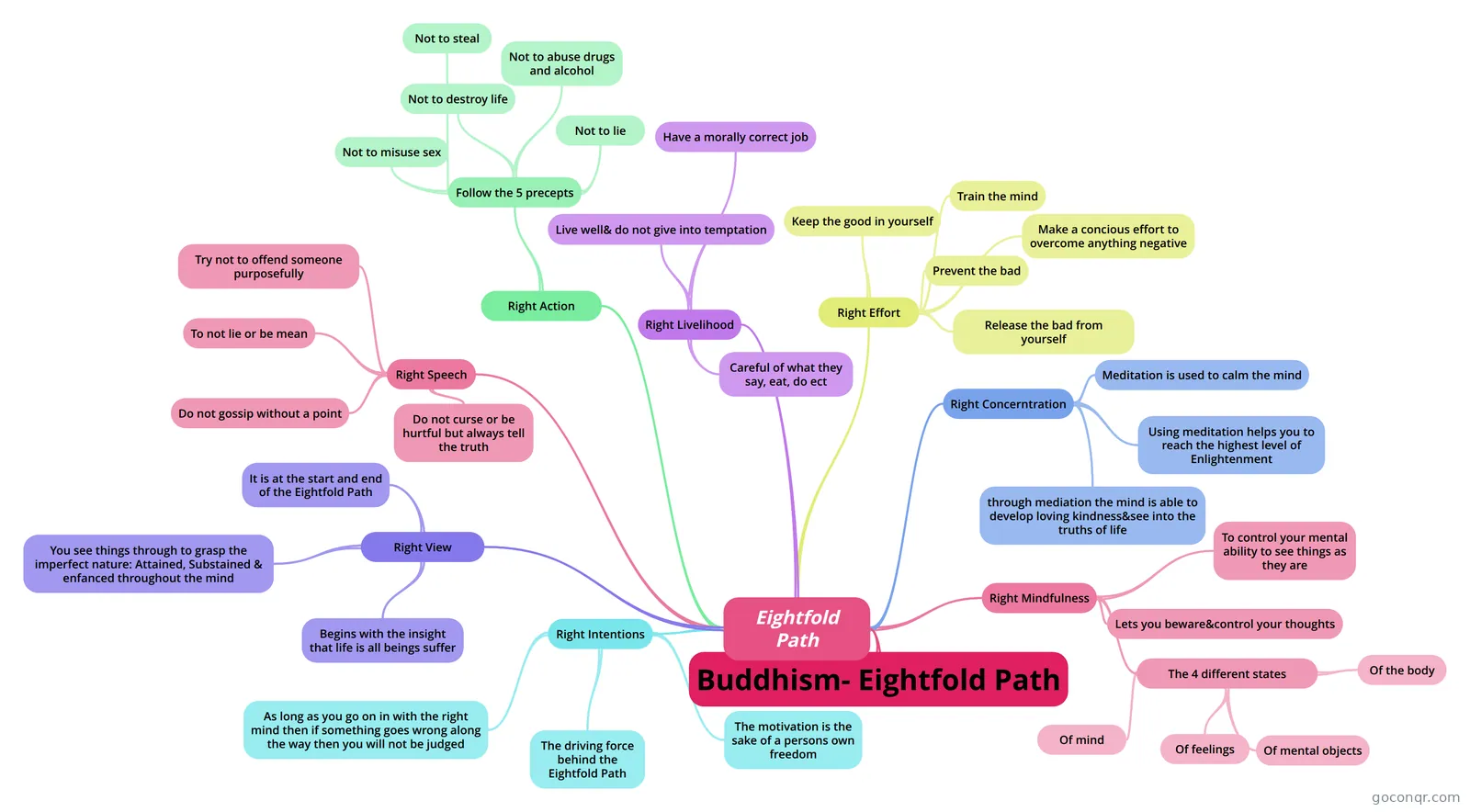 Mind map Buddhism- Eightfold Path
Quizzes
See all 20 quizzes-
20 questionsQ1 Exam Review for Buddhism How many steps did the Buddha take after he was born?
-
12 questionsRELIGIOUS STUDIES- BUDDHISM What are the 'four noble truths'?
-
7 questionsThe Birth of Buddha What entered the queens womb?
-
12 questionsRELIGIOUS STUDIES- THE LIFE OF THE BUDDHA What is the name of the founder?
-
10 questionsBuddhism Quiz What were the four sights that the Buddha saw?
-
5 questionsBuddhism Where was Buddha born ?
Mind maps
See all 321 mind maps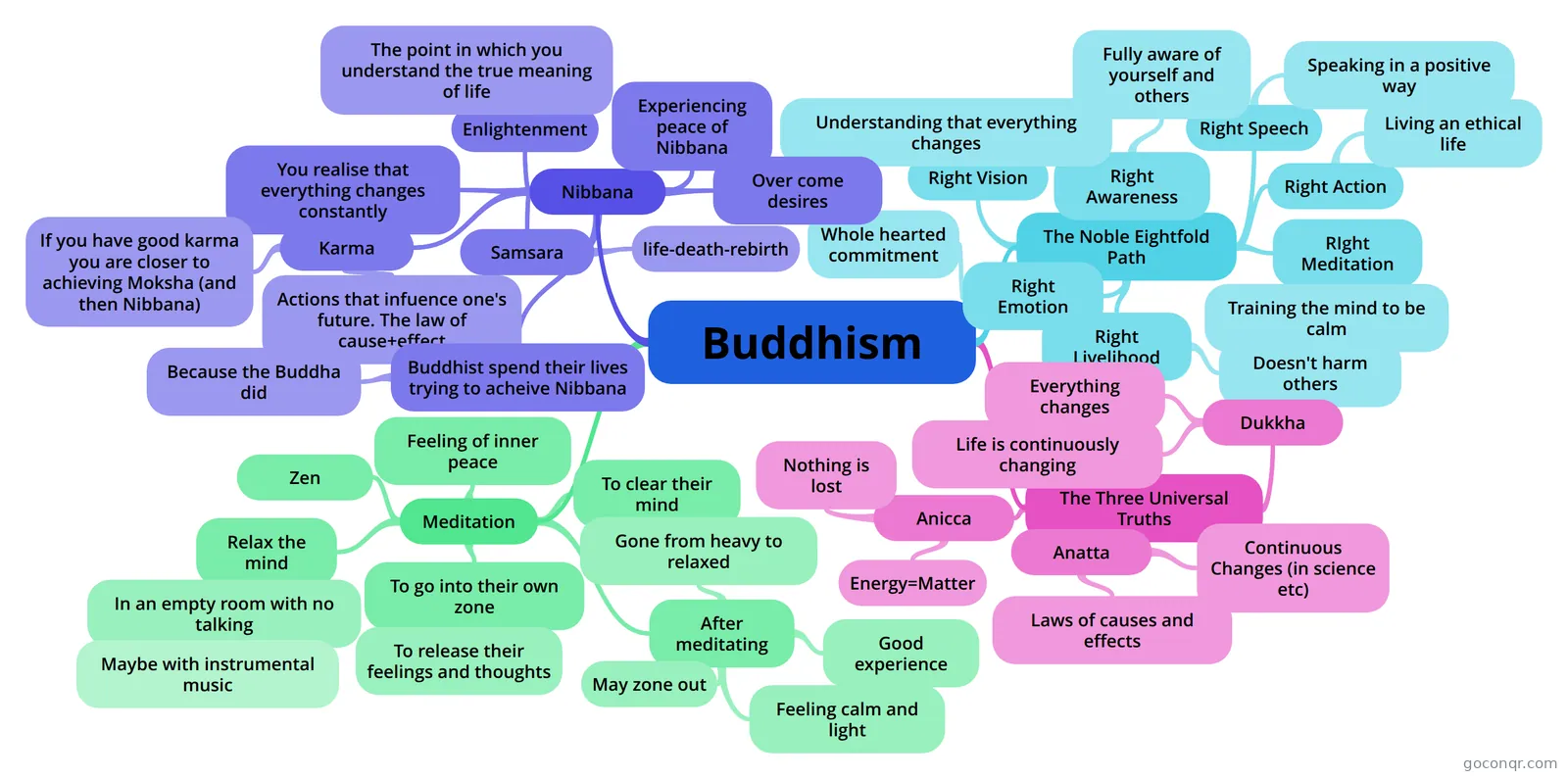
Flashcards
See all 144 flashcards-
21 cardsBuddhism key words: Living The Four Noble Truths
-
19 cardsBuddhism Key Words: Insight Buddhism insight flashcards
-
19 cardsBuddhism Keywords
-
6 cardsRS GCSE BUDDHISM What are the 5 precepts ?
-
23 cards3 Marks of Existence
-
50 cardsBuddhism - Society: Key Words RS A Level Buddhism
-
43 cardsChapter 17: Zen Buddhism
-
37 cardsBuddhism Final Four Major Sites
Flowcharts

Notes
See all 24 notes-
Buddhism Siddhartha Gotama – Quote: ‘Our life is shaped by our mind: we become what we think.’ · Royal Life · Realized how much suffering there is · ...
-
RS- Buddhism Beliefs A Buddha is an enlightened human being. Everyone has potential as long as they are strict with themselves and understanding of what it means to become a Buddha. The Buddha is Siddattha Gotama, the first Buddha i...
-
Buddhism - Global Issues Global IssuesPrejudice and Discrimination Bad karma if they are prejudice or discriminate towards someone They believe in equanimity which means equality for everyone There is no difference between each human because ...
-
Three marks of existence Anicca Buddhists believe this principal applies to everything It is the principle of impermanence Everything changes, nothing is permanent Your not the same person as when you were younger, your not even the same pers...
Slides
See all 10 slidesMore Religion and theology topics
About Buddhism
GoConqr OriginalWhat this unit covers
The page lists resources made by GoConqr users on Buddhism, with a strong focus on core beliefs. The mind map Buddhist Beliefs lays out the Four Noble Truths: Dukkha, Samudaya, Nirodha and Magga. The map The four noble truths covers the same ground in a different layout, so you can compare how each author breaks it down.
Other maps look at the Noble Eightfold Path, Nibbana and the Three Universal Truths. Story of Siddhartha follows the Buddha's early life, and Zen Buddhism looks at its Chinese and Japanese influences, including Mahayana Buddhism and Shinto.
Where to start
- Open Buddhist Beliefs or Story of Siddhartha to get the big picture.
- Move on to Buddhism- Eightfold Path to see how the path is split into right view, right speech, right effort and more.
- Read the notes titled Buddhism, which open with a quote from Siddhartha Gotama about the mind shaping our lives.
Keywords and exam practice
The flashcard decks Buddhism Key Words: Insight and Buddhism key words: Living cover terms such as Samsara, Karma, the Six Realms of Existence, Tanha and the Deer Park Sermon. Some resources mention GCSE Religious Studies and A-level Religious Studies, and there are notes on 12 mark questions and mock essay questions for writing practice.
Using quizzes and maps together
Read a map first, then try the quiz RELIGIOUS STUDIES- BUDDHISM. It asks about the four noble truths and the twelve links of dependent origination on the wheel of Samsara. Wrong answers show you which map or deck to return to. Then go back to the flashcards for the terms you missed.
Where it sits
This unit belongs to the Other World Faiths strand of Religion and theology. Choose a resource that matches what you are revising, or make your own maps and flashcards as you go.
Frequently asked questions
Which resource should I open first?
Start with the mind map Buddhist Beliefs. It sets out the Four Noble Truths in order, from Dukkha to Magga. Once that makes sense, try the Noble Eightfold Path maps, then check your understanding with the quiz RELIGIOUS STUDIES- BUDDHISM.
What do the mind maps cover?
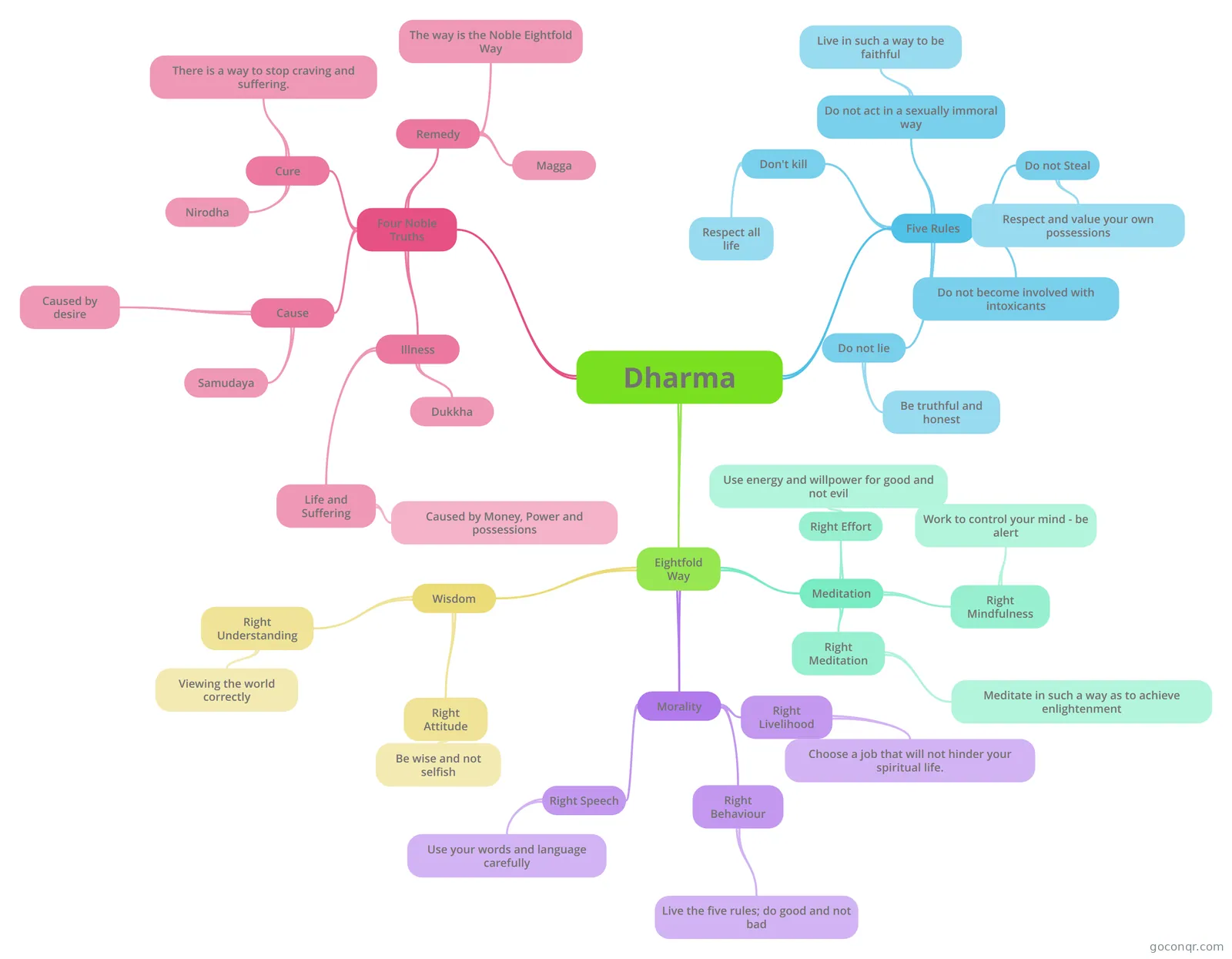
They cover beliefs and practice. You will find the Four Noble Truths, the Eightfold Path, Nibbana, the Three Universal Truths, the story of Siddhartha, Zen Buddhism, Dharma, the Bodhisattva Ideal and Avalokiteshvara. There are over 300 maps, so several cover the same topic in different ways.
Are these resources free to use?
Yes. Every resource listed here is free to open, study and take, with no account needed. They were made by GoConqr users, not by GoConqr itself, so it can help to compare a couple of versions of a topic. A free account lets you save quiz scores and make your own.
Which levels and exams do they suit?
Most resources are at secondary level, with a smaller share for university students and professional candidates. Some mention GCSE Religious Studies and A-level Religious Studies. Teachers can use the ready-made maps, decks and quizzes as starting points for lessons or revision tasks.
Are there flashcards for key terms?
Yes, there are over 140 flashcard decks. Buddhism Key Words: Insight covers Samsara, Karma and the Six Realms of Existence. Buddhism key words: Living covers the Four Noble Truths and Tanha. Other decks cover Zen Buddhism, rebirth and the 5/10 Precepts.
What if I cannot find what I need?
Try a different format, because a topic may appear as a note, a deck or a map. If nothing fits, you can build your own with a free account. Making a mind map or flashcard set from your class notes is also a good way to revise.