
Mapa mental
ADH
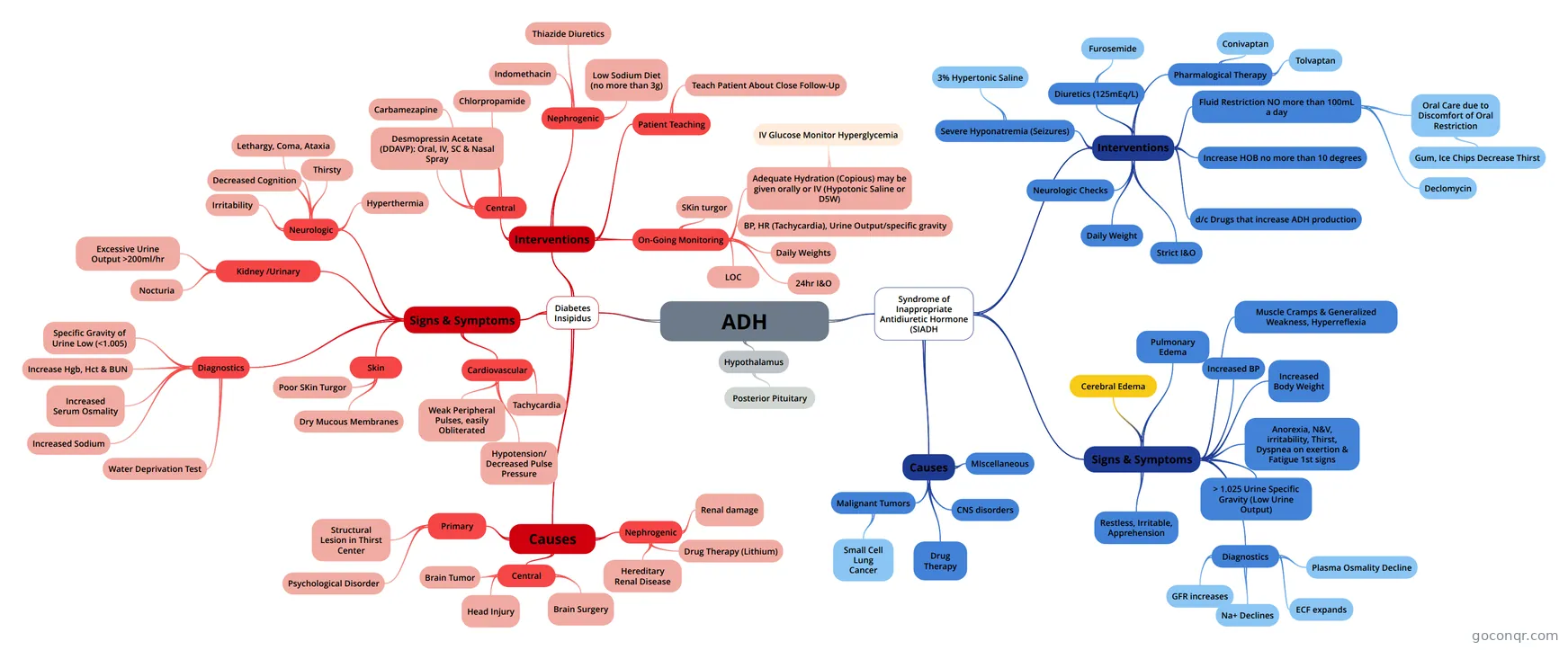
Mind map: ADH
Conteúdo do mapa
ADH
Diabetes Insipidus
- Deficiency of ADH hormone Responsible of retaining Water in the presence of High Sodium Concentration. In this Case The patient is Loosing Water which increases Sodium Levels. (Hypovolemia Hypernatremia). Increased Sodium Na+ Serum, Increased Serum Osmolality Concentration. Decreased Serum Osmality Concentration.
- Signs & Symptoms
- Diagnostics
- Specific Gravity of Urine Low (<1.005)
- Increased Serum Osmality
- Less than 100mOsm/Kg
- Increase Hgb, Hct & BUN
- Increased Sodium
- Water Deprivation Test
- Before Exam: Body weight and Urine Osmolality volume & Specific Gravity is measured! The patient is deprived water 8-12hrs and then given Desmopressin acetate Subcutaneously or Nasally. Patient with Central DI will Exibit a drastic increase of urine osmolality from 100 to 600mOsm/Kg and Decrease Urine Volume. Patient with Nephrogenic DI will not be able to increase Urine Osmolality greater than 300mOsm/Kg
- Kidney /Urinary
- 2 to 20L a day
- Excessive Urine Output >200ml/hr
- Greater than 200ml per hour
- Nocturia
- Fatigue is due to excessive urination and also causes generalized muscle weakness.
- Neurologic
- Irritability
- Decreased Cognition
- Thirsty
- Hyperthermia
- Lethargy, Coma, Ataxia
- Skin
- Fatigue is the result of Nocturia of Frequenctly going to the bathroom. Generalized Weakness can Also Manifest.
- Poor SKin Turgor
- Dry Mucous Membranes
- Cardiovascular
- Weak Peripheral Pulses, easily Obliterated
- Tachycardia
- Viscosity of Blood is (thicker) so the Heart will compensate to get the tissue oxygenated.
- Hypotension/ Decreased Pulse Pressure
- Diagnostics
- Causes
- Decreased Water Reabsorption in the Renal Tubules. Which leads to Decreased intravascular Volume.
- Central
- Interference with ADH synthesis, Transport or Release.
- Brain Tumor
- Head Injury
- Usually Self- Limiting
- Brain Surgery
- Intercranial Surgery- Triphasic Pattern: Acute excessive polyuria, Interphase Urine Normalizes, Third phase DI permanent (3rd phase 10-14days post-operatively)
- Primary
- Structural Lesion in Thirst Center
- Psychological Disorder
- Nephrogenic
- Inadequate Renal Response to ADH
- Renal damage
- Drug Therapy (Lithium)
- Hereditary Renal Disease
- Interventions
- On-Going Monitoring
- Daily Weights
- 24hr I&O
- Adequate Hydration (Copious) may be given orally or IV (Hypotonic Saline or D5W)
- IV Glucose Monitor Hyperglycemia
- Hyperglycemia & Glycosuria leads to Osmotic diuresis. This will lead to fluid volume deficit.
- IV Glucose Monitor Hyperglycemia
- BP, HR (Tachycardia), Urine Output/specific gravity
- LOC
- alertness, response to stimuli,
- SKin turgor
- Central
- Desmopressin Acetate (DDAVP): Oral, IV, SC & Nasal Spray
- Hormone Replacement Others: Aqueous Vasopressin, Lysine Vasopressin. *Asssess Response: (Weight gain, Headache, Restlessness, Hyponatremia)
- Chlorpropamide
- ADH stimulator (Synthetic Vasopressin)
- Carbamezapine
- Desmopressin Acetate (DDAVP): Oral, IV, SC & Nasal Spray
- Patient Teaching
- Teach Patient About Close Follow-Up
- Nephrogenic
- Low Sodium Diet (no more than 3g)
- Thiazide Diuretics
- May reduce flow to the ADH distal sensitive distal Nephrons
- Indomethacin
- Used if Thiazide do not work. NSAID (Helps increase Renal Responsiveness)
- On-Going Monitoring
Syndrome of Inappropriate Antidiuretic Hormone (SIADH
- Dilutional Hyponatremia (Euvolemic Hyponatremia) Caused by Overproduction of ADH homormone responsible for retaining water. Serum Na+ Decreased, Decreased Serum Osmalality Concentration & Increased Serum Osmlality Concentration.
- Causes
- MIscellaneous
- Hypothyroidism, Lung infection, COPD, Positive pressure mechanical ventilation, HIV, Adrenal Insufficiency.
- Drug Therapy
- Carbamazepine, Chlorpropamide, General Anasthetics, Opioids, Oxytocin, Thiazide Diuretics, SSRI & antidepressants, Tricyclic Antidepressants, Chemotherapy drugs, (Vincristine, Vinblastine, Cyclophosphamide)
- CNS disorders
- Head injury, stroke, brain tumor, Infection (Encephalitis, meningitis), Cerebral Atrophy, Guillain Barre Syndrome, Systemic Lupus Erythematosus
- Malignant Tumors
- pancreatic cancer, Lymphoid cancer, Thymus Cancer, Prostate Cancer, Colorectal Cancer
- Small Cell Lung Cancer
- Most Common!!!
- MIscellaneous
- Signs & Symptoms
- ADH increases Premeability at the Renal Distal Tubule & Collecting Duct which leads to Reabsorption of Water into the Circulation.
- Increased Body Weight
- Without Edema
- > 1.025 Urine Specific Gravity (Low Urine Output)
- Diagnostics
- Na+ Declines
- ECF expands
- GFR increases
- Plasma Osmality Decline
- <240mEq/L
- Pulmonary Edema
- Muscle Cramps & Generalized Weakness, Hyperreflexia
- Increased BP
- Cerebral Edema
- This can Occur symptoms would include: Lethargy, confusion Headache, seizure, coma
- Restless, Irritable, Apprehension
- Headache
- Anorexia, N&V, irritability, Thirst, Dyspnea on exertion & Fatigue 1st signs
- Interventions
- Fluid Restriction NO more than 100mL a day
- Oral Care due to Discomfort of Oral Restriction
- Gum, Ice Chips Decrease Thirst
- Declomycin
- The drug blocks effects on the renal Tubules.
- Oral Care due to Discomfort of Oral Restriction
- Strict I&O
- Daily Weight
- Neurologic Checks
- Seizure Precautions
- Increase HOB no more than 10 degrees
- Increase Venous return to the Heart & Increase Left atrial filling Pressure. Reducing the Release of ADH?
- d/c Drugs that increase ADH production
- Chlorpropamide, carbamezapine, oxytocin, thiazide, diuretics, SSRI antidepressants & Some Chemo Drugs.
- Diuretics (125mEq/L)
- If below the patient may loose sodium ions with the water which is increased risk for seizure. Also causes loss of K+, Ca+ & Mg2+ loss may need supplements.
- Furosemide
- Severe Hyponatremia (Seizures)
- 3% Hypertonic Saline
- Pharmalogical Therapy
- Euvolemic Hyponatremia Medication Treatments
- Tolvaptan
- Conivaptan
- Fluid Restriction NO more than 100mL a day
Hypothalamus
- Anitdiuretic Hormone is produced from the Hypothalamus.
- Posterior Pituitary
- Anitdiuretic Hormone Stored & Produced in the Posterior Pituitary.