
Mapa mental
RELATIONSHIPS: CONCEPTS
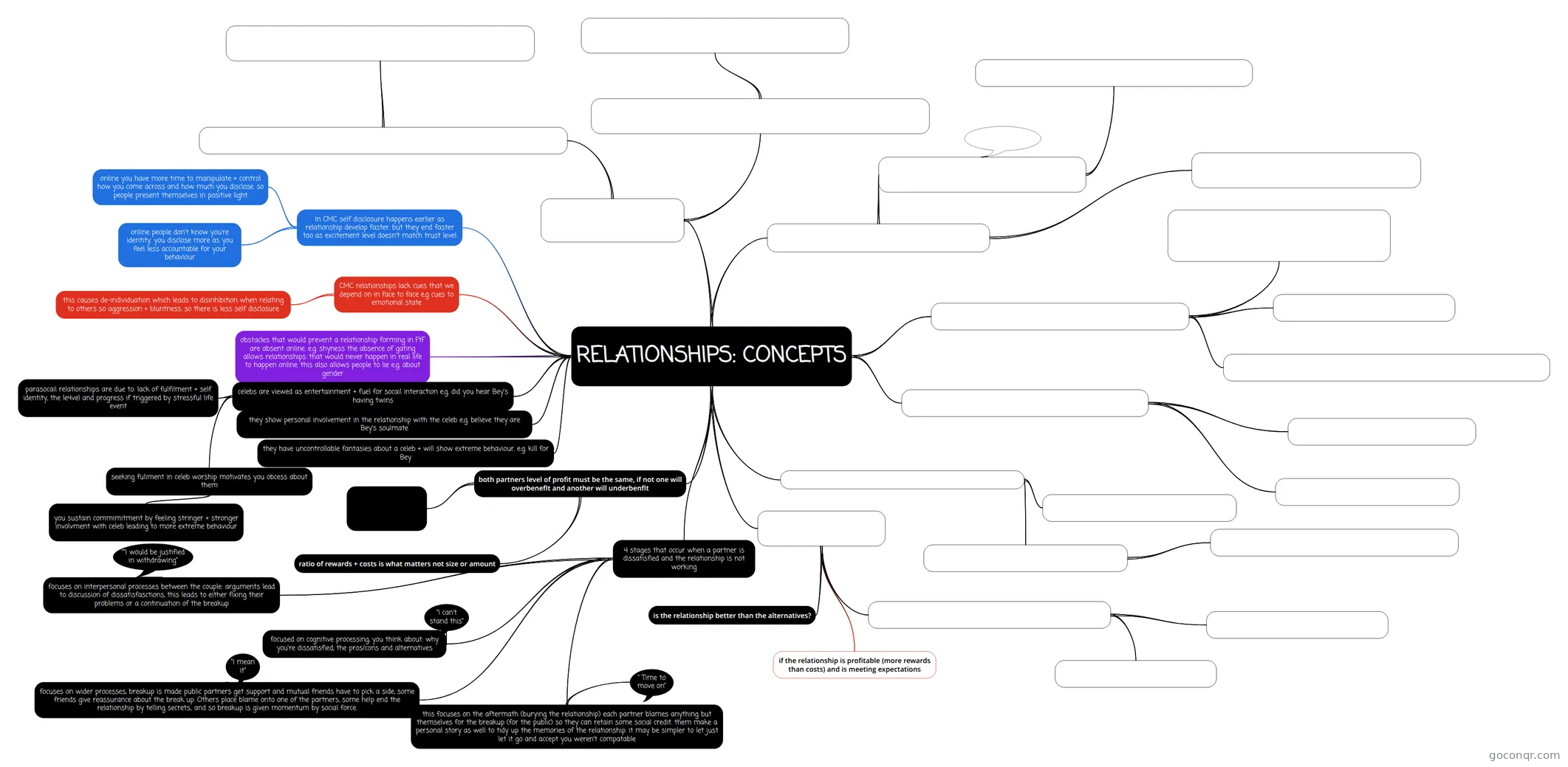
Mind map: Relationships concepts
Conteúdo do mapa
RELATIONSHIPS: CONCEPTS
the anisogamy in humans results in there being a lot of fertile males but limited fertile women, because of this 2 mating strategies have been made.
- inter-sexual selection, females face more consequences (time, energy) if they choose the wrong guy partner compared to men. this is why they are picky, they want the guy with the best genes + resources
- females mate with guys who have desirable traits, their sons will inherit this desired 'sexy' trait so females will mate with him and so on. causing the sexy trait to be passed on
- intra-sexual selection, males compete between themselves to see who gets the girl. the males with the trait that is best suited to compete will win (strength+ size) and so his traits will be passed on
- bigger stronger guys pass on their traits so more males will be bigger overtime. but females don't have to compete so they don't have to be bigger or stronger this eventually results in males + females having differences
- inter-sexual selection, females face more consequences (time, energy) if they choose the wrong guy partner compared to men. this is why they are picky, they want the guy with the best genes + resources
symmetrical faces are attractive as its a sign of genetic fitness. baby faces are attractive as they trigger caring instinct
- we assume that attractive people are good kind etc. these assumed ideas make them even more attractive in our eyes and can blind make us blind to their bad traits
- "what is beautiful is good"
- we act nice to good looking people so they act nice back. we say thanks they say your welcome but that doesn't mean they are usually nice or good people
- we all want good looking people but we dont wanna be out of our league, so we pick partners who have same attractiveness as us
- we assume that attractive people are good kind etc. these assumed ideas make them even more attractive in our eyes and can blind make us blind to their bad traits
different factors limit or filter the range of people that can be your partner
- 1st filter. factors which affect the chance of 2 people meeting in the 1st place. you're more likely to meet if you share demographic characteristics e.g.religion class ethnic group, and if you don't live within proximity will you meet or stay in touch after you meet?
- 2nd filter partners should have same basic values + beliefs. this also leads to better self-disclosure
- 3rd filter. you need your partner to make up for the traits you lack and vice versa. this is more important in long term relationships. it makes the couple feel that together they are whole
the more you reveal your true self to your partner the more they gain greater understanding + 'penetrate' more deeply into each others lives
- you can disclose superficial low-risk stuff or deeper high-risk stuff doing this too fast or too slow is bad
- partners should respond to self disclosure with empathy understanding and their own self disclosure
rewards-costs=profit higher profit is higher satisfaction in relationship
- past relationships + social norms affect the rewards you expect to get. you pursue the relationship if pur CL is high.
- people with low self esteem have low CL so will be okay with low profit relationship. high self esteem= high CL so high profit relationships
- we only stay in relationship if its more rewarding than the alternatives e.g. single or someone else
- past relationships + social norms affect the rewards you expect to get. you pursue the relationship if pur CL is high.
both partners level of profit must be the same, if not one will overbenefIt and another will underbenfIt
- ratio of rewards + costs is what matters not size or amount
wanting to stay in a relationship with long term goals is affected by 3 things
- if the relationship is profitable (more rewards than costs) and is meeting expectations
- is the relationship better than the alternatives?
- the importance of resources associated with the relationship that you would lose if it ended. higher the investment the more you'll stay
- resources put directly into the relationship can be tangible or intangible e.g. money, self disclosure
- resources that weren't connected to the relationship before? e.g. mutual friends, kids
4 stages that occur when a partner is dissatisfied and the relationship is not working
- focused on cognitive processing, you think about: why you're dissatisfied, the pros/cons and alternatives
- "I can't stand this"
- focuses on interpersonal processes between the couple: arguments lead to discussion of dissatisfasctions, this leads to either fixing their problems or a continuation of the breakup
- ""I would be justified in withdrawing"
- focuses on wider processes, breakup is made public partners get support and mutual friends have to pick a side, some friends give reassurance about the break up. Others place blame onto one of the partners, some help end the relationship by telling secrets,. and so breakup is given momentum by social force.
- "I mean it"
- this focuses on the aftermath (burying the relationship) each partner blames anything but themselves for the breakup (for the public) so they can retain some social credit. them make a personal story as well to tidy up the memories of the relationship. it may be simpler to let just let it go and accept you weren't compatable
- " Time to move on"
- focused on cognitive processing, you think about: why you're dissatisfied, the pros/cons and alternatives
CMC relationships lack cues that we depend on in face to face e.g cues to emotional state
- this causes de-individuation which leads to disinhibition when relating to others so aggression + bluntness. so there is less self disclosure
In CMC self disclosure happens earlier as relationship develop faster. but they end faster too as excitement level doesn't match trust level
- online you have more time to manipulate + control how you come across and how much you disclose. so people present themselves in positive light
- online people don't know you're identity. you disclose more as you feel less accountable for your behaviour
obstacles that would prevent a relationship forming in FtF are absent online. e.g. shyness the absence of gating allows relationships. that would never happen in real life to happen online. this also allows people to lie e.g. about gender
celebs are viewed as entertainment + fuel for socail interaction e.g. did you hear Bey's having twins
- parasocail relationships are due to: lack of fulfilment + self identity, the le4vel and progress if triggered by stressful life event
- seeking fuliment in celeb worship motivates you obcess about them
- you sustain commimitment by feeling stringer + stronger involvment with celeb leading to more extreme behaviour
they show personal involvement in the relationship with the celeb e.g. believe they are Bey's soulmate
they have uncontrollable fantasies about a celeb + will show extreme behaviour. e.g. kill for Bey
Informações
- Descrição
- Mapa Mental sobre RELATIONSHIPS: CONCEPTS, criado por Ma-adjoa Akwah em 11-04-2017.
- Criado por
- Ma-adjoa Akwah
- Visualizações
- 3
- Avaliação
Mais sobre Sexual selection and partner preferences