
Mapa mental
Welding Processes
Conteúdo do mapa
Welding Processes
Fusion Welding
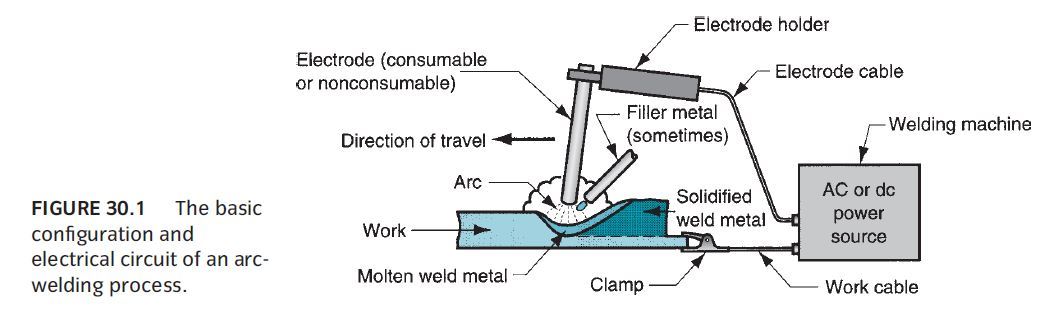
- Arc Welding
- Arc time = (time arc is on)/(hours worked)
- Electrode
- Consumable
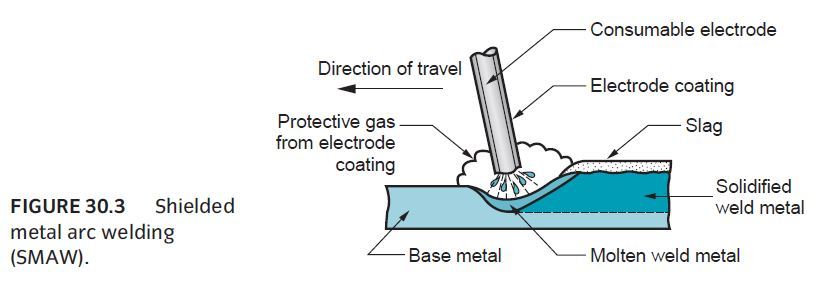
- Shielded Metal Arc Welding (SMAW) or Stick Welding
- Prinsip dari SMAW adalah menggunakan panas dari busur untuk mencairkan logam dasar dan ujung sebuah consumable elektroda tertutup dengan tegangan listrik
- Panas tersebut dihasilkan oleh lompatan ion listrik yang terjadi antara katoda dan anoda (ujung elektroda dan permukaan plat yang akan dilas )
- Shielded metal arc-welding (SMAW) process difficult to automate because the consumable stick has to be replaced too often
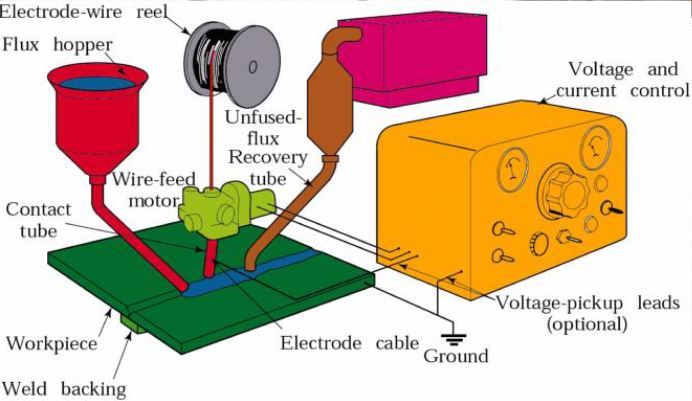
- Submerged Arc Welding (SAW)
- uses a continuous, consumable bare wire electrode, and arc shielding is provided by a cover of granular flux.
- Fluks yang bentuknya seperti pasir untuk melindungi logam
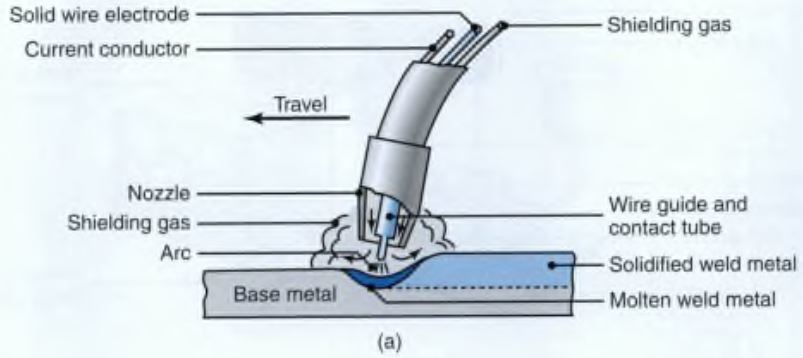
- Gas Metal Arc Welding (GMAW)
- Electrode is a consumable baremetal wire, and shielding is accomplished by flooding the arc
- Gases used for shielding include inert gases such as argon and helium, and active gases such as carbon dioxide.
- Awalnya proses ini bernama MIG welding (for metal inert gas welding)
- Kemudian karena gas inert mahal maka digantikan dengan gas CO2
- Awalnya proses ini bernama MIG welding (for metal inert gas welding)
- Gases used for shielding include inert gases such as argon and helium, and active gases such as carbon dioxide.
- Electrode is a consumable baremetal wire, and shielding is accomplished by flooding the arc
- Flux-Cored Arc Welding
- as an adaptation of shieldedmetal arc welding to overcome the limitations imposed by the use of stick electrodes.
- The flux-cored arc welding (FCAW) process is similar to gas metal-arc welding, with the exception that the electrode is tubular in shape and is filled with flux (hence the term flux cored).
- self-shielded flux-cored arc welding
- gas-shielded flux-cored arc welding
- Electrogas Welding
- Produces a smaller heat affected zone (HAZ)
- The weld metal is deposited into a weld cavity between the two pieces to be joined.
- Shielded Metal Arc Welding (SMAW) or Stick Welding
- Non-consumable
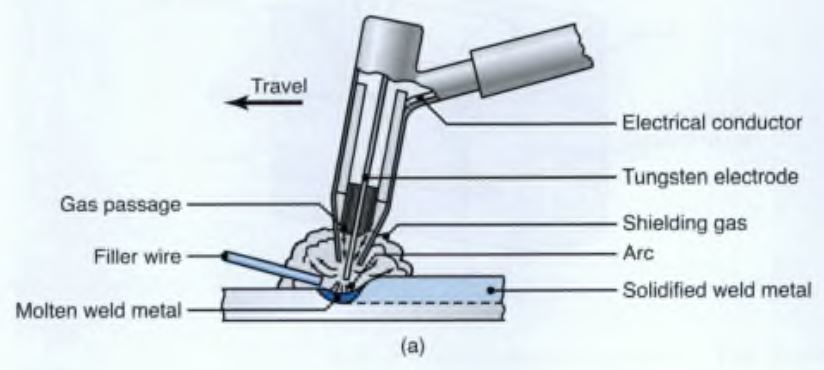
- Gas Tungsten Arc Welding (GTAW)
- the filler metal is supplied from a filler wire
- flux is not used
- Welding with GTAW may be done without filler metals, such as in welding close-fit joints.
- Plasma Arc Welding (PAW)
- The reason why PAW's temperature is the highest) derives from the constriction of the arc. Although the typical power levels used in PAW are below those used inGTAW, the power is highly concentrated to produce a plasma jet of small diameter and very high power density.
- Gas Tungsten Arc Welding (GTAW)
- Consumable
- A flux is a substance used to prevent the formation of oxides and other unwanted contaminants, or to dissolve them and facilitate removal.
- Arc adalah sebuah jembatan bercahaya terbentuk di celah antara dua elektroda
- Arc welding (AW) is a fusion-welding process in which coalescence of the metals is achieved by the heat of an electric arc between an electrode and the work.
- An electric arc is a discharge of electric current across a gap in a circuit. It is sustained by the presence of a thermally ionized column of gas (called a plasma) through which current flows.
- Oxfuel gas Welding
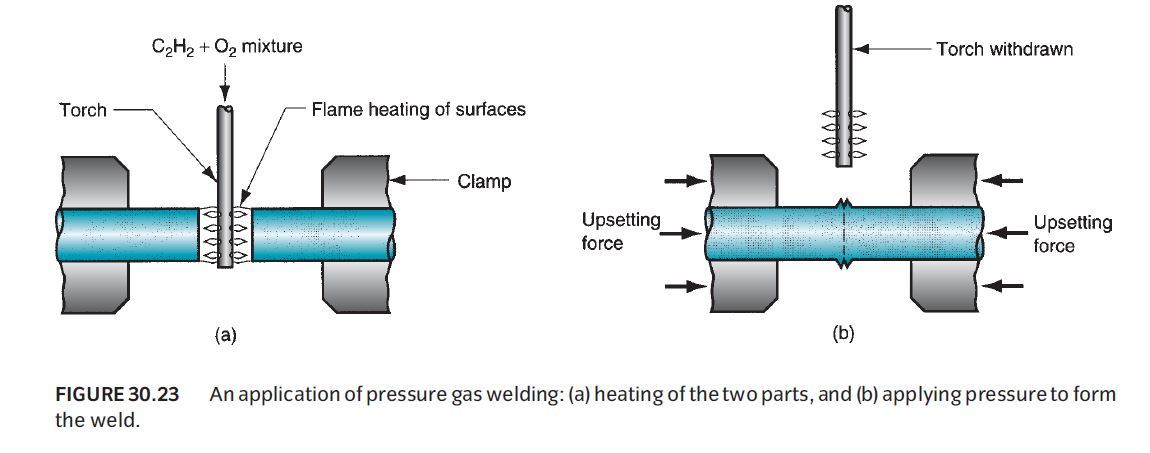
- Pressure Gas Welding
- heating them with an appropriate fuel mixture + applying pressure to bond the surfaces.
- Oxyacetylene welding
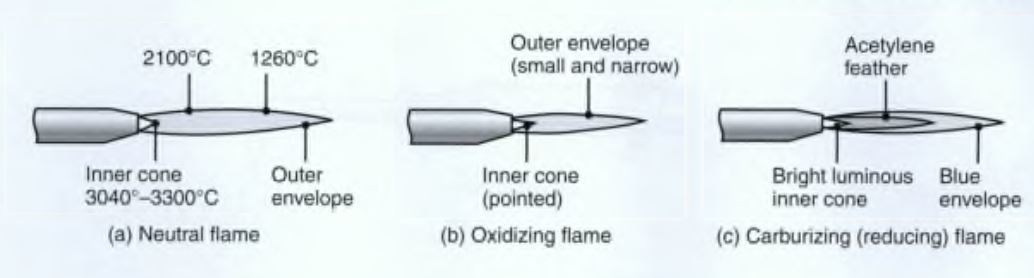
- acetylene mixed with an equal volume of oxygen burns hotter than any other commercially available fuel
- Types of flames
- neutralizing,oxidizing and reducing/carburizing
- neutralizing,oxidizing and reducing/carburizing
- thermit welding involves mixing a metal powder with a metal oxide, and using a high-temperature ignition source to cause anoxidation–reduction reaction
- Pressure Gas Welding
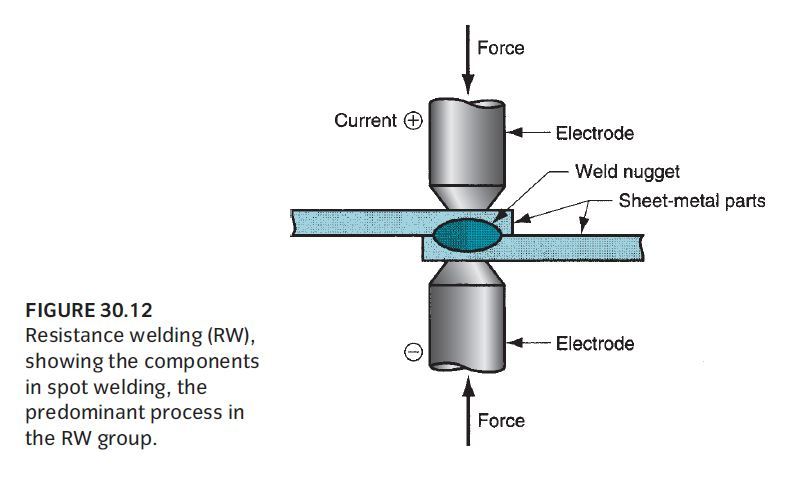
- Resistance Welding
- Group of fusion welding that uses a combo of heat and pressure to accomplish coalescence, heat being generated by electrical resistance to current flow at the junction to be welded
- Electron-Beam Welding
- fusion-welding process in which the heat for welding is produced by a highly focused, high-intensity stream of electrons impinging against the work surface
- Laser-Beam Welding
- Fusion-welding process inwhich coalescence is achieved by the energy of a highly concentrated, coherent light beam focused on the joint to be welded
- Several advantages of LBW over EBW: no vacuum chamber is required, no X-rays are emitted, and laser beams can be focused and directed by optical lenses and mirrors
- Fusion-welding process inwhich coalescence is achieved by the energy of a highly concentrated, coherent light beam focused on the joint to be welded
- Arc Welding
Solid-State Welding
- Solid state welding does not melt the base materals and there is no filler metal
- Forge Welding
- Cold Welding
- Roll Welding
- Hot Pressure Welding
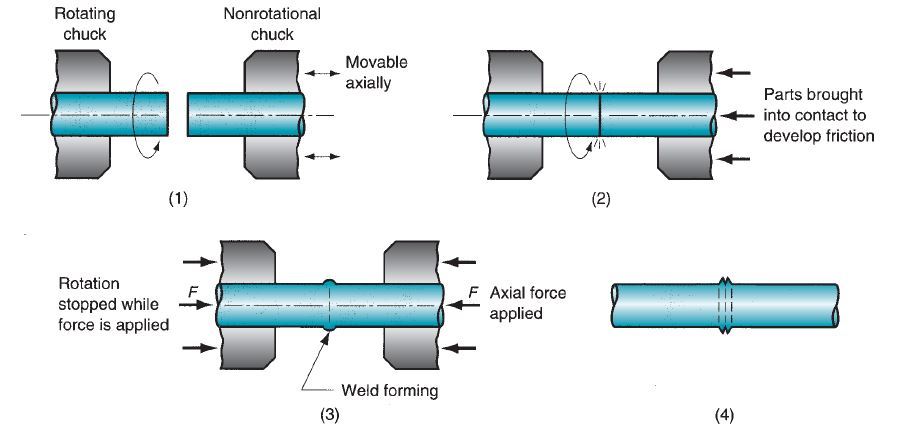
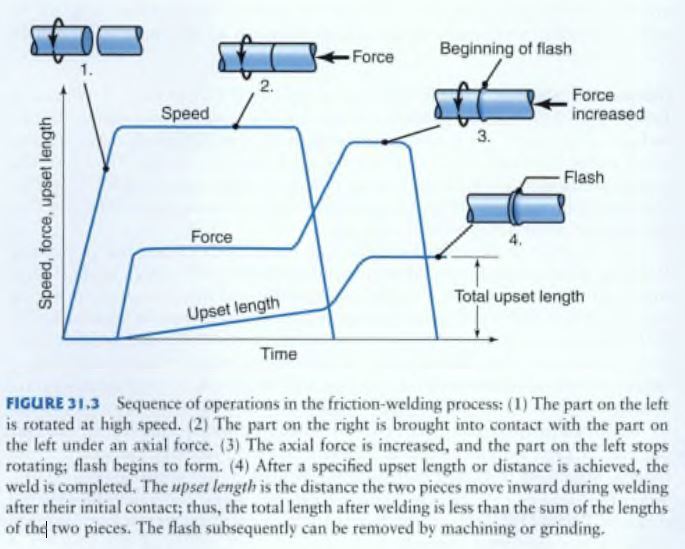
- Friction Welding
- Friction welding (FRW) is a solidstate welding process in which coalescence is achieved by frictional heat combined with pressure.
- The friction is induced by mechanical rubbing between the two surfaces, usually by rotation of one part relative to the other,
- Continuous-drive friction welding
- Saat panas yang sesuai sudah tercapai maka akan terjadi pengereman
- Inertia friction welding
- benda kerja disatukan dengan flwheel, sampai panas yang sesuai sudah tercapai, flywheel dilepas dan benda kerja tetp berputar akibat inersia
- Linear friction welding
- the interface of the two components to be joined is subjected to a linear reciprocating motion, as opposed to a rotary motion.
- Kelebihannya dibanding inertia friction welding yaitu penampang benda tidak harus lingkaran
- Friction welding (FRW) is a solidstate welding process in which coalescence is achieved by frictional heat combined with pressure.
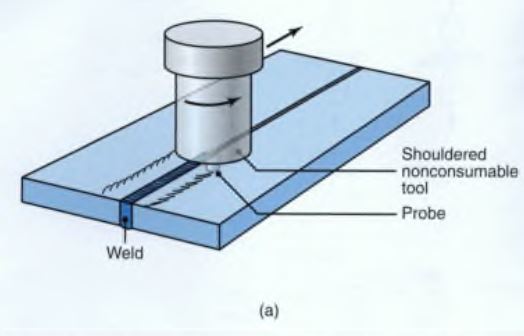
- Friction Stir Welding
- Solid state welding process in which a rotating tool is fed along the joint line between two workpieces, generating friction heat and mechanically stirring the metal to form the weld seam
- Perbedaan dengan friction welding adalah pada FSW panas yang dihasilkan didapatkan dari alat tahan haus yang terpisah sedangkan pada FW panas dihasilkan dari gesekan antar benda kerja
- Ultrasonic Welding
- The shearing stresses cause plastic deformation at the interface of the two components, breaking up oxide films and contaminants, and thus allowing good contact and producing a strong solid-state bond.
- Diffusion Welding
- The primary mechanism of coalescence is solidstate diffusion, which involves migration of atoms across the interface between contacting surfaces.
- Ultrasonic Welding
- Solid-state welding process in which two components are held together under modest clamping force, and oscillatory shear stresses of ultrasonic frequency are applied to the interface to cause coalescence
- Although heating of the contacting surfaces occurs due to interfacial rubbing and plastic deformation, the resulting temperatures are well below the melting point. No filler metals, fluxes, or shielding gases are required in USW.
- Solid-state welding process in which two components are held together under modest clamping force, and oscillatory shear stresses of ultrasonic frequency are applied to the interface to cause coalescence
WELDABILITY
- Metals with high thermal conductivity tend to transfer heat away from the weld zone, which can make them hard to weld
- Factor that affect weldability
- welding process
- base metal properties
- filler metal properties relative to base metal
- similarities between two base metal which are
- surface metal condition
Welding Defects
- Crack
- Cavities
- Solid Inclusions
- Imperfect Shapes
- Unacceptable Contour
The faying surfaces are the part surfaces in contact or close proximity that are to be joined.
- The feature that distinguishes fusion welding from solid-state welding is that melting of the faying surfaces occurs during fusion welding but not in solid-state welding
Imagens e arquivos do mapa
Informações
- Descrição
- PROSMAN II Mapa Mental sobre Welding Processes, criado por Kalolo 34 em 13-07-2017.
- Criado por
- Kalolo 34
- Visualizações
- 3
- Avaliação