
Notas
Chapter 7 Cheat Sheet
Conteúdo das notas (8)
Página 1
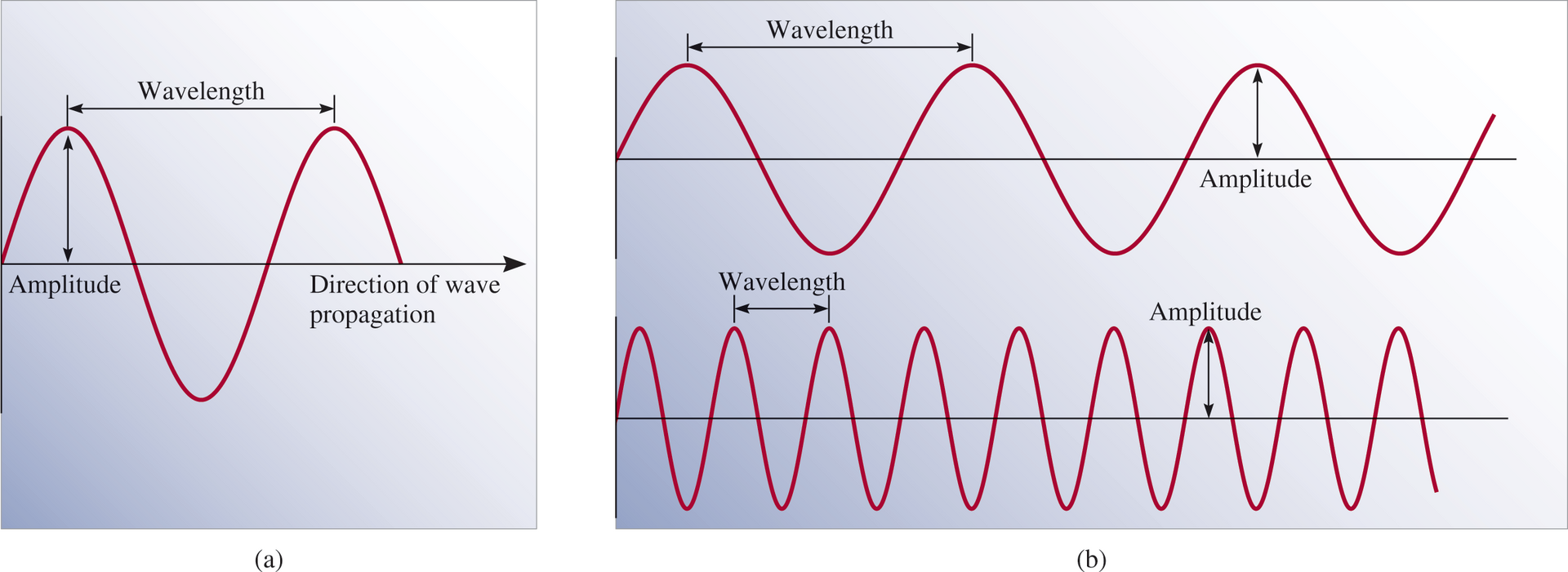
waves- A vibrating disturbance by which energy is transmitted
wavelength (λ)- distance b/n two points
frequency (ν)- # of waves that pass through a pt
amplitutde- vertical distance of a wave
measured in Hz
Página 2
Formulas
Speed of waves
u=λν
energy of a single quantum
E=hv
E=hc/λ
Energy of a photon
E=hv
Electrons aquiring kinetic energy
hv= KE+W
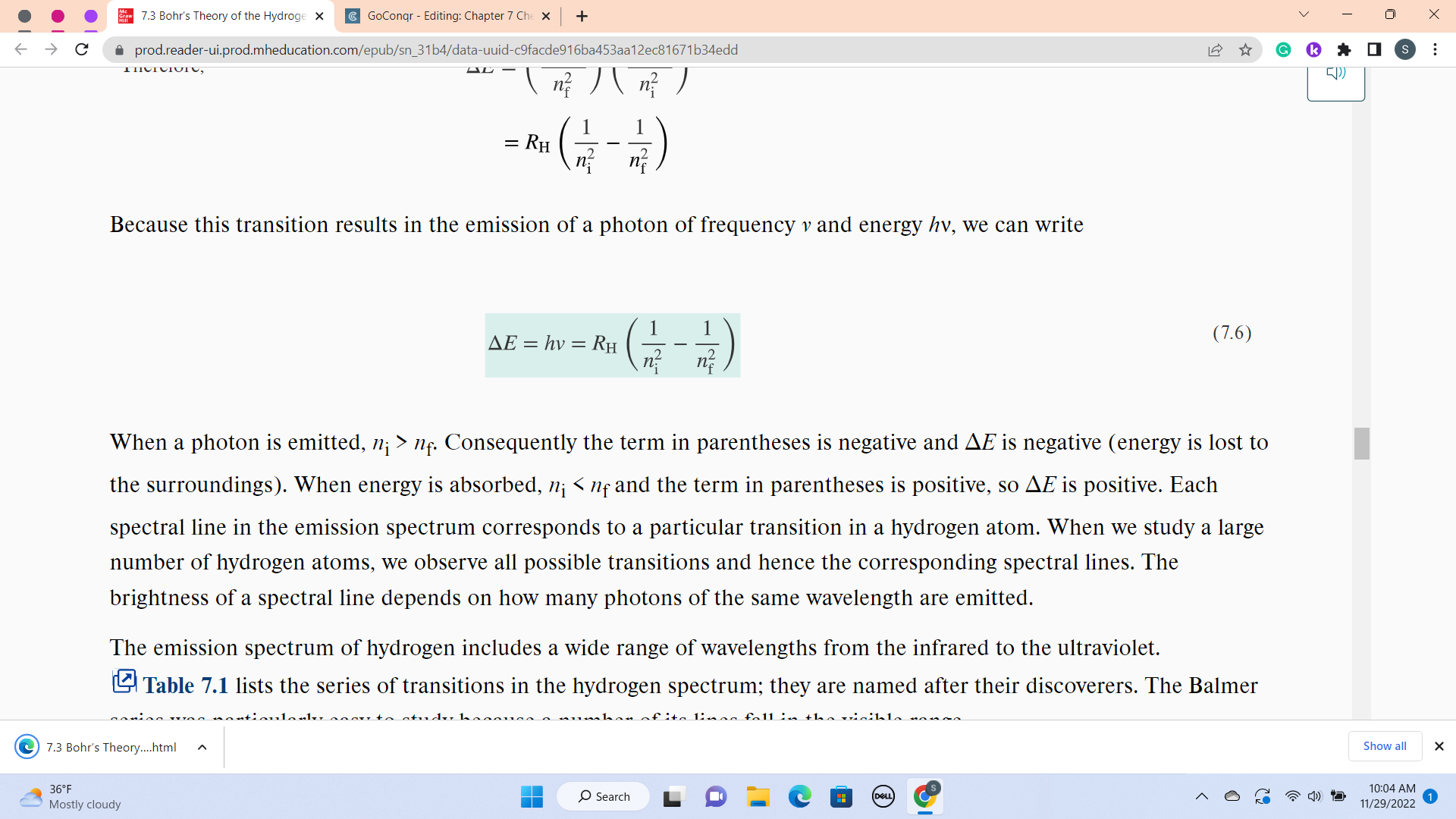
Energies e- can obtain in H
En=-RH (1/n2)
Rh constant= 2.18x10⁻¹⁸ J
Change in Energy state
triE=Ef-Ei
De Broglie dual nature
λ=h/mu
Página 3
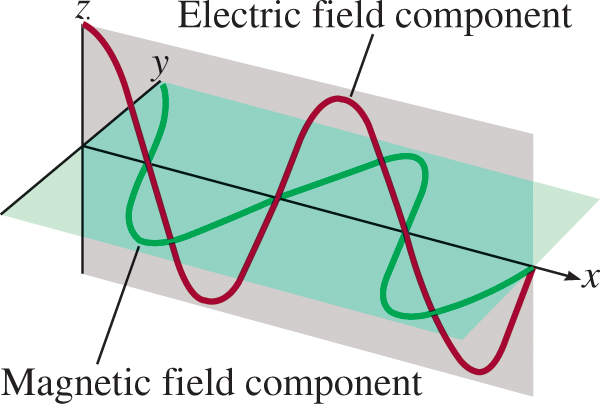
Electromagnetic waves-A wave that has an electric field component and a mutually perpendicular magnetic field component
same, wavelength, frequency, and speed
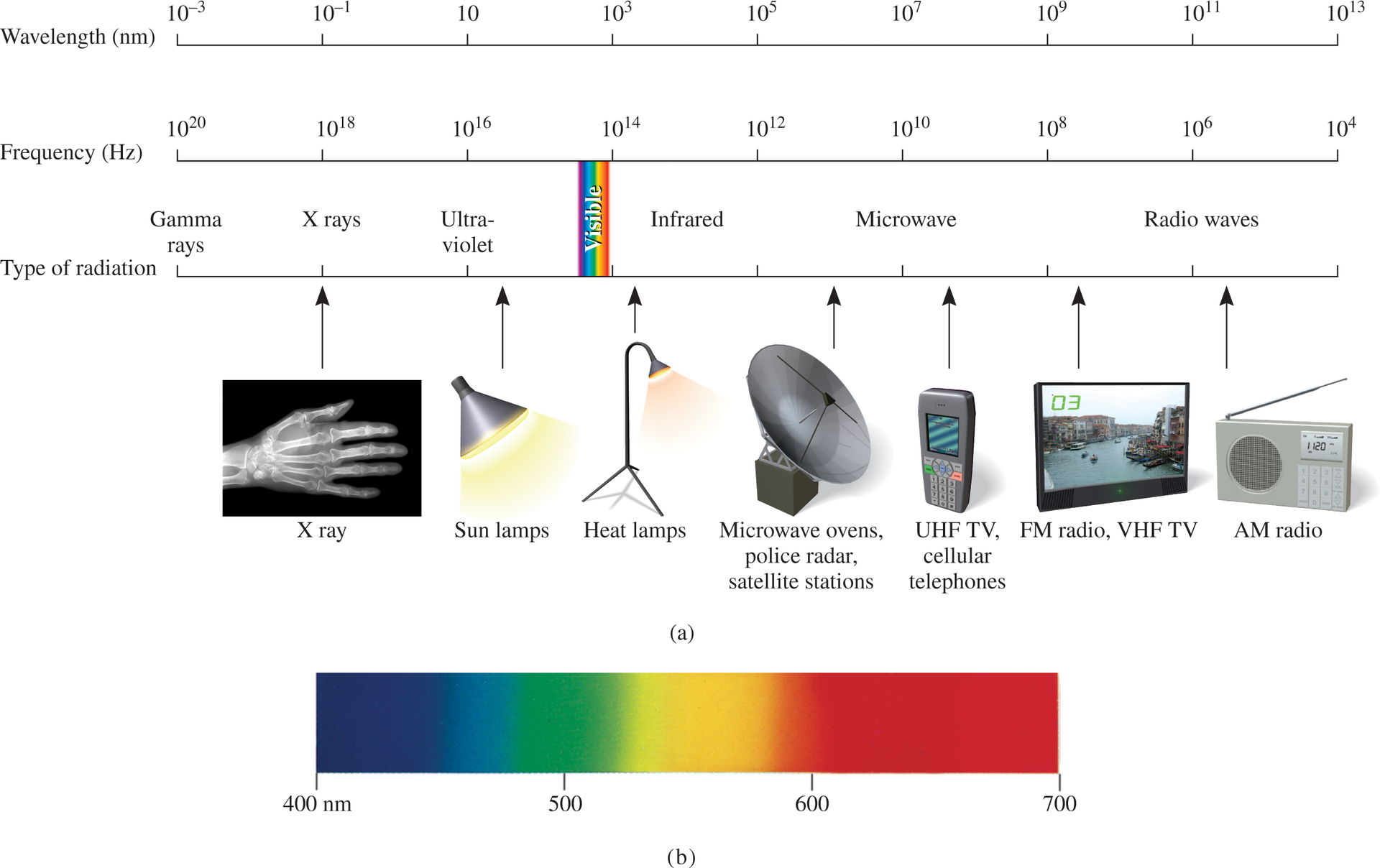
the energy given off is electromagnetic radiation
Página 4
emission spectra- Continuous or line spectra emitted by substances
every element has unique emission spectra
line spectra- light emissions at specific wavelengths
Página 5
Planck's Quantum Theory
Quantum- smallest amount of E that can b emitted or absorbed
Always emitted in intervals; hv, 2hv, 3hv
Planck's constant: 6.6310-34 J * s
Photoeletric Effect- Einstein
A phenomenon in which electrons are ejected from the surface of certain metals exposed to light of at least a certain minimum frequency
Photons- particles of light
Electrons r held in metal by attractive forces
if frequency of photons matches E holding e- they will come loose
if higher they will become loose and get some kinetic energy
more energy of photon more KE
Light behaves like particles and waves (particle wave duality)
Página 6
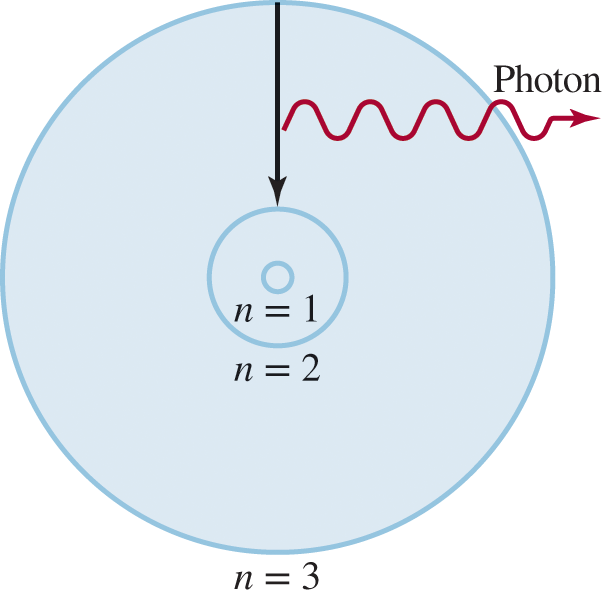
Bohr's Theory of H atom
energies of electrons r quantized, why they don't spiral out of control
Emitting energy- e- drops from higher energy to lower
Absorbing energy- e- goes from lower to higher energy
Ground state-lowest energy state of system
Excited state- higher energy state than ground state
Página 7
Dual Nature of Electrons
De Broglie asked if e-s can behave like particles, maybe e- can behave like waves
Quantum Mechanics
Heisenberg uncertainty principle- can't know the position and momentum of a particle at the same time
Shrodinger Equation- wave function
wave function squared is probality used to find where electron located
Electron density- where an e- might be located
atomic orbial- wave function of an e- in an atom
Rlly only works 4 H becuz it has 1 e-
Página 8
Informações
- Descrição
- Notas sobre Chapter 7 Cheat Sheet, criado por Grogu Mando em 29-11-2022.
- Criado por
- Grogu Mando
- Visualizações
- 2
- Avaliação