
Notas
Science test revision
Conteúdo das notas (5)
Página 1
science test revision
core science
Página 2
Science test revision - Its elementry - Chemical reactions 20-24
20.
Describe the signs & evidence associated with chemical change (change in:
-change in temperature
-gas produced
-odor produced
- precipitate produced
-sound produced
-light produced
- solid disappears
-permanent colour change
21.
identify reactants and products in a chemical reaction (refer page in workbook for practice)
22.
identify that photosynthesis, respiration, combustion, corrosion are examples of chemical change that occur in everyday life
chemical changes are:
a change that produces a new substance
involves the breaking and forming of chemical bonds
difficult or impossible to reverse
photosynthesis -> Since new chemical species are formed, photosynthesis is clearly a chemical change.
respiration -> Since glucose is converted into new products with different composition, respiration is a chemical change.
combustion -> When organic molecules combust the reaction products are carbon dioxide and water
corrosion -> converts a refined metal to a more chemically-stable form
23.
write the word equations for the chemical reactions of photosynthesis, respiration, and combustion
photosynthesis -> energy + carbon dioxide + water = glucose and oxygen
respiration -> oxygen + glucose = water and carbon dioxide and energy
combustion -> A combustion reaction always has oxygen as one reactant. The second reactant is always a hydrocarbon, which is a compound made up of carbon and hydrogen.
corrosion ->iron + water + oxygen = corrosion
24
assess why society should support scientific research (e.g. developing new pharmaceuticals and polymers)
Página 3
Science test revision - All mixed up - 1-22
Kinetic theory of matter
1
Explain the kinetic theory of matter in terms of energy (motion), between particles and forces of attraction between the particles.
all matter is made up of particles
these particles are always moving
the particles are held together by forces vary in strength
2
use the kinetic theory of matter to explain the properties of each state of matter.
solids
particles are close together
particles are held tightly together
particles are not free to move
particles only can only vibrate in their fixed positions
liquid
particles are close together
particles are held less tightly than in solids
particles roll over one another
gas
particles are much further apart
particles are not held together
particles are free to move
particle collisions with container walls cause gas pressure
3
discuss the benefits and limitations of using models to classify matter.
Change of state
4
predict what happens to particles as substances are heated and cooled in terms of the kinetic theory of matter
cooling = slowed down particles can cause freezing
heating = speeds up particles can cause melting or gas
5
relate the physical changes and energy transfers during evaporation, condensation, boiling, melting, freezing, sublimation in terms of the kinetic theory of matter.
evaporation - liquid -> gas
boiling - liquid -> gas
melting - ice -> solid
condensation = water vapor + cold surface
freezing = liquid -> solid
sublimation - solid -> gas
6
identify the change in the state of water as it is heated or cooled
ice - solid - shape cannot be changed easily - cannot be compress
water - liquid - shape can be changed easily - cannot be compressed
air - shape can be changed easily - can be compressed
7
explain that density is a measure how much matter there is in an object, relative to how much space it takes up.
matter has a property called density. density is a measure of how much matter there is in an object (its mass) compared with how much space it takes (its volume)
the density of an object depends on how closely packed the particles are.
8
calculate density using the formula: density=mass/volume
Aqueous "a fourth state"
9
list the properties of water: liquid, transparent (clear), odorless and colorless, low viscosity, tasteless, boiling point 100 degrees C, melting point 0 degrees C
10
describe the importance of water as a solvent in daily life, industry and the environment.
11
distinguish between solute, solvent, and solution
solute dissolves in a solvent
solvent dissolves solute
solution = solvent + solute
12
identify an aqueous solution occurs when water is the solvent
cordial
13
Identify that water the solvent in an aqueous solution
14
compare soluble and insoluble substances in water
insoluble - coin
soluble -sugar
15
explain that the process of dissolving the result interactions of molecules and the solute particles
particles in solid are held together by forces
forces between water and solid particles pull solid apart - solid dissolves
forces between solid particles are so strong that it cannot be dissolved in water
16
explain the difference between dilute, concentrated, and saturated solutions.
dilute - low solute
concentred - high solute
saturated - as much as possible solute
17
distinguish between pure substances and mixtures and identify some common mixtures.
pure substances only contain 1 type of particle
mixed contain more than 1 type of particle
separating substances in a mixture
18
construct a flowchart to show how matter is classified into pure (elements and compounds)and impure substances (mixtures)
19
identify that a mixture is made up with 2 or more substances with different properties
20
identify soluble and soluble mixtures that are found in everyday life
fanta
orange juice
coca cola
lemonade
tea
21
describe and compare the following techniques used to separate insoluble mixtures: magnetism, hand sorting, sieving, separating, decanting, centrifuging.
magnetism - using a magnet to take a metallic object out of a mixture
hand sorting, - picking things out of a mixture with your hands or tweezers
sieving - separates solid particles of different sizes
decanting - undissolved solid sits at the bottom while a liquid is poured off
centrifuging - placed in a container and spun at high speeds
22
describe and compare the following techniques used to separate soluble mixtures: evaporation, crystallization, chromatography, distillation.
evaporation - liquid turns into gas leaving behind solid
crystallization - occurs when saturated solution evaporates slowly and arranges to form crystals
chromatography - separating solutions dissolved in solutions
distillation - evaporation but vapors are condensed and collected in a separate container
Página 4
Science test revision - rock your world - 1-24
structure of the earth
1
describe and label the structure of the earth (ore, mantle, crust, and lithosphere)
Rocks and minerals
2
distinguish between minerals and rocks
minerals - naturally occurring in the earth's crust, chemical (elements or compounds) structure formed by the geological process.
rocks - 1 or more minerals, physically mixed and cemented or fused together
3
identify the properties that geologists use to distinguish between different types of minerals.
colour, luster, crystal shape & size, streak, hardness, cleavage
4
using tables or classification keys identify some, minerals based on their properties
5
identify that rocks can be divided into 3 main groups, based on how they are formed: sedimentary, igneous and metamorphic rocks. using tables or classification keys to identify some common minerals based on their properties
igneous rocks
6
describe how igneous rocks are formed
molten rock or magma underneath the earth's crust
7
distinguish between different types of igneous rocks observable properties (pumice, basalt, granite, scoria, obsidian)
pumice - very light, buoyant
basalt - heavy, grey, smooth, small grains
granite - coarse, large grains, heavy
scoria - similar to pumice, heavier, darker in colour
obsidian - smooth, high lustre, black
sedimentary rocks
8
describe how sediment is deposited to form sedimentary rocks
weathering -> sediments get carried-> deposited-> compacted-> sedimentary rocks
9
distinguish between types of sedimentary rock (coal, limestone, conglomerate, sandstone, and shale)
coal - black, hard rock, fuel
limestone - made of marine skeletons
conglomerate - grey, made of different types of rocks
sandstone - beige, made of sand
shale - compact mud that has gone under lots of pressure
10
discuss how examination of sedimentary layers reveals information about earth history
the further the rock layers, the older the earth surface
11
state that the oldest rocks in sedimentary layers are at the base and the youngest at the top
fossils
12
identify that a fossil is evidence of a past life
13
describe the conditions under which fossils are formed
fossils are formed under heat and pressure
metamorphic rocks
14
describe how metaphoric rock is formed from other rock types
they are formed through the change of igneous and sedimentary rocks
melt and crystallise or squeezed and deformed
15
distinguish between some common examples of metamorphic rocks: slate, quartzite, marble and the parent rock
slate-parent rock: shale ->heat and pressure->slate
quartzite-contact metamorphosim-molten magma forced into cracks crust
marble-limestone->melts->recrystallises->marble
erosion and weathering
16
distinguish between erosion and weathering
erosion=In earth science, erosion is a processes that removes soil, rock, or dissolved material from one location on the Earth's crust, and then transports it to another location
weathering=the action of the weather conditions in altering the colour, texture, composition, or form of exposed objects specifically
17
give examples of how human activity causes a change to the earth's surface
mining, deforestation, building, global warming, pollution, highways, roads, cities, farming, damns, transportation, etc.
18
identify examples of chemical and physical weathering
chemical
Chemical Weathering from Water
Chemical Weathering from Oxygen
Chemical Weathering from Acids
Chemical Weathering from Living Organisms
physical
When water in a river or stream moves quickly, it can lift up rocks from the bottom of that body of water. When the rocks drop back down they bump into other rocks, and tiny pieces of the rocks can break apart.
Many rock surfaces have small crevices on them. Water can freeze in these crevices when it is cold, and then melt when the weather is warmer. This repeated freezing and thawing creates ice wedges, which can cause rocks to break.
Roots of plants growing into cracks may put pressure on the surrounding rock, eventually breaking rocks apart as the roots grow.
19
identify the agents of weathering and erosion
Water, ice, acids, salts, plants, animals, and changes in temperature
20
explain how rock weathers and how the process of erosion redistributes sediment
Weathering describes the breaking down or dissolving of rocks and minerals on the surface of the Earth.
rock cycle
21
identify that the rock cycle describes the constant reformation of rocks from one type into another in the lithosphere
land forms
22
research the processes (physical and chemical weathering, erosion and deposition) that form a range of landforms
Deposition is the geological process in which sediments, soil and rocks are added to a landform or land mass.
Science in action: mining
23
describe examples of how the understanding of science is used in the exploration, mining, and processing of minerals in Australia
coal
bauxite,ilmenite, iron ore, rutile and zircon; the second largest producer of gold, lead, lithium, manganese ore and zinc
24
recall how metals are mined and how valuable metal is extracted
mines and building production facilities
Página 5
Science test revision - Circle of life - 1-7
types of living organisms
1
recall the characteristics of living things
Move - parts of the body moves
Reproduce - produces offspring
Sensitive - responds & reacts to the environment around them
Gow - gets to adult size
Respire - turns food into energy
Excrete - gets rid of waste
Nutrition - needs food
2
recall that all living things are made up of cells - a cell is a building block of an organism
3
distinguish between plant and animals cells
organelles shared by both plant and animal: nucleus, cystol, cell membrane
organelles only plants have: chloroplasts, vacuole, cell wall
4
distinguish between unicellular and multicellular
classification
5
outline reasons why biologists classify living things
Biologists classify organisms to make it easier to study, analyze and research them.
6
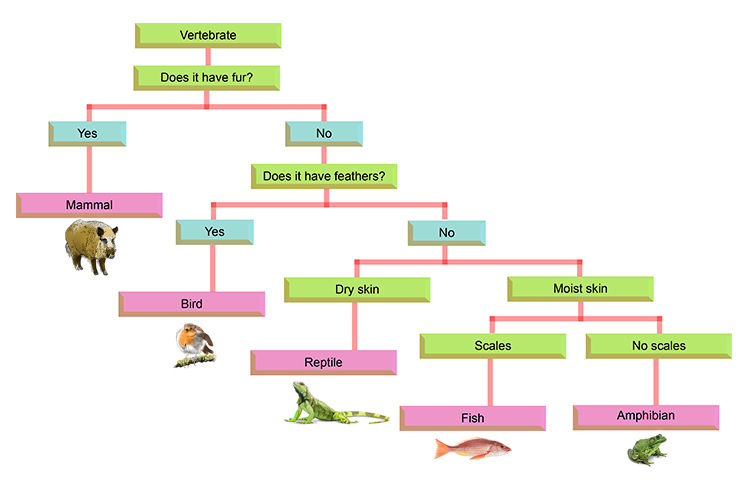
use and construct dichotomous keys
A dichotomous key is a tool that allows the user to determine the identity of items in the natural world, such as trees, wildflowers, mammals, reptiles, rocks, and fish
a dichotomous key is a flowchart to classify living things
7
extract information from different types of classification keys
Informações
- Descrição
- dis mah science thingo TIS MINEEEEEEEEEEEEE
- Criado por
- Izzy Owen
- Visualizações
- 87
- Tags
- Avaliação