
Notas
Mitosis and Meiosis
Conteúdo das notas (1)
Página 1
Mitosis
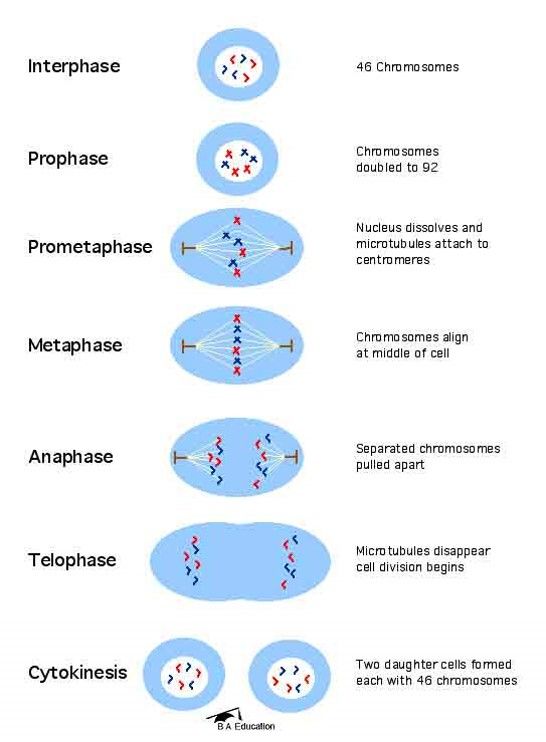
Interphase: Before and after mitosis it inculdes
G1: normal cell function ~90% of a cells life
S: DNA and centrosome replicated
G2: Cell prepares to divide but the chromosomes aren't visable
Prophase:
Chromatin condenses and chromosomes become visable.
The nucleus disappears and he nuclear envelope breaks down.
Centrosomes migrate to opposite poles.
Spindle fibres form from microtubules to organise chromosomes.
Prometaphase:
Kinetochores assemble at centrosome and microtubules attach at kinetochores connecting the centromeres to the centrioles, Chromosomes begin moving.
Metaphase:
Chromosomes align along the middle of the cell
Spindle fibres co-ordinate movement this helps to ensure chromosomes separate properly so each nucleus has only one copy of each chromosome.
Anaphase
Sister chromatids separate at kinetochores and move to opposite poles they are pulled at the centrosome by motor proteins along microtubules
Telophase
Chromosomes arrive at opposite poles: daughter nuclei form and nucleoli from. Chromosomes are no longer visible.
Cytokinesis: DNA goes back to chromatin
Animal Cell: Belt of actin microfilaments form around equator of cell splitting the cell in two
Plant Cell: formation of new cell wall.
Cytoskelton
Provides:
Structural support that maintains shape of the cell and anchorage for organelles.
Motility for cell locomotion, cillia and flagella
Regulation that organises structures and activities of cells
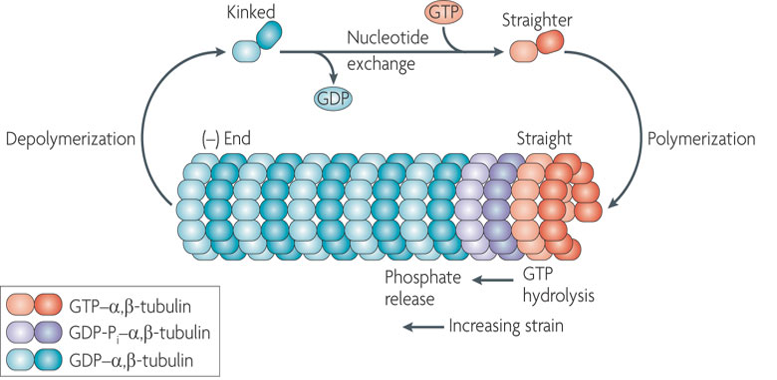
Microtubules: responsible for movement in eukaryotic cells like cell division. It is made of tubulin found in all eukaryotic cells, at least 3 types are found alpha, beta or gamma. alpha and beta form heterodimers which are linked end to end to form protofilaments which associate to form a microtubule ~11-16 protofilaments. They are polar with addition and disassembly both occuring at the positive end.
Meiosis
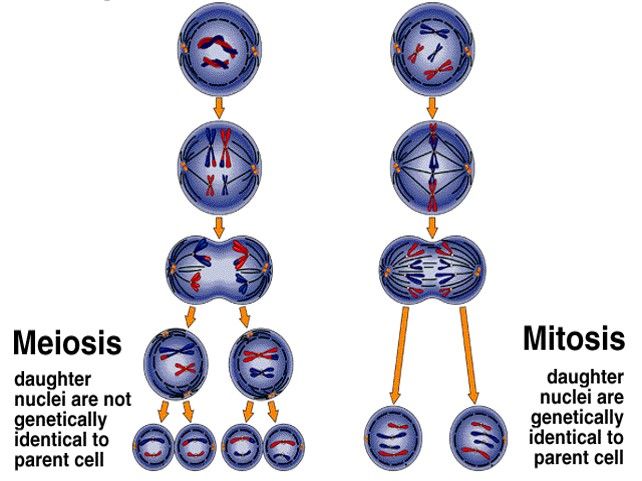
Cell division to form gametes by meiosis 2 (same stages as mitosis: separation of 2 chromatids) and meiosis 1(separation of homologus chromosomes.
DNA is replicated and homologues align with each other at the equator
Meiosis 1: Homologues are separated but sister chromatids remain together.
Meiosis 2: separates sister chromatids
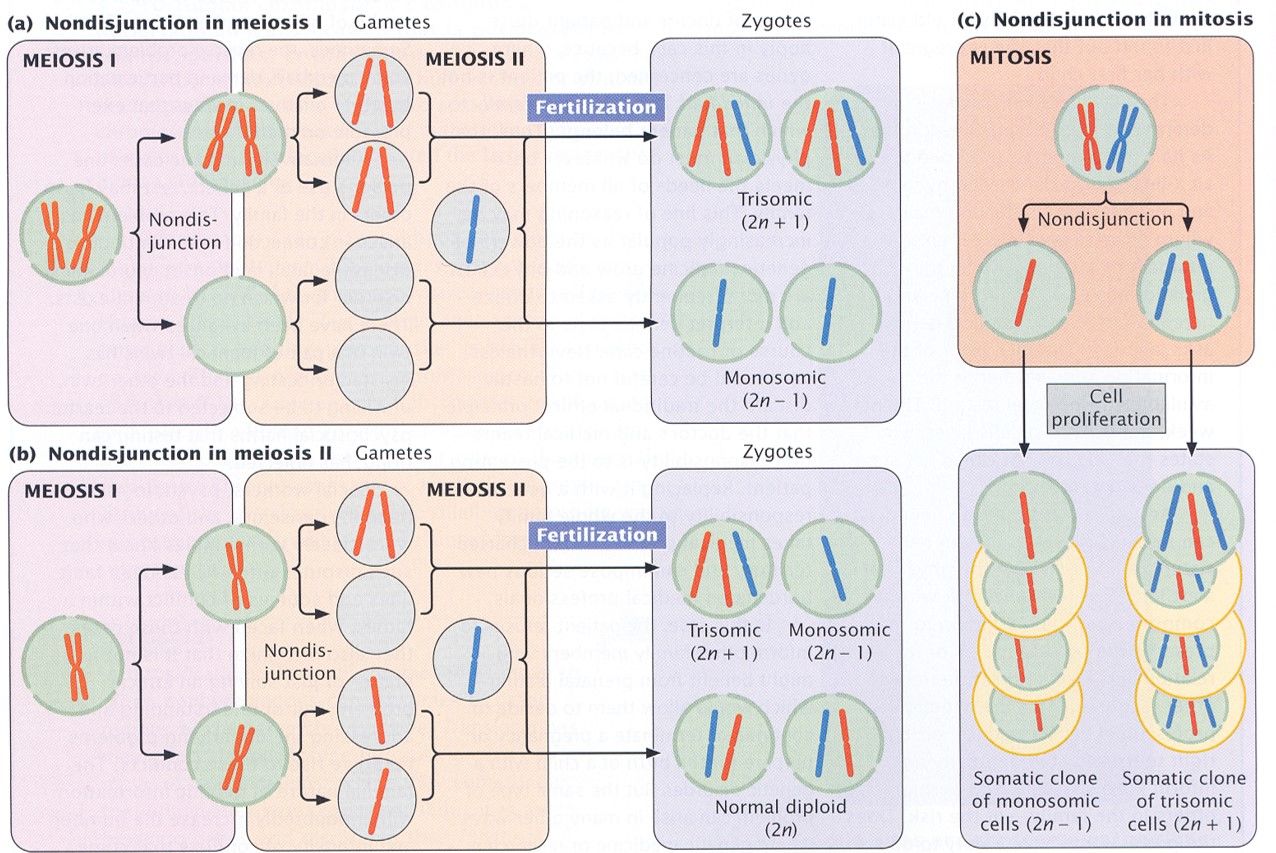
Chromosomal nondisjunctions: failure to separate homologus chromosomes or sister chromatids. Monosomic zygotes are lethal and most trisomic are aswell.
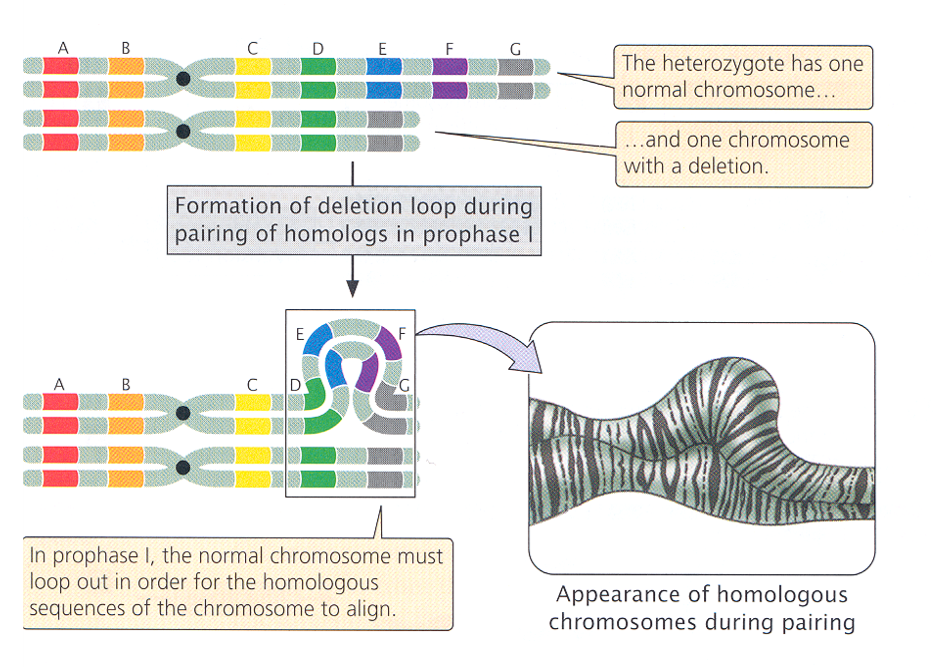
Chromosomal deletions delete part of the chromosome
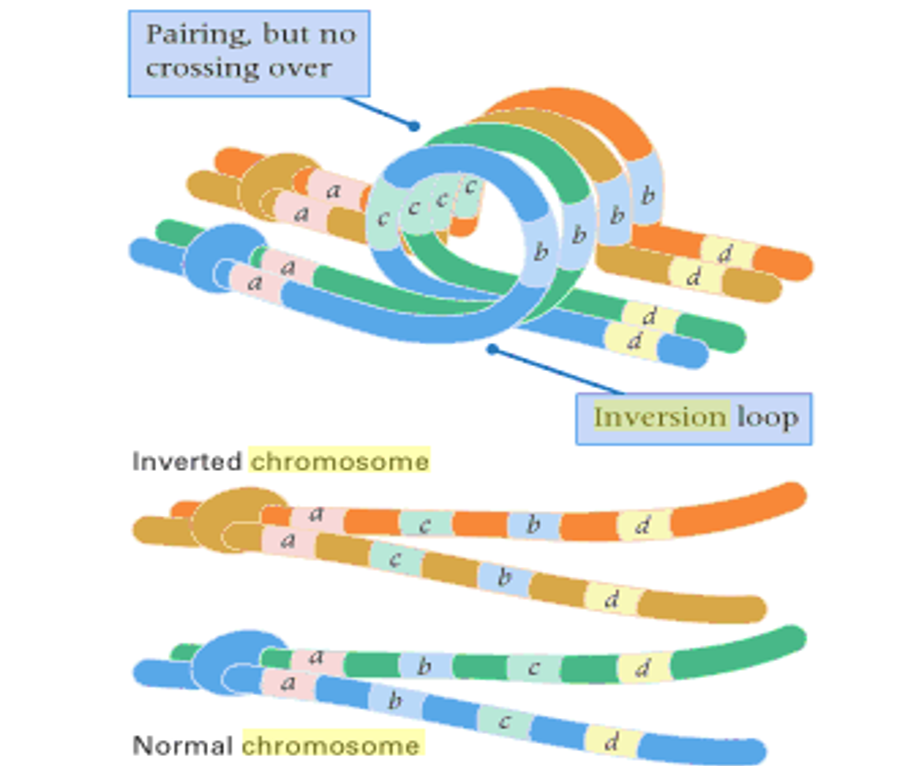
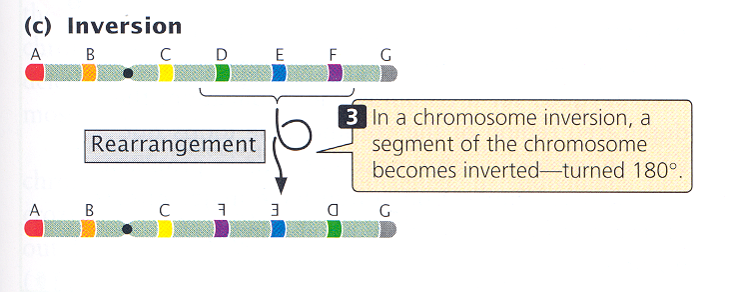
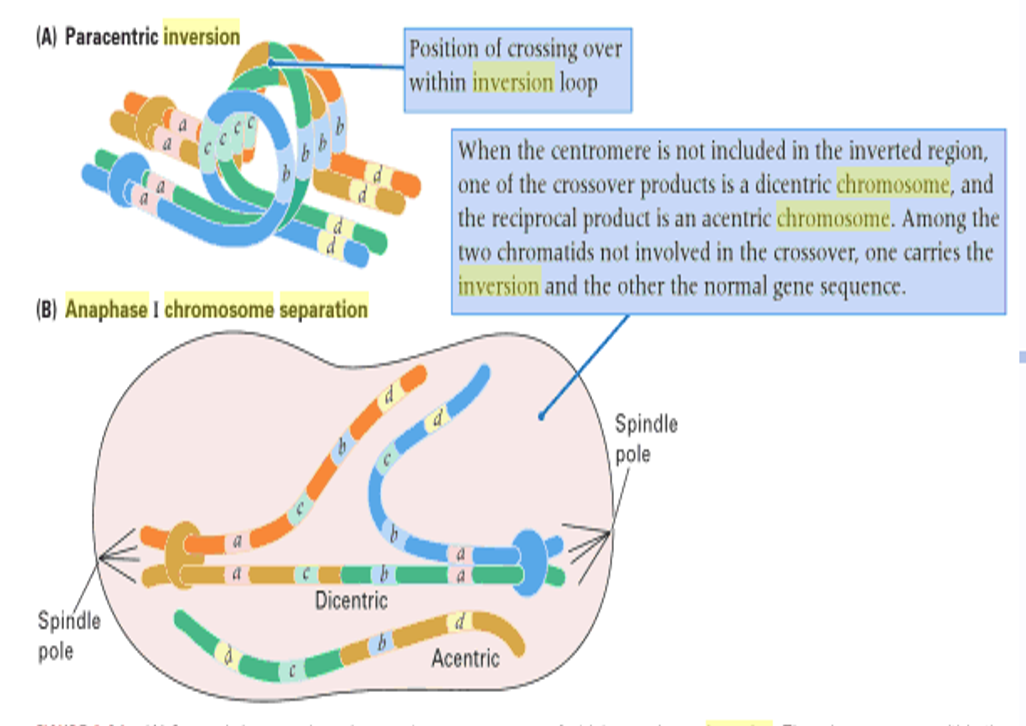
Inversions: rotate a segement 180 degrees.
Informações
- Descrição
- University Genetics Notas sobre Mitosis and Meiosis, criado por Beckie Thorne em 08-05-2015.
- Criado por
- Beckie Thorne
- Visualizações
- 9
- Avaliação