
Notas
REPORTED SPEECH
Conteúdo das notas (1)
Página 1
REPORTED SPEECH
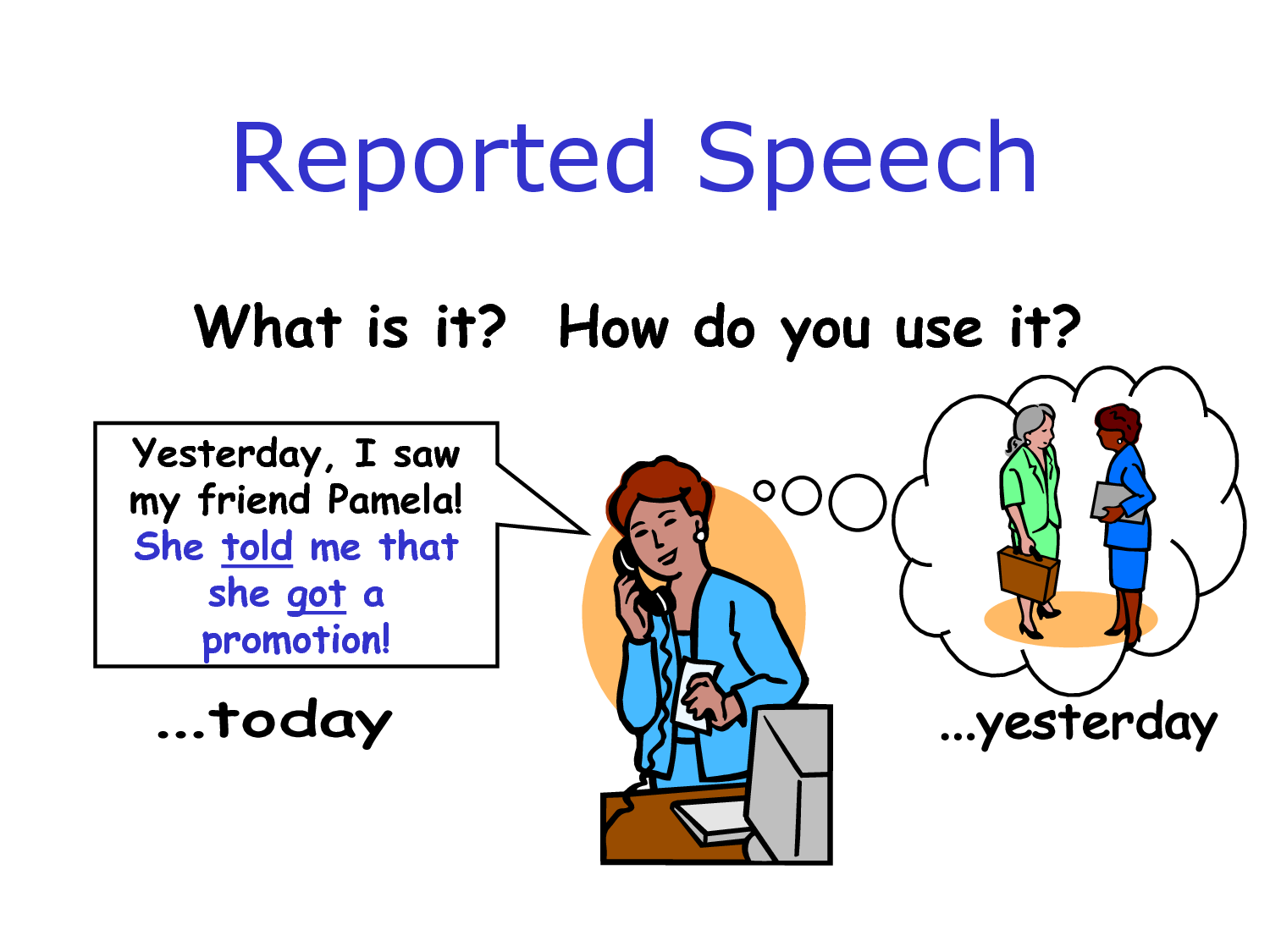
Reported speech is used to tell somebody else what a person told you.

There is usually a change of tense when you tell somebody what another person told you before. This is called "backshift".
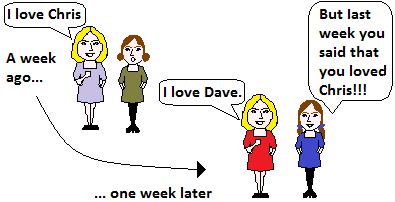
Reported (or
indirect speech) is when we say what was said before.
You
said that you loved Chris.
There are four things you
need to remember to change.
1. The tense. If the events
are now in the past, you need to change the verbs to the past forms.
present
simple
changes
to
past
simple
present
continuous
past
continuous
present
perfect
past
perfect
will
would
shall
should
must
had to
can
could
is
going to
was
going to
2. The pronouns. Words like
'I' and 'his' and 'they' will all change, because the people speaking have
changed.
3. Some time expressions. If
the time has changed, words like 'yesterday' are meaningless. Instead, we say
the day/week before or the previous day/week
the following day/week or the next day/week
4. If the place has
changed, "here" should change to "there".
Example:
Direct speech: "After Robert left primary school, he grew up very quickly," said his mother.
Robert´s mother said that after he had left primary school, he had grown up very quickly.
There are a number of different reporting verbs in English. Here is a list of common ones, showing the structures they can take:
ACCUSE OF + ING
Mark accused Doug of deliberately forgetting to tell him about the course.

admit + ... ing
apologize for .... ing

argue for + .... ing
deny + .... ing
explain that ......
insist on . . . ing / insist that . . .
promise (somebody) that . . . . / promise to . . .
refuse to . . . (infinitive)
say that . . . .
IS SAID + THAT
suggest + .... ing
suggest + that . . .
warn (somebody) that . . . / warn (somebody) to (infinitive) or NOT + to + infinitive
TO REPORT QUESTIONS, YOU USE THE FOLLOWING FORMULA:
Informações
- Descrição
- Rules and images for reported speech
- Criado por
- leticia.pontones
- Visualizações
- 243
- Tags
- Avaliação