
Reported Speech
1,042 resources created by 872 users
This Reported Speech page on GoConqr gathers community-made quizzes, mind maps, flashcards, slide sets, flowcharts and notes, from reported statements and questions to reporting verbs and modals. It's built for school students practising how to turn direct speech into indirect speech, and for teachers after ready-made material. There are more than 900 resources here, including more than 70 quizzes and over 600 mind maps, nearly all at secondary level. Pick a quiz to find your gaps, then build your own maps.
Top Reported Speech resources
-
15 questionsExamen Reported Speech: Questions This is a quiz to practice reported speech questions with correct answers and explanations of the rules.
-
18 questionsExamen Reported Speech: Transformation of statements Tom: 'I want to visit my friends this weekend.'
-
10 questionsExamen Reported Speech: Reporting structures Tracy: 'Let's get together and go to a restaurant tonight.'
-
40 questionsQuick test 8 (intermediate) check your knowledge
-
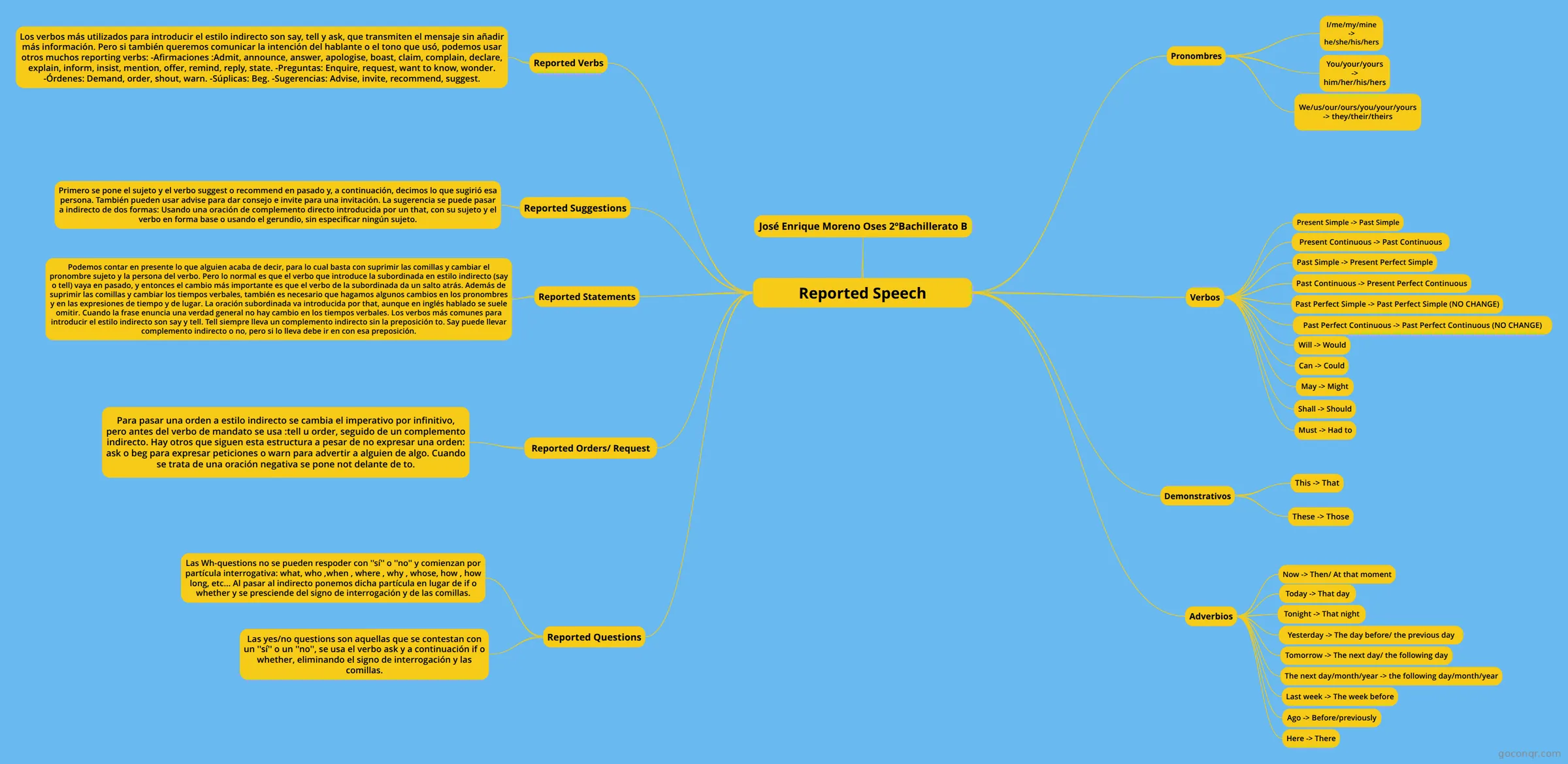 Mind map Reported Speech
-
16 cardsJuego Reported speech: Statement transformations Famous Last Words
-
24 cardsReported Speech - Statements and Questions revision This is a set of 24 flashcards to review the contents of Part 1 (statements) and part 2 (questions) of this...
-
14 cardsReported speech 1 Tom: "I can't afford to go to the concert next week"
Quizzes
See all 75 quizzes-
15 questionsExamen Reported Speech: Questions This is a quiz to practice reported speech questions with correct answers and explanations of the rules.
-
18 questionsExamen Reported Speech: Transformation of statements Tom: 'I want to visit my friends this weekend.'
-
10 questionsExamen Reported Speech: Reporting structures Tracy: 'Let's get together and go to a restaurant tonight.'
-
40 questionsQuick test 8 (intermediate) check your knowledge
-
5 questionsReported Speech Exercise (Easy) Select the correct way to say this quote in reported speech:
-
20 questionsImprovement Plan Evaluation 9th Grade From 1-10 choose the best answer to report the speech. “It’s a great moment at the end of a long journey to...
-
10 questionsReported Speech III: Reporting structures Quiz Tracy: 'Let's get together and go to a restaurant tonight.'
-
14 questionsChoices - Upper-Intermediate - Unit 9 “I travel a lot in my job”. What is the report speech form of the sentence above?
Mind maps
See all 657 mind maps-
Reported Speech
-
Direct and Indirect speech dIS
-
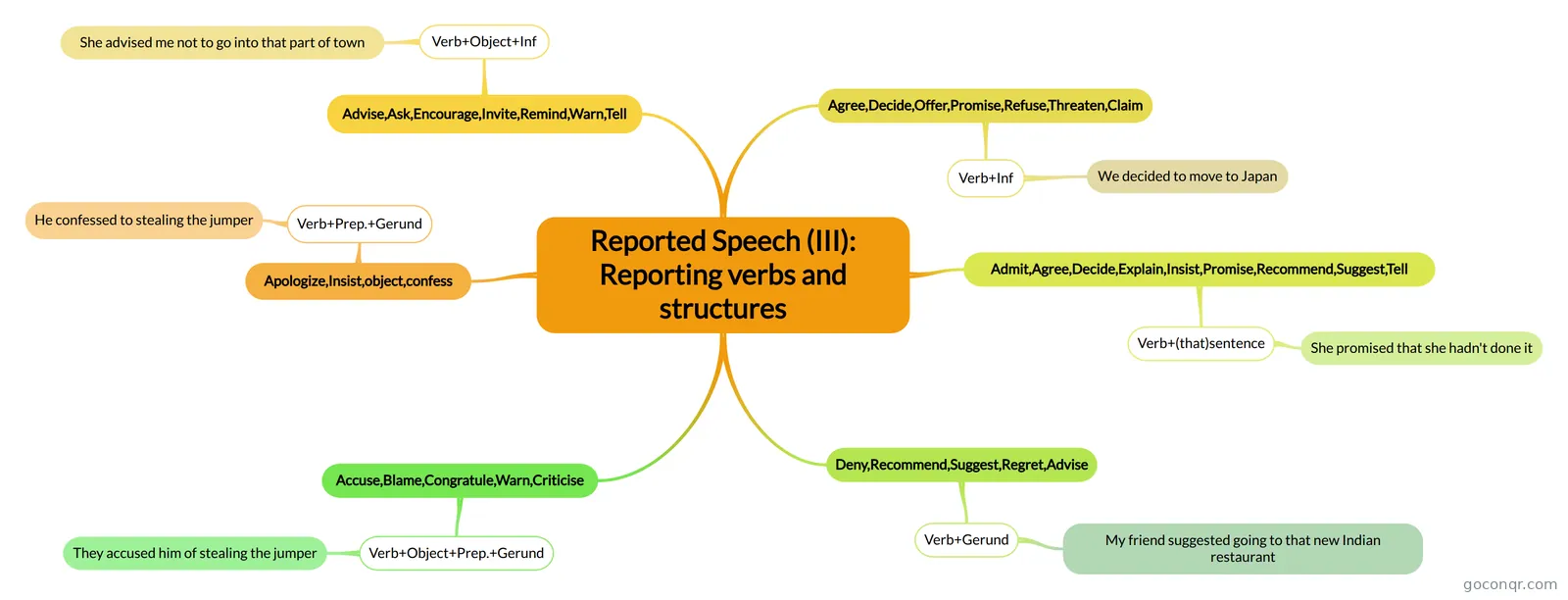 Reported Speech (III): Reporting verbs and structures This is a Mind Map that illustrates what other reporting verbs we can use apart from Say and Tell and the g...
-
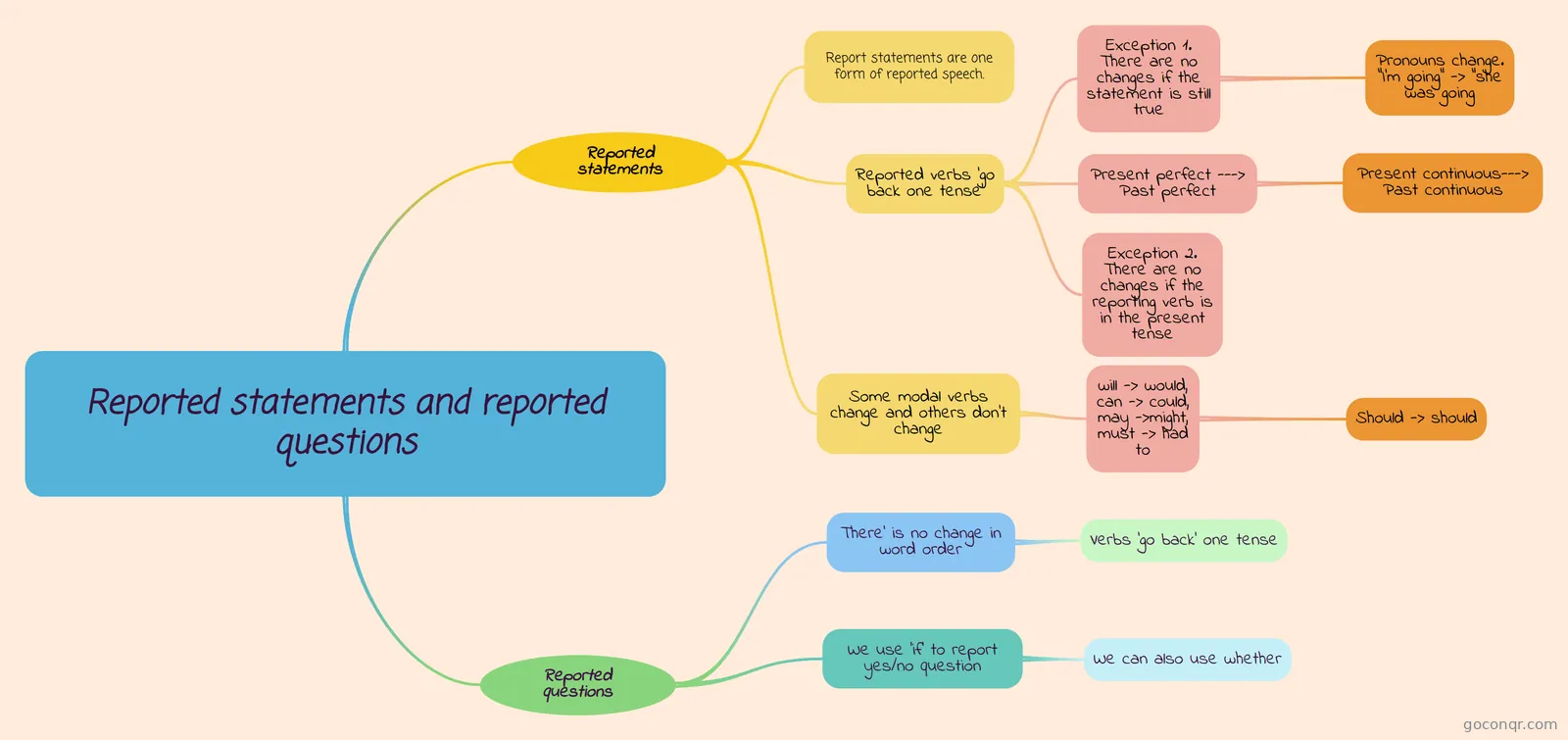 Reported statements and reported questions
-
"Reported Speech"and "Direct Speech" mapa mental
-
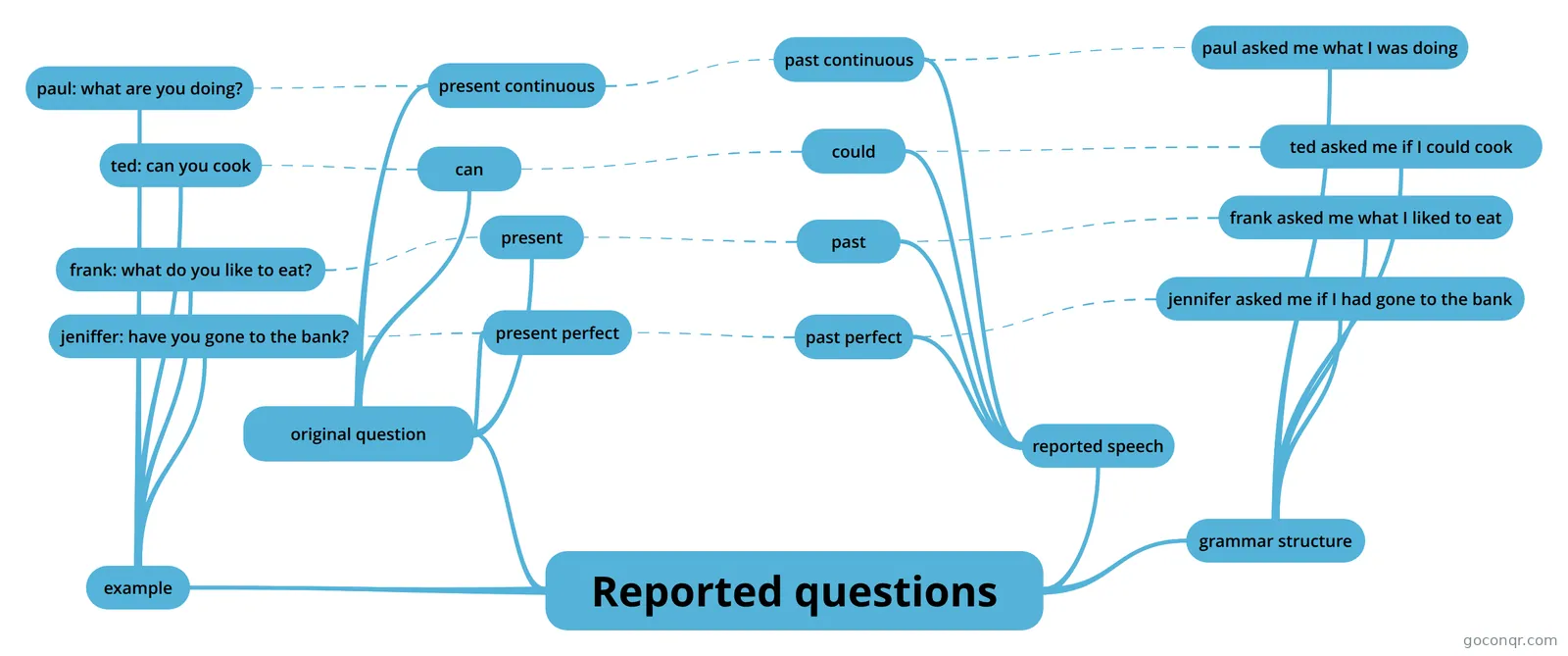 Reported questions mlp
-
Reported Speech
-
UNIT 10: SPREADING THE NEWS
Flashcards
See all 233 flashcards-
16 cardsJuego Reported speech: Statement transformations Famous Last Words
-
24 cardsReported Speech - Statements and Questions revision This is a set of 24 flashcards to review the contents of Part 1 (statements) and part 2 (questions) of this...
-
14 cardsReported speech 1 Tom: "I can't afford to go to the concert next week"
-
6 cardsReported Speech Easy way to understand and practice reported speech
-
13 cardsReporting verbs cards Why don’t we have a party?
-
12 cardsReported Speech (II): Questions This is a set of 10 flashcards to practice the transformation of direct and indirect questions into reporte...
-
10 cardsReported speech with modals Presentation "We will go to the park."
-
12 cardsDirect and Indirect Speech Exercise (reporting statements) This exercise is designed to practice reported speech in class as an oral drill.
Flowcharts
See all 46 flowchartsNotes
See all 20 notes-
REPORTED SPEECH REPORTED SPEECH Reported speech is used to tell somebody else what a person told you. There is usually a change of tense when you tell somebody what another person told you before. This is called "backshift".
-
Interactive Lesson Plan 1 SCHOOL: JULIO GARAVITO ARMERO ...
-
Untitled
-
Reporting verbs Reporting verbs 1 verb+ infinitiveagree, claim, decide, offer, promise, refuse, threatenWe refused to go to the meeting.2 verb+ object+ infinitiveadvise, beg, encourage, invite, order, permit, persuade,remind, tell, w...
-
Reported speech
-
Reported Speech - created from Mind Map Past SimpleFor example: She said that she liked cats Time references Is used to communicate what someone else saidFor example: He said I'm coming
-
REPORTED SPEECH - created from Mind Map PRESENT SIMPLE He said, "I eat cheese" PAST SIMPLE He said that he ate cheese PRESENT CONTINUOUS He said, "I am eating cheese"
-
INdirect and direct speech Indirect and Direct Speechput into indirect speech1.) "I am writing a letter to my mom," explained Lucy. ...
Slides
See all 11 slidesTopics in Reported Speech
More English language topics
About Reported Speech
GoConqr OriginalWhat the page covers
The resources here deal with moving from direct to reported speech. The mind map Direct and Indirect speech sets out the basics, including the use of "if" or "whether" when a yes/no question is reported. Other maps cover pronoun changes, tense shifts such as Present Simple to Past Simple, and reported speech with modals.
Where to start
- Open the mind map Direct and Indirect speech for an overview.
- Work through the flashcard deck Reported Speech - Statements and Questions revision, which drills said or told.
- Try the quiz Quick test 8 (intermediate), which mixes tense changes with patterns such as would you mind + V-ing.
- Move on to reporting verbs with the slide set Reported Speech (III): Reporting Verbs and the matching mind map.
Using quizzes and maps together
Read a map first, then test yourself. If a quiz answer surprises you, go back to the map and find the rule. The quizzes on questions, reporting structures and transformation of statements let you check one skill at a time. The flashcard game on famous last words turns real quotations into reported statements, which is a friendly way to practise.
Where this unit sits
Reported Speech belongs to the strand Grammar: Verbs and Tenses in the English language subject. It connects tense work with sentence patterns, since reporting verbs such as suggest, promise or refuse each take their own structure.
Your next step
Teachers can set a quiz or a flowchart as a quick check in class. Students can choose one resource today and see how far they get.
Frequently asked questions
Which resource should I open first?
Start with the mind map Direct and Indirect speech. It gives a short overview of direct and indirect speech, including how yes/no questions use "if" or "whether". After that, the revision flashcards on statements and questions make a good second step.
What do the mind maps cover?
There are over 600 mind maps. They cover pronoun changes, tense shifts, reported questions, reported statements, modals and reporting verbs. Some are general overviews, while others focus on one point, such as other changes in reported statements.
Are there quizzes on reporting verbs?
Yes. The quiz Examen Reported Speech: Reporting structures covers verbs such as suggest followed by a gerund, with explanations. Another quiz, Reporting verbs + Passive, goes further, and a slide set and mind map cover the same patterns.
Are the resources free to use?
Yes. Every resource listed here is free to open, study and take, with no account needed. They were made by GoConqr users, not by GoConqr itself, so styles and difficulty vary from one resource to the next.
Who are these resources for?
They mainly suit school students working at secondary level, and teachers looking for ready-made material. Nearly all the resources are at that level, so you will find tests, revision cards and class notes rather than advanced material.
What if I can't find what I need?
Try a different format on the same topic, such as a flowchart instead of a mind map. A free account also lets you make your own quizzes, mind maps, flashcards and notes, and saves your quiz scores.