
Notas
Topic 6b: Memory
Conteúdo das notas (5)
Página 1
Encoding: formatting of information from the external environment into a format usable and retrievable by the brain
stimuli perceived by the senses
signals travel to the thalamus and are synthesized into an experience
hippocampus analyzes the experience and determines if it should be encoded
4 main pathways used by humans to encode information:
visual encoding: The encoding of images and visual sensory information
the creation of mental pictures
this information is temporarily stored in iconic memory and then is moved to long- term memory for storage
amygdala has a large role
acoustical encoding: processing of verbal language and auditory information
phonological loop: auditory or verbal information is repeated in a person's echoic memory for improved storage and retrieval; Self vocalizations can also enhance auditory encoding (such as repeating a phone number out loud)
Elaborative encoding: the relation of new information to information that is already known for storage purposes
the recollection of the new memory becomes dependent on both the previous information and new information
studies show long- term retention of information is much improved when this form of encoding is used
semantic encoding: the storage of sensory information that has a certain meaning or context associated with it
chunking: combining information in a series of parts, to more easily store it in short- term memory
mnemonics: acronyms and physical cues (calendar on the knuckles of the hand) are used to recall information
Ways to improve encoding:
chunking
mnemonics
State- dependent memory: the use of environmental cues to improve recall of information
Retrieval cues play a large role in this technique; Example: listening to a certain song while learning a concept, and then playing that song to recall the learned concept.
Memory consolidation: processes that stabilize a memory trace after this first acquired; These influence whether the memory of an event is accessible later, similar to encoding
the processes involved in consolidation are more unconscious and happen at the cellular or neurological level, and do not require focus the way that encoding does.
sleep has a large role in consolidation, and one memory- enhancement technique is to play an audio recording of information you want to remember while trying to fall asleep.
Página 2
Memory storage: accomplished via encoding and consolidation
memories are not stored as exact replicas of experiences; Rather they are modified and reconstructed during retrieval and recall
long- term memory can hold much more information than short- term memory, however information in long- term memory is not immediately accessible, because when the memories are consolidated, they are done so in a way that optimizes space for other memories.
Sensory memory: the retention of impressions of sensory information for a short amount of time after the original stimulus is gone
this is an automatic response considered outside of cognitive control
allows one to remember great sensory detail about complex stimuli after it is presented
very short retention time of up to 5 seconds
echoic memory: memory of auditory stimuli
iconic memory: memory of visual stimuli
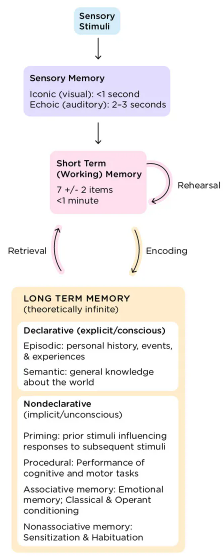
Working memory: AKA a short- term memory
the ability to hold information for some seconds
information is quickly lost if not stored in short- term memory when it is first received
several elements can be held in short- term memory simultaneously, however they compete for recall or degrade each other
long- term memory: the ability to hold information for an extended period of time
explicit: AKA declarative memory, those memories we can consciously remember
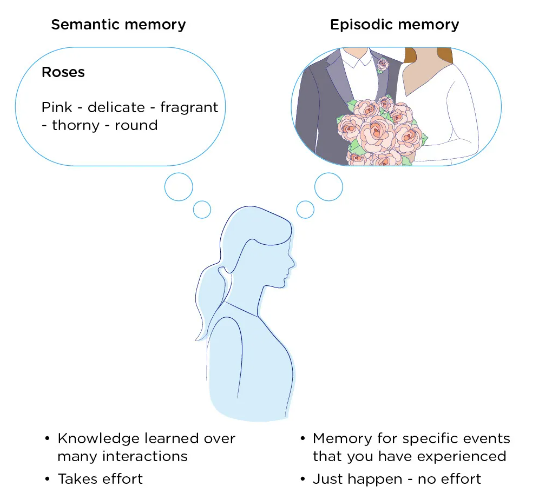
include episodic memories of experiences and semantic memories of common concepts
episodic memory: personal facts, time related information connected to your individual recollections (your first birthday party)
implicit memory: less conscious, “muscle memory”
include procedural memories, like knowing how to ride a bike and emotional conditioning
procedural memory: the ability to recall psychomotor skills
Items move from working to long- term memory via rehearsal, processing, and use.
Although the capacity of long- term memory is much greater than short- term memory, those memories are not permanent, and have to be recalled from time to time otherwise they will be forgotten.
Long- term memory storage can be affected by traumatic brain injury ---> amnesia: memory deficit caused by brain damage
anterograde amnesia: the inability to store new memories
retrograde amnesia: the inability to retrieve old memories prior to a specific point in time
Because there are different types of amnesia, the idea that memory has storage process is supported
Memory models to explain types of recall: These models must identify how an encoded memory can remain in storage until it is accessed in order to explain the recall process
multi- trace distributed memory model:
States that memories being encoded are converted to multiple memory traces, which are then added into a memory matrix
to retrieve the memory, a person must pull up the memory matrix with a particular related hint or aspect
limitations of this theory:
the idea that the memory matrix continuously grows with the addition of new traces and the idea of how memories could be found within the vast matrix both sound beyond the scope of human recall
Neural network model: states that form a highly interconnected complex network with other neurons
each neuron is characterized by the activation value (the amount of energy it takes to activate that neuron)
each neuronal connection is characterized by weight value (essentially ranking the strength of the connection between the two neurons)
connections are formed during the process of memory storage, strengthened by use, and weakened by disuse
this model maintains the useful features of the multi- trace model, while also addressing its limitations
search- of- associative- memory (SAM) model:
States that items in working memory will be recalled first during the recall process, and then items in the long- term storage
the probability of an item being recalled from long- term storage is proportional to the strength of the association within the long- term storage
the semantic matrix is used to explain the semantic effect associated with memory recall
semantic networks: the memory connections made by an individual's lifetime of memories and event
semantic memory: factual information that's not connected to individual recollection (happy birthday song)
spreading activation: the recall of one meaningful piece of information triggers the recalls of other pieces of information
Retrieval cues used to help recall or relearn information, they activate other neurons associated with that information, involves spreading activation via semantic networks
Página 3
retrieval: moving stored information back into conscious memory from long-term memory
context cues: where the information was learned, or activation of the semantic network of that information
Encoding specificity principle: explains why retrieval cues work
States people encode information in a specific way, which means the stronger the link between the cue and the memory, the better the recollection
3 types of retrieval --->
recognition: low cognitive load, an outside stimulus reminds a person they have learned this information in the past or a cue brings forth related information to the mind,
example: the process used while answering multiple- choice test questions, with the answer choices being the cue
recall: higher cognitive load, the ability to access the information directly from the memory, retrieval cues can also be helpful here
example: the process used while answering fill- in- the- blank test questions.
serial recall: remembering events or items in the order they occurred
serial-position effect: remembering the 1st and last items of a series and struggling to recall the middle items
free recall: having to recall multiple items but in any desired order
primacy effect: items that were presented 1st are better recalled as they are encoded into long-term memory
recency effect: items presented last are better recalled as they are still in working memory
cued recall: list of items to recall, and then when asked to recall, provided with cues
relearning: when information is relearned, there is a faster gain of information than when it was learned initially, as this only requires reactivation of dormant connections in the brain
retrieval can be affected by the amount of time since the information was retrieved, other information learned in the meantime, etc. --->
Spacing effect: repetitions of information over a long period of time results in stronger memories than repeating information in a smaller period of time
testing effect: practicing retrieval of a concept helps increase chances of remembering it
Role of emotion:
If a piece of information is learned while feeling a certain emotion, feeling that emotion again later can trigger the rise of that memory and other memories made while feeling that emotion
High emotional arousal can result in heightened attention to detail of an event, which may help in better encoding the memory
Emotion- congruent information: Aka “flashbulb memory," when powerful emotions create a vivid recollection that is like a snapshot of the moment. These memories degrade at the same rate as other memories, however we believe that these memories are accurate although they are not always. Practically, this present as difficulties with eyewitness testimony that occurs years after the event.
Emotion-discongruent information: it can be more difficult to recall information when you are feeling one emotion but you learned the information while feeling another
Página 4
Forgetting: dysfunctions of memory which can be natural or related to injury or disease
Memories are easier to recall the more recent they are
the more often information is repeated or used, the more likely it is entered into long-term memory
transience: deterioration of a memory over time, prevalent in short-term memory
working and episodic memory do show age-related declines, while crystallized and procedural memories do not appear to be significantly affected
major disease processes associated with memory loss:
dementia
picks disease and Alzheimer's disease: involved the formation of beta- amyloid plaques, which interfere with synapse transmission
korsakoff syndrome: prolonged alcohol use results in amin B1 deficiency, which causes chronic memory loss due to difficulty encoding new information and recalling previously learned information
Theories on why we forget:
decay theory: states that forgetting happens because of degradation of memory synapse overtime because of disuse. Postulates --->
all memories fade over time
a trace must be followed to recall a memory
if the trace is not used, it is degraded leading to recall difficulty or inability
rehearsal slows this process
memory decay causes retrieval failure
retrieval failure is also possible if:
the encoding specificity principle is not met, where the retrieval cue does not match well to the encoded memory.
this process is immediate (hence why we can forget names soon after we learn them)
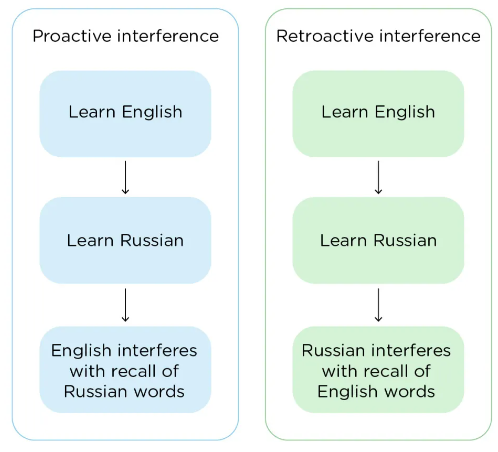
interference: impacts memory because it prevents encoding or retrieval of information
retroactive interference: new information interferes with already learned information
proactive interference: old information prevents learning of new information
Other factors that affect memory retention:
absentmindedness: ineffective coding occurs secondary to low attention levels during learning, due to which we undergo events like misplacing keys, forgetting appointments, etc.
blocking: results in the “tip of the tongue” phenomenon; the brain tries to encode or recall information but another memory interferes with this. A part of the word or memory can usually be recalled, but recall is partial. A cue can help to gain full recall
false memory: remembering events differently from how they happened, or remembering events that did not happen; can be vivid, held with high confidence
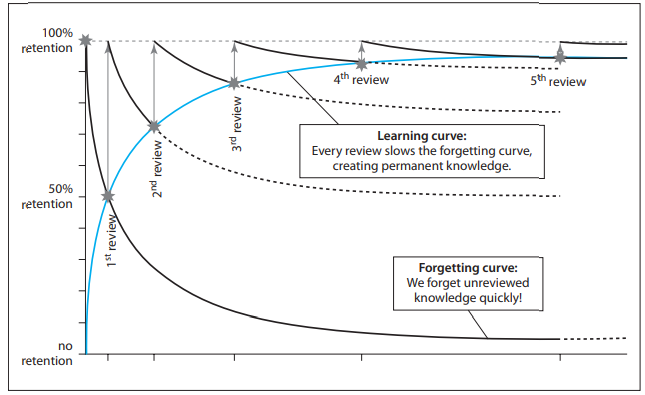
Learning curve: established by Herman Ebbinghaus to show how quickly information degrades in the human memory
Página 5
learning: stimuli in the environment result in changes in the nervous system
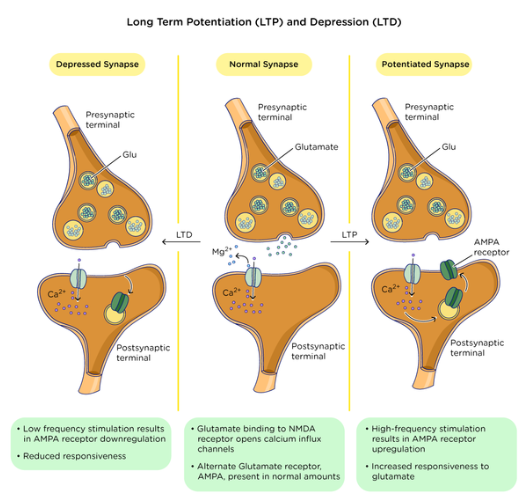
Synaptic connections are the basis for memory and learning; These connections are selectively strengthened during encoding
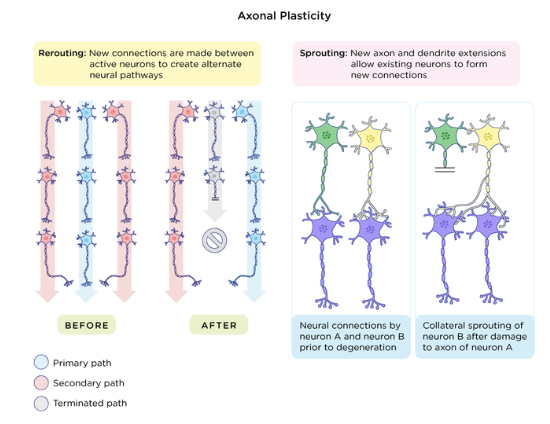
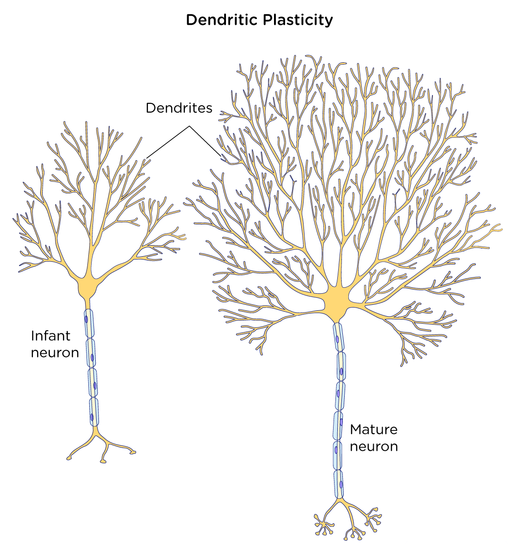
the brain does continue to grow neurons, change synaptic connections, and form new connections throughout an individual's lifetime
3 main pathways:
long-term potentiation: the formation or strengthening of neural pathways via alteration of the flow of information within the brain using chemicals and electric impulses
a neuron shows increased excitability over time because of a repeated pattern, behavior, or response
long-term depression is the opposite of this, where there is decrease in synaptic strength
2. Habituation: the “behavior” version of sensory adaption; we learn to not respond to a repeated stimulus that has not changed
Fewer neurotransmitters are released at the synapse
3. Sensitization: strengthening of a neurological response to a stimulus because of the response to a secondary stimulus
more pre-synaptic neurotransmitters, resulting in a more excitable neuron
an exaggerated “startle” response, often seen in trauma patients
neural plasticity: changes to already present synaptic connections, as part of the brain's ability to adapt to new situations over time via potentiation
neural nets: collections of neurons that are activated in response to specific associations
Informações
- Descrição
- Notas sobre Topic 6b: Memory , criado por 000 000 em 06-09-2022.
- Criado por
- 000 000
- Visualizações
- 0
- Avaliação