
Notas
The Cold War - as I see how the IB sees it
Conteúdo das notas (1)
Página 1
Long Term Causes (1917-28)
distrust existed from 1917 w/ Bolshevik Revolution
B. Rev. was seen as a threat to capitalism, and leaders of US (Wilson) were worried about international spread of communism
with Lenin & Trotsky's formation of the Comintern in 1919, fear of international communism was increased
US refused to recognize new government of Soviet republic, created tensions w/ USSR
USSR was also attacked between 1918-1921, backed/aided by Western countries (incl. US), seen as interruption of communist experiment
USSR also lost large territory to Poland in T of Riga in 1921, aided by Western power, increased discontent
Causes (Origins) of the Cold War
Soviet Isolationism in 1920s
Soviet isolationism also contributed to tensions
Soviet republic crippled by invasions, civil war/revolution and WWI, was economically damaged
Soviet republic was also economically backwards (from tsarist days)
Stalin's agricultural policies did not help
Soviet republic also did not have many allies during 1920s
embargos and trade bans imposed on Soviet republic made things difficult
Changes in Policy (Ideology vs. Realpolitik)
between 1919-1941 both sides favored realpolitik over ideology
Instances of Realpolitik w/ USSR
when pact between major capitalist powers failed between 1933-39, Stalin signed Nazi-Soviet Non-Aggression Pact
signing of N-SNA Pact was alarming to West
Instances of Realpolitik w/ US
US more willing to support dictatorial regimes to ensure no possibility of communist revolution
ex. US companies gave aid to Franco's uprisings in 1930s (approved by US gov't)
--->
Grand Alliance
Grand Alliance between US, USSR and other Western countries formed when US was attacked by Japan and USSR attacked by Germany in 1941!
Short Term Causes (1941-45)
Issue of Second Front - 1942 Stalin asked GB and US to open up second front in western Europe in order to take pressure off of Soviet forces, though GB and France delayed with invasion of Italy; front finally opened w/ Tehran Conf. in 1942, opened 1943
Tehran, 1942 - agreed that no central alliance would be made against USSR and that USSR would get back 1918 Polish border
Percentages Agreement, 1942 - after Tehran, Churchill & Stalin met to discuss percentages of influence over European countries (ex. Greece: GB 90:10 USSR)
Yalta and Potsdam, 1944-45 - disagreed over Germany, Poland & E. Europe, Economic reconstruction, nuclear weapons
ex. divided Germany, which Stalin did not want; US's refusal to share nuclear weapon tech with USSR; US's statement that USSR had to take reparations from only East Germany (less money there)
|
V
First Cold War: Things Happening in Europe
1946 was a turning point!
Kennan's Long Telegram - 1946, George Kennan sent 'Long Telegram' to US gov't, outlining Soviet FP based on his findings with the DRA (Department of Russian Affairs) based in Riga (hence RIGA AXIOMS!); came to be basis for US FP for years to come
Churchill's Iron Curtain Speech - 1946, Churchill gave speech in Fulton, Missouri, stating that there was an "iron curtain" separating the East and West; outraged USSR and they withdrew from INF
Truman Doctrine - 1947, Pres. Truman announced Doctrine that stated that you were either with the US or with communism (you were to either join US in freedom, or submit to cruelty of communism); increased divide between US and USSR greatly, exaggerated the two camps
Marshall Plan - 1947, was continuation of T. Doctrine essentially, a plan that allowed giving of aid to those who had sided with the US against communism; Stalin was opposed to this and called it "dollar imperialism", emphasized split between two camps
At the same time...
Communist parties in Europe are becoming increasingly stronger.
Byrnes (US official) is giving aid to countries against communism, and offered USSR aid if they would abide by agreements made (ofc USSR said no)
WHO WAS PRESIDENT??
Truman, from 1945!
WHO WAS LEADER OF USSR??
Still Stalin!
Additional Points of Tension...
publishing of article 'Mr. X' by Kennan in 1947; strengthened attitude of US towards USSR
CIA carried out covert operations in France and Italy to get rid of communist uprisings
Cominform was set up in 1947, and Two Camps Doctrine was announced
--> Cominform intended to keep communist parties in Europe under USSR's control
--> Two Camps Doctrine separated East and West bloc, further establishing a divide between the two blocs
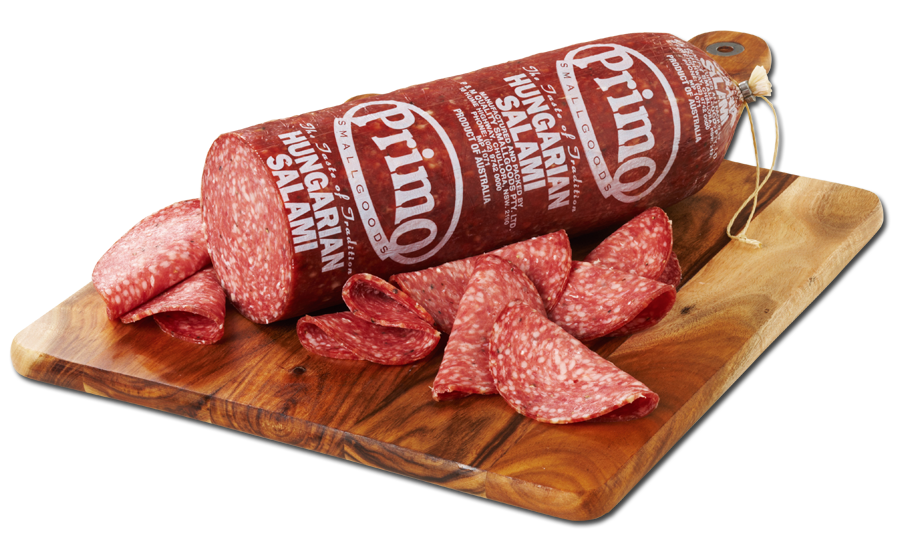
Introducing... Stalin's SALAMI TACTICS!
in response to T. Doctrine and Marshall Plan in 1947, Stalin seized greater control over his Eastern European border states
How Stalin gained control over his E. European states (i.e. how to salami):
1. create a general alliance against facism within the desired country
2. slowly "slice off" parties that are not communist/non-communist supporting, through arresting leaders and crushing campaigns
3. left with a communist party! reinforce this party with politicians from Moscow
Salami tactics were used in the case of Poland (Mikolajczyk), Bulgaria (restriction of actions of opposing party), Romania, Czechoslovakia
The Berlin Blockade, 1948
the Potsdam Conference decided that Berlin would be split into 4 divisions, though Stalin wasn't for this
he wanted pastoralization of Germany (i.e. with no industry), whereas GB and US supported idea of rebuilding German economy
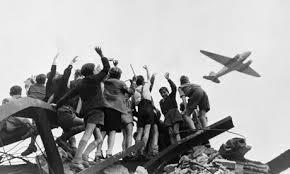
Stalin was so not for a divided Germany that he imposed the Berlin Blockade of 1948, closing off access roads to West Berlin
the Allies responded with shipping in food and supplies via the Berlin Airlift
when Stalin realized that the Berlin Blockade failed, he stopped it in 1949
the blockade encouraged the set up of the FDR, establishing West Germany as a state
the USSR was reluctant for a divided Germany, but responded by setting up GDR in 1949
1946 - 1949
First Cold War: Things that Happened in Europe after the Berlin Blockade in 1948
1949 - 1953
during this time, Truman and Byrnes pushed for an overall tougher policy, with concessions being made only if USSR complied (containing communism policy)
Kennan believed that this tougher stance would make the USSR more willing to go into negotiating away their sphere of influence
however, Clay believed that this would push the USSR into a "defensive war"
--> thus the US gov't ordered conscription for all adult males during this time, which was unusual at a time of peace
Formation of NATO, 1949
the takeover of control in Eastern European states by Stalin (with salami tactics) lead W. European countries to from the Brussels Treaty Organization (BTO)
after the Berlin Blockade in 1947, Western countries in Europe and the Americas came together to form the North Atlantic Treaty Association (NATO) from the BTO in 1949
the US was very happy to make this deal
of course, Stalin and the USSR was not included in the deal
Molotov Plan, Comecon & Worries about NATO
Molotov Plan was formed in 1948, and was a series of trade agreements between USSR and E. European states
Comecon was also formed in 1949, promising mutual economic assistance
both the Molotov Plan and Comecon served to bind the E. European states even closer to the USSR
Soviet fears regarding power of West increased with formation of NATO in 1949, and increased again with Pacific and Middle East trade agreements arose with US
1949: USSR explodes their first atom bomb...!
The US now no longer has a monopoly over nuclear weapons.
The arms race begins.
--->
|
V
Stalin's Peace Campaigns
in efforts to slow the development of the nuclear arms race, Stalin creates peace campaigns in Europe
also proposed neutralization and demilitarization of East Germany with Western powers
wide support followed worldwide
Stalin hoped that the peace campaigns would put more pressure on US to negotiate Germany
Stalin also made offers for neutral Central Europe in return for neutralized Germany
these offers were never accepted, but Stalin continued to make them until his death in 1953
Stalin's "Peace Campaigns"
with US's first a-bomb explode in 1945, Stalin wanted to decrease the speed of the nuclear arms race
he thus started "peace campaigns" throughout Europe to promote the stopping of use of weapons
gained worldwide support
Stalin hoped that it would put pressure on US to reduce tensions and take policies more to USSR's liking
Stalin also proposed neutralization of Germany, and did so until his death in 1953
China
1940s-50s
US and USSR before 1937
did not really care for China pre-1937
but Japan's invasion of China caused concern due to competition in Pacific
fall of Japan in 1945 and Soviet invasion of Manchuria made clear that civil war was imminent, and US did not want formation of communist China under CCP
US supported Jiang Jieshi, and gave aid, though GMD was defeated in 1947, and CCP took over Nanjing in 1948
US's Response to China
FP was cautious, but US gov't officials thought that nuclear arms monopoly would be enough
worry increased when communist China reached out to USSR for aid (30 Year Treaty of Friendship, Alliance and Mutual assistance in 1949)
NSC-68!
due to events in Asia in 1949 and criticisms at home, Truman revised his FP
NSC-68 said that:
- USSR was a worldwide military threat that needed to be contained
- US needed to increase military strength to keep monopoly
- communism should be "rolled back" (not just contained)
Korean War
June 1950 N. Korea invaded S. Korea to unite Korea again
Korea was divided on 38th Parallel
US wanted unification under Syngman Rhee
USSR wanted unification under Kim Il Sung
USSR's Policies...? Or Kim Il Sung's Ideas...?
USSR was cautious about another conflict due to economic status, though gve Kim go-ahead in 1950
Kim pushed for Korean war because:
- Acheson's Defensive Perimeter Speech in 1950
- less popular support of Rhee
US's Policies...?
control of Japan was needed in order to develop US SoI and
causes (origins) of Cold War
FCW: things happening in Europe
FCW: things happening in europe (2)
China
Informações
- Descrição
- Notas sobre The Cold War - as I see how the IB sees it, criado por mlesheuk em 15-09-2014.
- Criado por
- mlesheuk · set 2014
- Atualizado
- 6 set 2016
- Visualizações
- 127
- Tags
- Avaliação