
Notas
Water on the Land
Conteúdo das notas (1)
Página 1
The River Valley
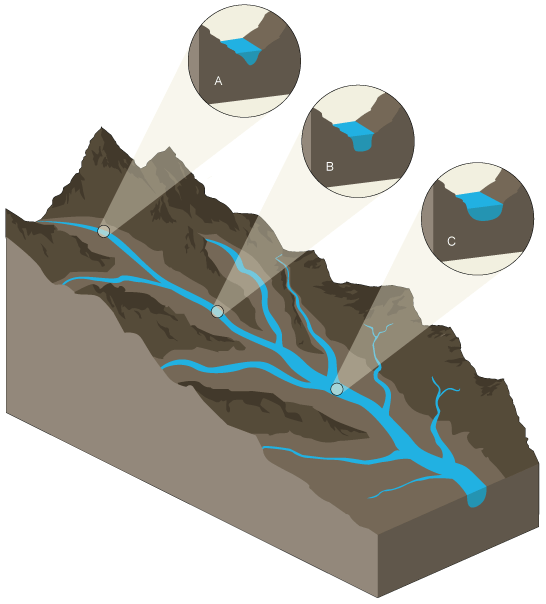
Course
Upper
Middle
Lower
Gradient
Steep
Medium
Gentle
Valley and channel shape
V-shaped valley, steep sides. Narrow, shallow channel
Gentle sloping valley sides. Wider, deeper channel
Very wide, almost flat valley. Very wide, deep channel
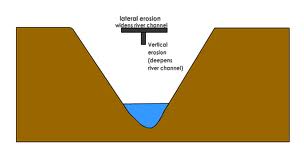
Processes of erosion:
Hydraulic Action - The force of water breaks rock particles away from the river channel
Abrasion - Eroded rocks picked up by river scrape along channel, wearing away
Attrition - Eroded rocks picked up by river smash together and break into smaller pieces
Solution - River dissolves some types of rock (e.g. chalk and limestone)
Types of transportation:
Traction - Large particle like boulders are pushed along river bed
Saltation - Pebble sized particles are bounced along the river bed
Suspension - Small particles like silt and clay are carried along by the water
Solution - Soluble materials dissolve in the water and are carried along
Deposition:
Deposition is when a river drops eroded material it's transporting
Reasons for deposition:
The volume of water in the river falls
The amount of eroded water material in the water increases
The river is shallower#The river reaches its mouth
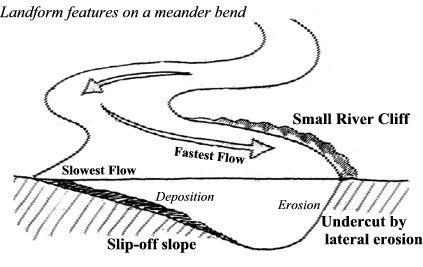
Meanders
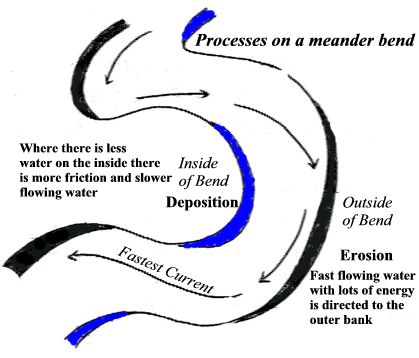
The current is faster on the outside of the bend because the river channel is deeper
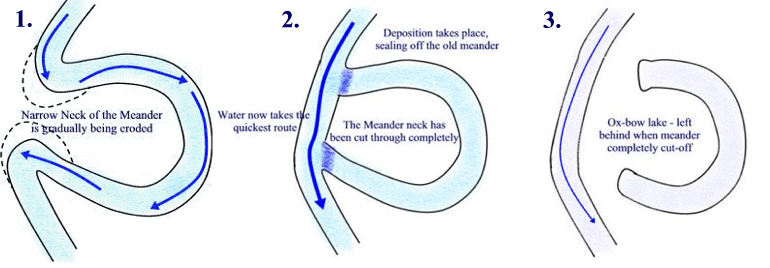
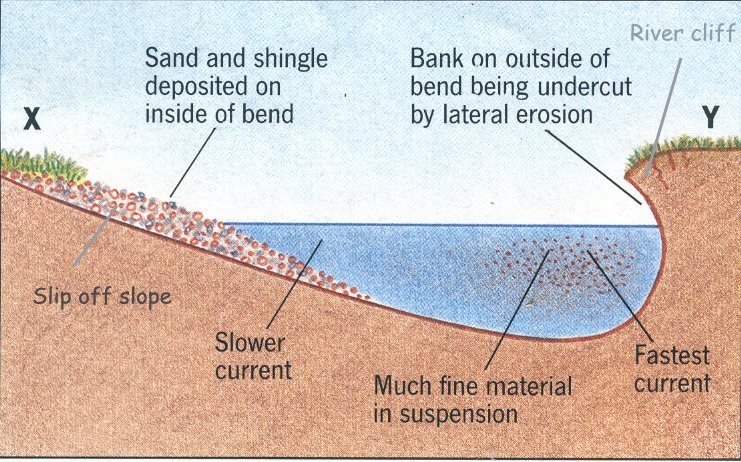
Oxbow Lake
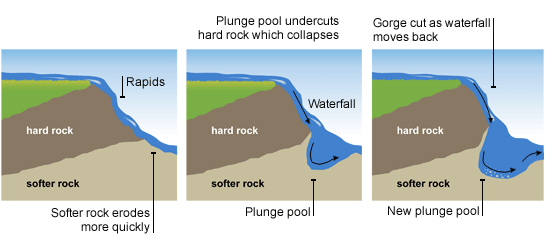
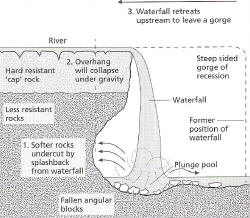
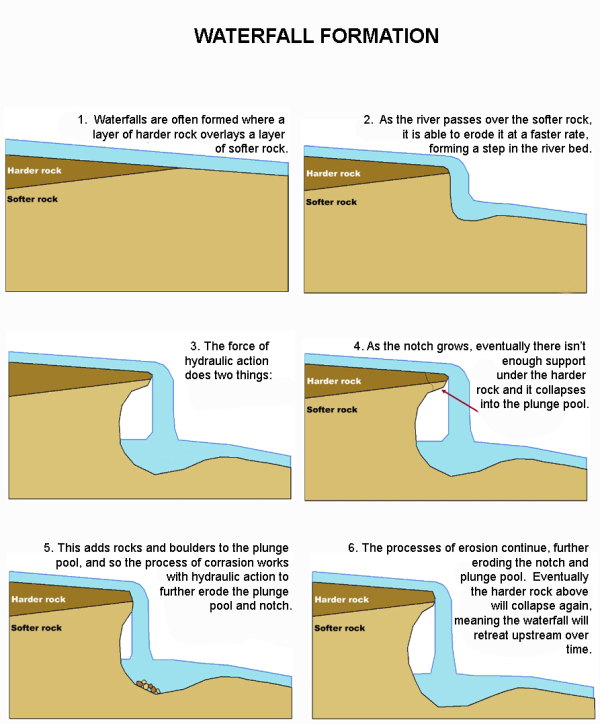
Waterfalls
Gorges
Floodplain - the wide valley floor on either side of a river which occasionally gets flooded
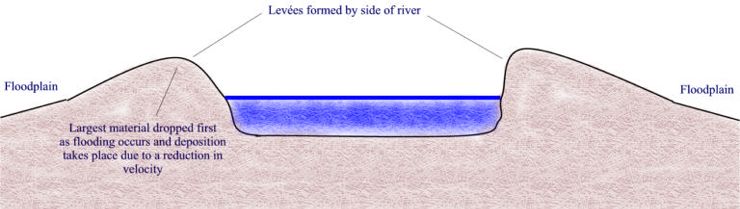
Levées - natural embankments (raised bits) along the edges of a river channel
Both are found in the lower course of a river
Both are found in the lower course of a river
Erosion
The River Valley
Erosion
River Landforms
River Landforms
Floodplain and Levees
Informações
- Descrição
- GCSE Geography Notas sobre Water on the Land, criado por Aliya em 09-05-2013.
- Criado por
- Aliya · mai 2013
- Atualizado
- 11 dez 2016
- Visualizações
- 1.318
- Tags
- Avaliação