
Quiz
wireless 3
Este quiz tem tipos de pergunta que abrem no player de sempre.
Perguntas do quiz (71)
1free space path loss
FSPL = 32.44 +(20log10(f) + (20log10(D))
f–Frequency in MHz
D - Distance in km between the antennas- AVerdadeiro
- BFalso
2RF components
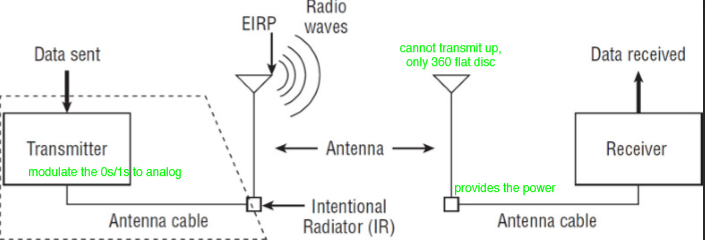
- Ayes
- B-
3dBm = 10 x log10 (PmW)
PmW = 10 (dBm÷10)- AVerdadeiro
- BFalso
4For every 10 dBi/dBd of gain you multiply signal strength by 10
For every 3 dBi/dBd of gain multiply the signal strength by 2- AVerdadeiro
- BFalso
5The transmit power is 100mW. There is 3 dB loss (cable etc.) and 10 dBi gain from the antenna.
Calculation in mW:
Power after transmitter is 100 mW
Power at the end of the cable is 100/2 = [blank_start]50[blank_end] mW
Power after the antenna (EIRP) is [blank_start]50[blank_end] *10 = [blank_start]500[blank_end] mW
Calculation in dBm:
Power after transmitter is 20 dBm
Power at the end of the cable is 20 -3 = 17 dBm
Power after the antenna (EIRP) is 17+[blank_start]10[blank_end] = 27 dBm- A50
- B50
- C500
- D10
6Which of the following are valid ISM bands? (Choose all that apply.)
- AA. 902-928 MHz
- BB. 2.4-2.5 GHz
- CC. 5.725-5.825 GHz
- DD. 5.725-5.875 GHz
7Which of the following are valid UNII bands? (Choose all that apply.)
- AA. 5.150-5.250 GHz
- BB. 5.47-5.725 GHz
- CC. 5.725-5.825 GHz
- DD. 5.725-5.850 GHz
8Which technologies are used in the 2.4 GHz ISM band? (Choose all that apply)
- AA. FHSS
- BB. ERP
- CC. DSSS
- DD. HR-DSSS
9802.11n (HT clause 20 radios) can transmit in which frequency bands? (Choose all that apply)
- AA. 2.4-2.4835 GHz
- BB. 5.47-5.725 GHz
- CC. 902-928 GHz
- DD. 5.15-5.25 GHz
10In the UNII-1 band, what is the center frequency of channel 40?
- AA. 5.2 GHz
- BB. 5.4 GHz
- CC. 5.8 GHz
- DD. 5.140 GHz
11What is the channel and band of a Wi-Fi transmission whose center frequency is 5.300 GHz?
- AA. UNII-1 channel 30
- BB. UNII-1 channel 60
- CC. UNII-2 channel 30
- DD. UNII-2 channel 60
12The 802.11-2007 standard requires how much separation between center frequencies for HR-DSSS (clause 18) channels to be considered nonoverlapping?
- AA. 22 MHz
- BB. 25 MHz
- CC. 30 MHz
- DD. 35 MHz
- EE. 40 MHz
13As defined by the IEEE-2007 standard, how much separation is needed between center frequencies of channels in the UNII-2 Extended band?
- AA. 10 MHz
- BB. 20 MHz
- CC. 22 MHz
- DD. 25 MHz
- EE. 30 MHz
14With the center frequency of channel 1 at 2.412 GHz, what is the center frequency of channel 2?
- AA. 2.444 GHz
- BB. 2.417 GHz
- CC. 2.424 GHz
- DD. 2.422 GHz
15Which two 802.11 topologies require the use of an access point?
- AA. WPAN
- BB. IBSS
- CC. Basic service set
- DD. Ad hoc
- EE. ESS
16Which terms describe an 802.11 topology involving STAs but no access points? (Choose all that apply.)
- AA. BSS
- BB. Ad hoc
- CC. DSSS
- DD. Infrastructure
- EE. IBSS
- FF. Peer-to-peer
17What are the only three original topologies defined by the 802.11-2007 standard? (Choose all that apply.)
- AA. Bridge mode
- BB. Extended service set
- CC. BSS
- DD. IBSS
- EE. FHSS
18The basic service set identifier address can be found in which topologies? (Choose all that apply.)
- AA. FHSS
- BB. IBSS
- CC. ESS
- DD. DSSS
- EE. BSS
19Which algorithm is used to digitize a voice signal for transmission in a digital circuit-switched network and at which data rate is the voice signal transmitted?
In a circuit switched digital telecommunication network a speech channel usually uses a 64 kbit/s timeslot. The pulse code modulation (PCM) algorithm is used to convert an analog voice signal for digital transmission.- AVerdadeiro
- BFalso
20Name the most important components of the GSM Network Subsystem (NSS) and their tasks:
MSC: The Mobile Switching Center
SMS: Service Center Voice Mail Systems- AVerdadeiro
- BFalso
21Name the most important components of the GSM radio network (BSS) and their tasks:
The Base Station Controller
The Base Transceiver Stations (BTS)- AVerdadeiro
- BFalso
22How is a BTS able to communicate with several subscribers at the same time?
splitting a channel into 7 time slots: Time Division Multiple Access (TDMA)
Capacity increased by using several carrier frequencies per base station: Frequency Division Multiple Access (FDMA)
splitting the coverage area of a base station into several sectors and by using different carrier frequencies in each sector- AVerdadeiro
- BFalso
23What is a handover and which network components are involved?
A handover changes the routing of an ongoing voice call from one cell to another.
necessary if a subscriber leaves the coverage area of a cell and enters the coverage area of another- AVerdadeiro
- BFalso
24Space divided into Cells:
- ABase Station (BS)
- BMobile Station (MS)
- CRoaming
- DStationary Station (SS)
- EMulti Station (MS)
25evolution of cellular system
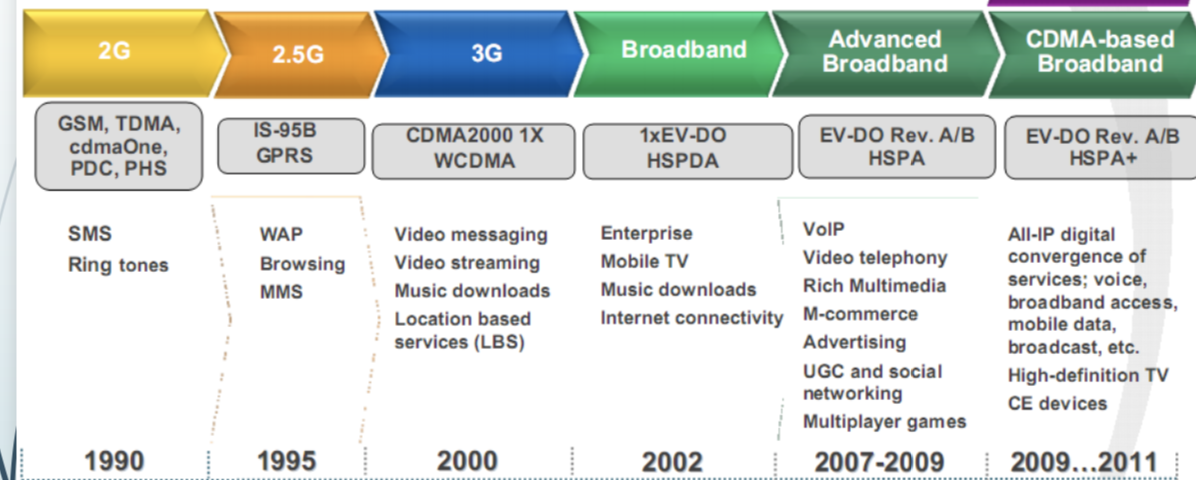
- Ayes
- B-
26Main Elements of a Cellular (Mobile) System
- ACore Network
- BUser Equipment
- CRadio Access Network (RAN)
- DAir Interface (RF or Wireless interface)
27Base Station Subsystem (BSS) translates between the air interface and the fixed wired infrastructure protocols
BSS consists of two components:
Base Transceiver Station (BTS)
Base Station Controller (BSC)- AVerdadeiro
- BFalso
28BSC (base station controller) is a high capacity switch that provides services such as
Handoff
Radio channel assignment
Transcoding- AVerdadeiro
- BFalso
29The NSS is responsible for network operation
comprising of one hardware and four software components:
Mobile Switching Center (MSC)
Visitor Location Register (VLR)
Home Location Register (HLR)
Authentication Center (AUC)
Equipment Identification Register (EIR)- AVerdadeiro
- BFalso
30MSC (mobile switch center)
Employs Signaling System 7 (SS-7) protocol- AVerdadeiro
- BFalso
31HLR (Home Location Register)
A database that handles the management of all the subscribers’ account of a particular operator
HLR stores information like the following EXCEPT:- AID (IMSI-International Mobile Subscriber Identity)
- BSubscriber's address
- CCurrent location
- DForwarding address
- EAuthentication keys
- FBilling information
- GSSID
32Visitor Location Register (VLR)
Temporary database identifying the subscribers visiting the coverage area of an MSC- AVerdadeiro
- BFalso
33Authentication Centre (AUC):
Authenticate the user trying the access the network
Equipment Register (EIR)
Contains MT identity information- AVerdadeiro
- BFalso
34GSM
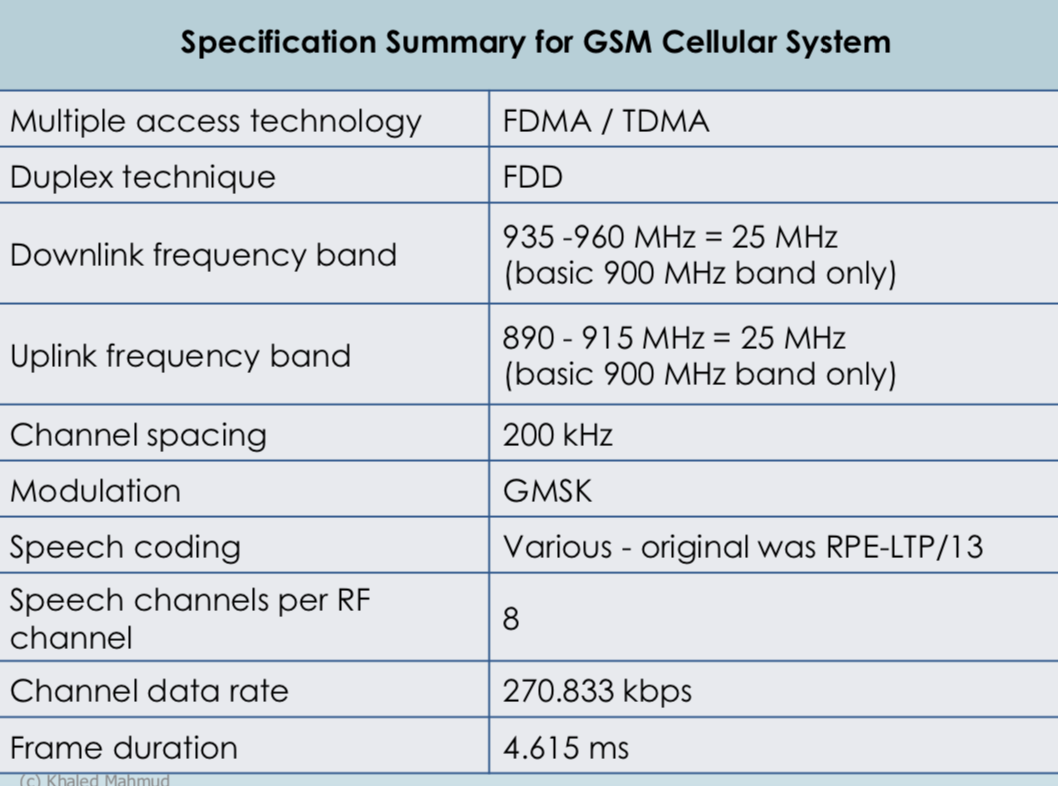
- Ayes
- B-
35GSM Air Interface
Duplex separation is 45 MHz
25 MHz is divided in to 124 (not 125) radio frequency channels
200 kHz wide- AVerdadeiro
- BFalso
36GSM architecture
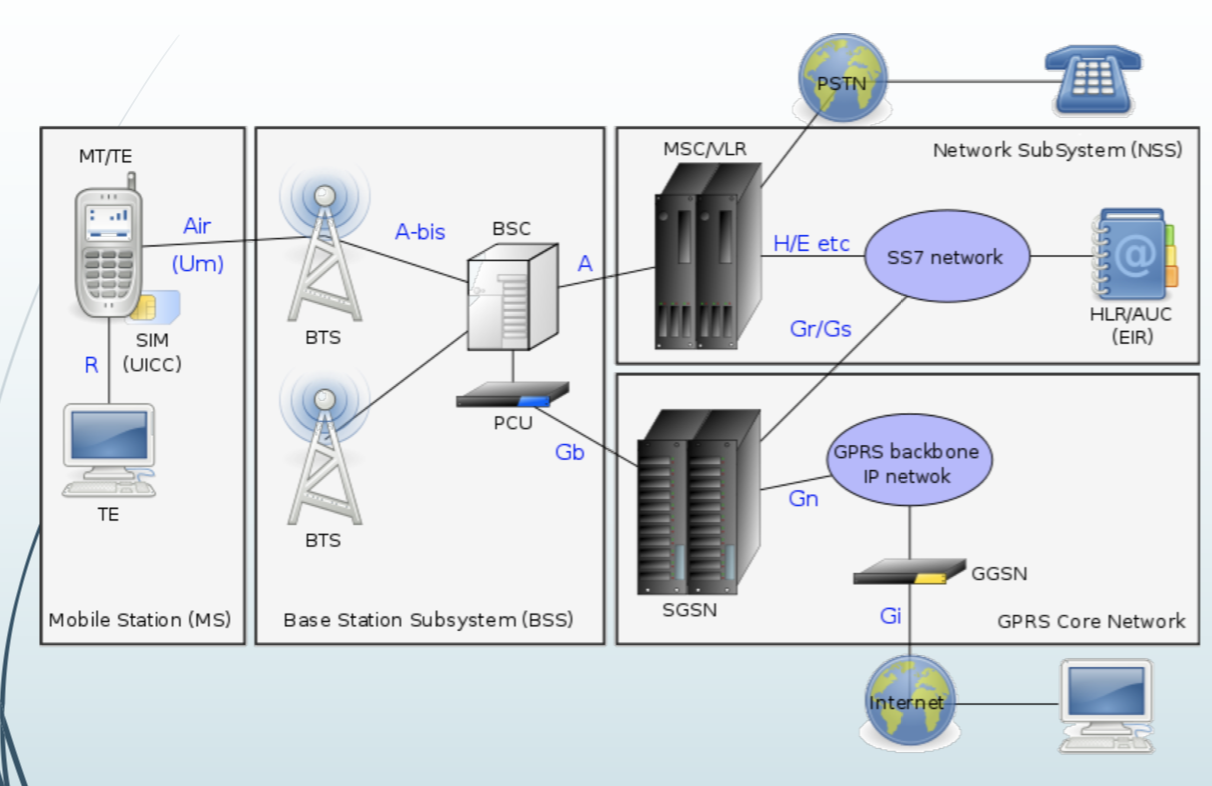
- Ayes
- B-
37Elements for GPRS Architecture
- ASGSN (packet switching)
- BGGSN (forms gateway to outside world
- CPCU (packet routing)
- DDCS (frequency)
38Mobile Station ISDN Number (MSISDN)
Directory Number
MSISDN = CC + NDC + SN
CC = Country Code
NDC = National Destination Code
SN = Subscriber Number- AVerdadeiro
- BFalso
39Two parts of Mobility management:
Location Management -
In a mobile network the destination terminal may be anywhere within the network
refers to the activities performed by the wireless network to keep track of the mobile terminal
Handoff Management
The MS is moving around during an ongoing communication session
refers to the activities performed by the wireless network to transfer one point of access to the infrastructure to another point- AVerdadeiro
- BFalso
40Location management consists of three major parts
- ALocation update (Messages sent by the MS regarding its changing point of access to the fixed network, ping pong effect)
- BPaging (Paging is a broadcast message (PCH))
- CLocation information
- DHome database
- EMobile identification
41Visitor Location Register (VLR) which keeps track of the MSs in its serving area
- AVerdadeiro
- BFalso
42Handoff Control has:
- ANetwork Controlled Handoff (NCHO)
- BMobile Controlled Handoff (MCHO)
- CMobile Assisted Handoff (MAHO)
- DSoft handoff (SHO)
- EHard handoff (HHO)
43In GSM, 3 security algorithms are used:
- AA3: Used for authentication
- BA5: Used for encryption
- CA8: Used to create secrete key
- DA9: used to store location
443G or UMTS introduced universal global roaming
- AVerdadeiro
- BFalso
45International Standardization:
- AITU (International Telecommunication Union)
- BIMT-2000
- C3G Partnership Projects (3GPP & 3GPP2)
46Wideband CDMA
Standard for Universal Mobile Telephone Service (UMTS)- AVerdadeiro
- BFalso
47HSPA:
High Speed Packet Access
Based on same UMTS network (UTRAN)
Improves the performance of WCDMA- AVerdadeiro
- BFalso
48ITU Requirements for 4G:
Bandwidth
Scalable channel bandwidth 5–20 MHz
Optionally up to 40 MHz- AVerdadeiro
- BFalso
49Key Technologies in LTE
- AMultiple Antenna Technology
- BMulti-carrier Technology
- CPacket Switched Radio Interface Technology
- DMulti-Sensor Technology
50LTE - advantages: PICK INCORRECT
- Ahigh throughput
- Blow latency
- CFDD and TDD in same platform
- DSuperior end user experience
- ESeamless connection
- FPlug and play
- GSimple architecture
- HFrequency hopping
51What is the difference between association frames and reassociation frames?
- AAssociation frames are management frames, whereas reassociation frames are control frames.
- BAssociation frames are used exclusively for roaming.
- CReassociation frames contain the BSSID of the original AP.
- DOnly association frames are used to join a BSS.
52Which of the following contains only LLC data and the IP packet but does not include any 802.11 data?
- AMPDU
- BPPDU
- CPSDU
- DMSDU
- EMMPDU
53Which of the following are protection mechanisms? (Choose all that apply.)
- ANAV back-off
- BRTS/CTS
- CRTS-to-Self
- DCTS-to-Self
- EWEP encryption
54The presence of what type of transmissions can trigger the protection mechanism within an ERP basic service set? (Choose all that apply.)
- AAssociation of an HR-DSSS client
- BAssociation of an ERP-OFDM client
- CHR-DSSS beacon frame
- DERP beacon frame with the NonERP_Present bit set to 1
- EAssociation of an FHSS client
55Which of the following information is included in a probe response frame? (Choose all that apply.)
- ATime stamp
- BSupported data rates
- CService set capabilities
- DSSID
- ETraffic indication map
56Which of the following are true about beacon management frames? (Choose all that apply.)
- ABeacons can be disabled to hide the network from intruders.
- BTime-stamp information is used by the clients to synchronize their clocks.
- CIn a BSS, clients share the responsibility of transmitting the beacons.
- DBeacons can contain vendor-proprietary information.
57If WMM-PS is not supported, after a station sees its AID set to 1 in the TIM, what typically is the next frame that the station transmits?
- ACTS
- BPS-Poll
- CATIM
- DACK
58When a station sends an RTS, the Duration/ID field notifies the other stations that they must set their NAV timers to which of the following values?
- A213 microseconds
- BThe time necessary to transmit the DATA and ACK frames
- CThe time necessary to transmit the CTS frame
- DThe time necessary to transmit the CTS, DATA, and ACK frames
59How does a client station indicate that it is using Power Save mode?
- AIt transmits a frame to the AP with the Sleep field set to 1.
- BIt transmits a frame to the AP with the Power Management field set to 1.
- CUsing DTIM, the AP determines when the client station uses Power Save mode.
- DIt doesn't need to, because Power Save mode is the default.
60What would cause an 802.11 station to retransmit a unicast frame? (Choose all that apply.)
- AThe transmitted unicast frame was corrupted.
- Bthe ACK frame from the receiver was corrupted.
- Cthe receiver's buffer was full.
- DThe transmitting station will never attempt to retransmit the data frame.
- EThe transmitting station will send a retransmit notification.
61If a station is in Power Save mode, how does it know that the AP has buffered unicast frames waiting for it?
- ABy examining the PS-Poll frame
- BBy examining the TIM field
- CWhen it receives an ATIM
- DWhen the Power Management bit is set to 1
- EFrom the DTIM interval
62When is an ERP (802.11g) AP required by the IEEE 802.11-2012 standard to respond to probe request frames from nearby HR-DSSS (802.11b) stations? (Choose all that apply.)
- AWhen the probe request frames contain a null SSID value
- BWhen the AP supports only ERP-OFDM data rates
- CWhen the AP supports only HR/DSSS data rates
- DWhen the Power Management bit is set to 1
- EWhen the probe request frames contain the correct SSID value
63Which of the following are true about scanning? (Choose all that apply.)
- AThere are two types of scanning: passive and active.
- BStations must transmit probe requests in order to learn about local APs.
- Cthe 802.11 standard allows APs to ignore probe requests for security reasons.
- DIt is common for stations to continue to send probe requests after being associated to an AP.
64Given that an 802.11 MAC header can have as many as four MAC addresses, which type of addresses are not found in an 802.3 MAC header? (Choose all that apply.)
- ASA
- BBSSID
- CDA
- DRA
- ETA
65When a client station is first powered on, what is the order of frames generated by the client station and AP?
- AProbe request/probe response, association request/response, authentication request/response
- BProbe request/probe response, authentication request/response, association request/response
- CAssociation request/response, authentication request/response, probe request/probe response
- DAuthentication request/response, association request/response, probe request/probe response
66WLAN users have recently complained about gaps in audio and problems with the push-to-talk capabilities with the ACME Company's VoWiFi phones. What could be the cause of this problem?
- AMisconfigured TIM setting
- BMisconfigured DTIM setting
- CMisconfigured ATIM setting
- DMisconfigured BTIM setting
67The WLAN help desk gets a call that all of the sudden, all of the HR-DSSS (802.11b) VoWiFi phones cannot connect to any of the ERP (802.11g) lightweight APs that are managed by a multiple-channel architecture WLAN controller. All the laptops with ERP (802.11g) radios can still connect. What are the possible causes of this problem? (Choose all that apply.)
- AThe WLAN admin disabled the 1, 2, 5.5, and 11 Mbps data rates on the controller.
- BThe WLAN admin disabled the 6 and 9 Mbps data rates on the controller.
- CThe WLAN admin enabled the 6 and 9 Mbps data rates on the controller as basic rates.
- DThe WLAN admin configured all the APs on channel 6.
68In a multiple-channel architecture, roaming is controlled by the client station and occurs based on a set of proprietary rules determined by the manufacturer of the wireless radio. Which of the following parameters are often used when making the decision to roam? (Choose all that apply.)
- AReceived signal level
- BDistance
- CSNR
- DWMM access categories
69What are some of the advantages of using U-APSD and WMM-PS power management over legacy power-management methods? (Choose all that apply.)
- AApplications control doze time and trigger frames.
- BU-APSD APs transmit all voice and video data immediately.
- CThe client does not have to wait for a beacon to request data.
- DDownlink traffic is sent in a frame burst.
- EData frames are used as trigger frames. PS-Poll frames are not used.
70WMM-PS is based on which 802.11-2012 power-management method?
- AS-APSD
- BU-APSD
- CPSMP
- DSM Power Save
- EPS-Poll
71LTE network diagram
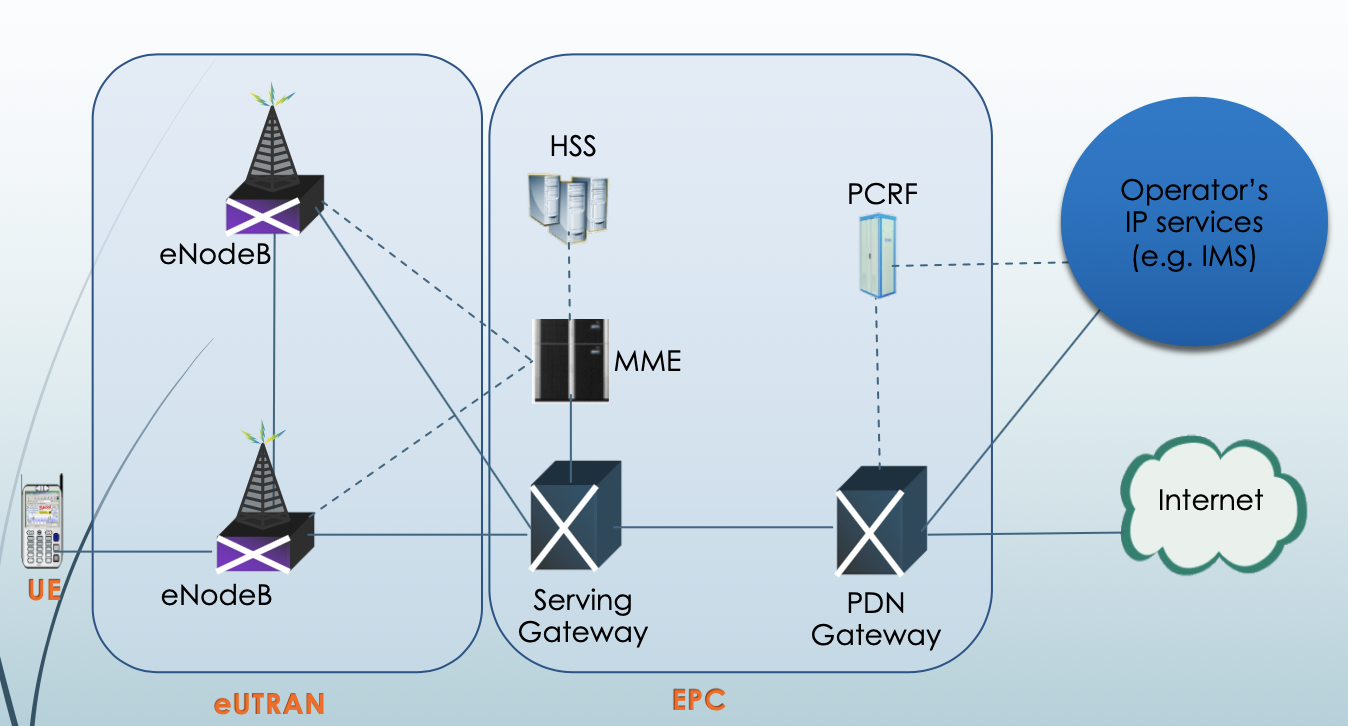
- Ayes
- B-
Informações
- Descrição
- Computer Science Quiz sobre wireless 3, criado por Duncan Levings em 07-12-2018.
- Autor
- Duncan Levings
- Idioma
- English
- Visualizações
- 15
- Etiquetas
- Avaliação
- Ainda sem avaliações Avalie este quiz