
Quiz
Science 9: Unit 1- Biodiversity MEGA QUIZ
Este quiz tem tipos de pergunta que abrem no player de sempre.
Perguntas do quiz (90)
1Check FIVE characteristics all living things have:
- AUse oxygen
- BThey can reproduce
- CThey are made up of cells
- DRequire energy
- ECan move around
- FGrow and develop
- GHave adaptations to survive
2What is a species?
- ARefers to the living and non-living things working together in a place
- BA group of organisms with same structures and can reproduce with eachother
- CGenetic varietes of a species or Genius
- DVariation among ecosystems, communities, landscapes
3Check all that are examples of species?
- ADogs
- BCats
- CDesert
- DHumans
- ERainforest
- FSunflower
- GCanis
- HAnimalia
4What is an ecosystem?
- AGenetic variants of a species or Genius
- BVariation among ecosystems, communities, landscapes
- CA group of organisms with same structures and can reproduce with eachother
- DRefers to the living and non-living things working together in a place
5Check all that are examples of ecosystems:
- ACats
- BRainforest
- CArctic
- DDogs
- EDesert
- FPrairies
- GRose
- HFelis
6What is Genetic Diversity?
- AGenetic variants of a species or Genius
- BA group of organisms with same structures and can reproduce with eachother
- CVariation among ecosystems, communities, landscapes
- DNumber of species in an ecosystem
7What are some characteristics of Genetic Diversity?
- AStrength
- BEye color
- CPiano talent
- DSize
- EShape
- FCats
- GHair texture
8What is Species Diversity?
- ANumber of species in an ecosystem
- BVariation among ecosystems, communities, landscapes
- CRefers to the living and non-living things working together in a place
- DA group of organisms with same structures and can reproduce with eachother
9What is Ecosystem Diversity?
- ANumber of species in an ecosystem
- BGenetic variants of a species or Genius
- CVariation among ecosystems, communities, landscapes
- DA group of organisms with same structures and can reproduce with eachother
10Order of Classifying Diversity:
K[blank_start]ingdom[blank_end]s -> [blank_start]Phyla[blank_end] -> [blank_start]Subphyla[blank_end] -> [blank_start]Class[blank_end] -> [blank_start]Order[blank_end] -> [blank_start]Family[blank_end] -> [blank_start]Genera[blank_end] -> S[blank_start]pecies[blank_end]- Aingdom
- BPhyla
- CSubphyla
- DClass
- EOrder
- FFamily
- GGenera
- Hpecies
11There is [blank_start]more[blank_end] diversity near the equator because of [blank_start]warmer[blank_end] climates and [blank_start]more[blank_end] variation.
There is [blank_start]less[blank_end] diversity far from the equator because of the [blank_start]colder[blank_end] climate and [blank_start]harsh[blank_end] conditions.- Amore
- Bless
- Cwarmer
- Dcolder
- Eless
- Fmore
- Gcolder
- Hwarmer
- Imore
- Jless
- Kharsh
- Lgentle
12Check all that are Kingdoms:
- AMonera
- BProtista
- CBacterium
- DFungi
- EInsectives
- FPlantae
- GAnimalia
- HSingularis
13What is a Dog?
Kingdom - [blank_start]Animalia[blank_end]
- [blank_start]Chordata[blank_end]
- [blank_start]Mammalia[blank_end]
- [blank_start]Carnivora[blank_end]
- [blank_start]Canidae[blank_end]
- [blank_start]Canis[blank_end]
Species - [blank_start]Canis Familiaris[blank_end]- AAnimalia
- BChordata
- CMammalia
- DCarnivora
- ECanidae
- FCanis
- GCanis Familiaris
14Kingdoms have the [blank_start]highest[blank_end] population because they are the [blank_start]broadest[blank_end].
Species have the [blank_start]lowest[blank_end] population because they are the [blank_start]most specific[blank_end].- Ahighest
- Blowest
- Clowest
- Dhighest
- Ebroadest
- Fmost specific
- Gmost specific
- Hbroadest
15[blank_start]Intraspecies competition[blank_end] is competition between organisms of the same species.
[blank_start]Interspecies competition[blank_end] is competition between organisms of different species.- AInterspecies competition
- BIntraspecies competition
- CIntraspecies competition
- DInterspecies competition
16Population - A group of [blank_start]the same[blank_end] species in a particular area
Community - A group of populations of [blank_start]different[blank_end] species living in the [blank_start]same[blank_end] area
Niche - Describes the interrelationships of a species or population. A species' [blank_start]role[blank_end].- Athe same
- Bdifferent
- Cdifferent
- Dthe same
- Esame
- Fdifferent
- Grole
- Hpredator
- Istatistics
- Jprey
- Kplace in the food web
17What is symbiosis?
- ATwo or more organisms living in a long term relationship
- BTwo or fewer organisms living in a long term relationship
- CBoth organisms benefit from the relationship
- DOne organism is benefitted and the other isn't effected
18What is mutualism?
- AOne organism is harmed and the other is benefitted
- BOne organism is benefitted and the other isn't effected
- CBoth organisms benefit from the relationship
19What is parasitism?
- AOne organism is benefitted and the other isn't effected
- BOne organism is harmed and the other is benefitted
- CBoth organisms benefit from the relationship
20What is commensalism?
- AOne organism is benefitted and the other isn't effected
- BBoth organisms benefit from the relationship
- COne organism is harmed and the other is benefitted
21Check all that are examples of Mutualism:
- AMosquitoes and humans
- BCats and humans
- CHumans and assistant dogs
- DTapeworms and humans
- EBees and flowers
- FBirds and hippo
- GBarnacles on boats
22Check all that are examples of Parasitism:
- ACats and humans
- BBarnacles on boats
- CWasps and humans
- DBirds and hippos
- EDog and tick
- FMosquitoes and humans
- GBees and flowers
23Check all that are examples of Commensalism:
- ABees and flowers
- BBarnacles on boat
- CCats and humans
- DNurse plants
- EDogs and ticks
- FMosquitoes and humans
24Variations are [blank_start]differences[blank_end] between organisms of the [blank_start]same[blank_end] species.
Higher levels [blank_start]increase[blank_end] the chance of survival. This is because they [blank_start]can live[blank_end] through changes.- Adifferences
- Bsimilarities
- Csame
- Ddifferent
- Eincrease
- Fdecrease
- Gcan live
- Hdie
25There are two types of adaptations:
[blank_start]Behavioural[blank_end] - Mentally affects the species' survival
[blank_start]Structural[blank_end] - Physically affects the species' survival- ABehavioural
- BStructural
- CMigrational
- DStructural
- EBehavioral
- FMigrational
- GBuild
26Natural Selection: The [blank_start]earth[blank_end] picks the outcomes of members of a species based on how the species [blank_start]adapt[blank_end]. If it [blank_start]can[blank_end] adapt, it will live. If it [blank_start]can't[blank_end] adapt, it will die. This will also make the strongest ones with the "best" traits make those traits the [blank_start]most[blank_end] common.
A good example is [blank_start]giraffes[blank_end] got their long necks from battling. The strongest one would get to mate and spread the long neckedness to the next generation.- Aearth
- Bpeople
- Cadapt
- Dlive
- Eeat
- Fcan
- Gcan't
- Hcan't
- Ican
- Jmost
- Kleast
- Lgiraffes
- Melephants
- Nzebras
27What are Heritable characteristics?
- ARefers to a difference that has a defined form; this or that
- BRefers to when there is a range of possible outcomes
- CCharacteristics that are not passed on to the next generation
- DCharacteristics that are passed on to the next generation
28What are Non-heritable characteristics?
- ACharacteristics that are passed on to the next generation
- BCharacteristics that are not passed on to the next generation
- CRefers to a difference that has a defined form; this or that
- DRefers to when there is a range of possible outcomes
29What is Discrete Variation?
- ARefers to when there is a range of possible outcomes
- BCharacteristics that are passed on to the next generation
- CRefers to a difference that has a defined form; this or that
- DCharacteristics that are not passed on to the next generation
30What is Continuous Variation?
- ARefers to when there is a range of possible outcomes
- BRefers to a difference that has a defined form; this or that
- CCharacteristics that are not passed on to the next generation
- DCharacteristics that are passed on to the next generation
31Environmental factors are [blank_start]not heritable[blank_end] but [blank_start]do[blank_end] change traits.
- Anot heritable
- Bheritable
- Cdo
- Ddon't
32Asexual production:
- [blank_start]One parent[blank_end]
- Offspring is [blank_start]identical[blank_end]
- [blank_start]Four[blank_end] types
Sexual reproduction:
- [blank_start]Two parents[blank_end]
- Offspring is [blank_start]mixed[blank_end]
- [blank_start]One[blank_end] type- AOne parent
- BTwo parents
- CThree parents
- Didentical
- Emixed
- FFour
- GThree
- HTwo
- IOne
- JTwo parents
- KOne parent
- LThree parents
- Mmixed
- Nidentical
- OOne
- PThree
- QTwo
- RFour
33Asexual production is used a lot for [blank_start]farming[blank_end].
Sexual production is ideal for [blank_start]variation[blank_end].- Afarming
- Bvariation
- Cdog breeding
- Dvariation
- Efarming
- Ftime conservation
34[blank_start]Budding[blank_end]: Parent produces a smaller version of itself that eventually detaches and becomes an independent organism that is identical to the parent.
[blank_start]Binary Fission[blank_end]: A cell splits in two and creates identical organisms. Only for single-celled organisms.
[blank_start]Spore Production[blank_end]: Similar to seeds but are only made by one parent. It can remain inactive for a while.
[blank_start]Vegetative Reproduction[blank_end]: Doesn't involve a seed.- ABudding
- BBinary Fission
- CSpore Production
- DVegetative Reproduction
- EBinary Fission
- FBudding
- GSpore Production
- HVegetative Reproduction
- ISpore Production
- JBudding
- KVegetative Reproduction
- LBinary Fission
- MVegetative Reproduction
- NBinary Fission
- OBudding
- PSpore Production
35Check all that are examples of Budding:
- ABacteria
- BYeast
- CSea Sponge
- DMould
- EHydra
- FPotatoes
- GCoral
36Check all examples of Binary Fission:
- ABacteria
- BYeast
- CAmoeba
- DCarrots
- EMould
- FFerns
37Check all that are Spore Production:
- ABacteria
- BMould
- CFerns
- DYeast
- ESea Sponge
38Check all that are Vegetative Reproduction:
- AHydra
- BAspen
- CCoral
- DCarrots
- EPotatoes
- FAmoeba
- GStrawberries
- HMould
39Check all that are properties of Gametes:
- AMale=Sperm Female=Egg
- BHave twice the amount of DNA
- CHave half DNA
- DCreated using meiosis
- ECreated using mitosis
- FMale=Egg Female=Sperm
40[blank_start]Fertilization[blank_end] is the union of [blank_start]two[blank_end] gametes. The [blank_start]sperm[blank_end] penetrates the [blank_start]egg[blank_end]. This turns into the [blank_start]zygote[blank_end], which is the [blank_start]first[blank_end] cell of the organism. Then, through the process of [blank_start]cleavage[blank_end](several divisions), it becomes an [blank_start]embryo[blank_end], which is a multicellular lifeform [blank_start]not[blank_end] identical to either parent.
Sperm - [blank_start]Male[blank_end] reproductive cell
Egg - [blank_start]Female[blank_end] Reproductive cell- AFertilization
- BArtificial Insemination
- CBinary Fission
- Dtwo
- Ethree
- Ffour
- Gsperm
- Hegg
- Iegg
- Jsperm
- Kzygote
- Lembryo
- Mfirst
- Nsecond
- O50th
- P10th
- Qcleavage
- Rbudding
- Scutting
- Tembryo
- Uzygote
- Vthat is not
- Wthat is
- XMale
- YFemale
- ZFemale
- AAMale
41The egg and sperm both have 50% of the DNA of the parent.
- AVerdadeiro
- BFalso
42Label the Diagram of Sexual Reproduction:
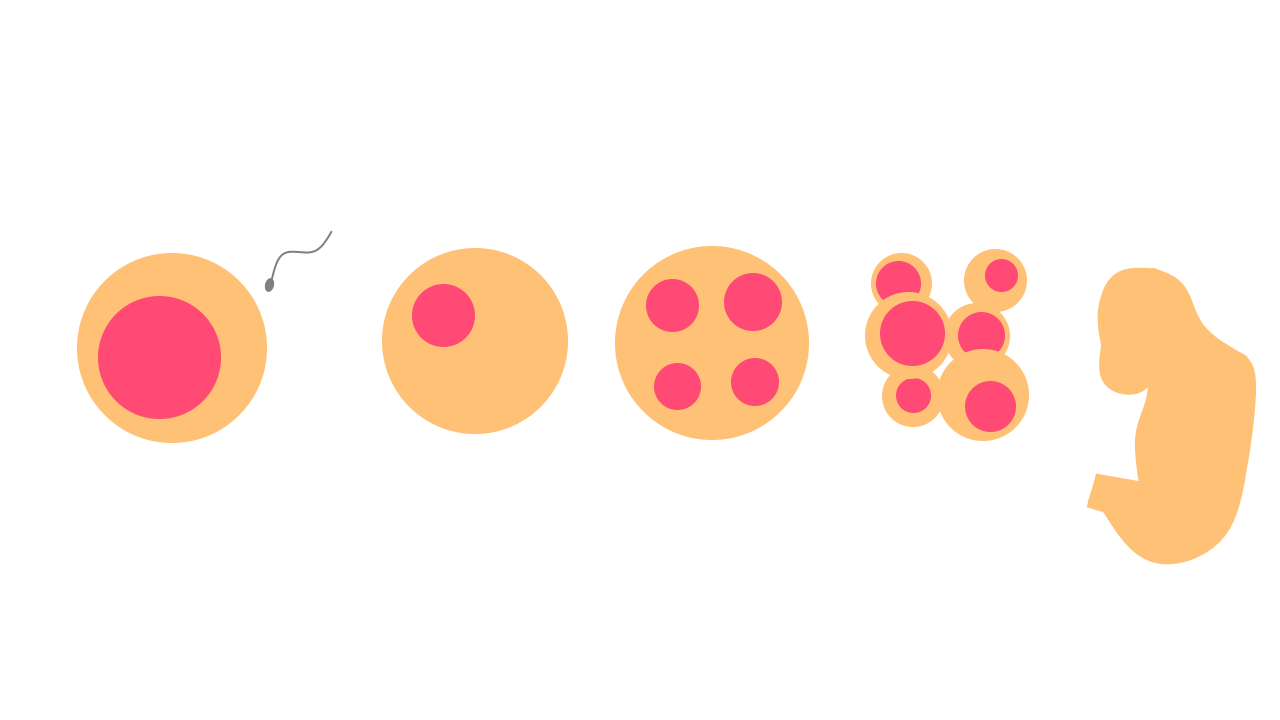
- AEgg
- BSperm
- CSperm
- DEgg
- EFertilization
- FArtificial Insemination
- GBudding
- HZygote
- IEmbryo
- JCleavage
- KCutting
- LDivision
- MEmbryo
- NZygote
43Check all that are properties of Pollen:
- AContains male gametes
- BFound in stamen
- C1/2 DNA from father
- DContains female gametes
- EFound in pistil/carpel
- F1/2 DNA from mother
44Check all that are properties of the Ovule:
- AContains female gametes
- BFound in the pistil/carpel
- C1/2 DNA from mother
- DContains male gametes
- EFound in stamen
- F1/2 DNA from father
45Pollination is when [blank_start]pollen[blank_end] is transferred from the [blank_start]anther[blank_end]([blank_start]male[blank_end]) to the [blank_start]stigma[blank_end]([blank_start]female[blank_end]).
- Aanther
- Bstigma
- Cmale
- Dfemale
- Estigma
- Fanther
- Gfemale
- Hmale
- Ipollen
- Jfemale gametes
46Check all that are male parts of the plant:
- AAnther
- BFilament
- CPetals
- DStigma
- EOvary
47Check all that are female parts of the plant:
- AStigma
- BStyle
- COvary
- DOvule
- EPetal
- FAnther
- GFilament
48Label the Reproductive Parts of the Plant:
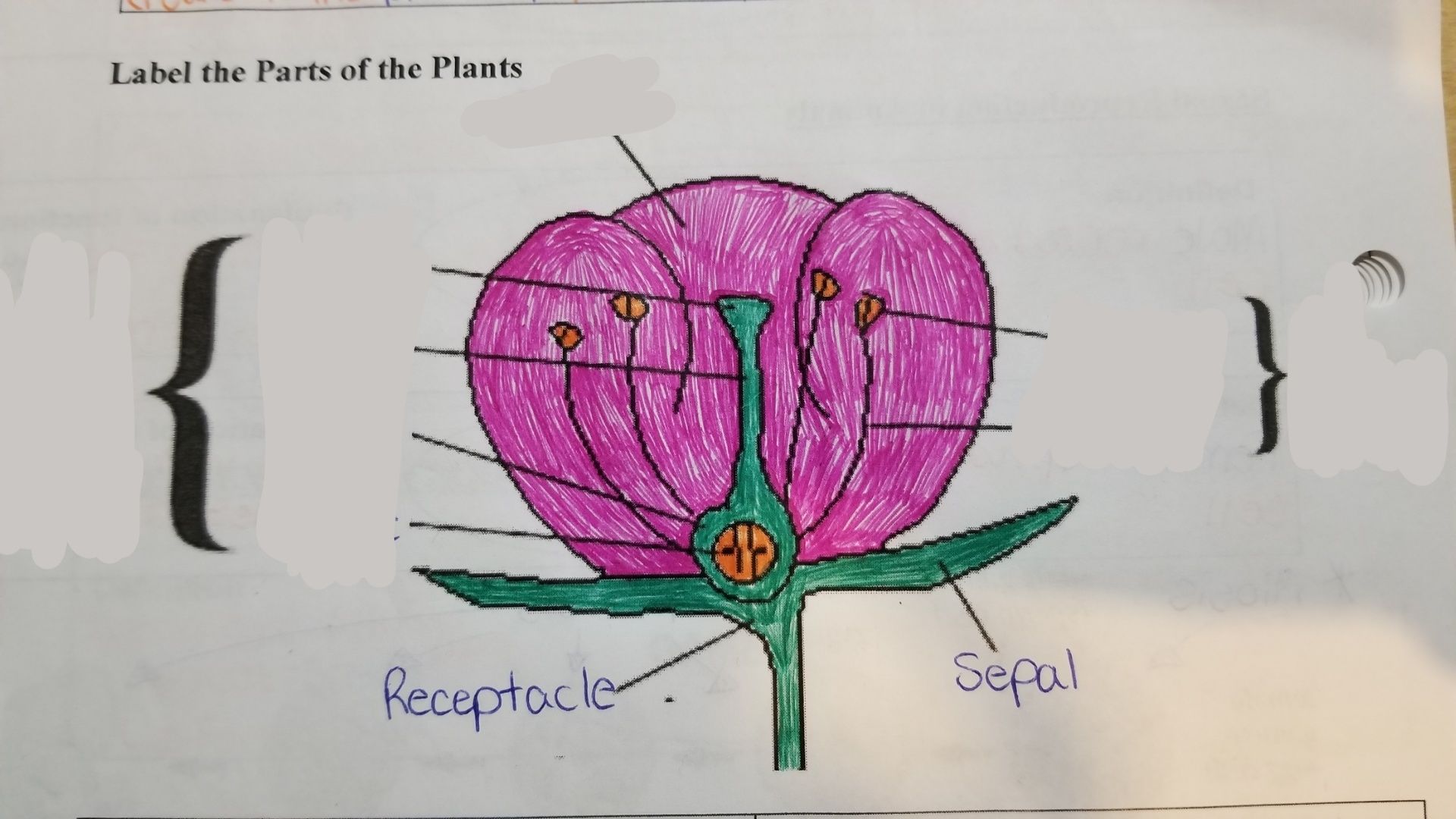
- AStigma
- BStyle
- COvary
- DFemale
- EMale
- FMale
- GFemale
- HStyle
- IStigma
- JOvule
- KOvary
- LOvule
- MOvule
- NOvary
- OPetal
- PStem
- QLeaf
- RAnther
- SFilament
- TFilament
- UAnther
49[blank_start]Cross-pollination[blank_end] is when pollen from one plant is transferred to another. It is usually caused by bees or wind.
[blank_start]Cross-fertilization[blank_end] is when pollen forms a long tube that grows down the style into the ovary. This happens in a [blank_start]cucumber[blank_end].- ACross-pollination
- BPollination
- CCross-fertilization
- DFertilization
- ECross-fertilization
- FFertilization
- GCross-pollination
- HPollination
- Icucumber
- Jpotato
- Kcarrots
- Lpeas
50Asexual Advantages and Disadvantages:
Advantages:
- [blank_start]Clone[blank_end] of parent
- [blank_start]Lots of[blank_end] offspring
- Requires [blank_start]less[blank_end] energy
Disadvantages:
- [blank_start]No new characteristics[blank_end]
- Can be wiped out easily(by storm, disease)
- [blank_start]Less[blank_end] variation- AClone
- BHalf
- CLots of
- DLittle
- Eless
- Fmore
- GNo new characteristics
- HLots of new characteristics
- ILess
- JMore
51Sexual Advantages and Disadvantages:
Advantages:
- [blank_start]More[blank_end] variation
Disadvantages:
- Needs [blank_start]more[blank_end] energy
- Needs [blank_start]more[blank_end] time
- Offspring is [blank_start]limited[blank_end]- AMore
- BLess
- Cmore
- Dless
- Emore
- Fless
- Glimited
- Hplenty
52Variation doesn't help a species survive at all.
- AVerdadeiro
- BFalso
53What are genetics?
- AThe study of how characteristocs are passed between generations
- BMolecular blueprint shaped like a twisted ladder
- CResponsible for inheritable characteristics
- DVariations of DNA sequences
54Gregor Mendell was the father of genetics.
- AVerdadeiro
- BFalso
55What is DNA?
- AThe pattern of DNA pairs
- BMolecular blueprint shaped like a twisted ladder
- CResponsible for inheritable characteristics
- DVariations of DNA sequences
56Where is DNA found in the cell?
- ACell wall
- BCytoplasm
- CNucleus
- DVacuole
57Check all that are the four molecules that make up DNA:
- AAdenine
- BThymine
- CGuanine
- DCytosine
- EChimine
- FTrisomine
- GAthline
- HGryosine
58We are 99.9% different from each other, only 0.01% is the same!
- AVerdadeiro
- BFalso
59What is the Genetic Code?
- AThe pattern of DNA pairs
- BMolecular blueprint shaped like a twisted ladder
- CThe study of how characteristics are passed between generations
- DVariations of DNA sequences
60What are chromosomes?
- APackets of DNA that determines traits
- BResponsible for inheritable characteristics
- CVariations of DNA sequences
- DThe pattern of DNA pairs
61What are genes?
- AResponsible for inheritable characteristics
- BVariations of DNA sequences
- CMolecular blueprint shaped like a twisted ladder
- DThe study of how characteristics are passed between generations
62What are alleles?
- AThe study of how characteristics are passed between generations
- BVariations of DNA sequences
- CResponsible for inheritable characteristics
- DMolecular blueprint shaped like a twisted ladder
63Brown - [blank_start]dominant[blank_end]
Blue - [blank_start]recessive[blank_end]- Adominant
- Brecessive
- Crecessive
- Ddominant
64Check all that are properties of Mitosis:
- AOne division, two new identical cells
- BHappens in skin and bone cells
- CPMAT once
- DFast
- ENo partner needed
- FLess energy needed
- GSlow
- HMore energy needed
- IHappens in gametes
- JTwo divisions, identical cells
65Check all that are properties of Meiosis:
- ATwo divisions, four different cells
- BHappens in gametes
- CPMAT twice
- DDiverse
- EMore energy required
- FNeeds a partner
- GSlow
- HFast
- IPMAT once
- JFour divisions, eight different cells
66P - [blank_start]Prophase[blank_end]
M - [blank_start]Metaphase[blank_end]
A - [blank_start]Anaphase[blank_end]
T - [blank_start]Telephase[blank_end]- AProphase
- BMetaphase
- CAnaphase
- DTelephase
67In Meiosis, the chromosomes mix together
- AVerdadeiro
- BFalso
68What are dominant traits?
- AThe trait that is expressed if present
- BThe trait not expressed if dominant is present
- CBoth dominant or recessive, no either/or
- DHas dominant and recessive
69What are recessive traits?
- AThe trait that is expressed if present
- BBoth dominant or recessive, no either/or
- CThe trait not expressed if dominant is present
- DHas dominant and recessive
70What is purebred?
- AThe trait that is expressed if present
- BThe trait not expressed if dominant is present
- CHas dominant and recessive
- DBoth dominant or recessive, no either/or
71What is hybrid?
- ABoth dominant or recessive, no either/or
- BHas dominant and recessive
- CThe trait not expressed if dominant is present
- DThe trait that is expressed if present
72Dominant traits are more common.
- AVerdadeiro
- BFalso
73Check all that are Dominant traits:
- ABrown eyes
- BDark hair
- CWidow's peak
- DDimples
- EFreckles
- FExtra fingers
- GBlue eyes
- HLight hair
- INo dimples
- JAttached earlobes
74Check all that are Recessive traits:
- ABlue eyes
- BAttached earlobes
- CNo freckles
- DLight hair
- ENormal fingers
- FGreen eyes
- GBrown eyes
- HDark hair
- IUnattached earlobes
- JFreckles
75What is a phenotype?
- AObservable traits that result from a gene's expression
- BTwo letters that represent alleles
- CHave more than two variations
- DControls the expression of genes
76What is a genotype?
- ATwo letters that represent alleles
- BObservable traits that result from a gene's expression
- CTool used to predict probability of phenotype
- DHave more than two variations
77What is a Punnet Square?
- ATool used to predict the probability of phenotype
- BObservable traits that result from a gene's expression
- CTwo letters that represent alleles
- DResults in a phenotype that is a blend of allele pair
78Incomplete dominance - Results in a phenotype that [blank_start]is a blend[blank_end] of allele pair Eg. Red + Blue = [blank_start]Purple[blank_end]
Codominance - Results in a phenotype that [blank_start]shows both traits[blank_end] of an allele pair Eg. Red + Blue = [blank_start]Red and Blue[blank_end]- Ais a blend
- Bshows both traits
- Cshows both traits
- Dis a blend
- ERed and Blue
- FPurple
- GPurple
- HRed and Blue
79Multiple Alleles - Have more than [blank_start]two[blank_end] variations
Regulatory Genes - Controls the [blank_start]expression[blank_end] of genes
Environmental Factors - DNA [blank_start]changes[blank_end] that occur from the environment- Achanges
- Bdamages/changes
- Cdamages
- Dexpression
- Evariation
- Ftwo
- Gone
- Hthree
- Ifour
80What is extinction?
- ASpecies disappearance from the entire planet
- BSpecies disappearance from a certain area
- CThe species is soon to become endangered
- DThe species are at risk of being extinct
81What is extirpation?
- AThe species is soon to become endangered
- BSpecies disappearance from the entire planet
- CSpecies disappearance from a certain area
- DThe species are at risk of being extinct
82What is a "threatened species"?
- AThe species is soon to become endangered
- BThe species are at risk of being extinct
- CSpecies disappearance from a certain area
- DSpecies disappearance from the entire planet
83What is an "endangered species"?
- AThe species are at risk of being extinct
- BThe species is soon to become endangered
- CSpecies disappearance from a certain area
- DSpecies disappearance from the entire planet
84Overspecialization: When an organism has [blank_start]too little[blank_end] to survive on. Occurs in a [blank_start]non-changing[blank_end] environment.
"Trapped in specialization" = organism [blank_start]cannot[blank_end] adapt- Atoo little
- Btoo much
- Cnon-changing
- Dconstantly changing
- Ecannot
- Fcan
85Biotechnology: The process of [blank_start]intervention[blank_end] to produce [blank_start]desirable[blank_end] traits
- Adesirable
- Bundesirable
- Cintervention
- Dcreation
86What is a clone?
- AThe process of producing populations that are genetically identical
- BArtificially joining male and female gametes
- CMale and female gametes are placed in a controlled environment and fertilize
- DDirectly altering the DNA
87What is Artificial Insemination?
- AArtificially joining male and female gametes
- BDirectly altering the DNA
- CMale and female gametes are placed in controlled environment and fertilize
- DThe process of producing populations that are genetically identical
88What is In-Vitro Fertilization?
- AThe process of producing populations that are genetically identical
- BArtificially joining male and female gametes
- CMale and female gametes are placed in controlled environment and fertilize
- DDirectly altering the DNA
89What is Genetic Engineering?
- ADirectly altering the DNA
- BMale and female gametes are placed in a controlled environment and fertilize
- CArtificially joining male and female gametes
- DThe process of producing populations that are genetically identical
90In-situ Conservation: Conservation of biodiversity [blank_start]within[blank_end] its natural habitat EG. [blank_start]National Parks[blank_end]
Ex-situ Conservation: Conservation of biodiversity [blank_start]outside[blank_end] its natural habitat EG. [blank_start]Zoos[blank_end]- Awithin
- Boutside
- Coutside
- Dwithin
- EZoos
- FNational Parks
- GNational Parks
- HZoos
Informações
- Descrição
- Use this for the PAT and Unit Test.
- Autor
- Riley Babuik
- Idioma
- English
- Visualizações
- 22
- Histórico
- Criado em 27 out 2019 · atualizado em 24 jan 2020
- Etiquetas
- Avaliação
- Ainda sem avaliações Avalie este quiz