
Quiz
BCBA Exam- Experimental Design- Graphs
Perguntas do quiz (26)
1Multiple baseline design graphs measures all of the following EXCEPT:
- Asettings
- Bbehaviors
- Cpeople
- Dinterventions
2Which type of graph is used MOST widely?
- AMultiple design
- Bsingle subject
- Calternative treatments
- Dscatterplot
3Which highly flexible graph has a staggered step-like fashion display?
- Amultiple stepline
- Bmultiple baseline
- Cchanging criterion design
- Dalternating treatments with baseline and final phase
4Multiple baseline across behaviors is where two or more different behaviors on the same subject and the subject acts as his/her own control.
- AVerdadeiro
- BFalso
5Which type of multiple baseline is most widely used?
- Asubjects/people
- Bsettings
- Cbehavior
- Dinterventions
6Check the other variations of multiple baseline designs:
- Amultiple acquisitions
- Bmultiple probe
- Cdelayed multiple baseline
7Check the guidelines to follow when using multiple baseline designs.
- Aselect independent yet functionally similar baselines
- Bpermission has to be granted to use a multiple baseline design
- Ccaution must be given to how soon an intervention is applied
- Dintervene on the most stable baseline first
- Edo a reversal to as soon as possible
- Fvary the lengths of the baselines
8All of the following are advantages to using a multiple baseline design EXCEPT:
- Asuccessful interventions do not have to be removed
- Beasy to implement
- Cevaluates generalization easily
- Ddemonstrates experimental control
9Which are disadvantages to using the multiple baseline design?
- ACan not be used in various settings
- Bsubjects have to be similar in age
- Cdoes not show experimental control
- Dintervention may be delayed when otherwise doesn't need to be
10Check which designs are experimental designs.
- Awithdrawal
- Bmultiple baseline
- Cscatterplot
- Dreversal
- Efunctional baseline
- Fchanging criterion
- Galternating treatments
11What type of design is seen here?
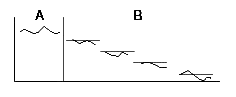
- Amultiple baseline
- Bchanging criterion
- Cmultiple probe
12What type of design is demonstrated here?
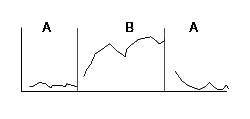
- AReversal
- BAB Design
- CAlternative treatment
13Changing criterion designs requires all of these considerations EXCEPT
- Alength of phases
- Bmagnitude of criterion changes
- Cnumber of criterion changes
- Dwhen to apply the reversal
14Examples of when to use a changing criterion design include:
- Amath problems
- Breading fluency speed
- Cdistance running
- Dhead banging
15Advantages to the changing criterion design include:
- Adoes not require reversal
- Bgradually improves behavior and works well in classrooms
- Cbehaviors can be reversed
- Ddoes not need to be repertoire
- Ehelps shape behaviors
16Any experimental design in which the researcher reverses back to a previous condition is called
- AReversal
- Bwithdrawal
- Cmultiple baseline
- Dchanging criteria
- Ealternative treatment
17The more preferred method of a reversal design is A-B-A over A-B-A-B.
- AVerdadeiro
- BFalso
18The A-B-A-B reversal is the most straight forward and generally most powerful within-subject design for demonstrating a functional relationship between an environment manipulation and a behavior.
- AVerdadeiro
- BFalso
19Reversal design includes what?
- Asolid data points for actual measures of behavior and open data points for predicted data
- Bopen data points for actual measures of behavior and solid data points for predicted data
20Experiments that use the reversal design to compare two or more treatment effects are vulnerable to confounding effects by sequence effects.
- AVerdadeiro
- BFalso
21Which experimental design in which 2 or more conditions are presented in rapidly alternating succession independent of the level of responding & the differential effects on the target behavior are noted?
- Aalternating intervention design
- Balternating treatment design
- Calternative treatments design
22What type of experimental design would be best used when trying to determine which treatment is most effective?
- Aalternating treatment design
- Bparametric analysis
- Cchanging criterion design
- Dmultiple baseline design
23What problems are avoided when choosing to use an alternating treatment design?
- Adoes not require treatment withdrawal
- Bopen- ended design
- Cquickly compares different treatments
- Dis limitless on how many treatments can be implemented at once
- Eminimizes irreversibility
- Fminimizes sequence effects
- Gcan be used with unstable data patterns
- Hassess generalization of effects
- Iinterventions can begin immediately
- Jnever have to settle on just one treatment
24Withdrawal and reversal designs are the same type of experimental design where the intervention is removed and a return to baseline has occurred. Withdrawal design will often be the technical term when looking for generalization of a behavior as the intervention is sequentially or partially withdrawn.
- AVerdadeiro
- BFalso
25What type of graph is being demonstrated?
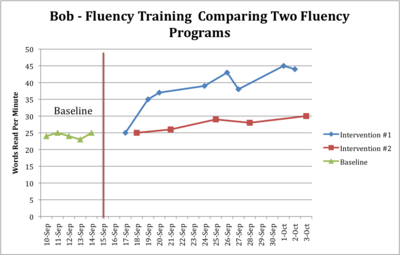
- Aalternating treatments design
- Bintervention comparison design
- CA-B-B design
- Dalternative treatments design
26What type of graph is being shown?
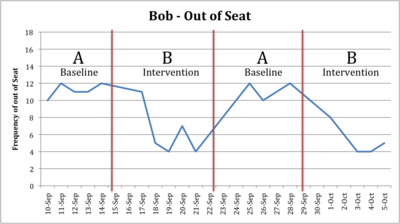
- AReversal Design
- BSequential Withdrawal Design
- CRemoval Design
Informações
- Descrição
- Explanations of answers come from the ABA Bible: Cooper, J. O., Heron, T. E., & Heward, W. L. (2007). Applied behavior analysis, 2nd ed. Upper Saddle River, N.J.: Pearson Prentice Hall. I did not cite his book on each question so please understand each question refers to the Cooper book listed above.
- Autor
- Lynette Jacobs
- Idioma
- English
- Visualizações
- 5.023
- Histórico
- Criado em 19 jul 2015 · atualizado em 25 fev 2017
- Etiquetas
- Avaliação
- 4,5 de 5 · 2 avaliações Avalie este quiz