
How does a computer work?
Slides do conjunto (3)
-
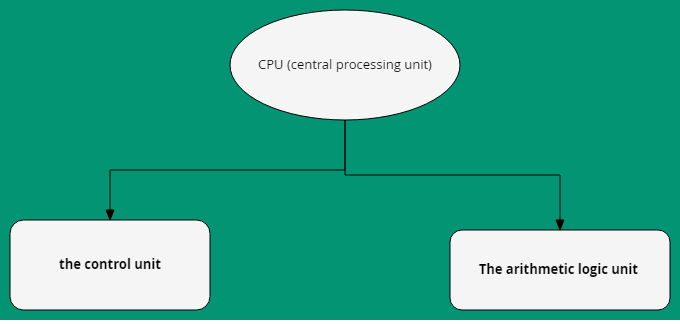
- The arithmetic logic unit (ALU), which performs arithmetic and logical operations.
- The control unit (CU), which extracts instructions from memory and decodes and executes them, calling on the ALU when necessary.
-
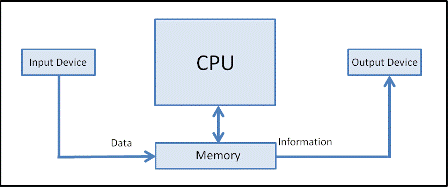
- The user gives information to the system using input devices these input devices send information to the memory in the form of binary which is then passed on to the CPU then it you get an output
- the memory has many forms:
- Random Access Memory (RAM) is volatile memory and Read Only Memory (ROM) is non-volatile memory. It is also called as read write memory or the main memory or the primary memory. ... RAM is further classified into two types- SRAM (Static Random Access Memory) and DRAM (Dynamic Random Access Memory).
-
- the information is stored as binary in the computer we get an output when we request for it based on the information that we have given the computer.
- let's take an example:
- let's say we request for an image on the screen and then the CPU processes that and then based on the binary it tells the monitor what colour to display and at which pixel. this is how information is processed
Informações
- Descrição
- Slides sobre How does a computer work?, criado por Utsav Eshan em 02-04-2019.
- Criado por
- Utsav Eshan
- Visualizações
- 1
- Avaliação