
Flashcards
Geography: Population
Flashcards do conjunto (17)
- 1Birth RateThe number of live births per 1000 people, per year.
- 2Death RateThe number of deaths per 1000 people, per year.

- 3Fertility RateThe average number of children a woman will have between the ages of 15 and 44 (reproductive age).
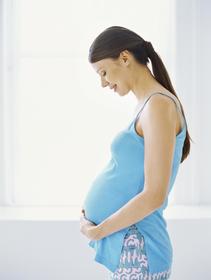
- 4Infant Mortality RateThe number of children (out of every 1000 born alive) who die before their first birthday.

- 5Life Expectancy (Longevity)The average age (in years) a person can expect to live.

- 6Migration RateThe difference between the number of people who migrate in (immigrants), and the number of people who migrate out (emigrants) per 100,000 (or 1000) of the population, per year.
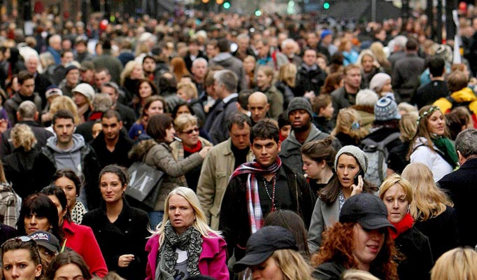
- 7Population DensityThe number of people per square kilometre. It's the total population of an area divided by the size of the area.
- 8Natural ChangeThe change in population (increase or decrease), because of the difference between the birth rate and the death rate.
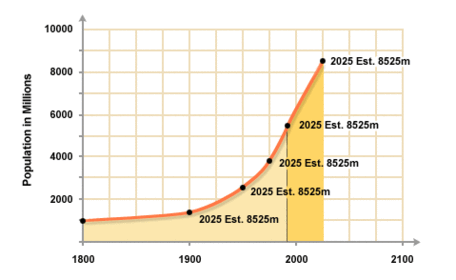
- 9Zero Growth RateThe population is neither increasing nor decreasing (e.g. birth rate = death rate).
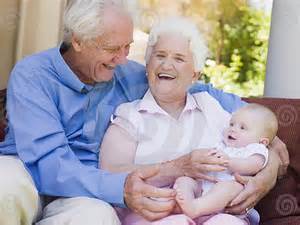
- 10Stage 1 of the DTM High birth rate and high death rate.- Birth and death rate fluctuate at a high level: the population remains stable but low.
- Birth rate is high because there's no birth control or family education, and education is poor.
-Its' also high because there's a high infant mortality, so more people have more children to replace those who've died.
- Death Rate is high due to poor health care, sanitation and disease.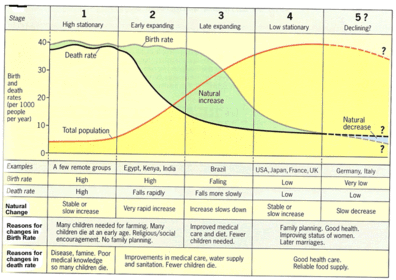
- 11Stage 2 of the DTM High birth rate, death rate falls.- Death rate falls, but birth rate remains high- rapid population increase.
-Still little birth control, family planning or education.
-Children needed for labour.
-Death rate falls and life expectancy increases due to better health care, sanitation and diet.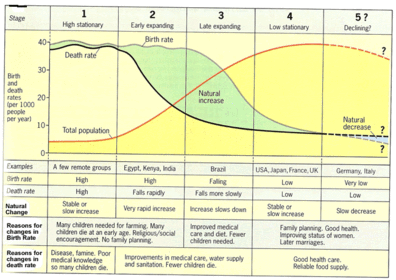
- 12Stage 3 of the DTM Birth rate falls rapidly and the death rate a little.-Population increases slowly.
-Birth rate decreases due to birth control, family planning and better education.
- Fewer children needed for labour.
-Women choose work over children.
-Population policies introduced.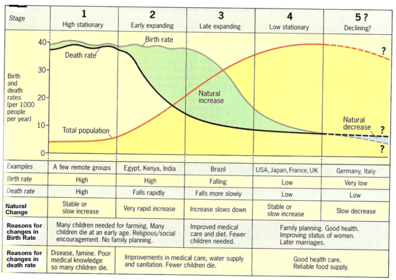
- 13Stage 4 of the DTM Low birth rate and low death rate.- Birth and death rate fluctuate at a low level- the population remains stable but high.
-Birth rate low due to increased demand and access to luxuries like holidays and material possessions. Less money for children.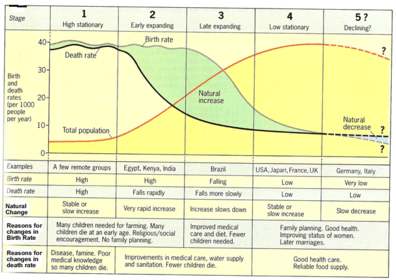
- 14Stage 5 of the DTM Birth rate drops below death rate.- Birth rate declines further but the death rate remains stable.
- Birth rate decrease due to the expenses of children and the burden of elder relatives.
-Death rate remains steady as there's more elders to die, despite advances in health care.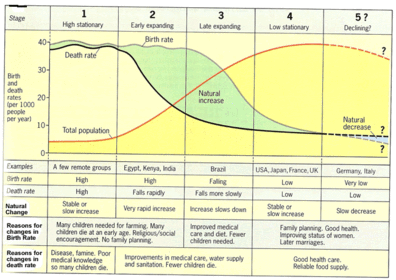
- 15Push Factors- Things that make people want to move out of the place they're in. They're negative factors about the place they're leaving, e.g. lack of jobs or poor living conditions and services, fear of political persecution.

- 16Pull Factors- These attract people to a new place. They're positive factors about the place they're moving to, e.g. better jobs and more job opportunities, better living conditions and services.

- 17Internal Migration- Migration within a country.

Informações
- Descrição
- Key Terms for Geography Population
- Criado por
- ameliaalice
- Visualizações
- 686
- Tags
- Avaliação