
Flashcards
Group 16 - General Characteristics

Flashcards do conjunto (27)
- 1What are O, S, Se, Te, Po commonly called?
- 2Naturally existing sulphatesGypsum - CaSO4.2H20
Epsom Salt - MgSO4.7.H20
Baryte - BaSO4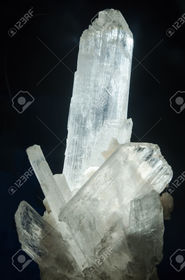
- 3Naturally occurring SULPHIDESGalena - PbS
Zinc blende - ZnS
Copper pyrites - CuFeS2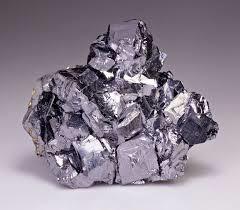
- 4General electronic configurationns2 np4
(6 valence electrons) - 5Atomic/ Ionic radiiIncreases down the group
(more shells)
- 6Ionisation enthalpy (energy to remove an e-)Decreases down the group
lesser than gr 15 (1/2-filled p-orbitals)
- 7Electron gain enthalpy (energy to gain an e-)More negative to less negative
- 8Why is the electron gain enthalpy of oxygen less (-ve) than sulphur?Compact nature of oxygen atom
- 9Electronegativity (ability to pull an e- pair towards itself)Decreases down the group
(hence metallic character increases from O to Po) - 10Metallic characterO, S - Non-metals
Se, Te - Metalloids
Po - Metal - 11Radioactive element(s)Polonium
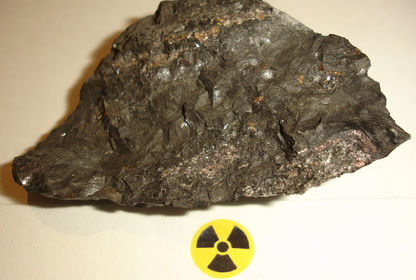
- 12Melting and boiling points (trend)Increase down the group
(increase in size) - 13Why is there a large difference between the melting and boiling points of Oxygen and Sulphur?Due to difference in atomicity
Oxygen - O2 (diatomic)
Sulphur - S8 (Polyatomic)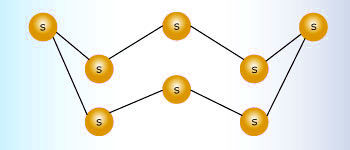
- 14Oxidation states exhibited-2 - stability decreases down the group
+2
+4 - stability increases down the group (inert pair effect) - covalent bonding
+6 - stability decreases down the group - covalent bonding - 15When does oxygen exhibit +2 oxidation state?Oxygen has high electronegativity, hence exhibits negative ox. states (-2)
In OF2 - +2 - 16Oxidation states of S, Se, Te with O, Fwith oxygen - +4
with fluorine - +6 - 17Anomalous behaviour of oxygen is due to...1. Small size
2. High electronegativity - 18Why is there strong hydrogen bonding in H2O, but not in H2S? (H2O is liquid while H2S is gaseous)1. Small size
2. High electronegativity - 19Covalency of Oxygen, reasonLimited to 4
Absence of d-orbitals - 20Hydrides and their trendsH2O, H2S, H2Se, H2Te, H2Po
1. Acidity -> (decrease in bond dissociation enthalpy, more ability to release H+)
2. Thermal stability -> ''
3. Strength of reducing agent ->
(except H2O) - 21Types of oxidesEO2 - reducing strength decreases down the group (SO2 reducing, TeO2 - oxidising)
EO3 - S, Se, Te
(both are acidic in nature) - 22HalidesEX2, EX4, EX6
- 23Stability of halidesstability - F > Cl > Br > I
- 24stable hexahalides and their structurehexafluorides , octahedral
SF6 is most stable (steric reasons) - 25Structure and hybridisation of tetrafluoridessp3d - Trigonal bipyramidal with one lp in the equatorial position (SEE - SAW)
- 26Dichlorides, dibromides Structure, hybridisationHybridisation: sp3
Structure: Tetrahedral
DIMERIC in nature
(S2F2, S2Cl2, S2Br2, Se2Cl2, Se2Br2)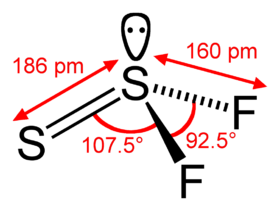
- 27Disproportionation in dimeric halides+2 +4 0
2Se2Cl2 ->SeCl4 +3Se
Informações
- Descrição
- CBSE Central Board of Secondary Education Chemistry FlashCards sobre Group 16 - General Characteristics, criado por Nancy Mathew em 07-12-2016.
- Criado por
- Nancy Mathew
- Visualizações
- 52
- Tags
- Avaliação